
I design and manage digital user interfaces. When a client hires me to fix a broken website, they usually want to focus on the visual paint. They want to talk about adding heavy animations, bright colors, and complex graphic layouts. I refuse to have that conversation on the first day.
I strip the website down entirely. I force the client to look at the raw, unstyled text and the basic HTML structure.
If the core structure is broken, the visual paint does not matter. You cannot fix a bad foundation by covering it in heavy decorations. The digital product must function perfectly in its raw, naked state.
I apply this exact same strict philosophy to my kitchen in Rio de Janeiro. When friends visit my apartment and ask me how they can start brewing better coffee at home, they expect a shopping list. They want me to recommend a specific grinder or a beautiful glass pour over cone. I do not recommend hardware first. The first coffee habit I recommend to beginners requires absolutely zero money. It is a strict psychological rule. You must taste your coffee completely black before you add a single drop of milk or a single grain of sugar.
The Cultural Training
We are heavily conditioned by modern food culture to treat coffee like a liquid dessert.
Most people are introduced to coffee through massive corporate cafe chains. These companies do not sell agricultural products. They sell hot milkshakes. They sell massive cups filled with heavy cream, artificial vanilla syrup, and whipped cream. The actual coffee is just a bitter background note used to balance the extreme sugar.
Because of this cultural training, beginners develop a highly automated physical reflex.
They brew a cup of coffee at home, place it on the counter, and immediately reach for the sugar bowl. They pour the milk without thinking. They alter the chemistry of the beverage before they even know what the beverage actually tastes like.

The Insult to the Process
Adding milk and sugar automatically is a massive culinary insult.
If you go to an expensive restaurant and the chef serves you a carefully prepared steak, you do not immediately cover the meat in cheap ketchup before taking a bite. You taste the food first. You respect the preparation.
When you blindly dump sugar into a fresh cup of coffee, you are insulting the farmer who spent months cultivating the soil. You are insulting the roaster who carefully managed the thermal energy of the drum. More importantly, you are insulting your own physical effort in the kitchen.
Explaining this baseline of agricultural respect is exactly What Happened When I Stopped Buying Pre-Ground Coffee because I realized fresh ingredients demand your full sensory attention. You cannot appreciate the vitality of a fresh seed if you instantly drown it in dairy.
The Ultimate Diagnostic Tool
The rule of tasting the coffee black is not about being a rigid purist. It is about gathering accurate data.
Black coffee is the ultimate diagnostic scanner for your brewing technique. If you made a mechanical mistake in the kitchen, the black coffee will report that error to your palate instantly.
If your water was too cold, or your grind was too coarse, the black coffee will taste aggressively sour and thin. If you poured the water too slowly, or your grind was too fine, the black coffee will taste harshly bitter and dry. The raw liquid tells you exactly how to adjust your grinder for tomorrow.
The Chemistry of the Mask
If you add milk and sugar before tasting, you completely destroy your diagnostic scanner.
Cow milk contains heavy proteins and dense animal fats. When you pour milk into coffee, those proteins physically bind to the harsh, bitter tannins in the liquid. The milk literally neutralizes the bitterness. Refined white sugar acts as a massive sensory distraction. It overwhelms your palate and completely masks the sour, under extracted acids.
You can brew the worst, most chaotic cup of coffee on the planet. If you add enough milk and sugar, it will taste acceptable.
You will think you executed a perfect extraction. You will never learn to fix your pouring technique because your mistakes are constantly hidden behind a wall of fat and sucrose. You guarantee permanent mediocrity in your kitchen.
The Three Sip Protocol
When a beginner comes to my kitchen, I enforce a strict physical protocol. I call it the three sip rule.
I weigh the Ethiopian beans. I grind them manually. I execute a flawless concentric pour with my gooseneck kettle. I let the red liquid drain into a small ceramic tasting cup.
I place the cup in front of the beginner. I physically move the sugar bowl to the other side of the room. I give them strict instructions. They must take three slow, deliberate sips of the black coffee. They cannot make a judgment until the third sip is finished.
The Shock of the First Sip
The first sip is almost always a failure of expectation.
The human brain is an anticipation machine. If the beginner is used to drinking massive vanilla lattes, their brain expects a heavy, thick, sugary dessert to hit their tongue.
When the black Ethiopian coffee hits their palate, it is a biological shock. The liquid is hot, thin, and highly acidic. The brain panics slightly because the incoming data completely contradicts the expectation. The beginner usually winces. They immediately want to reach for the sugar. I force them to wait.
The Calibration of the Second Sip
I make them wait a full minute before taking the second sip.
During this minute, the extreme heat of the coffee begins to bleed out into the room. The temperature drops. The human tongue becomes much more sensitive.
More importantly, the brain recalibrates. It accepts that the liquid is not a milkshake. It stops looking for artificial vanilla syrup and starts scanning the actual liquid for usable data.
The beginner takes the second sip. The wince disappears. They usually look slightly confused. The harsh shock is gone. The palate adjusts to the natural acidity. The liquid feels cleaner. The raw profile of the roasted seed begins to peek through the mental fog.

The Revelation of the Third Sip
I make them wait another minute. The coffee is now perfectly warm. The heat blanket is completely gone. The complex fruit sugars are fully exposed.
The beginner takes the third, final sip. This is the moment the paradigm permanently shifts.
Because the palate is fully calibrated, the true flavor of the extraction hits the sensory receptors perfectly. The bright lemon acidity acts as a crisp introduction. It melts seamlessly into a heavy, syrupy peach sweetness. The finish tastes like blooming jasmine flowers.
Witnessing this exact sequence of sensory awakening was exactly The First Time I Realized Coffee Could Taste Sweet because it completely destroyed my definition of the beverage. The beginner realizes that a perfectly extracted coffee bean contains its own natural dessert. It does not need external help.
Discovering the Origin
Once the beginner survives the three sip rule, a massive new world opens up. They finally gain access to the concept of origin.
Specialty coffee is a diverse agricultural product. A coffee bean grown in the volcanic soil of Kenya tastes entirely different from a coffee bean grown in the high mountains of Colombia.
Kenyan coffee is bright, juicy, and tastes like ripe tomatoes and blackberries. Colombian coffee is heavy, rich, and tastes like dark caramel and green apple. Brazilian coffee is dense, nutty, and tastes like heavy milk chocolate.
The Erasure of Geography
You cannot taste geography through a wall of cow milk.
If you take a brilliant, floral Ethiopian coffee and a dense, chocolatey Brazilian coffee, and you pour two ounces of heavy cream into both cups, they will taste exactly the same. They will just taste like warm milk with a generic roasted background note.
You completely erase the hard work of the specific farmer. You delete the specific climate, the specific soil, and the specific altitude.
Removing the dairy was exactly How I Started Noticing Flavor Notes in Coffee because I stopped muting the raw data. The bright, distinct characteristics of the different countries finally became obvious to my palate. I could travel the world simply by changing the bag on my counter.
The Financial Logic
The habit of tasting coffee black also enforces strict financial logic.
Specialty coffee is an expensive luxury. I frequently pay twenty five dollars for a single bag of light roasted African coffee. I pay that premium price specifically to experience the delicate, highly articulate flavor profile created by the farmer and the roaster.
If I buy a twenty five dollar bag of coffee and immediately drown it in cheap supermarket sugar, I am a financial idiot.
I am paying a massive premium for a delicate feature that I am intentionally destroying. If your goal is to drink a sweet, milky beverage, you should buy the cheapest, darkest roasted commercial coffee you can find. The cheap coffee will cut through the milk just as effectively as the expensive coffee.
The Permissive Transition
I am not a dictator in my kitchen. The three sip rule is not a permanent ban on dairy.
If my friend takes the three deliberate sips, fully evaluates the black liquid, appreciates the natural acidity, and still decides they want a splash of milk, I hand them the milk.
The goal is not to force people to drink something they hate. The goal is to replace a blind, automated reflex with a conscious, intentional choice.
If you add milk after tasting, you are making a culinary decision. You are saying, “This coffee has a massive chocolate body, and a tiny amount of milk will enhance that specific note.” You are acting like a chef. You are not acting like a robot.
The Evolution of the Palate
The most fascinating part of teaching this habit is watching the long term evolution of the beginner.
When they first start brewing manually at home, they still add a little bit of sugar after their three sips. Their palate is still transitioning away from the corporate cafe conditioning.
But over the course of a few months, the physical additions slowly disappear.
They start to appreciate the clean, sharp finish of a black pour over. They start to crave the vibrant acidity. They realize that adding sugar makes the coffee feel sticky and heavy in their throat. One morning, they brew their cup, take their three sips, and simply leave the sugar bowl in the cabinet. The transition is complete.
Audit Your Own Reflex
Look at your own behavior tomorrow morning.
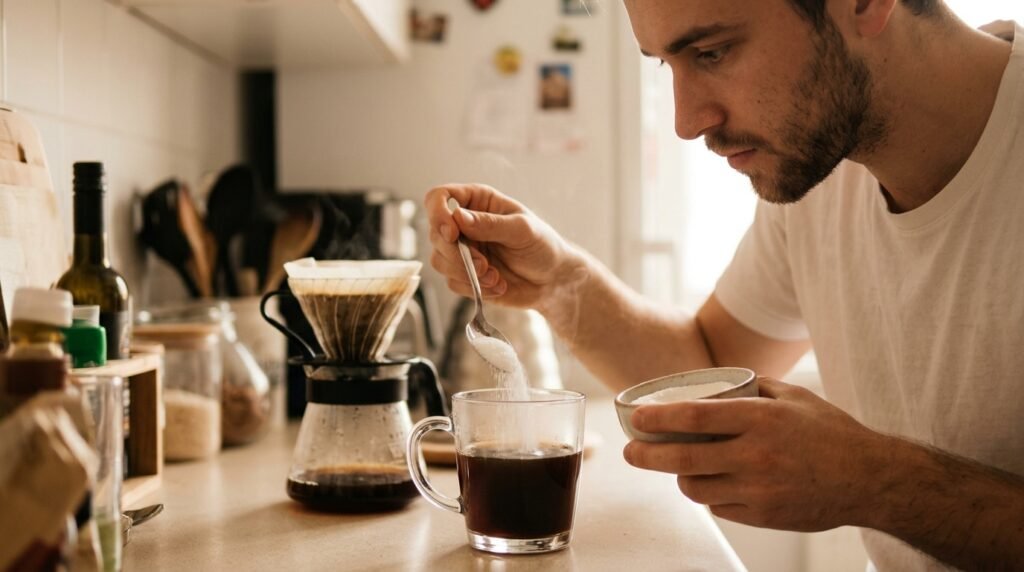
Watch your hands immediately after you finish your extraction. Are you reaching for the refrigerator before you even pick up the coffee mug? Are you grabbing a spoon for the sugar bowl before you smell the aroma of the hot liquid?
You are operating on autopilot. You are actively hiding the results of your own physical labor.
Stop the automated sequence. Put the milk back in the fridge.
Pour the black liquid into a small cup. Look at the deep red color. Smell the explosive floral aromatics. Sit down in a quiet room. Let the extreme heat dissipate. Take one slow sip. Let your brain panic. Take a second sip. Let your palate calibrate. Take a third sip.
When you finally force yourself to experience the naked, unstyled reality of the roasted seed, you will unlock a level of culinary depth you never knew existed. You will stop drinking milkshakes, and you will finally start tasting coffee.
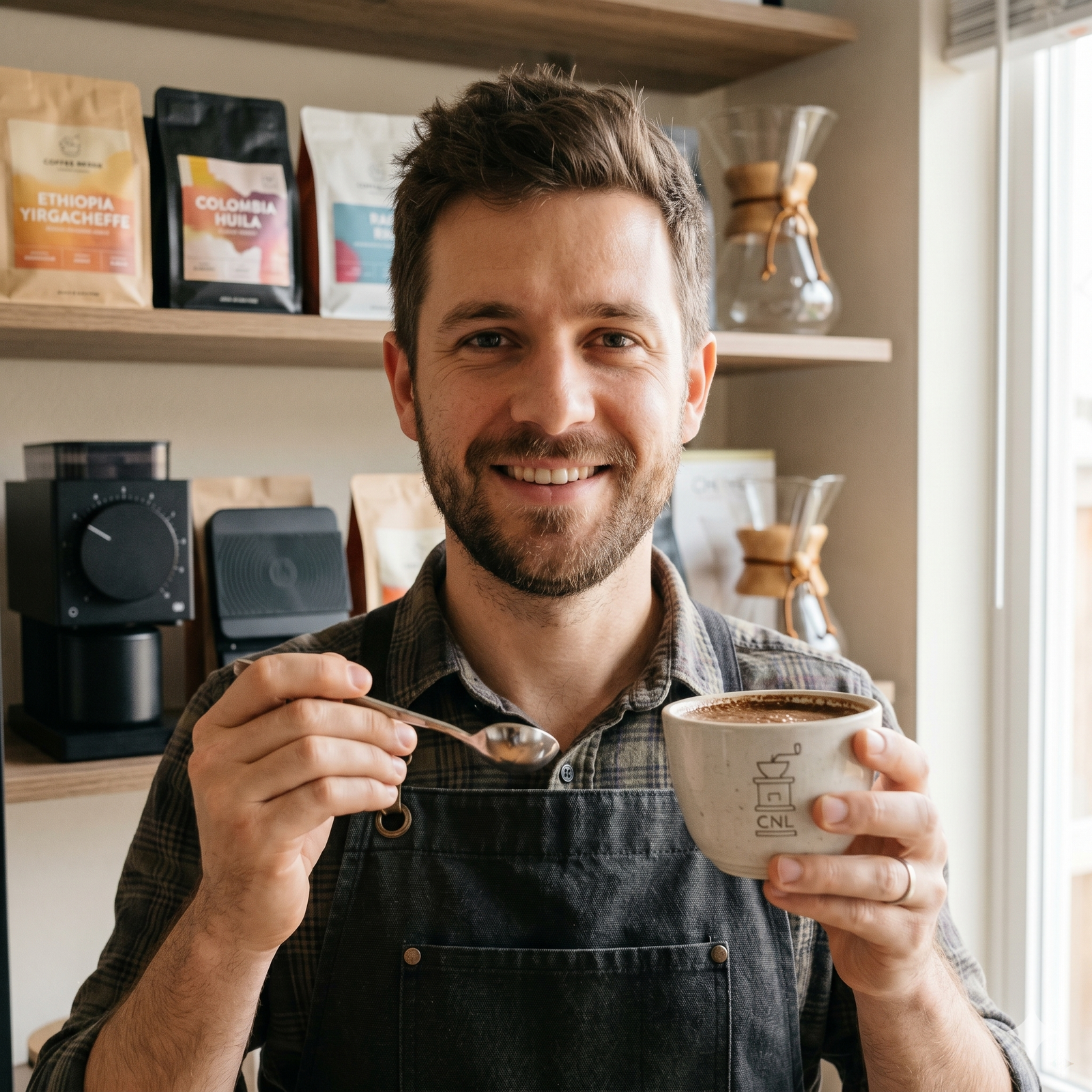
Hi, I’m the coffee enthusiast behind Coffee Nerd Lab.
Like many people, I started drinking coffee simply because it helped me wake up in the morning. Over time, that daily habit turned into a genuine interest in understanding what makes a great cup of coffee. I began experimenting with different beans, brewing methods, grinders, and coffee gear, learning through trial and error along the way.
This blog is where I document that journey. Every article is inspired by real experiences, discoveries, and lessons I’ve learned while exploring the world of coffee. From brewing guides and equipment reviews to practical tips and coffee basics, my goal is to share useful information in a way that’s easy to understand and enjoyable to read.
Thanks for stopping by, and I hope Coffee Nerd Lab helps you enjoy your next cup a little more than the last.