

The summer heat in Rio de Janeiro can be completely unrelenting. In January, the temperature inside my apartment climbs aggressively by eight o’clock in the morning. I manage digital servers and work from home. I constantly monitor the temperature of my computer hardware to ensure nothing overheats and crashes.
I applied this exact same logic to my kitchen pantry.
I had just purchased a very expensive bag of light roasted Ethiopian Sidamo coffee. I held the warm paper bag in my hands. I knew heat was a catalyst for biological decay. I knew heat oxidized the delicate coffee oils and destroyed the vibrant fruit sugars.
I looked at the hot kitchen cabinet. I looked at the cold refrigerator. I made a seemingly logical decision. I opened the refrigerator door and placed the bag of coffee right next to a carton of milk.
I thought I was being incredibly smart. I thought I had hacked the preservation cycle. The coffee storage habit I had to unlearn was this exact refrigerator trap. It is a massive culinary error. It completely ruined my expensive beans and taught me a brutal lesson about the difference between temperature control and moisture contamination.
The Illusion of Preservation
The logic behind putting coffee in the refrigerator makes perfect sense on the surface.
We use the refrigerator to extend the life of almost everything we consume. Cold temperatures stop milk from souring. Cold temperatures keep leafy green vegetables crisp. Cold temperatures prevent meat from spoiling.
If heat destroys fresh coffee, then the cold refrigerator must protect it.
This is a catastrophic misunderstanding of agricultural science. Coffee is not a wet vegetable. It is not a liquid dairy product. It is a highly processed, roasted, and completely dry seed. You cannot treat a dry seed the same way you treat a wet piece of fruit.

The Biological Sponge
During the intense heat of the roasting process, all the natural moisture is aggressively driven out of the coffee bean. The seed becomes completely dehydrated.
Because the bean is completely dry and highly porous, it becomes hygroscopic. This is a scientific term. It means the coffee bean actively attracts and absorbs moisture from the surrounding environment. It acts exactly like a massive, microscopic sponge.
This sponge effect is the core reason the refrigerator is a terrible environment for specialty coffee.
The Closed Air System
A kitchen refrigerator is not just a cold box. It is a highly active, circulating environment.
The air inside the refrigerator is constantly moving to maintain the cold temperature. This circulating air carries massive amounts of ambient moisture. It also carries something much worse. It carries the microscopic aromatic compounds of every single piece of food sitting on the shelves.
My refrigerator contained half of a sliced raw onion. It contained a plastic container of leftover garlic pasta. It contained a wedge of sharp cheese.
Every time the internal fan cycled on, it pushed the smell of the garlic, the onion, and the cheese directly across the highly porous coffee beans. The dehydrated African seeds eagerly absorbed every single floating odor.
The Contaminated Extraction
I left the coffee in the refrigerator for three days. I woke up on a Thursday morning and decided to brew a cup.
I pulled the cold bag off the shelf. I weighed fifteen grams of beans and ground them in my manual burr grinder. I poured the boiling water from my gooseneck kettle.
I sat at my computer desk and took a sip. My brain completely rejected the liquid.
The beautiful, delicate notes of peach and jasmine were entirely gone. The coffee tasted heavily of stale garlic. The finish was sharp, savory, and aggressively unpleasant. The liquid tasted like a dirty kitchen sponge. The cross contamination was absolute.
Tasting this ruined extraction was exactly How I Learned Coffee Storage Affects Flavor because it proved that the ambient environment literally becomes part of the beverage. The beans do not protect themselves. They absorb their surroundings.
The Danger of Condensation
The odor contamination was a massive failure, but it was not the only problem. The refrigerator habit triggered a second, much more destructive physical reaction.
Every single morning, I took the cold bag of coffee out of the refrigerator. I opened it on my warm kitchen counter to scoop out my daily dose. Then I put the cold bag back into the refrigerator.
This daily temperature shock is devastating.
When you introduce a freezing cold object to a hot, humid room, physics takes over immediately. Condensation forms on the surface of the object. If you take a cold glass of water outside in the summer, the outside of the glass instantly sweats. The exact same thing happens to coffee beans.
Brewing Inside the Bag
When I opened the cold bag on my kitchen counter, microscopic water droplets instantly condensed directly onto the surface of the roasted seeds.
Remember that water is the specific solvent we use to extract coffee. When that condensation formed on the beans, the extraction process actually began prematurely. The water activated the delicate oils. It began breaking down the complex fruit sugars.
Then, I put the bag back into the refrigerator. The condensation dried, leaving the damaged, oxidized oils exposed on the surface of the bean.
I repeated this violent cycle of condensation and drying every single morning. I was actively washing the flavor out of the coffee beans while they were still sitting inside the bag.
The Loss of Vitality
By the fifth day, the coffee was completely dead.
Even if I ignored the garlic flavor, the structural integrity of the coffee was gone. When I poured the boiling water over the grounds, there was absolutely no bloom. The coffee bed did not swell. No carbon dioxide gas escaped.
The moisture from the condensation had completely pushed the protective gas out of the cellular walls. The coffee was entirely stale.
Witnessing this flat, lifeless reaction was exactly The Day I Finally Understood Why Fresh Coffee Beans Matter because I saw how quickly the vitality of the seed could be stripped away. A bag of coffee that should have lasted three weeks was completely ruined in less than five days.

Protecting the Hardware
The moisture from the refrigerator condensation also threatened my expensive brewing equipment.
I use a premium manual hand grinder. It features incredibly sharp, high carbon steel burrs. High carbon steel is brilliant for slicing dense coffee beans, but it is highly susceptible to rust.
When I dumped cold, slightly damp coffee beans into the metal grinding chamber, I was introducing liquid water directly to the steel burrs. If I continued this habit, the microscopic moisture would slowly corrode the sharp edges of the metal.
The refrigerator was not just destroying my raw ingredients. It was actively attacking my two hundred dollar processing engine.
The Difference Between Fridge and Freezer
When I discuss this failure with friends, they often get confused. They point out that many coffee professionals recommend freezing coffee beans.
Freezing coffee is a highly effective preservation method, but it operates on completely different rules.
When you deep freeze coffee, you seal the bag completely airtight. You place it in the extreme cold to halt molecular activity. Most importantly, you never open the bag while it is cold. You take the sealed bag out of the freezer and let it sit on the counter for twelve hours until it reaches room temperature. You only open it when the risk of condensation is completely gone.
The refrigerator habit fails because you are constantly opening the cold bag in the warm air. You are inviting the moisture inside daily.
Unlearning the Protocol
I had to completely rewrite my kitchen protocols. I threw the garlic flavored Ethiopian coffee in the trash. It was a painful financial loss, but it forced me to build a secure system.
I went to a local roastery and bought a fresh bag of coffee. I walked into my apartment. I completely ignored the refrigerator.
I needed to find the most stable environment in my entire house. It needed to be dark. It needed to be dry. It needed to have a consistent temperature that did not fluctuate wildly during the heat of the day.
The Dark Cabinet Solution
I analyzed my kitchen layout.
The cabinets directly above the stove were a terrible choice. The heat from boiling pasta water rises and creates massive temperature swings. The cabinets next to the dishwasher were also dangerous. The dishwasher generates heavy steam and humidity during its drying cycle.
I found a low cabinet in the corner of my kitchen, far away from any major appliances. It was completely dark. The air inside was dry and cool.
I placed the sealed foil bag of coffee onto the wooden shelf. I closed the door. This dark, boring cabinet became my permanent coffee vault.
Restoring the Morning Peace
The next morning, I opened the low cabinet. The bag of coffee was at room temperature.
I opened the heavy foil zipper. There was no temperature shock. There was no condensation forming on the beans. There was no smell of leftover pizza or chopped onions.
The only smell was the explosive, vibrant aroma of sweet peach and raw agriculture. I scooped my fifteen grams, ground them smoothly, and brewed a flawless cup.
Finding this stable, boring storage location was exactly The Coffee Habit That Improved My Daily Routine because it entirely removed the anxiety of degradation. I stopped fighting the environment and started working with it. I knew my coffee was safe from moisture, and I could finally trust the flavor in my mug.
The Batch Processing Upgrade
Eventually, I upgraded my storage system even further to completely minimize oxygen exposure.
I bought a set of small glass test tubes with heavy silicone caps. Now, on Sunday nights, I take the bag of coffee out of the dark cabinet. I weigh exactly fifteen grams into each glass tube. I seal the tubes tightly.
I place the wooden block of tubes back into the dark, dry cabinet.
This batch processing system means I only open the main bag of coffee one time per week. The individual doses are perfectly isolated in their glass vaults. They remain at room temperature. They never see the inside of a refrigerator. The system is completely frictionless and incredibly stable.
Respecting the Roaster’s Design
Coffee roasters spend a massive amount of money engineering the perfect packaging.
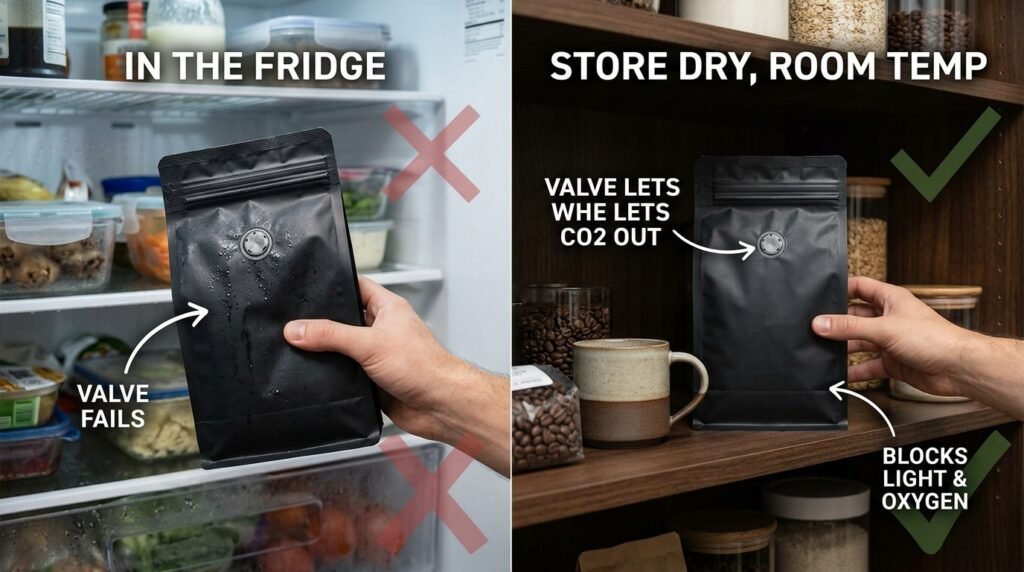
A high quality coffee bag is made from thick, opaque foil to block ultraviolet light. It features a heavy plastic zipper to seal out ambient moisture. It includes a one way degassing valve to push carbon dioxide out without letting oxygen in.
The bag is already a perfect environmental shield.
When you take that perfectly engineered shield and throw it into a cold, wet, smelly refrigerator, you are defeating the entire purpose of the packaging. You are putting the product in the exact environment the bag was designed to avoid.
Audit Your Kitchen Today
You need to take a critical look at how you store your premium ingredients.
Walk into your kitchen right now. Open your refrigerator. If you see a bag of coffee sitting next to the butter and the milk, take it out immediately.
You are actively ruining your morning beverage. You are dulling the bright acids. You are oxidizing the natural oils. You are infusing your expensive specialty beans with the aromatic footprint of your leftover dinners.
Find a dark, cool, dry cabinet away from the stove. Place your coffee inside and make sure the bag is tightly zipped. Coffee requires absolute stability. When you finally stop shocking the beans with cold air and moisture, you will stop drinking muddy, stale water. You will finally unlock the pristine, complex clarity that the farmer and the roaster intended you to taste.

Hi, I’m the coffee enthusiast behind Coffee Nerd Lab.
Like many people, I started drinking coffee simply because it helped me wake up in the morning. Over time, that daily habit turned into a genuine interest in understanding what makes a great cup of coffee. I began experimenting with different beans, brewing methods, grinders, and coffee gear, learning through trial and error along the way.
This blog is where I document that journey. Every article is inspired by real experiences, discoveries, and lessons I’ve learned while exploring the world of coffee. From brewing guides and equipment reviews to practical tips and coffee basics, my goal is to share useful information in a way that’s easy to understand and enjoyable to read.
Thanks for stopping by, and I hope Coffee Nerd Lab helps you enjoy your next cup a little more than the last.