
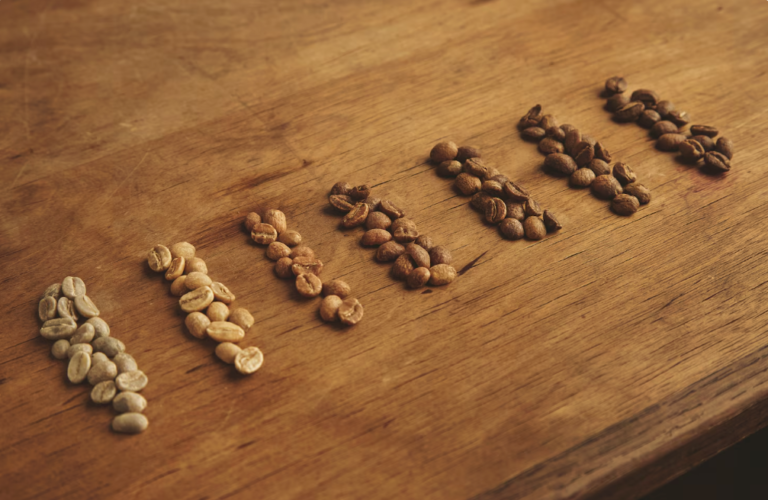
For years, my relationship with coffee was built entirely on speed and convenience. The goal was simple: get caffeine into my bloodstream as fast as humanly possible so I could function. I viewed the coffee-making process not as a craft, but as an obstacle standing between me and being awake.
Because of this mindset, I was a dedicated patron of the pre-ground coffee aisle.
I would walk into the supermarket, grab a brick of vacuum-sealed grounds or a giant plastic tub, and consider my coffee shopping done for the month. It was incredibly easy. I didn’t have to think about it. Every morning, I would crack open the container, scoop the brown powder into a paper filter, hit a button, and wait for the dark liquid to drip into the carafe.
I never questioned the taste because I didn’t know there was anything else. It tasted bitter, slightly stale, and required a generous pour of milk to become palatable. I thought that was just what coffee tasted like.
But a few years ago, a seemingly insignificant decision completely disrupted my morning autopilot. I decided to buy a bag of whole beans instead. And looking back, that one small shift completely changed my relationship with my morning cup.
The Illusion of Time Saved
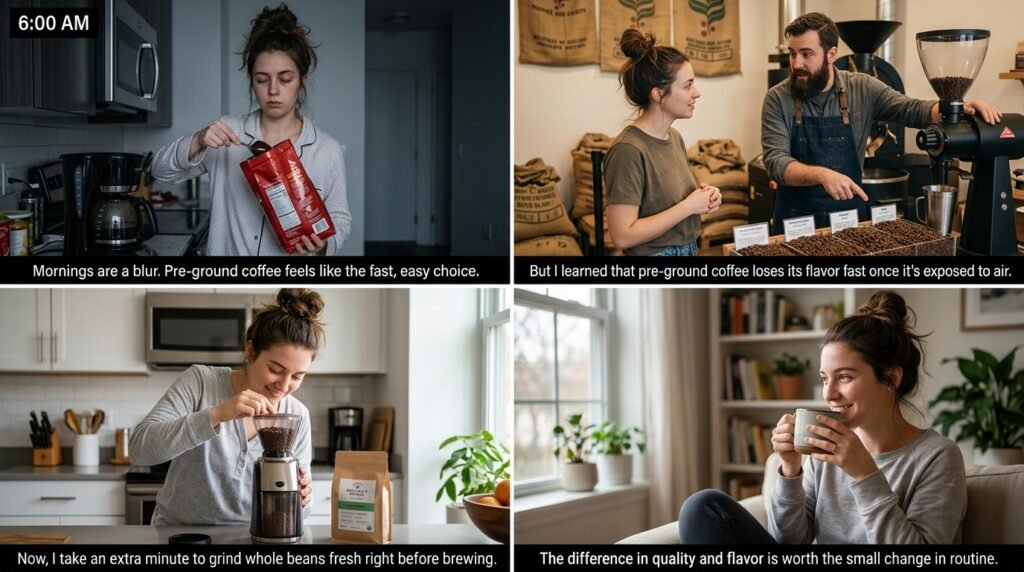
The primary reason I—and millions of other people—buy pre-ground coffee is the perceived saving of time. Grinding beans sounds like an extra step. It sounds like work. When you are stumbling around the kitchen at 6:00 AM with one eye open, the last thing you want is another chore.
But the truth is, the time you “save” by buying pre-ground coffee comes at a massive, hidden cost to the quality of what you are drinking.
Coffee is an incredibly volatile product. Inside an unground, roasted coffee bean, there are hundreds of complex aromatic compounds and delicate oils. The structure of the bean itself acts like a protective vault, keeping all those beautiful flavors sealed inside and safe from the outside world.
When you grind a coffee bean, you are essentially blowing up that vault.
You shatter the bean into thousands of tiny pieces, massively increasing its surface area. The moment this happens, those delicate oils are exposed to oxygen. And oxygen is the absolute worst enemy of fresh coffee.
Within minutes of grinding, the coffee begins to rapidly oxidize and lose its aromatic potency. By the time a bag of pre-ground coffee is roasted, ground at a factory, packaged, shipped to a warehouse, transported to a grocery store, and finally opened in your kitchen… the vast majority of its flavor has literally vanished into thin air.
I didn’t know any of this science at the time. All I knew was that I was getting bored of my morning routine. I wanted something better, but I didn’t know where to start.
The Catalyst: A Gift I Couldn’t Use
The turning point happened completely by accident. A friend who had recently returned from a trip handed me a beautifully packaged bag of coffee as a souvenir. It was a single-origin Colombian roast from a small, independent farm.
I was thrilled until I opened the bag and realized it was whole bean.
I didn’t own a grinder. For a week, that beautiful bag of coffee sat on my kitchen counter, taunting me. I seriously considered trying to smash the beans with a rolling pin just to get it over with.
Eventually, I caved. I went online and ordered a cheap, entry-level grinder. I figured if I was going to drink this gift, I might as well do it properly.
When the grinder arrived, I finally opened that bag of Colombian beans. And that was the exact moment everything changed.
The Aromatic Awakening
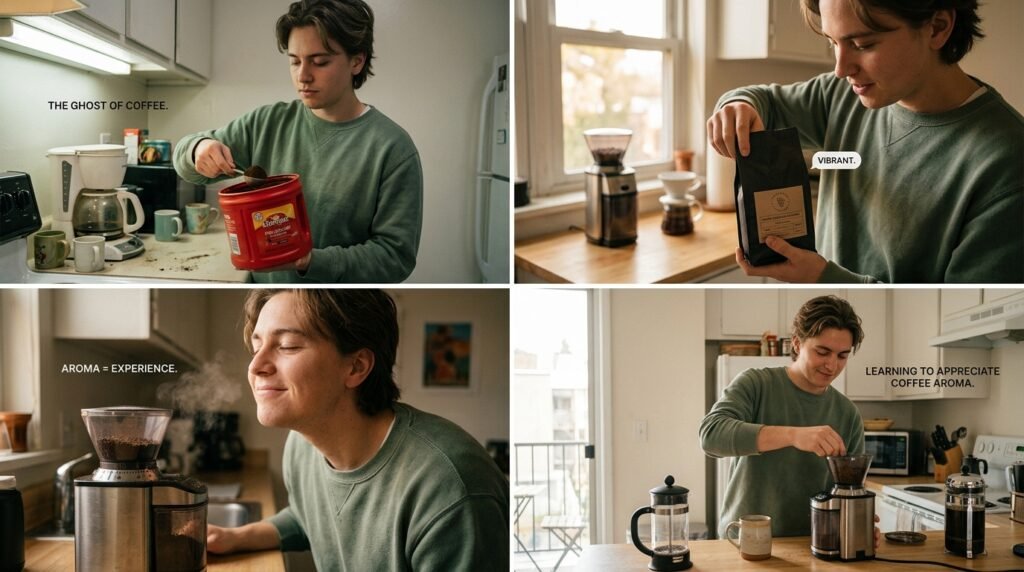
If you have only ever consumed pre-ground coffee from a plastic tub, you have never actually smelled coffee. You have smelled the ghost of coffee.
When I opened that bag of whole beans, the scent was entirely different from what I was used to. It wasn’t flat or dusty. It was incredibly vibrant. But the real magic happened when I poured those beans into my new grinder and hit the button.
As the blades spun, fracturing the beans, my kitchen was instantly flooded with a thick, intoxicating fragrance. It smelled like toasted caramel, dark chocolate, and a hint of dark cherry. It was so potent and pleasant that I actually stopped what I was doing just to breathe it in.
I realized right then that the aroma is half the experience of drinking coffee. By buying pre-ground, I had been robbing myself of this incredible daily sensory experience.
It was a profound realization about how much the smell impacts the taste, and it completely altered my perspective, which I wrote about in detail when explaining How I Learned to Appreciate Coffee Aroma More. The act of grinding the beans suddenly didn’t feel like a chore; it felt like unlocking a treasure chest.
The Shocking Difference in the Cup
I took my freshly ground Colombian coffee and put it into my standard drip machine. I expected it to taste a little better, perhaps a bit stronger. I did not expect it to taste like an entirely different beverage.
When I took my first sip, I braced myself for the familiar, harsh bitterness that usually coated the back of my throat. But the bitterness wasn’t there.
Instead, the coffee was smooth. It had a heavy, velvety body. I could actually taste the chocolate notes that I had smelled during the grinding process. There was a bright, pleasant acidity to it that reminded me of green apples—something I had never, ever tasted in my cheap pre-ground routine.
For the first time in my life, I drank a cup of black coffee and didn’t instinctively reach for the milk carton. It didn’t need to be masked or hidden. It was delicious entirely on its own.
I sat at my kitchen table, staring at my mug, feeling slightly betrayed by every tub of pre-ground coffee I had ever purchased. What else had I been missing out on?
Upgrading the Gear
Once you experience the jump in quality from pre-ground to freshly ground whole beans, a funny thing happens: you start caring about the details.
My cheap blade grinder did the job of breaking the beans apart, but as I started falling down the rabbit hole of coffee brewing, I learned that it was violently chopping the beans into uneven chunks. Some pieces were as fine as flour, while others were the size of sea salt. This unevenness leads to an unbalanced, unpredictable cup of coffee.
If I was going to invest in good whole beans, I needed to treat them right.
I eventually saved up and bought my first proper piece of coffee equipment. The difference it made in the consistency of my morning brew was staggering, and you can read all about that specific transition in my post about What I Learned After Switching to a Burr Grinder. Having the right tool to crush the beans evenly, rather than just slashing at them, elevated the flavor to a professional café level right in my own kitchen.
Discovering the “Bloom”
Another fascinating thing I noticed when I stopped buying pre-ground coffee was how the coffee physically reacted to hot water.
When you pour hot water over stale, pre-ground coffee, the grounds just sort of sit there. They get wet, they sink, and they look like wet mud. It’s a very lifeless process.
But when you pour hot water over freshly ground whole beans—especially beans that were roasted recently—the coffee comes alive.
The bed of coffee grounds rapidly swells, expanding and bubbling up towards the rim of the filter. It looks like a miniature science experiment. This phenomenon is called the “bloom.”
When coffee is roasted, carbon dioxide gets trapped inside the bean. When you grind the beans fresh and hit them with hot water, that gas rapidly escapes. The bloom is the visual, undeniable proof that the coffee you are about to drink is fresh and full of vitality. Seeing that bloom every morning became a weirdly satisfying part of my routine. It was a daily confirmation that I was doing things right.
The Gateway to Better Brewing
Stopping my pre-ground habit didn’t just change the flavor of my coffee; it changed how I made my coffee.
Because the coffee tasted so much better, I started wanting to highlight those flavors even more. I moved away from my automatic drip machine and started experimenting with manual brewing methods.
I bought a French press to highlight the heavy, oily body of darker roasts. I bought a simple pour-over setup to bring out the clean, bright notes of lighter roasts. Grinding my own beans allowed me to control the grind size—coarse for the French press, medium-fine for the pour-over—giving me complete control over the extraction.
This newfound control opened up a whole new world of geography and flavor. Because I was no longer drinking stale, generic blends, I could actually taste the regional differences in the beans. I started seeking out different origins to see how they compared.
One weekend, I picked up a bag of light roast beans from Africa, entirely different from the chocolatey Colombian I started with. The floral and fruity notes completely blew my mind, an experience I documented thoroughly in The Day I Explored Ethiopian Coffee for the First Time. I would never have been able to taste those delicate jasmine and blueberry notes if I had bought those beans pre-ground and oxidized.
The Two Extra Minutes That Changed Everything
If you ask me today if grinding my own coffee takes more time than scooping pre-ground, the answer is yes. It absolutely does.
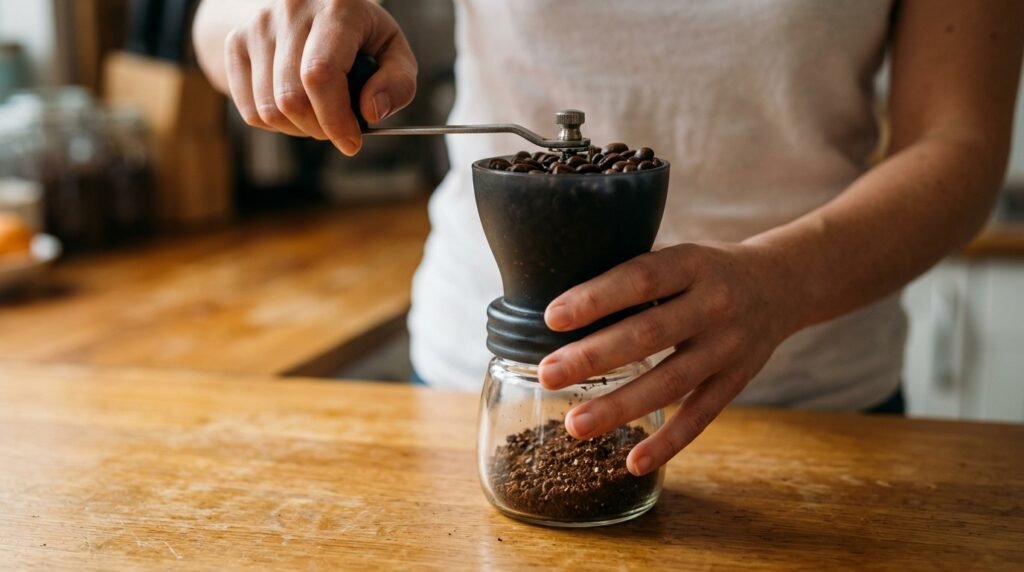
It takes me about two extra minutes every morning to weigh the beans, run them through the grinder, and prepare my brewing equipment.
But what happened when I stopped buying pre-ground coffee wasn’t just a change in flavor. It was a change in mindset.
Those two extra minutes are no longer an obstacle to my morning; they are my morning. The act of making coffee transformed from a mindless chore into a deliberate, grounding ritual.
The sound of the grinder waking up the house. The incredible burst of aroma when I open the catch bin. The visual satisfaction of watching the fresh grounds bloom as the hot water hits them. It forces me to slow down, be present, and engage my senses before the chaos of the workday begins.
The Bottom Line
If you are currently drinking pre-ground coffee and wondering if making the switch is worth the effort, let me save you years of mediocre mornings: Yes. It is the single most impactful change you can make to your coffee routine.
You don’t need a thousand-dollar espresso machine. You don’t need to learn complicated pouring techniques or buy expensive water filters.
Just buy whole beans and grind them right before you brew.
You will immediately notice a dramatic increase in aroma, a smoother flavor, and a richer body. You will start to taste the actual origin of the coffee, rather than just the generic taste of “roast.”
Yes, it requires buying a grinder. Yes, it takes a few extra moments of your day. But once you experience what fresh, whole bean coffee is actually supposed to taste like, you will realize that those few extra minutes aren’t a chore at all. They are an investment in a significantly better morning.
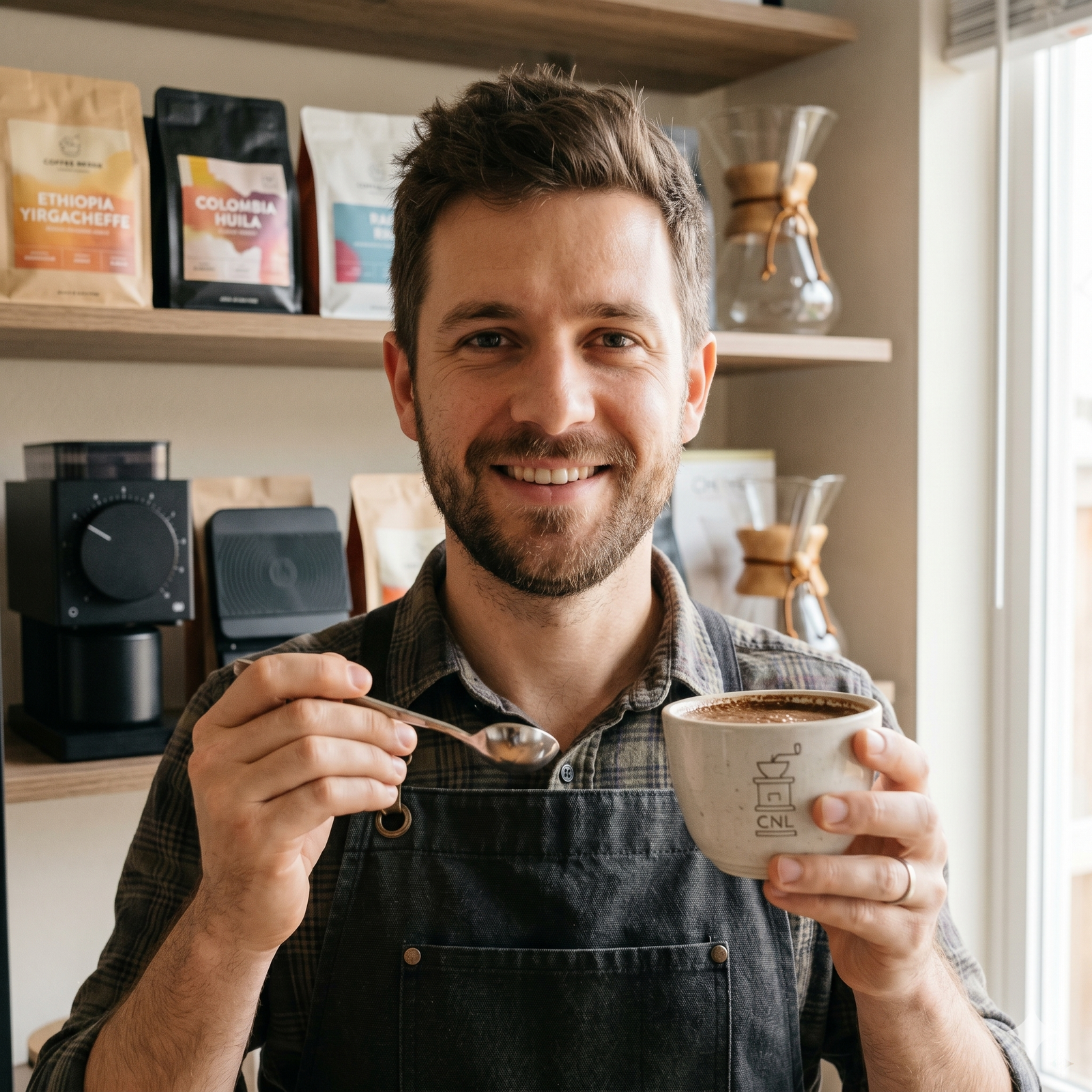
Hi, I’m the coffee enthusiast behind Coffee Nerd Lab.
Like many people, I started drinking coffee simply because it helped me wake up in the morning. Over time, that daily habit turned into a genuine interest in understanding what makes a great cup of coffee. I began experimenting with different beans, brewing methods, grinders, and coffee gear, learning through trial and error along the way.
This blog is where I document that journey. Every article is inspired by real experiences, discoveries, and lessons I’ve learned while exploring the world of coffee. From brewing guides and equipment reviews to practical tips and coffee basics, my goal is to share useful information in a way that’s easy to understand and enjoyable to read.
Thanks for stopping by, and I hope Coffee Nerd Lab helps you enjoy your next cup a little more than the last.