
I can remember the exact table I was sitting at. It was a small, slightly wobbly wooden table tucked into the corner of a brightly lit café I had never visited before. Rain was sliding down the windowpane, and I was just looking for a warm place to dry off. I had no idea that the drink I was about to order would completely shatter my understanding of what coffee was supposed to be.
If you had asked me on that rainy afternoon to describe the taste of coffee, I would have given you the same answer almost anyone else would give: dark, roasty, and intensely bitter.
Up until that point in my life, coffee was a harsh reality of adulthood. It was a bitter pill you swallowed to wake up. To make it drinkable, I relied on a heavy arsenal of camouflage. My daily cup was usually drowned in milk, heavily dosed with flavored syrups, or packed with at least three packets of processed white sugar. I wasn’t really drinking coffee; I was drinking warm coffee-flavored milkshakes.
I honestly believed that anyone who drank their coffee black was either lying about enjoying it, or their tastebuds were broken.
Then came the cup that changed everything. The cup that introduced me to a concept I thought was scientifically impossible: naturally sweet coffee.
The Accidental Black Coffee
When I approached the counter at this particular specialty café, I was prepared to order my usual vanilla latte. But the barista, a very enthusiastic guy wearing a denim apron, stopped me.
“We just got this new Ethiopian microlot in today,” he said, pointing to a glass hopper filled with beautifully light, matte-brown beans. “It’s a naturally processed coffee. If you have ten minutes, I’d love to make you a pour-over. No milk, no sugar. Just trust me.”
I was hesitant. Drinking a full cup of black coffee sounded like a punishment. But his enthusiasm was infectious, and I wasn’t in a rush, so I agreed.
I watched him go through a meticulous routine. He weighed the beans, ground them fresh, and slowly poured water from a strange-looking kettle over the grounds. When he finally handed me the glass carafe and a small ceramic mug, the liquid inside didn’t look like the dark sludge I was used to. It looked more like a rich, ruby-red tea.
I sat down at that wobbly wooden table, bracing myself for the bitter impact. I took a small, cautious sip.
My brain completely short-circuited.

The Flavor Disconnect
There was no bitterness. There was no harsh, ashy aftertaste coating the back of my throat.
Instead, the liquid was smooth, bright, and undeniably sweet. It wasn’t sweet like a candy bar or a spoonful of refined sugar. It was a complex, natural sweetness. It tasted remarkably like a handful of fresh blueberries, followed by a lingering finish that reminded me of milk chocolate and honey.
I actually put the cup down and stared at it. I looked back at the counter to see if the barista had snuck a pump of syrup into my mug when I wasn’t looking. He hadn’t. This was just coffee and water.
For a solid minute, I just sat there, trying to reconcile the flavor in my mouth with the word “coffee” in my brain. It felt like a magic trick. How could a roasted bean produce a beverage that tasted like fruit and honey?
That single cup sent me down a rabbit hole of research. I needed to understand the mechanics behind what I had just tasted. This curiosity led me to discover a whole new world of bean origins and processing methods, a journey I detailed in What I Noticed When I Started Paying Attention to Coffee Labels. I learned that the secret to this sweetness wasn’t magic; it was agriculture and chemistry.
The Secret Life of the Coffee Cherry
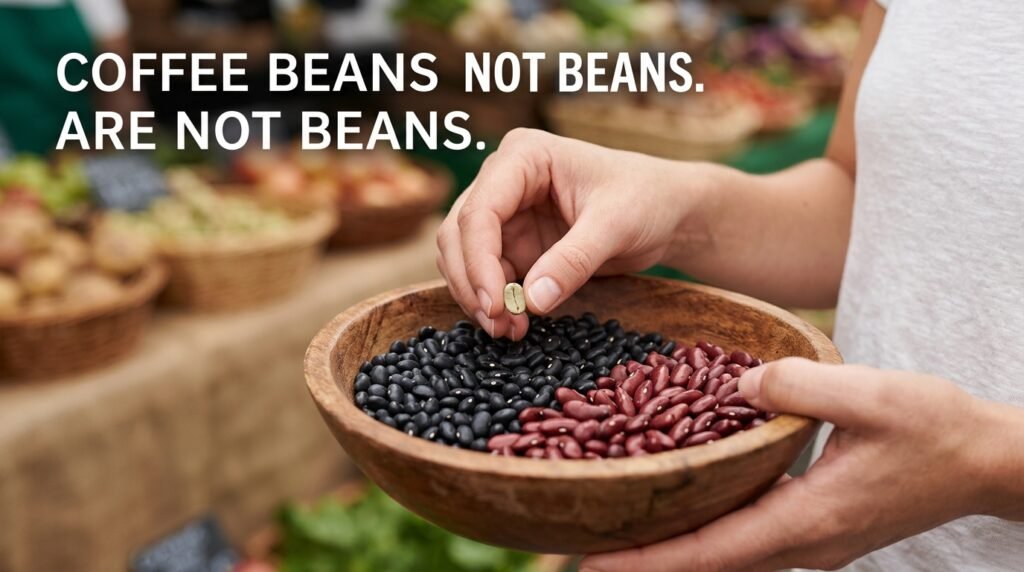
The biggest misconception I had about coffee—and the reason I never expected it to be sweet—was that I thought of coffee as a bean. We all call them “coffee beans,” which makes us think of savory things like black beans or kidney beans.
But coffee is not a bean. It is the seed of a fruit.
Coffee grows on trees in the form of bright red or yellow cherries. Inside these fleshy, sweet cherries are the seeds that we eventually roast and brew. Just like an apple, a peach, or a cherry, the coffee fruit is packed with natural fructose and complex sugars.
During the growing process, as the cherry ripens on the branch under the tropical sun, those sugars develop and intensify. The reason I had never tasted this natural fruitiness before was that I had only ever consumed mass-produced, low-quality coffee that had been roasted to the point of oblivion.
When you buy commodity coffee from the supermarket, the goal of the roaster is uniformity. They take beans from dozens of different farms, mix them together, and roast them incredibly dark to hide any defects or inconsistencies. That dark roasting process incinerates all the delicate natural sugars and fruit notes, leaving behind only the heavy, bitter flavor of the roast itself.
It’s like taking a beautifully ripe, sweet strawberry and burning it on a grill until it turns into a lump of charcoal. You wouldn’t expect the charcoal to taste sweet.
Processing: The Honey and the Natural
Learning about the coffee cherry was eye-opening, but I soon discovered that how the seed is removed from the fruit plays a massive role in the sweetness of the final cup.
The barista at the café had specifically mentioned that the Ethiopian coffee I drank was “naturally processed.” I later learned what this meant, and it is fascinating.
In standard “washed” processing, the skin and the fruity flesh of the coffee cherry are stripped away immediately after harvesting. The seeds are washed clean before they are dried. This results in a very clean, crisp cup of coffee.
But in “natural” processing, the whole coffee cherries are left intact and laid out to dry in the sun for weeks. As the fruit dries and shrivels like a raisin, all of those sweet, sticky, fermented fruit juices are absorbed directly into the seed. It is basically a sugar-infusion process orchestrated by nature.
When you lightly roast a naturally processed bean, you preserve all of those absorbed sugars. That is exactly why my cup of Ethiopian coffee tasted like blueberries and chocolate. The sweetness wasn’t added; it was inherent to the fruit, and the farmers had carefully preserved it.
The Chemistry of the Brew
Understanding the agriculture was only half the battle. When I bought a bag of those magical Ethiopian beans to take home, my first few attempts at making them were incredibly disappointing.
My home-brewed cups were sour, thin, and lacked that beautiful honeyed sweetness I had experienced at the café.
This is when I learned the harsh reality of coffee extraction. You can have the highest quality, sweetest beans on the planet, but if you don’t brew them correctly, you will leave all that sweetness trapped inside the grounds.
Coffee extraction happens in a very specific order. When hot water hits the coffee grounds, the first things to dissolve are the bright, fruity acids. Next come the complex sugars, which provide the sweetness and body. Finally, at the very end of the brewing process, the heavy, bitter compounds are extracted.
If you brew your coffee too quickly—or if your water isn’t hot enough—you only extract the acids. This leaves you with a sour, astringent cup of coffee. You have literally stopped the brewing process before the water had a chance to extract the sugars.
Conversely, if you brew the coffee for too long, you extract too many of the bitter compounds, which completely overwhelm and mask the delicate sweetness.
Finding the exact middle ground—the “sweet spot” where the acids and sugars are perfectly balanced—requires intention and technique. It requires slowing down. I realized that my chaotic, rushed morning routine was ruining the potential of my coffee, which I wrote about extensively in The First Time I Brewed Coffee Slowly Instead of Rushing. I had to learn how to manipulate time, temperature, and grind size to coax the sugar out of the bean.
Retraining the Palate
Once I figured out how to brew it correctly at home, a profound shift happened in my daily life. I stopped adding sugar to my coffee. Not because I was trying to be healthy, or because I was on a diet, but simply because the coffee didn’t need it anymore.
Adding refined white sugar to a delicate, naturally sweet specialty coffee is like putting ketchup on a high-end steak. It doesn’t enhance the flavor; it destroys the nuance.
Stripping away the milk and the syrups was like taking off a blindfold. Without the heavy dairy and artificial vanilla masking the beverage, my tastebuds began to wake up. I started to notice incredibly subtle differences between different cups of coffee.
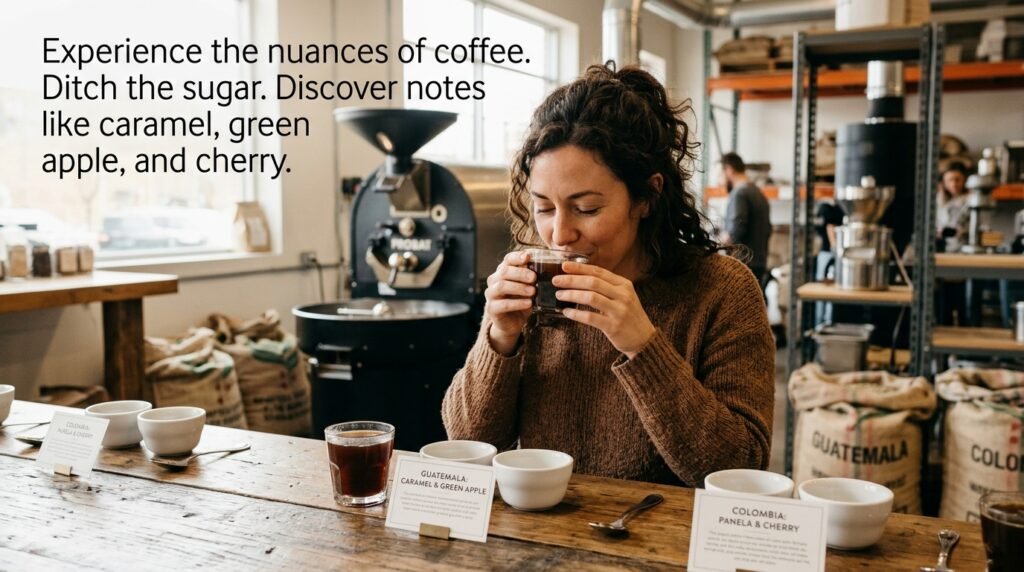
I began to realize that a coffee from Guatemala might have a deep, sugary sweetness reminiscent of caramel and green apple, while a coffee from Colombia might taste more like panela (unrefined cane sugar) and cherry. This sensory awakening is something you have to experience to believe, and if you are interested in developing this skill, I highly recommend reading How I Started Noticing Flavor Notes in Coffee. It turns your morning cup into a daily tasting adventure.
The Point of No Return
That rainy afternoon at the café ruined standard coffee for me forever.
Once you realize that coffee has the potential to be a vibrant, sweet, and complex agricultural product, it is impossible to go back to drinking dark, bitter diner sludge. You stop viewing coffee as a mere caffeine delivery system and start viewing it as a culinary experience.
It completely changed how I shop. I now look exclusively for light or medium roasts from specialty roasters. I look for tasting notes on the bag that mention specific fruits, chocolates, or caramels. I look for the origin, paying special attention to naturally processed coffees when I want a punch of wild, fruity sweetness.
If you are currently trapped in a cycle of adding spoonful after spoonful of sugar to your morning mug just to make it palatable, I want to challenge you.
Your coffee shouldn’t require fixing. It shouldn’t taste like ash or burnt toast.
Take the time to find a local specialty café. Ask the barista to recommend a light roast, perhaps something naturally processed from Africa or Central America. Order it as a pour-over, and promise yourself that you will take at least three sips before you even think about reaching for the cream and sugar.
Let the coffee cool down slightly—sweetness becomes much more apparent as the temperature drops. Swirl it around in your mouth. Pay attention to the finish.
You might just experience the same mind-bending realization that I did. You might discover that the sweetest, most delicious thing in your morning routine is just coffee and water. And trust me, the first time you taste that natural sweetness, you will never look at a coffee bean the same way again.
