
I am highly protective of the digital data I manage. When I configure a server for a client website in Rio de Janeiro, I build strict firewalls. I encrypt the passwords. I block malicious traffic. I know that if sensitive information is exposed to the open internet, it will be instantly corrupted or destroyed.
Security requires isolation. You cannot leave valuable data sitting in the open.
I applied this rigorous logic to my professional life perfectly. Yet for a very long time, I completely ignored this exact same logic in my kitchen. I was buying expensive, highly sensitive agricultural products and leaving them completely exposed to the elements.
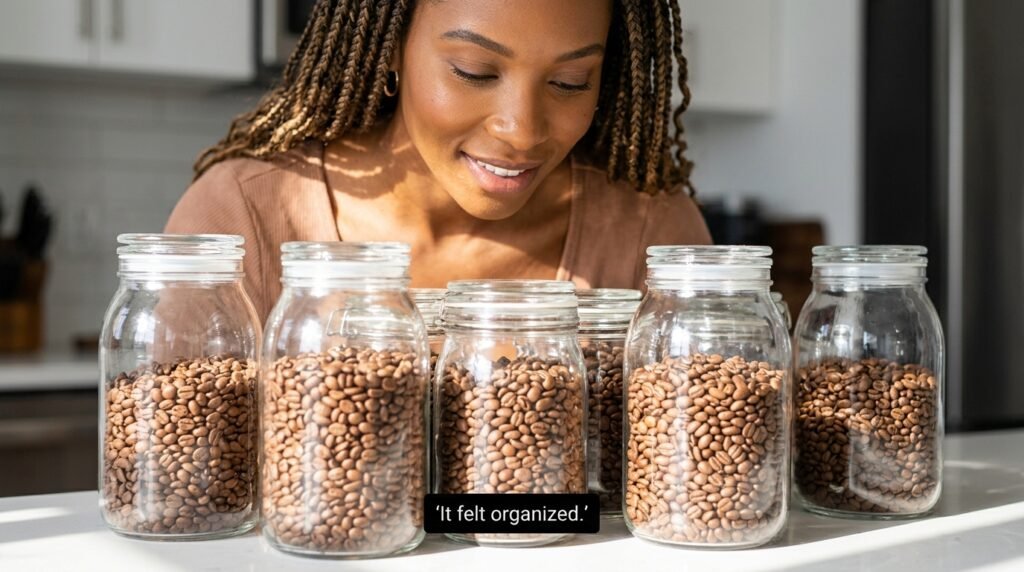
I wanted my kitchen counter to look like a beautiful interior design magazine. I bought a set of clear glass jars with elegant bamboo lids. I opened my expensive bags of light roasted Ethiopian coffee and poured the beautiful brown seeds into the transparent glass. I placed the jars right next to my window. The morning sunlight illuminated the coffee perfectly. It was visually stunning.
It was also a complete culinary disaster. What I learned after storing coffee beans the wrong way forced me to abandon visual aesthetics entirely. It taught me that coffee is a fragile chemical vault, and exposing that vault to the open environment guarantees total flavor destruction.
The Visual Trap
The clear glass jar is the most common storage mistake in the specialty coffee world.
We eat with our eyes first. We want to see the product we purchased. The coffee industry knows this. Many roasters even sell their beans in transparent plastic bags to show off the uniform roast color.
When I placed my clear glass jars on the kitchen counter, I felt incredibly organized. I threw the original, ugly paper coffee bags in the trash. I liked being able to see exactly how much coffee I had left for the week.
But coffee beans are not decorative rocks. They are highly complex organic materials. By removing them from their protective packaging and putting them in a clear display case, I was actively launching a chemical attack on my own morning routine.
The First Enemy is Light
The most destructive force in my kitchen was the beautiful morning sun.
Sunlight contains ultraviolet radiation. UV light is incredibly powerful. It actively breaks down cellular structures. If you leave a colorful painting in direct sunlight, the UV radiation will bleach the paint and destroy the color in a few months.
Coffee beans are full of delicate organic lipids and volatile aromatic oils. These oils contain the complex flavors of sweet peach, bright lemon, and dark chocolate.
When I placed the clear glass jar on my counter, I allowed the UV radiation to hit the coffee beans directly. The glass actually amplified the effect. The light acted like a laser beam. It violently attacked the cellular structure of the seeds. It triggered a process called photodegradation.
The Chemical Bleaching
Photodegradation completely ruins the flavor profile of the bean.
It specifically targets the fragile organic acids that provide the bright, juicy flavors in light roasted African coffees. The UV light incinerates those acids. It essentially bleaches the flavor right out of the seed.
I experienced this destruction rapidly. I opened the glass jar on a Tuesday morning. The coffee smelled vibrant and floral. I brewed a fantastic cup.
By Friday morning, the exact same coffee smelled like dusty cardboard. The sweet jasmine aroma was entirely gone. When I brewed the coffee, the bright lemon acidity had vanished. The liquid tasted flat, dull, and completely lifeless.
Recognizing this rapid biological decay was exactly How I Realized Freshness Affects Every Sip of Coffee because I watched my expensive investment die in just three days. The sun had completely erased the data from the bean.
The Second Enemy is Heat
The clear glass jar created a second massive vulnerability. It created a greenhouse effect.
Rio de Janeiro is a hot city. My kitchen window faces the morning sun. The direct sunlight hitting the glass jar did not just deliver UV radiation. It delivered massive amounts of thermal energy.
The air inside the sealed glass jar became significantly hotter than the ambient air in the kitchen. I had essentially placed my expensive Ethiopian coffee beans inside a miniature solar oven.
Heat accelerates biological decay. It forces the trapped carbon dioxide inside the beans to expand and escape rapidly. When the gas escapes, it pushes the delicate aromatic oils out to the surface of the bean. Once those oils are on the surface, they evaporate instantly into the hot air inside the jar.
Cooking the Raw Material
Coffee is roasted using extreme heat. Once the roasting process is finished, the beans must be kept as cool as possible.
By allowing the glass jar to bake in the sun, I was essentially continuing the roasting process. I was actively cooking the beans on my kitchen counter.
Understanding this chemical vulnerability was the core of How I Learned Coffee Storage Affects Flavor and it forced me to respect the thermal limits of the product. The heat was destroying the delicate sugars. It turned my bright, fruity coffee into a muddy, bitter disaster. I was ruining the farmer’s hard work before I even boiled my water.
The Third Enemy is Oxygen
My beautiful glass jars had one final fatal flaw. They were not actually airtight.
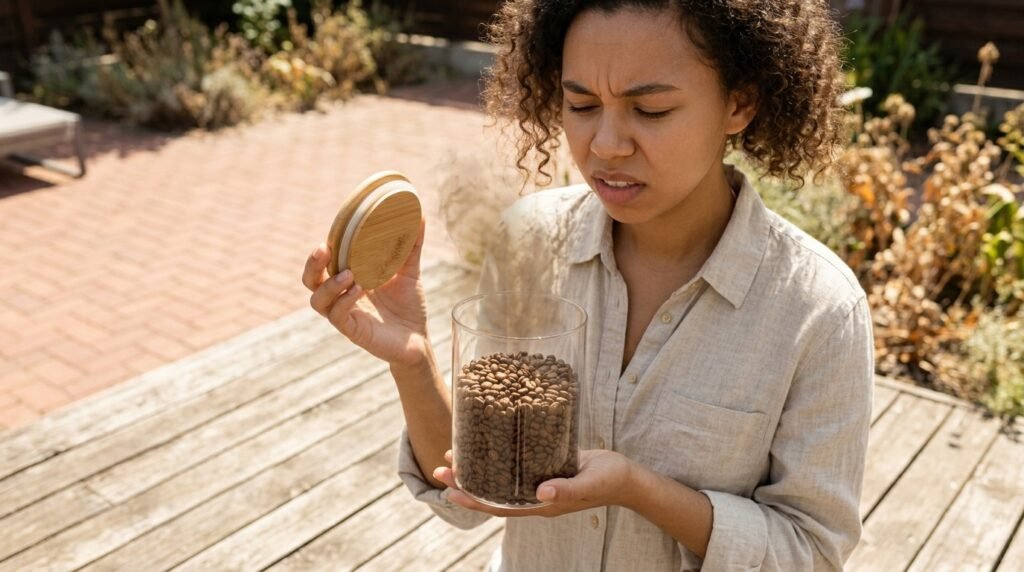
The jars featured smooth bamboo lids with a thin rubber gasket. When I pushed the lid down, it felt secure. It looked completely sealed. But rubber gaskets on cheap decorative jars degrade very quickly.
The seal was entirely porous. It allowed a constant, microscopic stream of fresh oxygen to enter the jar.
Oxygen is highly corrosive. When it interacts with the natural coffee oils, it causes severe oxidation. It turns the oils rancid. The combination of UV light, extreme heat, and a constant supply of fresh oxygen created the absolute perfect environment for biological destruction.
The Illusion of the Seal
I thought I was protecting the coffee by putting it inside a closed container. I was actually trapping the coffee inside a torture chamber.
I threw the glass jars into the recycling bin. I realized that visual aesthetics have absolutely no place in coffee storage. Form must strictly follow function.
I needed a storage solution that blocked light completely. I needed a solution that stayed cool. I needed a solution that was genuinely airtight. I had to treat the coffee beans with the exact same security protocols I use for my digital servers.
The Power of the Original Bag
I went back to the local roastery and bought a fresh bag of Ethiopian Guji.
I looked closely at the original packaging. The bag was built from thick, opaque, multi layered foil. It completely blocked one hundred percent of the light. It was an absolute blackout curtain for the beans.
The bag also featured a small plastic circle on the front. This is a specialized one way degassing valve.
Freshly roasted coffee releases massive amounts of carbon dioxide gas. The valve allows that heavy gas to push its way out of the bag. As the carbon dioxide exits, it physically pushes the oxygen out with it. But the valve snaps shut immediately. It physically prevents outside oxygen from reentering the environment.
The Engineering of the Roaster
The original coffee bag is an incredible piece of industrial engineering. It is designed specifically to fight the three enemies of coffee.
I realized my biggest mistake was throwing that engineered bag into the trash just so I could use a pretty glass jar.
I changed my workflow entirely. I kept the coffee in its original foil bag. When I weighed my fifteen grams for the morning brew, I squeezed the bag tightly. I physically pushed all the excess air out through the one way valve. Then, I closed the heavy plastic zipper at the top.
The Dark Cabinet Strategy
Keeping the beans in the original bag solved the light problem and the oxygen problem. Now I had to solve the heat problem.
I completely cleared a space in my kitchen pantry. The pantry is located in the center of my apartment. It is heavily shaded. There are no windows nearby. The temperature inside the dark wooden cabinet is consistently cool and perfectly stable.
I placed the sealed foil bag onto the dark shelf. I closed the wooden door.
The Sensory Validation
The results of this simple environmental shift were absolutely shocking.
I opened the cabinet on a Friday morning to brew a cup of coffee. The beans had been sitting in the dark pantry for two entire weeks.
I opened the heavy foil zipper. The explosive aroma of sweet peach and blooming jasmine filled the air instantly. The smell was incredibly vibrant. It smelled exactly like the day I bought it from the roaster.
I ground the beans and poured my hot water. The extraction was flawless. The bright lemon acidity hit my palate perfectly. The heavy floral finish was completely intact. The dark, cool storage had successfully frozen the biological clock.
Tracking the Lifespan
By securing the storage environment, I finally established a reliable timeline for my ingredients.
Tracking the decay timeline taught me How I Learned Which Coffee Beans Last Longer and why light roasts are so incredibly fragile. I learned that dark roasts degrade much faster because their cellular structure is more porous.
Because I stopped accelerating the decay with sunlight and heat, my light roasted Ethiopian beans now comfortably last for three to four weeks in the dark cabinet. I no longer have to rush to drink them before they turn into bitter cardboard. I can enjoy my morning ritual at a peaceful, measured pace.
Upgrading the Security
Using the original foil bag is the easiest and cheapest way to store coffee. It works perfectly for most people.
However, because I value extreme data precision, I eventually upgraded my storage hardware. I did not buy clear glass jars. I bought specialized, opaque vacuum canisters designed explicitly for the specialty coffee industry.
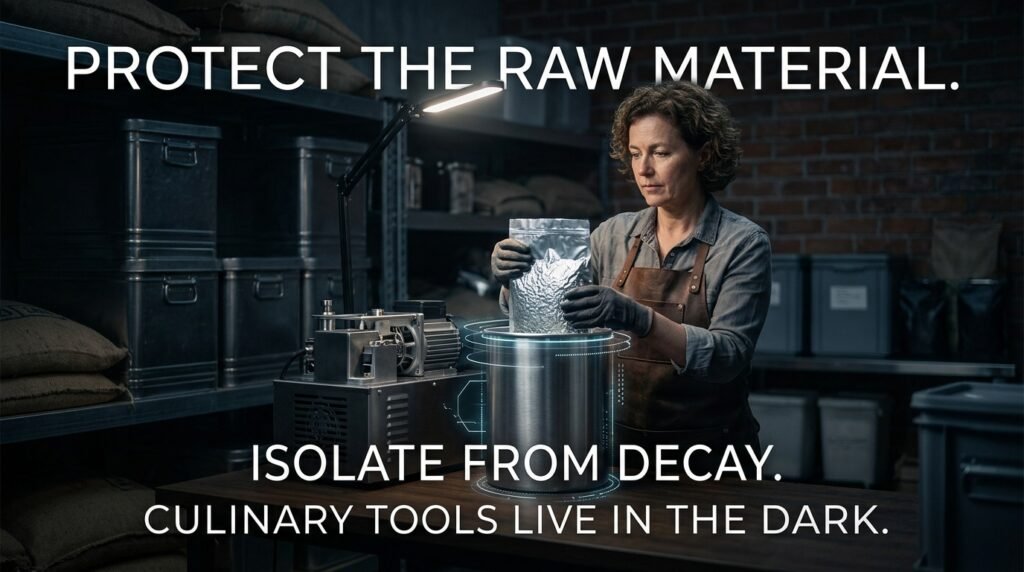
These heavy metal canisters are built from matte black stainless steel. They block all light. They feature a heavy internal plunger. You pour the beans into the black cylinder. You push the internal plunger down until it touches the surface of the coffee.
The plunger physically forces all the oxygen out of the container through a one way valve. It removes the empty air space completely. It creates an absolute zero oxygen environment.
The Discipline of the Workflow
Whether you use the original foil bag or a heavy metal vacuum canister, the discipline remains exactly the same.
You must protect the raw material. You must eliminate the variables that cause biological decay. You cannot build a perfect cup of coffee if the foundational data is corrupted by the environment.
You have to sacrifice the visual aesthetic of the kitchen counter. You have to accept that the most valuable culinary tools often live in the dark.
Evaluate Your Own Kitchen
Take a critical look at your kitchen counter today.
If you have coffee beans sitting in a clear glass jar, a transparent plastic container, or an open paper bag, you are actively destroying your own beverage. You are bleaching the flavor with UV light. You are oxidizing the oils. You are cooking the raw material.
Take those beans and put them in a dark, cool cabinet immediately.
Stop treating coffee like a decorative centerpiece. Treat it like a highly sensitive chemical vault. When you finally protect the roasted seed from the harsh elements of your kitchen, you will immediately unlock the true, vibrant clarity of the farm. You will stop drinking flat, dead coffee, and you will finally taste the complex reality of a perfectly preserved ingredient.
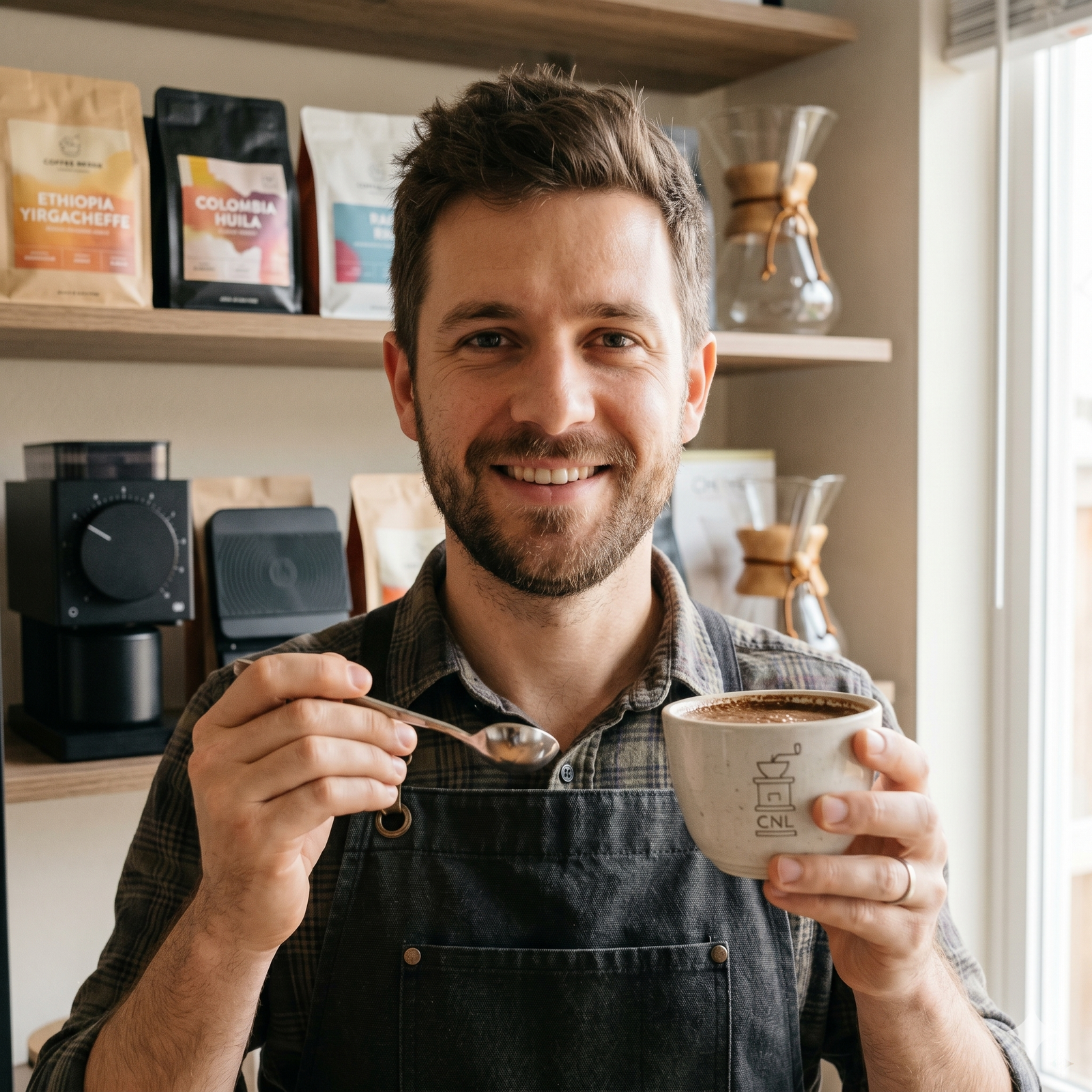
Hi, I’m the coffee enthusiast behind Coffee Nerd Lab.
Like many people, I started drinking coffee simply because it helped me wake up in the morning. Over time, that daily habit turned into a genuine interest in understanding what makes a great cup of coffee. I began experimenting with different beans, brewing methods, grinders, and coffee gear, learning through trial and error along the way.
This blog is where I document that journey. Every article is inspired by real experiences, discoveries, and lessons I’ve learned while exploring the world of coffee. From brewing guides and equipment reviews to practical tips and coffee basics, my goal is to share useful information in a way that’s easy to understand and enjoyable to read.
Thanks for stopping by, and I hope Coffee Nerd Lab helps you enjoy your next cup a little more than the last.