I build digital websites for a living. I spend my days writing strict code in my apartment in Rio de Janeiro. Computer code is an absolute science. If you type the exact right characters in the exact right order, the website works perfectly every single time. There is no room for interpretation. There is no room for physical nuance.
When I first started brewing specialty coffee at home, I applied this exact same rigid logic to my kitchen counter.
I went online and searched for the perfect pour over recipe. I found a video of a world champion barista. I wrote down his exact formula. He used fifteen grams of coffee. He used two hundred and fifty grams of water. He poured the water in five highly specific stages. His total extraction time was exactly three minutes.
I bought a digital scale. I bought a manual burr grinder. I bought an expensive bag of Ethiopian coffee. I followed the champion’s recipe perfectly. I hit the exact weight. I hit the exact time.
I took a sip of the resulting beverage. It tasted terrible. It was muddy, bitter, and completely hollow.
I was furious. I had followed the code perfectly, but the system had crashed. The coffee advice that actually worked for me did not come from a viral video or a digital forum. It came from a local coffee roaster who watched me stress over my stopwatch. He taught me a brutal truth about agricultural chemistry. He taught me to stop brewing the internet and start brewing the reality in front of me.
The Hardware Disconnect
The first massive flaw in copying internet recipes is the hardware gap.
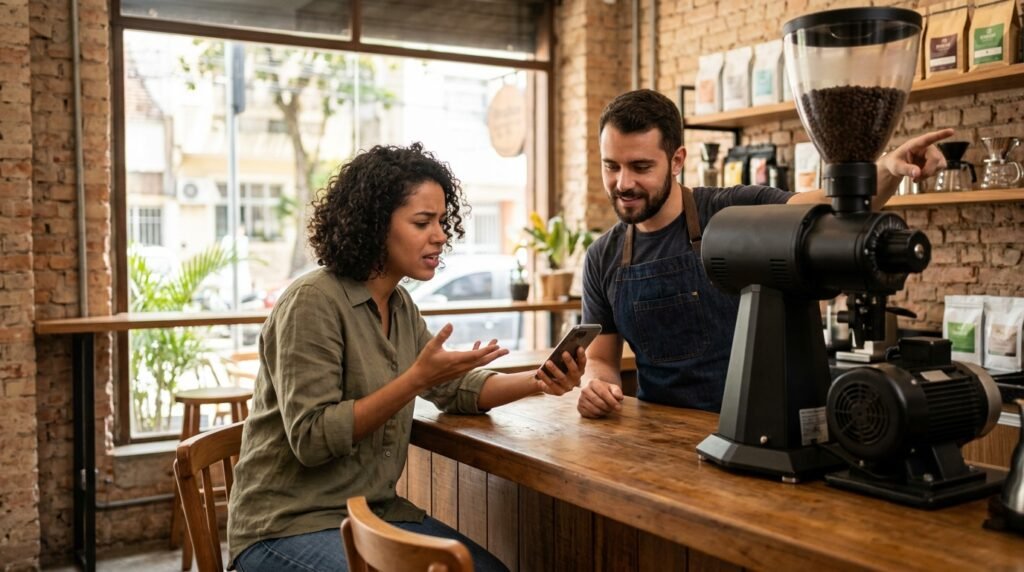
I walked into a local specialty coffee shop in Rio. I sat at the wooden bar. I ordered a pour over and started complaining to the barista about my failed morning extractions. I showed him the recipe I was trying to copy.
The barista smiled and pointed to the massive machine sitting behind the counter.
It was a commercial coffee grinder. It cost over three thousand dollars. It featured massive, flat steel burrs driven by a powerful electric motor. That specific machine produces a highly specific, flawless particle distribution. It generates almost zero microscopic coffee dust.
The Reality of the Hand Grinder
I use a premium manual hand grinder at home. It is a fantastic piece of engineering. But it uses conical ceramic burrs powered by my own physical arm.
It does not produce the exact same particle distribution as a massive commercial machine. It naturally produces slightly more microscopic dust.
If I try to force my hand grinder to hit the exact same three minute drawdown time as the three thousand dollar commercial grinder, I have to grind my coffee much finer. When I grind finer, I create even more microscopic dust. That dust clogs my paper filter and over extracts the bitter tannins.
I was ruining my coffee simply because I was trying to copy equipment I did not own.
The Environmental Variables
The hardware gap is only the first problem. The second problem is the environment.
A world champion barista develops his recipe in a highly controlled, air conditioned laboratory. The ambient humidity is perfectly stable. The barometric pressure is monitored. The coffee beans are exactly fourteen days off roast.
My kitchen in Rio de Janeiro is a chaotic tropical environment. The humidity changes violently from morning to afternoon. The temperature fluctuates. My bag of Ethiopian beans ages and dries out slightly every single day it sits in my dark cabinet.
A recipe written in a static environment two years ago cannot possibly account for the physical reality of my apartment today.
Bending to the Reality
I was sitting in my living room later that afternoon. I was looking through a heavy art book featuring traditional Japanese Irezumi tattoos. I was studying a massive Hebi serpent design winding across a backpiece.
A master tattoo artist does not just print a rigid stencil from the internet and slap it blindly onto a client. That looks terrible. The artist must adapt the snake to fit the physical muscles, the bone structure, and the curves of the specific human body. The design must bend to the physical reality.
Coffee brewing requires this exact same fluid adaptation. You cannot force a rigid numerical template onto a dynamic agricultural product.
Throwing Away the Stopwatch
The local roaster gave me the ultimate piece of advice. He told me to stop looking at the clock and start looking at the coffee bed.
The digital timer is a massive psychological trap. It makes you feel like you are failing if you miss an arbitrary number.
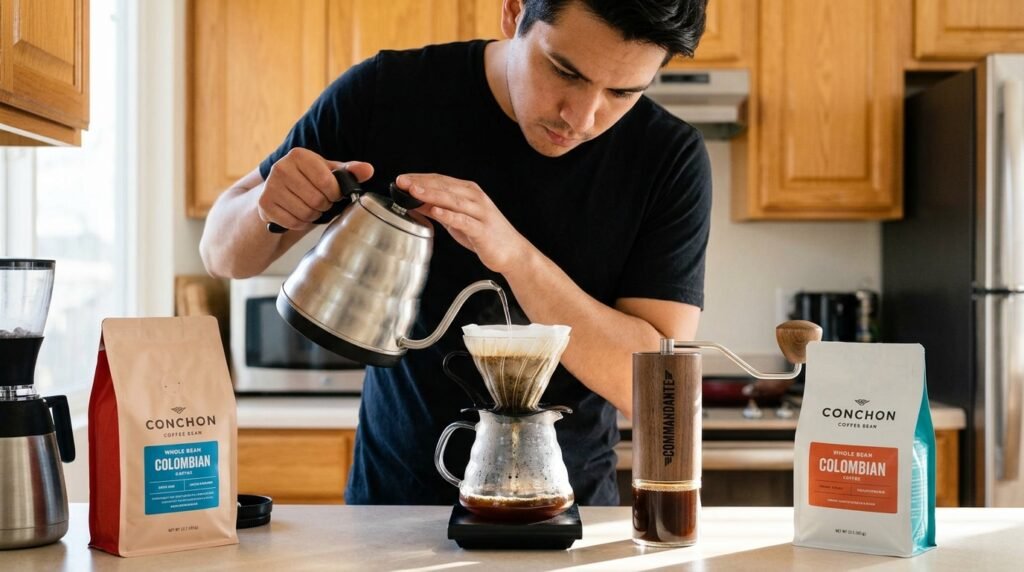
The next morning, I stood in my kitchen. I weighed my fifteen grams of coffee. I ground the beans at my standard medium setting. I placed my glass V60 cone on the scale and zeroed the numbers.
I did not open the stopwatch application on my phone. I completely ignored time.
The Intuitive Pour
I started pouring the hot water from my gooseneck kettle. I focused entirely on the physical fluid dynamics happening inside the paper filter.
I watched the bloom phase. When the carbon dioxide bubbles stopped escaping, I resumed my pour. I did not follow a complex five stage pouring structure. I just maintained a steady, gentle stream of water.
I watched the color of the slurry. If the water looked dark and thick, I poured slightly faster. If the water looked pale and weak, I slowed down. I adapted my physical movement to the visual feedback of the extraction.
Trusting the Final Metric
I stopped pouring when the scale hit exactly two hundred and forty grams. I let the red liquid drain into my ceramic mug.
Out of pure curiosity, I looked at the kitchen clock. The entire extraction had taken exactly two minutes and ten seconds.
According to the rigid internet recipe, this was a massive failure. It was almost a full minute too fast. The internet would tell me this coffee was completely under extracted and ruined.
I picked up the mug. I took a slow sip.

The Sensory Validation
The flavor was absolutely spectacular.
The coffee was not weak. It was not unpleasantly sour. It was incredibly vibrant. The bright lemon acidity hit my palate instantly. It melted perfectly into a heavy, syrupy peach sweetness. The floral jasmine finish lingered in my throat.
It was the best cup of coffee I had brewed all week. The internet was completely wrong. My tongue was absolutely right.
Discovering this personal freedom was exactly How I Discovered the Perfect Brew Ratio for Myself because I stopped trying to please a digital audience and started brewing specifically for my own palate. The numbers only matter if the liquid actually tastes good.
The Anatomy of the Bitter Failure
To fully prove the local roaster’s advice, I ran the opposite experiment the next day.
I wanted to force the coffee to hit the magical three minute mark. I took my manual grinder and turned the dial significantly finer. I used the exact same dose and the exact same water volume.
I poured the water. Because the particles were so fine, the water completely stalled. It dripped painfully slowly through the clogged paper filter. When the last drop fell, I looked at the clock. It was exactly three minutes. I had successfully hit the viral target.
I took a sip of the coffee. It tasted like hot, dry ash. The liquid was heavily astringent. It completely dried out the back of my tongue.
Learning to identify this specific chemical harshness was exactly What I Learned About Coffee Strength and Flavor Balance because it proved that hitting an arbitrary time goal means absolutely nothing if the chemical extraction goes too far. I had successfully followed the recipe and completely ruined the expensive beans.
Embracing the Diagnostic Tool
This experience permanently changed my relationship with my brewing equipment.
I still use my digital scale every single day. I still use my manual burr grinder. I still use my variable temperature gooseneck kettle. I am not suggesting you abandon all logic and just throw random amounts of dirt into hot water.
You must establish your base constants. You need a strict input dose and a strict water yield.
But you must treat the timer as a diagnostic tool, not an absolute law. The timer tells you what happened. It should never dictate what you do.
Analyzing the Real Data
If you brew a cup of coffee and it tastes perfectly sweet and balanced, check the time. If it took two minutes and fifteen seconds, write that down in your notebook.
That specific time is now your personal baseline for that specific bag of coffee on your specific grinder.
If you wake up the next morning, use the exact same settings, and the brew takes three minutes, you know something went wrong. You know the beans absorbed more humidity overnight, or you poured the water too aggressively and clogged the filter. The timer diagnoses the physical error.
The Freedom of Simplicity
Abandoning the rigid rules of the internet completely removed the panic from my morning routine.
I no longer stress over perfectly timing my interval pours. I no longer feel angry if my extraction finishes twenty seconds faster than yesterday. I just taste the liquid. If it tastes good, I am happy.
Adopting this relaxed, intuitive mindset became The Coffee Tip That Saves Me Time Each Morning because it transformed my kitchen from a hostile testing facility into a peaceful culinary space. I stopped fighting the raw material. I stopped trying to force it into a digital box.
Sharing the Routine
This intuitive approach also makes the hobby much easier to share.
My partner is not obsessed with coffee mechanics. She does not care about fluid dynamics or extraction percentages. She just wants a good cup of coffee before she starts her day.
If I try to explain a highly complex, strict mathematical recipe to her, she gets frustrated. But if I simply tell her to weigh the beans, pour the water gently until the scale hits a certain number, and ignore the clock, the process becomes approachable. It becomes a simple, enjoyable human task.
Building Your Own Database
You have to build your own personal sensory database. You cannot download it from a web forum.
When you buy a new bag of Colombian coffee from a local roaster, do not search for the ideal recipe online. Start with your own standard baseline. Grind the beans. Pour the water.
Sit down in a quiet room and taste the liquid. Be entirely honest with yourself. Is it too sour? Grind finer tomorrow. Is it too bitter? Grind coarser tomorrow. Is it perfectly sweet? Change absolutely nothing.
You become the ultimate authority over your own equipment. You learn how your specific hand grinder responds to dense, high altitude seeds. You learn how your specific water chemistry dissolves the heavy sugars.
The Ultimate Metric
Stop asking the internet how your coffee should taste.
If a world famous roaster tells you a specific bean should taste like dark chocolate, but your extraction tastes like vibrant strawberry, and you genuinely love the strawberry flavor, do not change your recipe. You have successfully unlocked a flavor profile that brings you joy.
Your kitchen is not a commercial cafe. You are not brewing coffee for paying customers. You are not competing in a global championship.
You are brewing a warm beverage for yourself in your own home. The only metric that actually matters is the physical smile on your face when you take the very first sip.
Use the digital scale to protect your financial investment. Use the precision grinder to ensure uniform particle distribution. Use the gooseneck kettle to control the physical flow of the hot solvent. But when the red liquid finally hits the ceramic mug, shut down your analytical brain. Trust your own palate. The best coffee advice in the world is simply giving yourself the permission to enjoy the result.
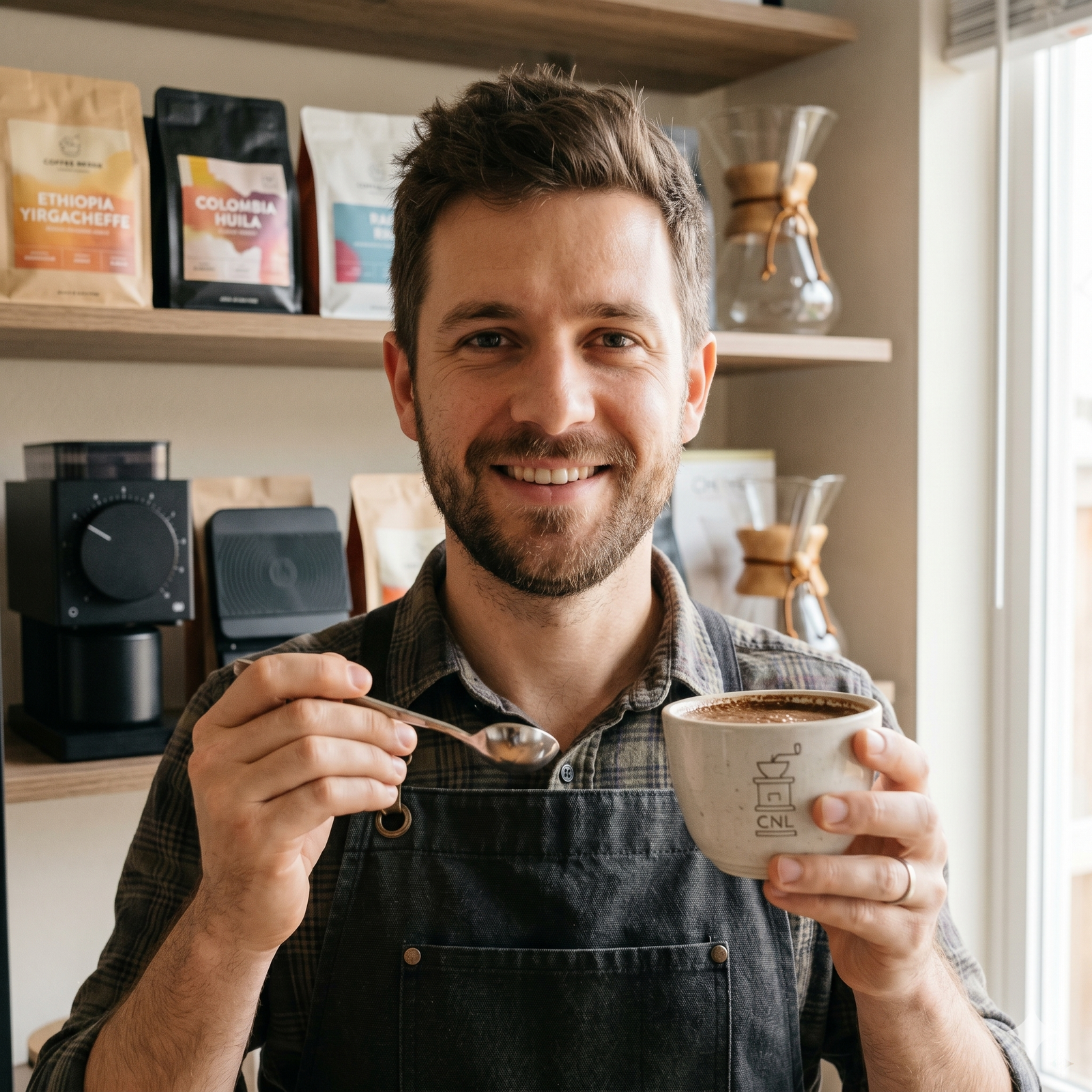
Hi, I’m the coffee enthusiast behind Coffee Nerd Lab.
Like many people, I started drinking coffee simply because it helped me wake up in the morning. Over time, that daily habit turned into a genuine interest in understanding what makes a great cup of coffee. I began experimenting with different beans, brewing methods, grinders, and coffee gear, learning through trial and error along the way.
This blog is where I document that journey. Every article is inspired by real experiences, discoveries, and lessons I’ve learned while exploring the world of coffee. From brewing guides and equipment reviews to practical tips and coffee basics, my goal is to share useful information in a way that’s easy to understand and enjoyable to read.
Thanks for stopping by, and I hope Coffee Nerd Lab helps you enjoy your next cup a little more than the last.