
I read a piece of advice on a popular coffee forum years ago. The author wrote it with absolute authority. They stated that you must never use boiling water to brew manual coffee. They claimed that boiling water physically burns the delicate coffee grounds. They insisted that you must turn off your kettle and wait exactly two minutes before pouring. I absorbed this rule entirely. I treated it as an unbreakable law of culinary science.
I manage digital servers in Rio de Janeiro for a living. When I read technical documentation about server security, I follow the instructions perfectly. I do not question the official manual.
I applied this exact same rigid obedience to the coffee forum. I assumed the author understood the chemistry better than I did. I was buying incredibly expensive, light roasted Ethiopian coffee beans. I wanted to protect my financial investment. I wanted to treat the raw agricultural product with absolute care. The first coffee tip that truly changed my brewing forced me to completely abandon this obedience. I learned that the internet was completely wrong. I had to learn how to trust the physics of the roasted seed instead of the fear of the amateur brewer.
The Ritual of Waiting
I built a strict, highly frustrating morning routine around this false rule.
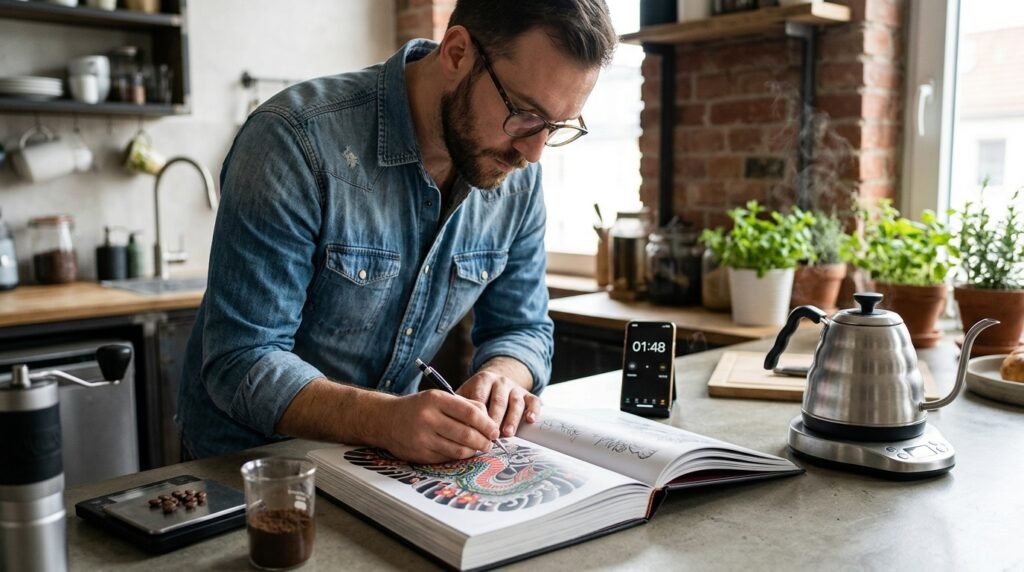
I would weigh my fifteen grams of coffee. I would grind the beans manually. I would fill my gooseneck kettle and bring the filtered water to a violent, rolling boil. Then, I would turn the electric base off. I would pull out my smartphone and start a digital stopwatch. I would stand in my kitchen for two full minutes doing absolutely nothing.
Waiting for water to cool down is an incredibly boring task.
I keep heavy art books in my kitchen to pass the time. I study traditional Japanese Irezumi tattoo designs. I would open a book and trace the scales of a Hebi serpent while the stopwatch ticked. I thought this waiting period was a sophisticated brewing technique. I thought I was protecting the delicate jasmine and peach notes hidden inside the African seeds.
The Sour Result
The stopwatch would finally hit two minutes. I would pick up the kettle and execute a careful concentric pour over my plastic V60 cone.
The resulting beverage was always a massive disappointment. The coffee tasted incredibly sour. It tasted like sharp lemon juice mixed with raw green grass. The heavy, syrupy sweetness printed on the bag was completely missing. The liquid felt thin and hollow on my palate.
I refused to blame the water temperature. I trusted the internet rule completely. Instead, I blamed my physical hardware.
Falling into this trap of hardware suspicion was exactly The Equipment Mistake I Made When I Started Brewing Coffee because I completely ignored the foundational chemistry. I assumed my manual grinder was failing. I assumed my pouring technique was creating uneven channels. I was trying to fix a fundamental temperature problem by constantly changing my grind size.
The Advice from the Source
I finally reached my breaking point. I visited the local roastery where I bought the Ethiopian beans.
I sat at the wooden bar and explained my frustrating results to the head roaster. I detailed my exact recipe. I told him I was carefully waiting two minutes for the water to cool down to protect the beans.
He looked at me and laughed. He told me I was actively ruining the coffee.
He gave me a simple, brutal correction. He told me to use boiling water immediately. He told me to stop waiting. He told me to stop treating the coffee bean like a fragile piece of glass.
The Myth of the Burn
The roaster completely shattered the internet myth. He explained the physical reality of the commercial roasting drum.
Raw green coffee beans are roasted at temperatures exceeding four hundred degrees Fahrenheit. They spend ten to fifteen minutes baking inside a massive, rotating metal oven. The seeds undergo intense, violent chemical reactions.
You cannot possibly burn a coffee bean with water that is only two hundred and twelve degrees Fahrenheit. The physics simply do not allow it. The bean has already survived temperatures twice as hot. The concept of burning the coffee with water from a standard kettle is a complete biological impossibility.
The Origin of the Warning
Understanding the source of the myth required me to look at commercial coffee history.
Fifty years ago, almost all commercial coffee was roasted incredibly dark. Dark roasted coffee is heavily compromised. The intense, prolonged heat in the roasting drum completely shatters the cellular walls of the seed. The bean becomes highly porous, brittle, and hollow. The dark sugars are pushed directly to the surface.
If you pour violently boiling water over a brittle, dark roasted Brazilian coffee, you will experience a terrible extraction.
The boiling water will instantly rip the harsh, bitter tannins out of the compromised cellular structure. The coffee will taste like ash and burnt wood. Grasping this structural difference was the core of The Day I Discovered the Difference Between Light and Dark Roast because it explains why older generations always warned against high heat. For dark roasts, the warning is actually correct.
The Density Barrier
Light roasted specialty coffee operates under completely different physical laws.
Because the roaster pulls the beans out of the drum very early, the cellular structure remains incredibly tight. The seed is dense and heavy like a small rock. The bright organic acids and the complex fruit sugars are locked deep inside a secure, microscopic vault.
Warm water is completely powerless against this dense structure.
The Need for Maximum Energy
You need absolute, maximum thermal energy to penetrate the dense cellular walls of a light roast. You need boiling water to melt the heavy lipids and extract the sweet sugars.
When I waited two minutes for my kettle to cool down, the water temperature dropped to roughly one hundred and ninety degrees. That water was far too cold to extract the Ethiopian beans properly.
The cool water only washed the light, sour acids off the surface of the coffee grounds. It left the heavy, balancing sweetness permanently trapped inside the core of the seed. I was drinking under extracted, sour water every single morning simply because I was afraid of the heat.
The Thermal Reality of the Pour
The roaster explained another massive flaw in my old routine. Water loses heat instantly.
Even if your kettle is boiling at two hundred and twelve degrees, the water drops in temperature the exact second it leaves the metal spout. It loses heat as it travels through the ambient air. It loses massive amounts of heat when it collides with the room temperature coffee grounds. It loses heat to the cold plastic cone.
The actual brewing slurry inside the paper filter is never boiling. It is always significantly cooler than the water inside the kettle. If you start with water that is already cool, the resulting slurry temperature will drop into the danger zone immediately.
The Boiling Test
I went home to test the new logic. I wanted to see the physics work in my own kitchen.
The next morning, I threw my digital stopwatch away. I weighed my fifteen grams of coffee. I ground the beans. I brought the kettle to a violent, rolling boil.
I did not wait a single second. I picked up the kettle. I immediately poured the violently boiling water directly over the dry coffee grounds. I watched the physical reaction closely.
The Visual Shift
The visual difference was staggering. The bloom phase was incredibly aggressive.
Because the water was at maximum thermal capacity, it penetrated the dense coffee grounds instantly. The trapped carbon dioxide gas erupted in a massive, swelling dome. The bubbles were larger and more active than I had ever seen.
When I started my main concentric pour, the fluid dynamics felt completely different. The water drained through the coffee bed with smooth, glassy speed. The extraction was visibly more efficient. There was no hesitation. The hot solvent was actively destroying the cellular walls exactly as it was designed to do.
Tasting the Heat
I finished the pour. I let the red liquid drain into my ceramic mug. I waited five minutes for the coffee to cool down on my desk.
I took a slow sip. The transformation was absolute.
The sharp, unpleasant sourness was entirely gone. The liquid felt heavy and rich on my palate. The massive, syrupy sweetness of a ripe peach dominated the flavor profile. The finish was perfectly clean and heavily floral. The coffee tasted exactly like the description printed on the roaster’s bag.
The Simplification of the Routine
This single piece of advice completely simplified my mornings.
I no longer have to stare at a clock. I no longer have to guess the exact temperature of the water. Boiling water is an absolute, fixed mathematical constant. It is always exactly two hundred and twelve degrees.
Removing this stressful guesswork was precisely The Simple Coffee Mistake I Made Every Morning for Years because I finally stopped trying to control a variable that just needed to be maximized. I eliminated a completely useless step from my workflow.
The Freedom of the Boil
Using boiling water also removes a massive layer of equipment anxiety.
Many beginners think they need to spend hundreds of dollars on a digital, variable temperature gooseneck kettle. They think they need the ability to hold water at exactly two hundred and one degrees.
If you drink light roasted specialty coffee, a variable temperature kettle is completely unnecessary. You just need a standard kettle that brings water to a boil. The hardware requirement drops significantly. You save money, and you save mental energy.
Adjusting the Master Variable
Once you lock your water temperature at a rolling boil, your extraction becomes incredibly stable. You have secured the thermal foundation.
If you brew a cup of coffee with boiling water and it tastes slightly bitter, you do not lower the water temperature the next day. You leave the heat exactly where it is. Instead, you adjust your master variable. You turn the dial on your manual burr grinder one click coarser.
You use the grind size to dictate the extraction, not the thermal energy. The boiling water remains your permanent, immovable baseline.
Trusting the Physics
You must align your brewing technique with the physical reality of your ingredients.
If you buy expensive, light roasted coffee, you must attack it with maximum heat. Stop listening to outdated rules built for old, dark roasted commercial beans. Stop treating the dense agricultural seed like a fragile piece of glass.
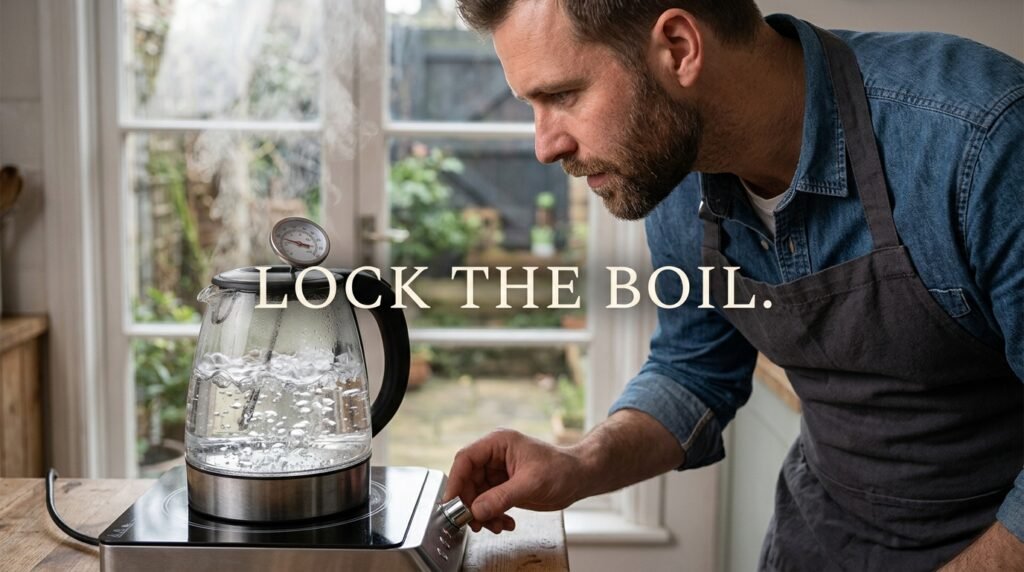
Fill your kettle with filtered water. Turn the heat all the way up. The exact moment the water bubbles aggressively, start your pour. Do not hesitate. Do not look at your stopwatch.
When you finally deliver the correct thermal energy to the coffee bed, you will unlock a level of sweetness you never thought possible. You will permanently erase the sharp, grassy sourness from your mug, and you will finally taste the full, vibrant potential of the roast.
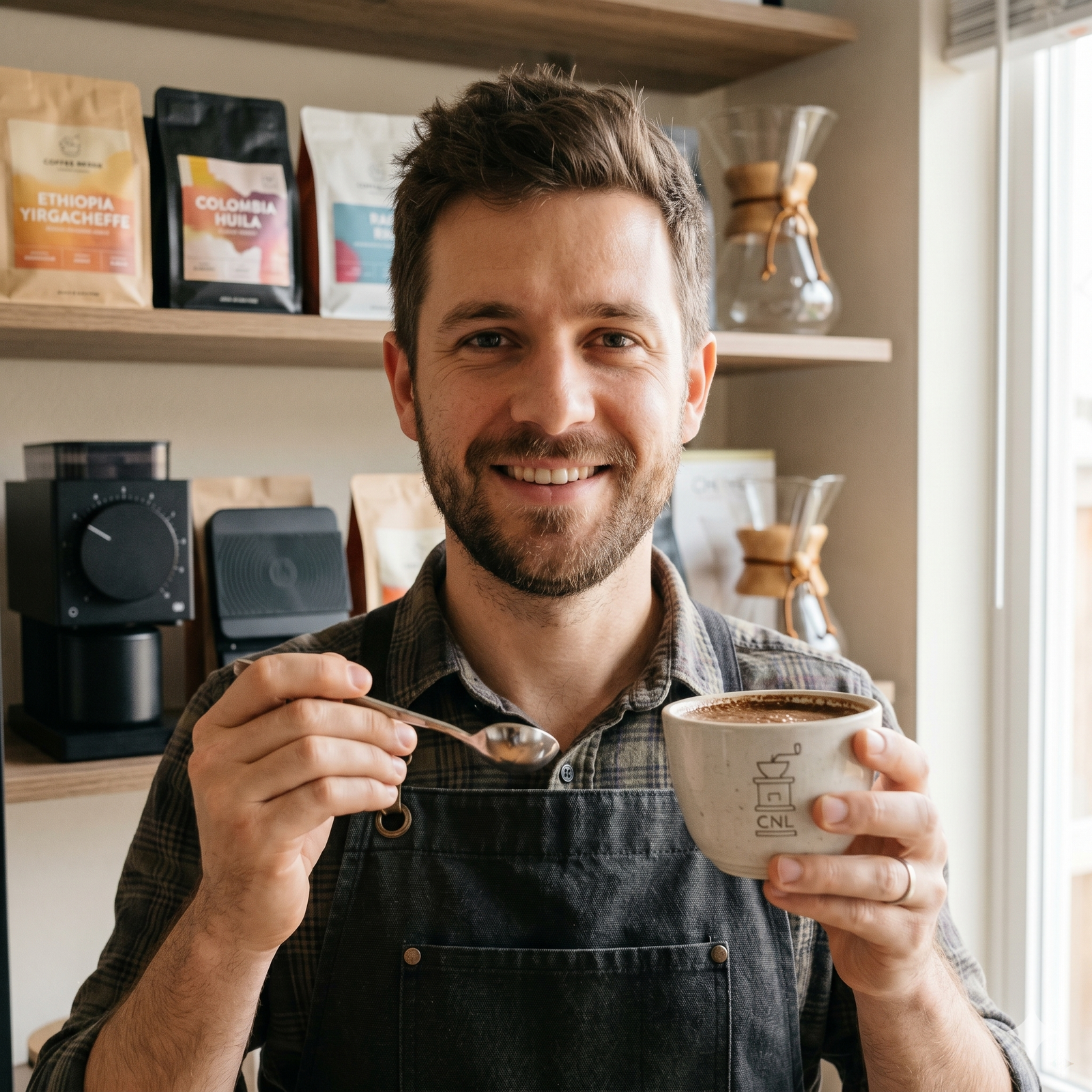
Hi, I’m the coffee enthusiast behind Coffee Nerd Lab.
Like many people, I started drinking coffee simply because it helped me wake up in the morning. Over time, that daily habit turned into a genuine interest in understanding what makes a great cup of coffee. I began experimenting with different beans, brewing methods, grinders, and coffee gear, learning through trial and error along the way.
This blog is where I document that journey. Every article is inspired by real experiences, discoveries, and lessons I’ve learned while exploring the world of coffee. From brewing guides and equipment reviews to practical tips and coffee basics, my goal is to share useful information in a way that’s easy to understand and enjoyable to read.
Thanks for stopping by, and I hope Coffee Nerd Lab helps you enjoy your next cup a little more than the last.