
It was a quiet Friday evening in Rio de Janeiro. A good friend of mine stopped by my apartment. He works as the head roaster at a small, independent coffee shop in the city.
He walked into my kitchen and placed three small, unmarked glass jars on my counter.
He told me he wanted to test my palate. He challenged me to brew a cup from each jar and guess the country of origin. He knew I was deeply obsessed with specialty coffee. He knew I spent my mornings carefully measuring water and studying flavor notes.
I accepted the challenge eagerly. I lined up the three jars. I grabbed my digital scale, my manual hand grinder, and my glass pour over cone.
I spent the next hour brewing, tasting, and taking detailed notes. I was absolutely certain I had identified three completely different countries. I confidently told him my answers. I was completely wrong. That blind tasting taught me a brutal and fascinating lesson about culinary chemistry. What happens when coffee beans are roasted differently completely overwrites the biology of the plant.
The Physical Struggle
Before I even tasted the liquid, I noticed massive physical differences between the three jars.
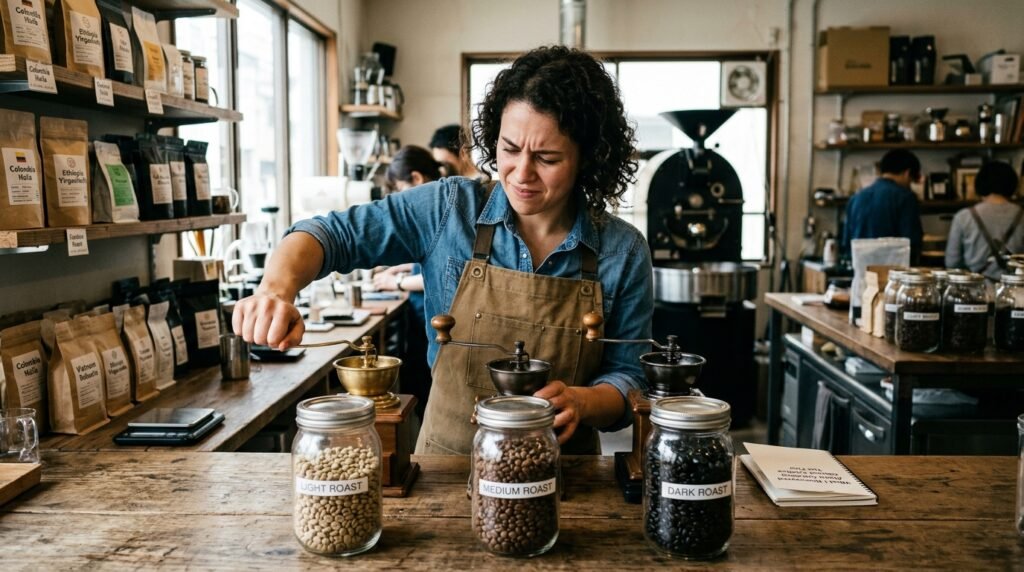
I started with the first jar. The beans were a pale, muted tan color. They had absolutely no oil on their surface. When I poured twenty grams into my manual hand grinder, I had to use intense physical strength to turn the metal handle. The ceramic burrs struggled to crush the dense, hard seeds.
I moved to the second jar. The beans were a medium brown color, like milk chocolate. They were slightly easier to grind.
Then I grabbed the third jar. These beans were pitch black and covered in a thick, greasy layer of oil. When I turned the handle of my grinder, there was almost zero physical resistance. The black beans shattered instantly. They felt hollow and brittle.
Understanding this structural breakdown was the exact premise of What I Discovered About Grinding Coffee Too Fine because brittle beans shatter into microscopic dust. The physical density of the seed had been completely altered.
Tasting the Spectrum
I brewed all three coffees using the exact same recipe. I poured the hot water slowly and carefully. I let the three mugs cool on my kitchen table.
I tasted the coffee from the first jar. It was spectacular. It exploded with a bright, juicy acidity. It tasted like biting into a ripe peach. It finished with a heavy, sweet floral note of jasmine.
I tasted the second jar. The bright peach acidity was entirely gone. Instead, the liquid was heavy and rich. It tasted like caramelized sugar, toasted almonds, and milk chocolate. It was a perfectly balanced, comforting cup.
I tasted the third jar. I physically recoiled. The liquid was incredibly harsh. It coated my tongue in a dry, bitter blanket. It tasted like burnt wood, dark smoke, and ash. There was zero sweetness and zero acidity.
The Massive Reveal
My friend asked me for my final guesses.
I told him the first jar was obviously an Ethiopian coffee because of the bright jasmine notes. I told him the second jar was a classic Colombian coffee because of the heavy chocolate. I told him the third jar was a cheap commercial blend from a supermarket.
He laughed out loud. He told me I was only right about the first jar.
Every single bean in those three jars came from the exact same burlap sack. They were all Ethiopian Guji beans. They were harvested from the exact same wild trees on the exact same volcanic mountain.
The only difference between the bright peach flavor and the bitter ash flavor was time. He simply left the second jar in the roasting oven a little longer. He left the third jar in the roasting oven until it burned.
The Chemistry of the Drum
I was completely stunned. I sat at my table and asked him to explain the science. I needed to understand how heat could completely erase the genetic identity of a plant.
He explained that a raw, green coffee bean tastes like dry grass. It has no sweetness. It has no aroma.
To unlock the flavor, you have to apply intense thermal energy. When green coffee drops into a hot roasting drum, the moisture inside the seed begins to boil. The bean physically turns yellow. It starts smelling like baking bread.
This is the beginning of the Maillard reaction. It is the exact same chemical process that browns a raw steak on a grill. The complex carbohydrates inside the dense seed begin to break down into simple sugars.
The First Crack
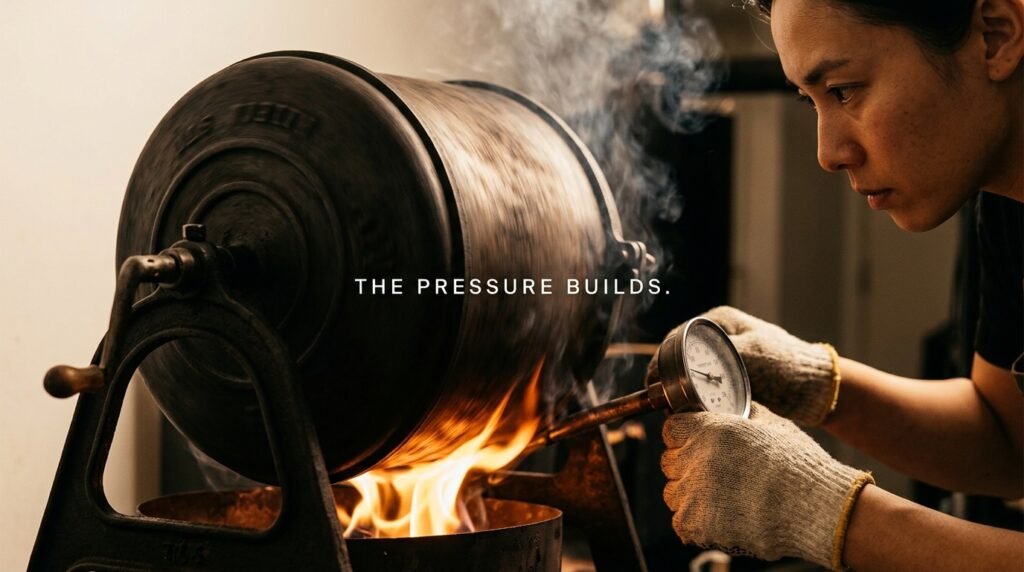
As the heat continues to rise, the steam pressure inside the bean builds rapidly. Eventually, the pressure becomes too great.
The cellular walls of the coffee bean forcefully shatter open. It sounds exactly like popcorn popping inside the metal drum. Roasters call this the first crack.
If a roaster opens the door of the machine and pulls the beans out immediately after this popping sound ends, you get a light roast. This was the coffee in my first jar.
A light roast preserves the natural organic acids of the fruit. The intense heat made the bean soluble, but it did not destroy the delicate botanical structure. The Ethiopian dirt and the high altitude genetics survived the oven. The peach and jasmine notes were perfectly intact.
The Destruction of the Origin
If the roaster ignores the first crack and leaves the beans in the drum, the chemistry changes drastically.
The temperature climbs higher. The natural fruit acids begin to physically incinerate. The bright peach and lemon flavors burn away completely.
In their place, the simple sugars begin to rapidly caramelize. This was the coffee in my second jar. A medium roast sacrifices the bright, complex acidity of the farm in exchange for heavy, comforting sweetness.
Experiencing this exact tradeoff was exactly How I Learned the Subtle Differences Between Roasts and helped me navigate the middle ground. The origin of the bean is still slightly visible, but it is heavily masked by the caramelized sugar.
The Second Crack
If the roaster refuses to pull the beans out, the drum reaches extreme temperatures.
A second violent popping sound occurs. This is the second crack. At this point, the cellular structure of the bean completely collapses. The extreme heat forces the internal oils to boil and push through the broken cell walls onto the surface of the bean. The bean turns pitch black and greasy.
This was the coffee in my third jar.
At this stage of a dark roast, the origin of the coffee is entirely dead. The volcanic soil does not matter. The wild genetics do not matter. The intense heat has carbonized the plant material. The heavy, smoky, bitter flavor is just the flavor of the fire. A dark roasted bean from Ethiopia will taste identical to a dark roasted bean from Vietnam.
The Illusion of Strength
My friend poured the remainder of the dark roast down my kitchen sink. He knew I hated it.
I asked him why massive commercial coffee companies intentionally burn their beans. If the light roast tasted so vibrant and beautiful, why would anyone intentionally turn it into bitter ash?
He explained that dark roasting is a commercial camouflage.
Massive coffee corporations buy incredibly cheap, defective beans. If they roasted those bad beans lightly, you would taste the mold, the dirt, and the rotting fruit. By burning the beans until they are black, they destroy the defective flavors.
They also rely on a massive cultural myth. People believe that dark, bitter coffee is physically stronger. People buy dark roasts because they think the harsh flavor equals more caffeine.
The Caffeine Myth
This is a complete chemical misunderstanding. Caffeine is an incredibly stable molecule. It is almost entirely immune to the heat of a roasting drum.
A single light roasted bean and a single dark roasted bean contain roughly the exact same amount of total caffeine.
However, because the dark roasted bean puffed up and expanded in the intense heat, it lost significant physical mass. It is larger, but it weighs much less. If you use a plastic scoop to measure your morning coffee, a scoop of dark roast contains fewer actual seeds than a scoop of dense light roast.
By volume, a cup of light roasted coffee actually contains slightly more caffeine. The heavy, bitter flavor of the dark roast is nothing more than a sensory trick.
Adjusting the Water Temperature
Understanding how the oven changes the physical density of the bean completely alters how you must operate in the kitchen.
You cannot use the same brewing recipe for a light roast and a dark roast. You will ruin the extraction.
Because light roasted beans are so incredibly dense, they resist water. If you pour lukewarm water over a light roast, the water will fail to penetrate the hard cell walls. It will only wash the sharp acids off the surface. You will brew a sour, empty cup. You must use violently boiling water to force the dense bean to surrender its sugars.
Dark roasts require the exact opposite approach.
Because dark roasts are hollow, fragile, and highly porous, the water rushes inside immediately. If you use boiling water on a dark roast, you will aggressively over extract the carbonized material. You will pull massive amounts of bitter tannins into your mug.
You must lower your water temperature to around one hundred and ninety degrees to protect the fragile dark roast. Understanding this thermal dynamic completely mirrored The Day I Discovered the Difference Between Light and Dark Roast and saved me from drinking hundreds of bad cups. The water must match the density of the seed.
The Invisible Chef
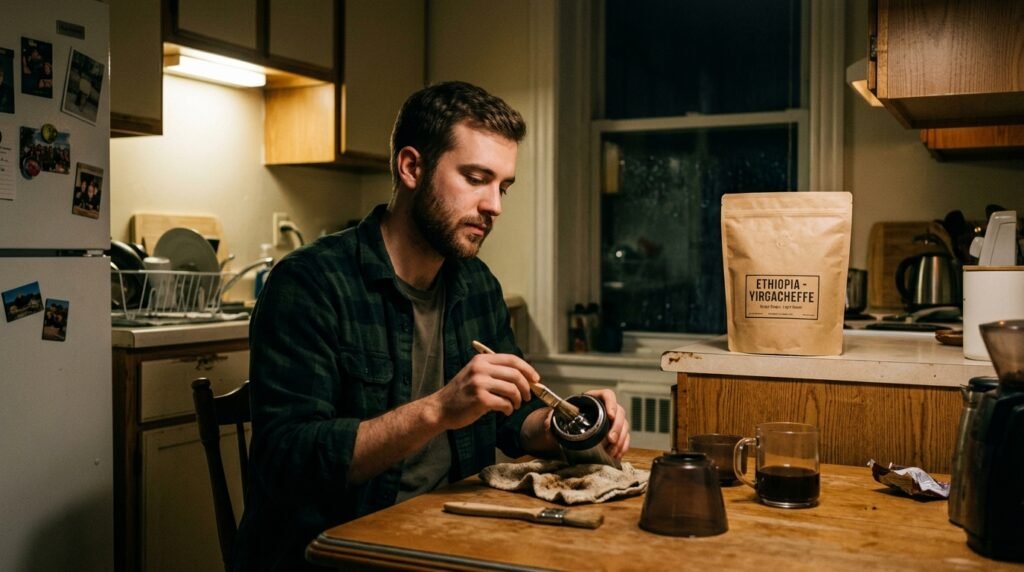
My friend packed up his glass jars and left my apartment later that night. I stayed at my kitchen table, cleaning my equipment.
I looked at the bag of Ethiopian coffee sitting on my counter. I had a profound new level of respect for the profession.
Coffee roasting is not an automated, mindless factory process. It is a highly sensitive culinary art. The farmer spends months growing a beautiful ingredient. The roaster is the chef who cooks it.
The roaster dictates the absolute flavor ceiling of your mug. They hold the dial. They can choose to protect the bright floral notes of the African soil, or they can choose to burn them away. A mistake of just fifteen seconds inside a hot drum can permanently alter the chemistry of an entire harvest.
Find Your Perfect Profile
There is no objectively right or wrong way to roast coffee. It entirely depends on what you want to taste in your mug.
If you love adding heavy cream and thick sugar to your morning beverage, a light roast will taste terrible. The bright fruit acids will clash violently with the dairy. You need a medium or dark roast with heavy chocolate notes to pierce through the milk.
If you prefer to drink your coffee black, and you want to taste the specific agricultural origin of the farm, you must seek out light roasts.
The next time you walk into an independent specialty cafe, do not just blindly order a cup of coffee. Ask the barista how the beans were roasted. Ask them what flavors the roaster was trying to highlight.
Look closely at the color of the beans before you grind them. Notice the lack of oil. Notice the physical effort required to turn the handle of your grinder. When you understand the intense chemical transformation that occurred inside the hot metal drum, your morning cup of coffee stops being a simple drink. It becomes a fascinating scientific timeline.
Hi, I’m the coffee enthusiast behind Coffee Nerd Lab.
Like many people, I started drinking coffee simply because it helped me wake up in the morning. Over time, that daily habit turned into a genuine interest in understanding what makes a great cup of coffee. I began experimenting with different beans, brewing methods, grinders, and coffee gear, learning through trial and error along the way.
This blog is where I document that journey. Every article is inspired by real experiences, discoveries, and lessons I’ve learned while exploring the world of coffee. From brewing guides and equipment reviews to practical tips and coffee basics, my goal is to share useful information in a way that’s easy to understand and enjoyable to read.
Thanks for stopping by, and I hope Coffee Nerd Lab helps you enjoy your next cup a little more than the last.