

I walked into a small, independent coffee roastery on a Tuesday morning. I was completely out of coffee at home. I needed a new bag to get through the work week.
I walked straight to the retail shelf. I looked at the small white labels stuck to the back of the brown paper bags. I was looking for the roast date.
I found a bag of Ethiopian Guji beans. The date stamped on the back was exactly that same day. The beans had been roasted just three hours before I walked into the shop. I felt incredibly lucky. I grabbed the bag, walked to the register, and placed it on the counter.
The head roaster was working the register. He looked at the date on the bag. He shook his head, picked the bag up, and put it beneath the counter.
He walked over to a different shelf. He grabbed another bag of the exact same Ethiopian Guji coffee. He placed it in front of me. I looked at the date on this new bag. It had been roasted twelve days ago.
I was confused and slightly annoyed. I asked him why he was taking away my incredibly fresh coffee and replacing it with older inventory. I thought I had found the ultimate prize.
He smiled and leaned against the counter. What a coffee roaster once told me that changed my morning cup was a brutal lesson in agricultural chemistry. He completely destroyed my definition of freshness. He taught me that patience is an actual ingredient in the brewing process.
The Bakery Fallacy
I stood at the register and listened to his explanation. He told me I was treating coffee beans like a loaf of bread.
When you buy a baguette from a bakery, you want it immediately after it comes out of the oven. You want it while it is still warm. Bread degrades rapidly. Every passing hour makes it staler and harder.
We naturally apply this bakery logic to coffee. We assume that if a coffee bean just came out of a hot roasting drum, it must be at its absolute peak flavor. We assume that a bag roasted two weeks ago is already dying.
The roaster told me this logic is completely backward.
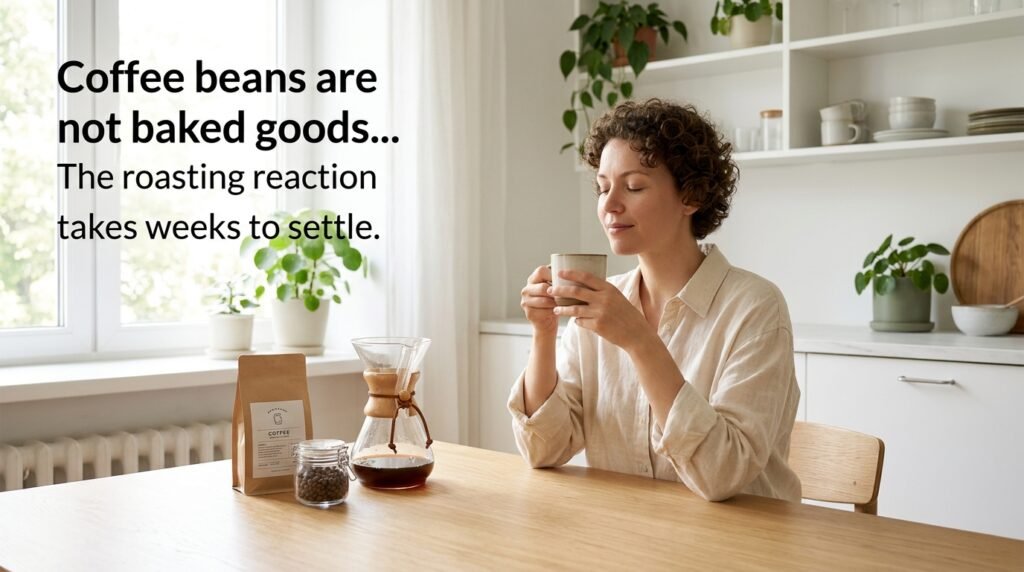
Coffee beans are not baked goods. They are dense, woody seeds. The roasting process does not finalize the product. The roasting process actually initiates a massive, violent chemical reaction that takes weeks to settle. If you brew a coffee bean on the exact same day it was roasted, you are drinking a chaotic, unfinished chemical equation.
The Invisible Shield of Gas
To understand why ultra fresh coffee tastes terrible, you have to look at the chemistry of the roasting drum.
When green coffee beans are exposed to extreme heat, the complex carbohydrates inside the seed begin to break down. This reaction generates a massive amount of carbon dioxide gas. The intense heat forces the cellular structure of the bean to expand and crack, trapping this gas deep inside the porous walls.
When the beans leave the roaster, they are physically bloated with carbon dioxide.
This trapped gas is the enemy of hot water. Carbon dioxide actively repels liquid. If you grind a bean that was roasted three hours ago, you release a violent storm of gas.
When you pour hot water over those fresh grounds, the gas pushes the water away. The water cannot penetrate the coffee particles. It cannot dissolve the complex sugars. It cannot extract the delicate fruit acids. The gas acts as an invisible, impenetrable shield.
The Chaotic Bloom
The roaster explained what would happen if I actually tried to brew that day old bag of coffee in my kitchen.
He said I would place my glass pour over cone on my scale. I would pour the initial splash of hot water to start the bloom phase. The coffee bed would swell massively. It would bubble and foam aggressively.
Visually, it looks incredibly impressive. But chemically, it is a disaster.
Because the gas is escaping so violently, it creates massive turbulence inside the filter. The turbulence forces the water to flow unevenly. The water finds weak spots in the coffee bed and channels straight to the bottom.
You end up with a mug of coffee that is severely under extracted. It tastes thin, sour, and hollow. You miss all the sweetness because the water never had a chance to touch the actual coffee. It only touched the escaping gas.
This mechanical failure was the exact reason behind The Day I Finally Understood Why Fresh Coffee Beans Matter but the definition of “fresh” was entirely wrong. Too fresh is just as bad as entirely stale.
The Art of Degassing
The roaster pointed to the twelve day old bag of Ethiopian coffee sitting on the counter. He told me that this bag was in the golden window.
After coffee leaves the roasting machine, it enters a phase called degassing.
The beans slowly exhale the trapped carbon dioxide into the surrounding air. This process cannot be rushed. It requires time. A light roasted Ethiopian bean is incredibly dense. Because the cellular structure is so tight, it takes a very long time for the gas to completely escape.
Usually, a light roast needs at least seven to ten days of rest before it is ready to brew. Some highly dense African coffees actually peak at twenty or even thirty days off the roast.
The twelve day old bag on the counter had already finished its violent exhalation. The invisible shield was gone. The water would be able to enter the grounds easily, dissolve the sugars, and pull out the sweet peach and jasmine notes.
The One Way Valve
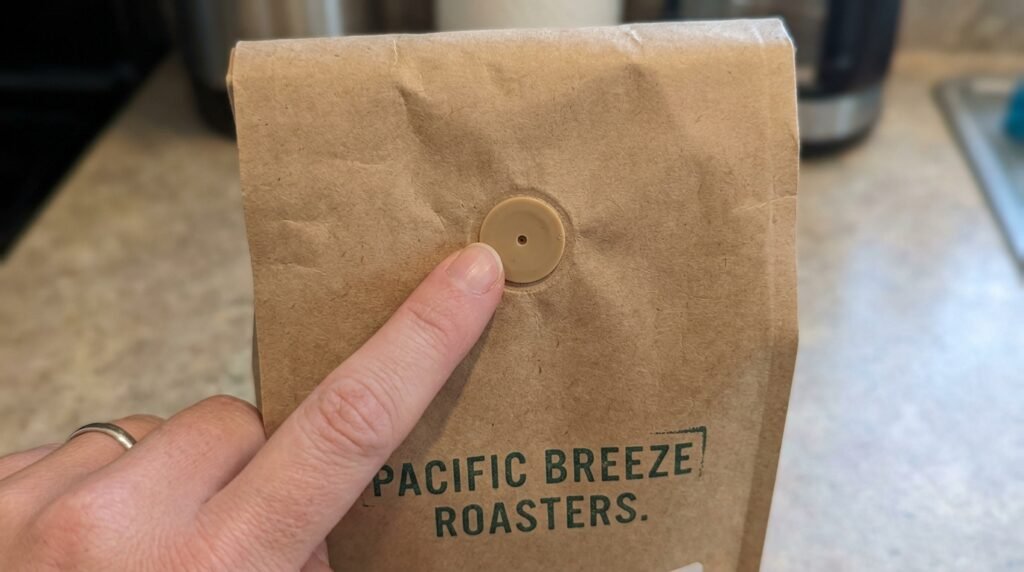
I looked at the older bag of coffee. I noticed a small plastic circle embedded near the top of the paper. It had a tiny pinhole in the center.
I asked the roaster about it. He explained that packaging is critical during the degassing phase.
If you put freshly roasted coffee into a completely sealed plastic bag, the escaping carbon dioxide will inflate the bag like a balloon. Eventually, the pressure will cause the bag to violently pop.
If you put the coffee in an open paper bag, the gas escapes safely. But oxygen enters the bag. Oxygen is the ultimate killer of flavor. It causes the coffee oils to go rancid.
The small plastic circle is a one way degassing valve. It allows the carbon dioxide to safely exit the bag, but it completely blocks outside oxygen from entering. The beans can rest and exhale in a perfectly protected environment. Recognizing the importance of this valve completely changed The First Bag of Coffee Beans That Made Me Curious About Roasting because I realized packaging was a functional tool, not just marketing material.
Taking the Roaster’s Advice
I paid for the twelve day old bag of coffee. I thanked the roaster for the impromptu science lesson. I walked out of the shop feeling slightly foolish, but incredibly curious.
I drove home and walked into my kitchen. I was ready to test his theory.
I set up my manual hand grinder and my glass V60 pour over cone. I boiled my gooseneck kettle. I weighed out twenty grams of the rested Ethiopian Guji beans.
When I opened the bag, the aroma was stunning. It did not smell smoky or sharp. It smelled like a bouquet of fresh flowers and sweet citrus. It smelled deeply settled and complex.
I ground the beans to a medium fine consistency. I poured them into the paper filter.
A Completely Different Bloom
I started my digital timer and poured sixty grams of hot water over the dry grounds.
I watched the bloom closely. I expected a massive, violent reaction. I expected the coffee to foam up like a dark chocolate volcano.
Instead, the reaction was incredibly calm. The coffee bed expanded slightly. A few gentle bubbles popped on the surface. But there was no chaotic turbulence. The water easily saturated every single particle of coffee. The slurry looked smooth, wet, and heavy.
The invisible shield was truly gone. The carbon dioxide had left the building.
I finished pouring the remaining water in slow, tight circles. The water drained evenly through the flat coffee bed. The liquid dripping into my mug was a bright, translucent ruby color.
Tasting the Golden Window
I removed the glass cone and threw the paper filter in the trash. I carried my ceramic mug to the kitchen table.
I took a slow sip. The flavor hit my palate with absolute brilliance.
There was no sharp, grassy sourness. There was no harsh, empty bite. The coffee was incredibly sweet and heavily textured. It tasted like ripe peaches coated in wild honey. The delicate jasmine aroma lingered in my nose long after I swallowed the liquid.
It was one of the most perfectly balanced cups of coffee I had ever brewed in my own home.
The roaster was absolutely right. The coffee did not need a different water temperature. It did not need a new grinder. It simply needed time. The twelve days of resting allowed the true potential of the volcanic Ethiopian soil to finally reveal itself.
The Frustration of Supermarket Coffee
This incredible experience highlighted a massive problem with the coffee most people buy at the grocery store.
If you look at a commercial bag of coffee in a supermarket aisle, you will almost never find a roast date. You will only find a “best by” date. A best by date is a completely useless piece of information. It tells you absolutely nothing about the age of the product.
Commercial coffee sits in massive warehouses for months. It sits on shipping trucks for weeks. It sits on the grocery store shelf for half a year.
By the time you bring it home, the coffee is completely dead. It has exhaled all of its carbon dioxide, but it has also oxidized and lost all of its complex organic acids. The volatile aroma compounds are gone.
Experiencing the fresh, sweet smell of a properly rested specialty bean was the exact moment I documented in The First Time I Smelled Freshly Roasted Coffee Beans because the contrast with stale commercial coffee is staggering. Supermarket coffee tastes like cardboard because it is biologically ancient.
Buying Coffee with Intention
That single conversation at the cash register changed the way I purchase my inventory. I no longer buy coffee when I am completely out of beans.
I buy coffee with a specific timeline in mind.
If I am drinking a bag of coffee at home, I will go to the local roastery when my bag is half empty. I will buy a brand new bag of beans that was roasted that exact same day.
I do not open the new bag. I put it in my pantry. I leave it sealed in its original bag with the one way valve. I let it sit in a dark, cool cabinet for ten days.
By the time I finish my old bag of coffee, the new bag has perfectly completed its degassing phase. It is ready to brew on the exact day I need it. I manage a rolling inventory of freshness.
Respecting the Roast Level
It is important to remember that the degassing timeline changes based on the roast profile.
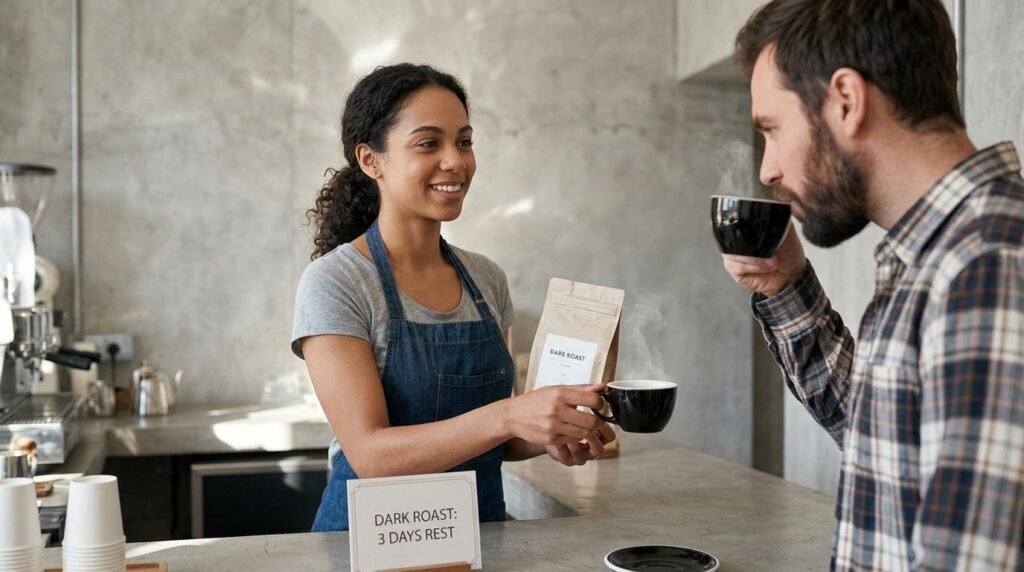
If you buy a very dark roasted coffee, the timeline speeds up dramatically. The intense heat of a dark roast completely shatters the cellular structure of the bean. The bean becomes highly porous. Because it is so porous, the carbon dioxide gas escapes very quickly.
A dark roast might only need three or four days of rest before it is ready to brew.
But if you prefer light roasted, single origin coffees like I do, you must practice extreme patience. The dense structure of a light roast requires at least a week, and often two weeks, to fully exhale. You cannot rush the physics of a dense seed.
The Illusion of Immediate Gratification
We live in a culture that demands immediate gratification. We want our food delivered in twenty minutes. We want our packages shipped overnight. We want our coffee fresh out of the roaster.
Coffee is an agricultural product that actively resists this modern mindset.
You cannot force a chemical reaction to stop simply because you are thirsty. You have to respect the biological reality of the ingredient. You have to let the coffee settle.
If your home brewed coffee frequently tastes unpleasantly sour, thin, or chaotic, check your dates. You might have excellent equipment. You might have excellent water. You might just be drinking the coffee entirely too early.
The next time you buy a bag of beans from a local specialty roaster, look at the stamp on the back. If it was roasted yesterday, do not open it. Put it in your cabinet. Wait a week. Let the gas escape. When you finally brew that first cup after a long rest, the explosive sweetness will completely validate your patience. Stop fighting the chemistry, and let the coffee tell you when it is ready.
Hi, I’m the coffee enthusiast behind Coffee Nerd Lab.
Like many people, I started drinking coffee simply because it helped me wake up in the morning. Over time, that daily habit turned into a genuine interest in understanding what makes a great cup of coffee. I began experimenting with different beans, brewing methods, grinders, and coffee gear, learning through trial and error along the way.
This blog is where I document that journey. Every article is inspired by real experiences, discoveries, and lessons I’ve learned while exploring the world of coffee. From brewing guides and equipment reviews to practical tips and coffee basics, my goal is to share useful information in a way that’s easy to understand and enjoyable to read.
Thanks for stopping by, and I hope Coffee Nerd Lab helps you enjoy your next cup a little more than the last.