
I was walking to my car on a freezing Tuesday morning in late November. The wind was sharp. I buried my chin inside my heavy winter coat and walked quickly down a narrow alleyway behind a row of brick commercial buildings.
Suddenly, I stopped walking. I hit a massive, invisible wall of scent.
The cold winter air completely vanished. It was replaced by an incredibly thick, warm, heavy aroma. It did not smell like the harsh, bitter coffee I was used to drinking. It smelled entirely different. It smelled like toasted brown sugar, dark chocolate, and an intense wave of sweet floral jasmine.
I looked up and saw a thick plume of white steam pouring out of a metal exhaust vent attached to a brick wall.
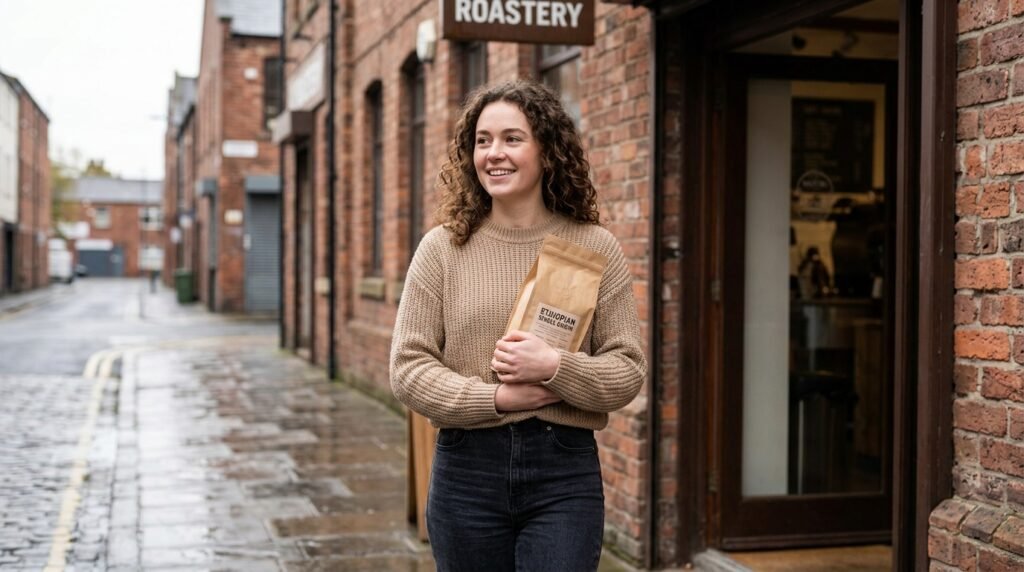
I followed the steam. I walked around the corner to the front of the building. It was a small, independent coffee roastery. I opened the heavy glass door and stepped inside. The aroma inside the room was ten times more powerful than the aroma in the alleyway. It completely overwhelmed my senses in the best possible way.
I stood near the entrance and closed my eyes. I took a deep, slow breath. The first time I smelled freshly roasted coffee beans, I realized I had been living in a culinary lie. That single sensory moment completely destroyed my tolerance for stale commercial coffee and forced me to rethink my entire morning routine.
The Cardboard Illusion
To understand the shock of that moment, you have to understand what I thought coffee was supposed to smell like.
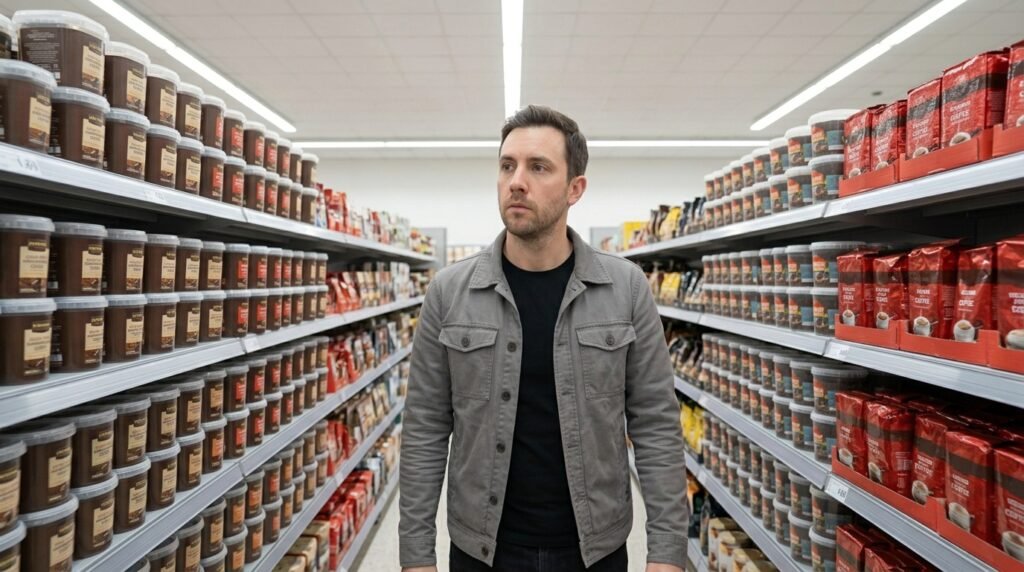
For my entire adult life, my only interaction with coffee aroma happened in the middle of a massive grocery store. I would walk down the coffee aisle. Hundreds of plastic tubs and vacuum sealed bricks lined the metal shelves.
The coffee aisle always smelled the exact same. It smelled like stale wood. It smelled like old ash. It smelled like dry cardboard.
I thought that flat, dusty scent was the natural aroma of the roasted seed. I thought coffee was just a bitter, utilitarian substance designed to deliver caffeine into my bloodstream. I had absolutely no idea that a coffee bean was capable of producing a scent that rivaled a fresh bakery or a blooming garden.
The Source of the Sweetness
I walked up to the counter inside the roastery. The head roaster was standing near a massive cast iron machine.
I pointed to the spinning cooling tray. I asked him what specific coffee he was roasting. I told him it smelled like a bouquet of flowers mixed with caramelized sugar.
He smiled and told me it was a single origin bean from the Yirgacheffe region of Ethiopia.
He explained that Ethiopian coffees are famous for their delicate, tea like aromas. The volcanic soil and the extreme altitude force the coffee plant to produce incredibly complex sugars and bright fruit acids. When you roast those beans carefully, those specific sugars caramelize and release that sweet jasmine scent into the air.
He told me the aroma I was smelling was the true, natural identity of the agricultural product. The cardboard smell of the supermarket was the smell of death and oxidation.
The Science of Volatile Compounds
I bought a bag of the freshly roasted Ethiopian Yirgacheffe beans. I sat at a small table near the window and started reading about the chemistry of coffee aroma.
I needed to understand why the beans in the grocery store smelled so incredibly bad.
The answer comes down to volatile aromatic compounds. When a coffee bean is roasted, the extreme heat creates nearly a thousand unique chemical compounds. These compounds are highly volatile. They desperately want to escape the bean and evaporate into the surrounding air.
When you smell a beautiful floral or chocolate note, you are physically inhaling those evaporating compounds.
The problem is that these compounds are incredibly fragile. They are highly reactive to oxygen. The moment a coffee bean leaves the roasting drum, oxygen begins attacking the cellular structure. The oxygen degrades the complex sugars. It turns the natural coffee oils rancid.
The Timeline of Decay
This chemical degradation happens incredibly fast.
A freshly roasted coffee bean reaches its absolute peak aromatic potential a few days after roasting. During this golden window, the volatile compounds are vibrant and heavily concentrated.
After three or four weeks, those compounds begin to vanish. The delicate floral notes disappear first. The sweet fruit notes disappear second. By the time the coffee is a few months old, all the beautiful volatile compounds have completely evaporated. The only thing left behind is the woody, fibrous structure of the dead seed.
Supermarket coffee sits in warehouses for months. It sits on shelves for half a year. It is chemically ancient.
Understanding this strict biological timeline was a massive revelation. It became the exact foundation for How I Realized Freshness Affects Every Sip of Coffee in my kitchen. You cannot brew a dynamic cup of coffee if the aromatic compounds have already escaped into the atmosphere. You are just brewing the corpse of the bean.
The Drive Home
I walked out of the roastery clutching the warm paper bag of Ethiopian beans. I got into my car and placed the bag on the passenger seat.
I drove home. The drive took twenty minutes.
During those twenty minutes, my car completely transformed. The heavy, sweet smell of the fresh beans filled the small cabin. It was intoxicating. I did not even need to open the bag. The volatile compounds were easily pushing through the paper packaging.
I realized that fresh coffee announces its presence loudly. You do not have to bury your nose in a plastic tub to find the scent. A truly fresh bag of coffee will make an entire room smell incredible.
The Second Explosion
I brought the bag into my kitchen. I wanted to brew a cup immediately.
I weighed out twenty grams of the whole beans on my digital scale. I placed them into my manual hand grinder.
When you smell a whole, unbroken coffee bean, you are only smelling the compounds that have managed to escape to the outer surface. The vast majority of the aroma is trapped safely inside the dense cellular walls of the seed.
I grabbed the handle of my grinder and started turning. The ceramic burrs crushed the hard Ethiopian beans.
The moment the beans shattered, a secondary explosion of aroma hit my face. It was entirely different from the smell in the roastery. It was sharper. It was more focused. The bright, acidic notes of sweet peach and lemon zest pierced through the heavy chocolate base.
Breaking the physical structure of the bean violently releases the trapped gases. This intense sensory moment was exactly How I Learned to Appreciate Coffee Aroma More as a vital step in my morning routine. Grinding fresh coffee is not just a mechanical chore. It is a massive aromatic reward.
The Bloom Phase
I poured the fresh, fragrant grounds into my glass pour over cone. I boiled my kettle and let the water cool slightly.
I was ready for the third and final aromatic explosion.
I poured a small splash of hot water over the dry grounds. The hot water acted as a massive thermal catalyst. It instantly accelerated the release of the remaining carbon dioxide gas and the trapped volatile compounds.
The coffee bed swelled and bubbled aggressively. The steam rising from the glass cone carried the heavy, sweet scent directly into my nose.
The scent of wet coffee grounds is entirely unique. The hot water changes the chemical structure again. The dry, dusty notes vanish. The aroma becomes incredibly heavy, dense, and syrupy. I stood in my kitchen, holding my kettle, completely mesmerized by the smell of the bloom.
Translating Scent to Flavor
I finished pouring the water. I let the bright ruby liquid drain into my ceramic mug.
Human taste is inextricably linked to human smell. Our tongues can only detect basic sensations like sweet, sour, salty, and bitter. The complex nuance of flavor comes entirely from our olfactory system. When you drink something, the aromas travel up the back of your throat into your nasal cavity.
If your coffee smells like stale cardboard, it will taste like stale cardboard.
I took a slow sip of the Ethiopian coffee. The flavor perfectly matched the intense aroma. The bright peach acidity danced on my palate. The heavy floral sweetness lingered in the back of my throat. The lack of harsh bitterness was absolutely shocking.
Because the aromatic compounds were perfectly preserved, the liquid in my mug was incredibly vibrant. It was alive.
The Permanent Shift
Drinking that specific cup of coffee ruined commercial coffee for me forever.
I realized I could never go back to the grocery store aisle. I could never go back to drinking dead, oxidized dust. I had experienced the true potential of the agricultural product. I had experienced the magic of volatile organic compounds.
From that Tuesday forward, I made a strict rule. I only buy whole bean coffee from local roasters. I only buy coffee that clearly displays the exact roast date on the packaging.
I want my kitchen to smell like a blooming jasmine garden every single morning. I refuse to settle for the smell of ash.
Training Your Palate
If you want to drastically improve your morning coffee experience, you have to start paying attention to your nose.
Scent is the ultimate indicator of quality. You do not need to be a professional barista to understand this. Your brain instinctively knows the difference between fresh food and stale food.
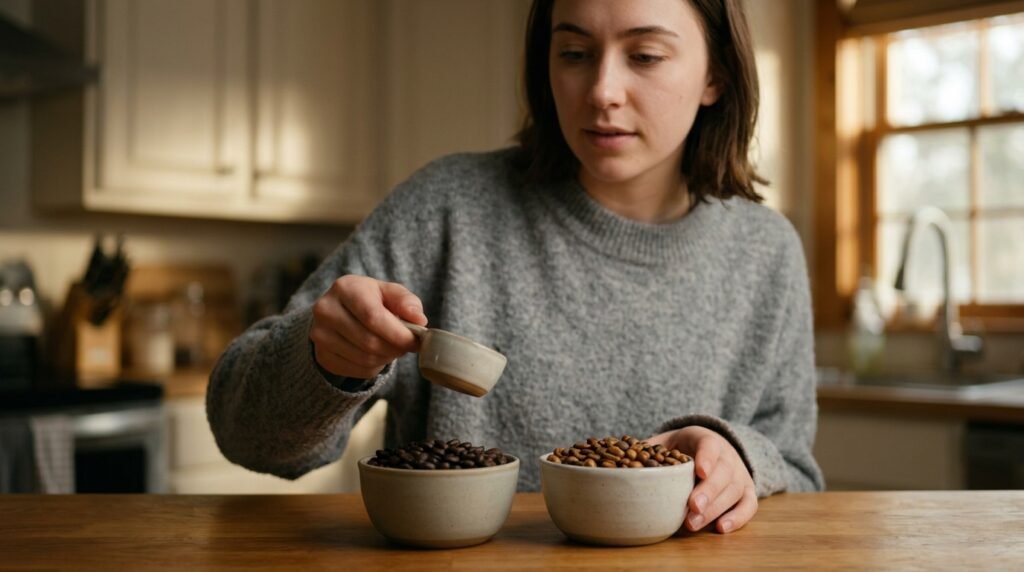
The next time you buy a bag of coffee, run a very simple test. This is exactly The Day I Compared Two Different Coffee Beans Side by Side in my own kitchen to prove a point to myself.
Take a scoop of your old, supermarket coffee and put it in a small bowl. Take a scoop of fresh coffee from a local roaster and put it in a second bowl.
Close your eyes. Bring the first bowl to your nose. Inhale deeply. Notice the flat, woody, lifeless scent.
Then, bring the second bowl to your nose. Inhale deeply. Feel the sharp, complex, vibrant aroma fill your sinuses. Notice the specific notes of fruit or chocolate.
The difference will shock you. It will completely rewrite your culinary standards.
The Search for the Roast
You owe it to yourself to experience this sensory explosion.
Do not trust the marketing labels on plastic coffee containers. Do not trust the words “premium” or “gourmet.” Those words mean absolutely nothing if the volatile aromatic compounds evaporated six months ago in a warehouse.
Find a local coffee shop that roasts their own beans. Walk through the front door. Take a deep breath.
If the air smells thick, sweet, and complex, you are in the right place. Buy a bag of beans that came out of the machine this week. Take it home. Grind it yourself.
The moment the ceramic burrs crush those fresh seeds, your kitchen will transform. The heavy, beautiful aroma will fill the room. You will finally understand what coffee is actually supposed to smell like. You will realize that the true joy of the beverage begins long before the water ever touches the cup.
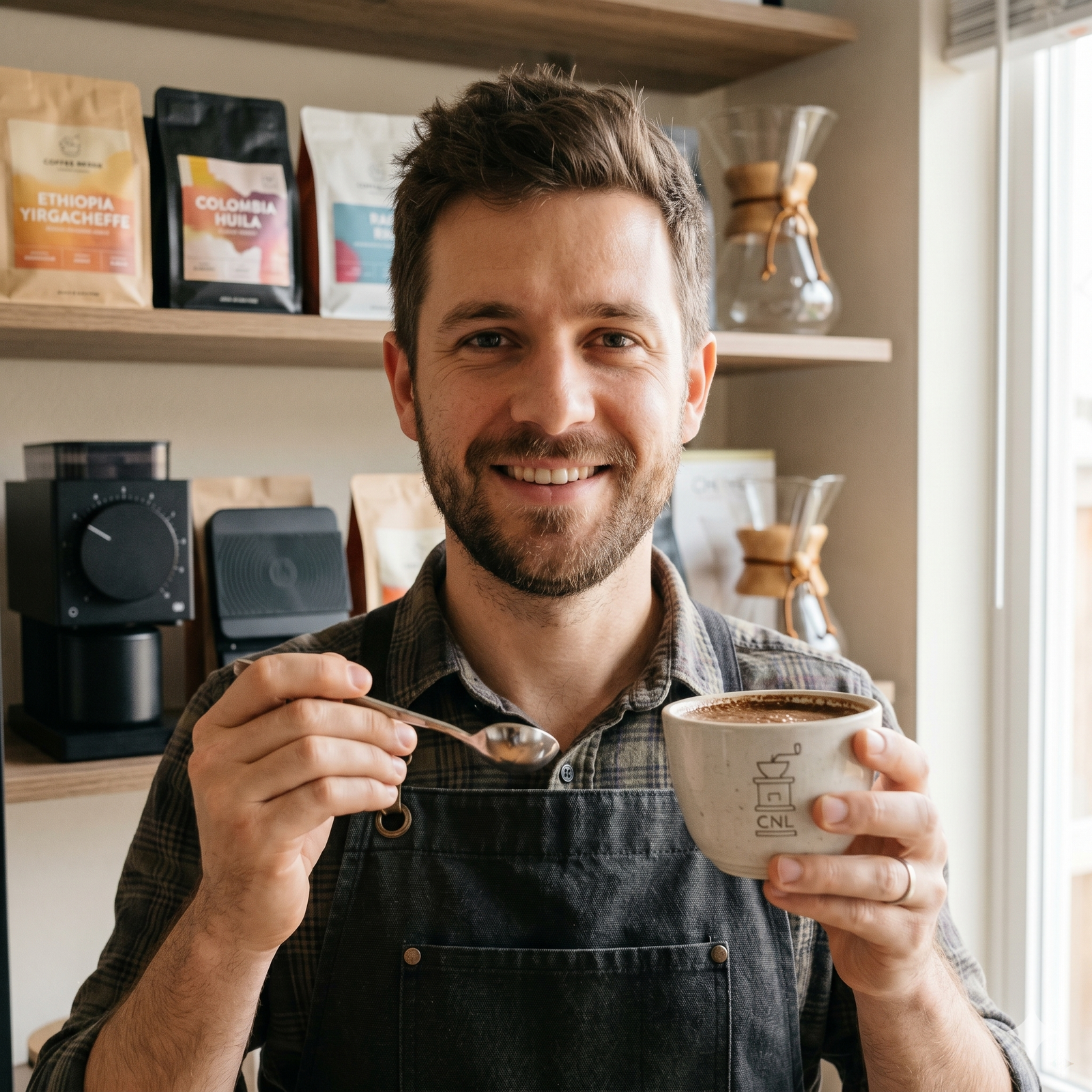
Hi, I’m the coffee enthusiast behind Coffee Nerd Lab.
Like many people, I started drinking coffee simply because it helped me wake up in the morning. Over time, that daily habit turned into a genuine interest in understanding what makes a great cup of coffee. I began experimenting with different beans, brewing methods, grinders, and coffee gear, learning through trial and error along the way.
This blog is where I document that journey. Every article is inspired by real experiences, discoveries, and lessons I’ve learned while exploring the world of coffee. From brewing guides and equipment reviews to practical tips and coffee basics, my goal is to share useful information in a way that’s easy to understand and enjoyable to read.
Thanks for stopping by, and I hope Coffee Nerd Lab helps you enjoy your next cup a little more than the last.