
The delivery driver knocked on my front door at exactly nine in the morning on a Saturday. I opened the door and found a small rectangular box sitting on the welcome mat. I picked it up and immediately grabbed a pair of scissors from the kitchen drawer.
I knew exactly what was inside the box. I had been waiting for it all week.
It was a tiny bag of coffee beans from Panama. They were a specific botanical variety called Geisha. They are notoriously difficult to grow and incredibly expensive to buy. I had treated myself to a single bag as a birthday present.
I cut the cardboard open and pulled out the matte white bag. I stared at it sitting on my kitchen counter.
A wave of mild anxiety hit me. I had spent a lot of money on a few ounces of roasted seeds. I absolutely did not want to ruin them. I looked at my collection of coffee gear. I had a heavy glass French press sitting next to my sink. I had a plastic V60 pour over cone sitting in the cabinet.
I stood there debating which tool to use. The French press would give me a heavy and sweet cup. The pour over would give me a clean and bright cup. I could not decide.
I realized I did not have to choose. I had enough kitchen counter space to do something completely ridiculous. I decided to brew the exact same coffee simultaneously using two entirely different devices. The morning I compared two different brewing methods side by side changed my entire perspective on culinary control.
Setting the Scientific Baseline
If I wanted this kitchen experiment to be accurate, I had to be strict. I had to eliminate any hidden variables.
I could not just eyeball the ingredients. I needed precision. In the past, I had performed a similar tasting experiment regarding the raw ingredients themselves. That experience was documented in my article about The Day I Compared Two Different Coffee Beans Side by Side. But comparing raw agriculture is entirely different from comparing mechanical extraction.
This time, the bean was the control variable. The hardware was the changing factor.
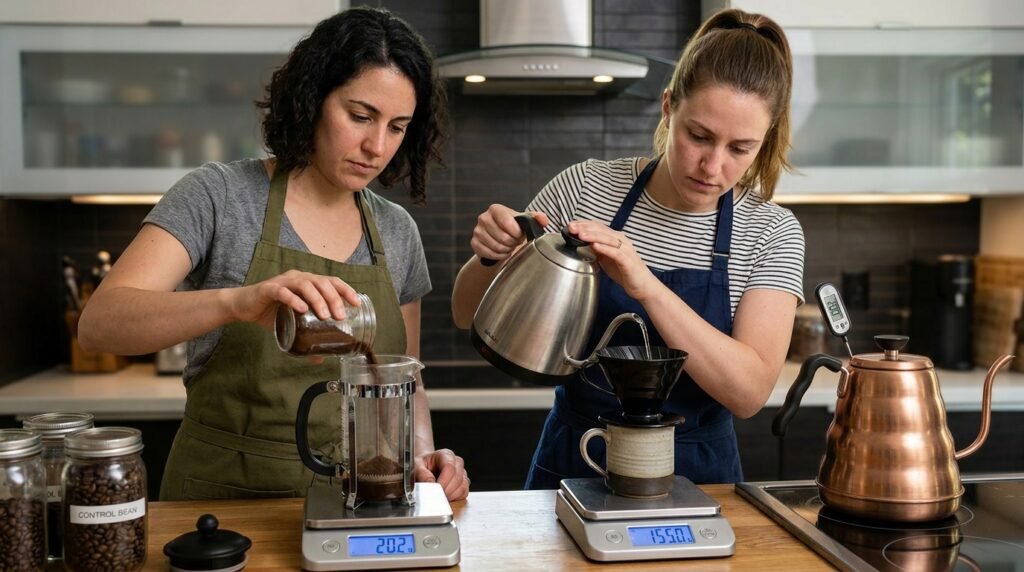
I pulled out two identical digital kitchen scales. I placed the French press on the left scale. I placed the plastic pour over cone and a ceramic mug on the right scale.
I boiled a massive kettle of filtered water. I wanted the water temperature for both brewers to be exactly the same. I turned the stove off and let the kettle rest for sixty seconds to bring the temperature down to a perfect two hundred degrees.
The Golden Ratio
Next, I had to lock in the mathematics.
A fair fight requires fair measurements. If I used more coffee in one brewer than the other, the entire taste test would be ruined. I relied on a specific mathematical formula I had developed months prior. Relying on this math is exactly How I Discovered the Perfect Brew Ratio for Myself to avoid weak or muddy cups.
I chose a ratio of one gram of coffee to fifteen grams of water.
I weighed exactly twenty grams of the expensive Geisha beans for the French press. I weighed another twenty grams of the exact same beans for the pour over cone. I now had two identical piles of premium coffee sitting in separate bowls.
Grinding for the Specific Tool
This is where the experiment diverged. I could use the same weight of coffee, but I could not use the same physical shape.
The French press requires a very coarse grind. The metal mesh screen has large holes. If I used fine powder, the powder would slip through the metal and ruin the beverage. I adjusted my manual hand grinder to its widest setting. I ground the first twenty grams. The pieces looked like heavy gravel. I dumped them into the bottom of the glass beaker.
The pour over cone requires a medium grind. The paper filter acts as a solid wall. It needs finer particles to slow the water down. I adjusted my hand grinder to a tighter setting. I ground the second batch of twenty grams. The pieces looked like coarse table salt.
I placed a paper filter into the plastic cone. I rinsed the paper with hot water and discarded the rinse water. I poured the medium coffee grounds into the damp filter.
I was officially ready to begin the dual extraction.
Brewing the French Press
I decided to start the French press first because it is a passive brewing method. It requires a long steep time.
I grabbed my hot kettle. I poured three hundred grams of water directly over the coarse gravel in the glass beaker. The coffee grounds bubbled and floated to the top. They formed a thick, solid crust.
I did not stir it. I did not place the lid on the glass. I simply started a stopwatch on my phone and let the mixture sit.
The French press operates on the principle of full immersion. The coffee and the water sit together in a shared space. The water slowly dissolves the sugars and oils over a long period of time.
Brewing the Pour Over
With the French press quietly steeping on the left side of the counter, I turned my attention to the right side.
The pour over cone is an active brewing method. It operates on the principle of gravity. The water does not sit with the coffee. The water actively passes through the coffee and drips away.
I poured sixty grams of water over the dry grounds in the paper filter. I watched the coffee swell and bloom. The trapped carbon dioxide gas escaped into the air. The smell of jasmine flowers and sweet peaches filled the kitchen.
After forty five seconds, I resumed pouring. I used slow, tight circles. I carefully managed the water level inside the plastic cone. I poured until the digital scale hit exactly three hundred grams.
I put the kettle down. I watched the final drops of liquid fall through the bottom of the filter into the ceramic mug. The extraction was complete.
Finishing the Immersion
I looked back at my phone timer. Four minutes had passed. The French press was ready for the final step.
I grabbed a metal spoon. I gently pressed the back of the spoon against the thick crust of floating coffee grounds. The crust broke apart instantly. A layer of tan foam bloomed across the surface. The heavy coffee grounds immediately sank to the bottom of the glass beaker.
I used the spoon to scoop off the remaining bitter foam. Then I placed the metal lid on top of the beaker. I pushed the plunger down exactly one inch. I did not crush the coffee grounds at the bottom.
I poured the dark liquid from the glass beaker into a second ceramic mug.
The brewing phase was completely finished. I had two mugs of coffee sitting side by side on my kitchen table. Both mugs contained twenty grams of the exact same Panamanian Geisha bean. Both mugs contained three hundred grams of the exact same water.
The Visual Shock
Before I even took a sip, the physical difference between the two mugs was absolutely staggering.
I looked closely at the mug containing the French press coffee. It was pitch black. It was completely opaque. No light passed through the liquid. A thick, shiny layer of natural coffee oils floated heavily on the surface. It looked like a dense, rich syrup.
I looked at the mug containing the pour over coffee. It looked completely different. It was translucent. It was a vibrant, glowing ruby red color. I could easily see the bottom of the ceramic mug through the liquid. The surface was perfectly matte. There was absolutely zero oil floating on top.
It was incredibly hard to believe that these two liquids came from the exact same bag of roasted seeds.
Tasting the Immersion
I decided to taste the French press coffee first. I wanted to experience the heavy body.
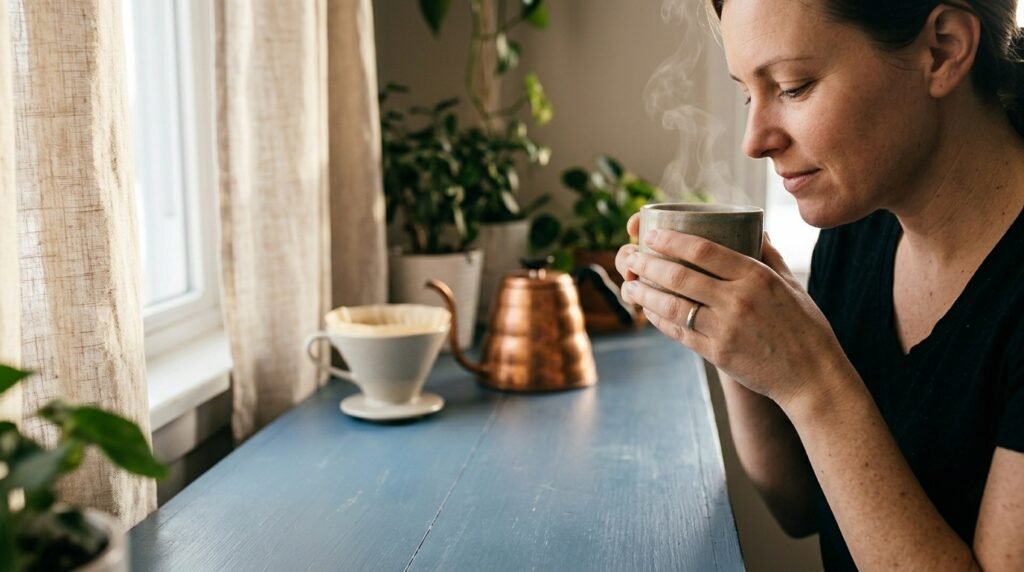
I brought the mug to my lips and took a sip. The texture was massive. It coated my entire palate like a thick velvet blanket. The liquid was heavy, rich, and deeply comforting.
The flavor profile was intensely sweet. The dominant notes were dark chocolate, toasted almonds, and a heavy caramel finish. The beautiful fruit notes I smelled during the brewing process were buried underneath that heavy sweetness. The coffee was delicious, but it felt slightly muted. It felt like listening to a symphony where the bass guitar was turned up entirely too loud.
Tasting the Gravity Drip
I took a sip of cold water to cleanse my palate. Then I picked up the second mug. I tasted the pour over coffee.
My brain completely short circuited.
The heavy, syrupy body was entirely gone. The coffee felt incredibly light and crisp on my tongue. It felt like drinking a hot fruit tea. The thick coating of chocolate and caramel was nowhere to be found.
Instead, the liquid was an explosion of bright, vibrant acidity. The flavor of sweet peaches and delicate jasmine flowers punched me right in the face. The clarity was absolute. I could pick out every single subtle tasting note printed on the coffee bag.
It was brilliant. The bass guitar was turned down, and the lead singer was finally allowed to hit the high notes.
The Physics of the Filter
I sat back in my chair and stared at the two mugs. The experiment was a massive success. It proved that the hardware in your kitchen dictates the final reality of your beverage.
The secret to the massive flavor shift was the filtration material.
The French press uses a metal mesh screen. That metal screen is full of holes. It stops the large pieces of coffee from entering your mug, but it lets everything else through. All of the heavy natural oils and microscopic coffee dust pass directly into the liquid. Those oils coat your tongue. They provide the massive body, but they also mask the delicate fruit acids.
The pour over cone uses a thick paper filter. Paper is highly absorbent. It acts like a trap.
When the water passes through the paper, the paper absorbs every single drop of natural coffee oil. It traps every single speck of microscopic dust. The physics of this barrier is precisely What I Learned After Making Coffee With Filter Papers during my deep dive into kitchen equipment. The paper strips away the heavy body and leaves behind nothing but pure, unadulterated flavor clarity.
The Illusion of the Best Method
People argue online constantly about the absolute best way to brew coffee. French press loyalists claim pour over coffee is too weak. Pour over loyalists claim French press coffee is too muddy.
That quiet Saturday morning taught me that both groups are completely missing the point.
There is no objectively best brewing method in the world. There is only the best method for the specific bean you bought and the specific mood you are in.
The brewing method is just a culinary lens. You choose the lens based on what you want to see.
If I buy a dark roasted coffee from Brazil that promises notes of heavy cocoa and roasted nuts, I will never use a paper filter. A paper filter would strip away the very things that make that coffee great. I will use the French press. I will lean into the heavy body and let the oils amplify the chocolate flavor.
Honoring the Delicate Bean
However, my expensive Panamanian Geisha was a completely different story.
That coffee was grown at an extreme altitude. It was lightly roasted to preserve its delicate floral aromas and its bright peach acidity. It was a fragile, complex agricultural product.
Brewing it in the French press was a mistake. The heavy oils smothered the delicate peach notes. The metal filter ruined the clarity.
The pour over cone was the correct tool for the job. The paper filter removed the muddy interference. It provided a clean, blank canvas for the jasmine and peach notes to shine. The gravity drip method honored the delicate nature of the specific bean.
Stop Blaming the Roaster
We often buy a bag of expensive specialty coffee, brew it at home, and feel disappointed. We usually blame the coffee roaster. We assume they sold us a bad batch.
My side by side experiment proved that the roaster is rarely the problem. The problem is usually a mismatch between the bean and the brewer.
You cannot treat all coffee beans exactly the same. You cannot force a delicate African coffee through a heavy metal screen and expect it to taste perfectly clean. You cannot run a heavy Indonesian dark roast through a thick paper filter and expect it to taste rich and syrupy.
You must pair the ingredient with the correct tool.

Run Your Own Experiment
If you have two different brewing devices sitting in your kitchen, you owe it to yourself to run this experiment.
You do not need to buy a bag of forty dollar Geisha beans. You can use your standard daily coffee.
Wait until a quiet weekend morning. Weigh your coffee perfectly. Boil a large kettle of water. Brew a French press and a paper filtered pour over at the exact same time. Pour them into two identical mugs.
Taste the heavy immersion first. Then taste the clean gravity drip.
The contrast will completely blow your mind. You will instantly understand the power of a paper filter. You will instantly recognize the heavy presence of coffee oils. You will stop viewing coffee as a rigid, static liquid. You will realize it is an incredibly flexible ingredient. You just have to decide which tool will unlock the flavor you actually want to drink.
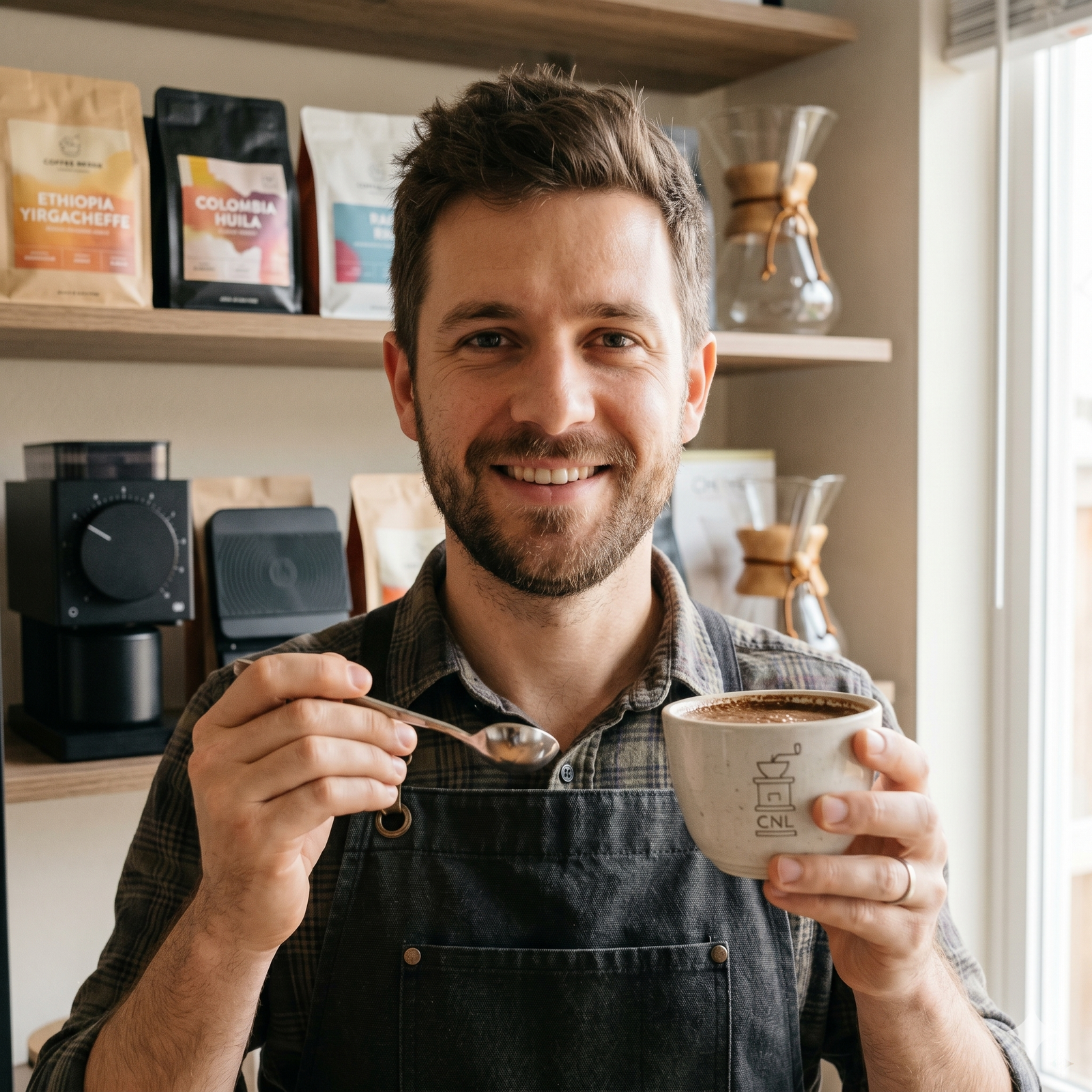
Hi, I’m the coffee enthusiast behind Coffee Nerd Lab.
Like many people, I started drinking coffee simply because it helped me wake up in the morning. Over time, that daily habit turned into a genuine interest in understanding what makes a great cup of coffee. I began experimenting with different beans, brewing methods, grinders, and coffee gear, learning through trial and error along the way.
This blog is where I document that journey. Every article is inspired by real experiences, discoveries, and lessons I’ve learned while exploring the world of coffee. From brewing guides and equipment reviews to practical tips and coffee basics, my goal is to share useful information in a way that’s easy to understand and enjoyable to read.
Thanks for stopping by, and I hope Coffee Nerd Lab helps you enjoy your next cup a little more than the last.