

I was reviewing a new website layout for a client on a hot Tuesday afternoon in Rio de Janeiro. The design was beautiful. The typography was clean. But the background image was completely wrong. The client uploaded a low resolution, highly compressed photograph. The bad image ruined the entire visual aesthetic of the page.
You cannot display a bad image on a premium screen and expect it to look good. The foundational data has to be clean.
I closed my laptop and walked into the kitchen. I needed a cup of coffee to reset my brain. I had an incredible setup. I owned a heavy manual burr grinder. I used a fast digital scale. I poured from a beautiful stainless steel gooseneck kettle. I bought expensive, light roasted Ethiopian Guji beans.
I ground the beans, poured the boiling water, and sat down at my table. I took a sip.
The coffee tasted dull. It was flat, chalky, and completely lacked the vibrant peach notes I expected. I was incredibly frustrated. I had all the right equipment. I had the right beans. I was executing the physical pouring technique perfectly.
I realized I was completely ignoring the foundational data. The small equipment change that improved my coffee was not an expensive mechanical gadget. It was a simple, twenty dollar plastic pitcher. It taught me that coffee is merely a reflection of the solvent you use to extract it.
The Invisible Majority
When we talk about coffee, we obsess over the roasted seed. We talk about the altitude of the farm. We talk about the processing method. We talk about the roasting curve.
We treat the bean as if it is the entire beverage.
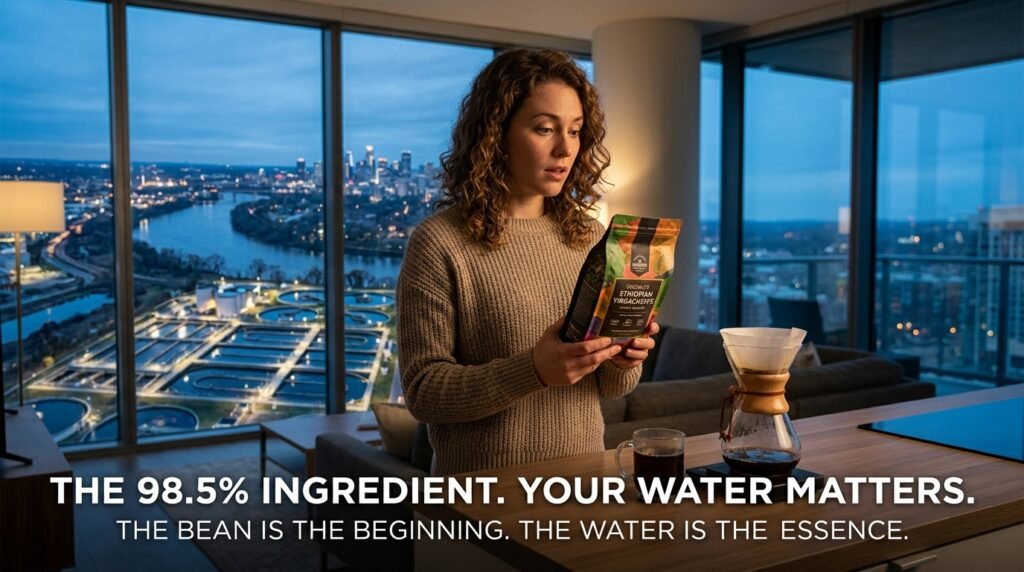
This is a massive mathematical failure. If you look at a standard cup of filter coffee, the actual dissolved coffee material only accounts for about one and a half percent of the total volume.
The other ninety eight and a half percent of the liquid inside your ceramic mug is just water.
Water is the blank canvas. Water is the primary ingredient. I was spending twenty dollars a bag for premium African coffee, and I was extracting it with harsh, heavily treated water straight from the tap in my kitchen.
The Problem with the Tap
Tap water is designed to be safe, not delicious.
Municipal water treatment facilities have a very difficult job. They have to push water through miles of old underground pipes. To ensure the water arrives at your house free of dangerous bacteria, they pump it full of strong chemical disinfectants.
The most common disinfectant is chlorine. Chlorine is incredibly effective at killing bacteria, but it possesses a harsh, aggressive chemical odor.
If you fill a glass with tap water and bring it to your nose, you can usually smell the faint trace of a swimming pool. If your water smells like a swimming pool, your coffee will inevitably taste like chemical sludge. You cannot hide that heavy chemical footprint behind delicate fruit notes.
The Hardness of the Minerals
Chlorine is only the first problem. The second problem is the mineral content.
As water travels through the earth and into the municipal system, it absorbs heavy minerals from the dirt and rocks. The two most important minerals for coffee brewing are calcium and magnesium.
The coffee industry refers to the concentration of these minerals as water hardness.
You actually need a specific amount of calcium and magnesium in your water. These minerals act exactly like microscopic chemical hooks. When the hot water enters the coffee bed, these hooks grab onto the complex fruit sugars and pull them out of the cellular walls of the bean.
The Danger of the Overload
The problem is that most tap water is entirely too hard. It contains an extreme excess of heavy minerals.
If you have too many chemical hooks in your water, the extraction becomes completely chaotic. The water aggressively pulls out everything it touches. It grabs the sweet sugars, but it also rips out the harsh, dry, aggressive tannins hidden deep inside the dark core of the seed.
This massive mineral overload creates a heavy, chalky texture on your palate. It actively mutes the delicate acidity.
If you brew a bright, citrusy coffee with heavily mineralized hard water, the citrus flavor disappears entirely. The heavy minerals crush the delicate organic acids. The resulting liquid tastes flat, muddy, and entirely uninteresting.
The Bottled Water Trap
When I first realized my tap water was ruining my extractions, I made a massive error. I started buying plastic bottles of drinking water from the local supermarket.
I thought bottled water was pure. I assumed it was the perfect blank canvas.
I was wrong. Most commercial bottled water is heavily fortified with artificial minerals to give it a specific “refreshing” taste. Many brands add massive amounts of sodium bicarbonate. Sodium acts like a chemical blanket. It completely neutralizes the bright, vibrant acidity of specialty coffee.
Furthermore, buying plastic bottles every single week is a massive waste of money and a terrible burden on the environment. I needed a sustainable, domestic solution.
Buying the Filter Pitcher
I went online and ordered a standard water filter pitcher.
It was a very basic piece of kitchen equipment. It was a clear plastic jug with a thick filter cartridge screwed into the center. It did not require electricity. It did not require complex plumbing installation. I just placed it inside my refrigerator.
This simple twenty dollar tool fundamentally changed my entire relationship with coffee.
The Mechanics of the Carbon
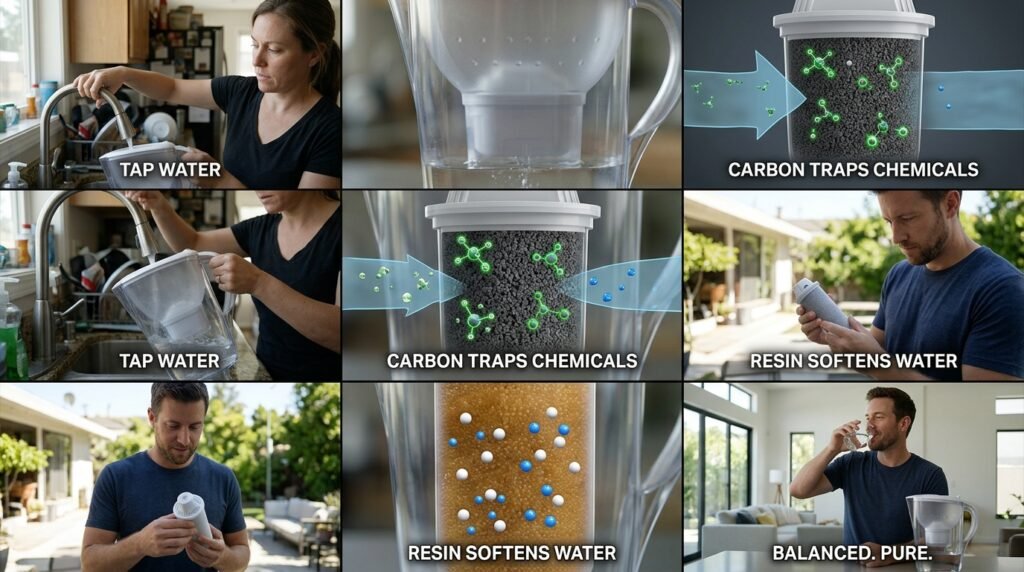
The cartridge inside the pitcher uses activated carbon and ion exchange resin.
When you pour harsh tap water into the top chamber, gravity slowly pulls it through the thick carbon block. Activated carbon is incredibly porous. It acts like a massive chemical sponge.
As the water passes through, the carbon aggressively traps the chlorine molecules. It absorbs the heavy agricultural run off. It strips away the volatile organic compounds that cause strange odors.
The ion exchange resin softens the water. It catches the extreme excess of calcium and magnesium. It lowers the heavy mineral count to a highly acceptable, balanced level.
The First Clean Boil
I filled the plastic pitcher and let the water slowly drip through the carbon filter.
I poured the newly filtered water into my stainless steel gooseneck kettle. I placed the kettle on the stove and turned on the heat.
I immediately noticed a physical difference. When I boiled hard tap water, the surface of the water looked slightly cloudy. A thin, white film of calcium would often form on the surface. The filtered water boiled completely clear. It looked like liquid glass.
Understanding this thermal dynamic was exactly How I Learned Coffee Temperature Changes Flavor because clean water carries thermal energy much more efficiently. The heat transfer is highly articulate.
The Aromatic Upgrade
I ground fifteen grams of my dense Ethiopian Guji beans. I set up my glass V60 cone and poured the hot water to initiate the bloom phase.
The sensory difference was shocking.
When I brewed with tap water, the rising steam always carried a faint, muddy, industrial scent mixed with the coffee. With the filtered water, the steam was perfectly pure. The only aroma in my kitchen was the explosive, vibrant smell of sweet peaches and blooming jasmine flowers.
Because the chlorine was gone, the actual botanical aroma of the African farm was allowed to dominate the room completely.
Tasting the Resolution
I finished the extraction and waited for the ruby red liquid to drain into my mug. I carried the cup to my desk.
I took a slow sip. My brain completely stalled.
The chalky, heavy, flat texture was completely gone. The coffee felt incredibly crisp and light on my tongue. A massive wave of bright lemon acidity hit my palate immediately. It was not sour. It was perfectly sweet and juicy.
The flavor was highly articulate. I could clearly separate the citrus notes from the floral notes.
The filtered water acted like a clean, high resolution computer monitor. It displayed the digital data of the coffee bean perfectly. There were no smudges on the screen. There was no static noise.
Protecting the Hardware
The flavor upgrade was incredible, but the filter pitcher provided a massive secondary benefit. It completely saved my expensive brewing equipment.
If you boil hard tap water inside a stainless steel kettle, the heavy minerals slowly bake onto the metal walls. Over time, this creates a thick, crusty white layer of calcium scale.
This scale ruins the kettle. It acts like an insulator, preventing the water from heating evenly. If pieces of the scale flake off, they fall directly into your coffee filter and ruin the extraction.
Realizing this mechanical threat was the core lesson behind The Morning I Learned the Importance of Clean Equipment and it forced me to protect my investments. By using filtered water, I completely eliminated scale buildup. The inside of my gooseneck kettle remains perfectly spotless and shining, even after months of daily use.
The Prerequisite for Freshness
The carbon filter also validates every single dollar you spend on fresh coffee.
We pay a massive premium for freshly roasted specialty beans. We want the absolute best agricultural quality. But if you brew fresh beans with bad water, the freshness does not matter. The chlorine will instantly destroy the volatile compounds.
Grasping this delicate chemical balance was exactly The Day I Finally Understood Why Fresh Coffee Beans Matter because I saw how easily the raw ingredient could be compromised.
If you want to experience the vibrant reality of fresh coffee, you must provide a clean solvent. The water must be invisible. It must step entirely out of the way and let the roasted seed do all the talking.
Taking the Next Step
For ninety nine percent of people, a basic carbon filter pitcher is the ultimate solution. It fixes the chlorine problem. It balances the minerals. It clears the muddy flavors perfectly.
However, if you want to push your kitchen into the realm of absolute professional chemistry, there is a final step.
Some coffee professionals buy perfectly pure distilled water. Distilled water contains absolutely zero minerals. It is completely empty. Then, they buy specialized mineral packets. They manually add highly specific amounts of magnesium and calcium back into the empty water.
They build custom water profiles designed explicitly to highlight specific fruit acids.
The Beauty of the Simple Pitcher
I have tested custom mineral water. It is incredible. But it is also highly tedious. I build digital systems all day. I do not want to mix chemical powders in my kitchen on a busy Wednesday morning.
The simple plastic pitcher sitting in my refrigerator is the perfect compromise.
It requires absolutely zero daily effort. I just fill it up from the sink and let gravity do the work. Once every two months, I throw the old carbon cartridge in the trash and screw a fresh one into the plastic housing.
It is the cheapest, most effective automation in my entire house.

Evaluate Your Canvas
Look closely at your own coffee routine tomorrow morning.
If you are spending good money on fresh beans, and if you are using a decent burr grinder, you are already halfway to a perfect cup. But if you walk over to your kitchen sink and turn the tap directly into your kettle, you are sabotaging the entire process.
You are painting a masterpiece on a dirty canvas.
Stop fighting the chemical hooks. Stop drinking heavy chlorine. Go online and buy a simple water filter pitcher today. When you finally brew a cup of coffee using a perfectly clean, balanced solvent, the heavy fog will lift. You will finally taste the actual farm, the exact soil, and the true clarity of the bean.

Hi, I’m the coffee enthusiast behind Coffee Nerd Lab.
Like many people, I started drinking coffee simply because it helped me wake up in the morning. Over time, that daily habit turned into a genuine interest in understanding what makes a great cup of coffee. I began experimenting with different beans, brewing methods, grinders, and coffee gear, learning through trial and error along the way.
This blog is where I document that journey. Every article is inspired by real experiences, discoveries, and lessons I’ve learned while exploring the world of coffee. From brewing guides and equipment reviews to practical tips and coffee basics, my goal is to share useful information in a way that’s easy to understand and enjoyable to read.
Thanks for stopping by, and I hope Coffee Nerd Lab helps you enjoy your next cup a little more than the last.