
I was aggressively cleaning my kitchen on a quiet Sunday morning in Rio de Janeiro. I needed a physical task to clear my head. I had spent the entire previous week migrating massive databases and fixing broken links across several client websites. My brain was completely saturated with digital logic. I wanted to organize something in the real world.
I started pulling everything out of my pantry. I moved boxes of pasta, jars of rice, and cans of soup.
Deep in the back corner of the top shelf, completely hidden in the shadows, I found a small brown paper bag. I pulled it out and dusted it off. It was a bag of Ethiopian Guji specialty coffee. I looked at the white sticker on the back of the package. The roast date was printed clearly. The coffee was exactly three months old.
I placed the old bag on my kitchen counter. Right next to it sat a brand new bag of the exact same Ethiopian Guji coffee. I had purchased the new bag just two days prior.
I looked at both bags side by side. I assumed coffee was just like the dry pasta sitting in my pantry. I thought it was a completely static, immortal pantry staple. The day I realized coffee beans change over time completely destroyed that assumption. I decided to brew both bags simultaneously. That single experiment proved that coffee is a living, breathing biological clock.
The Illusion of the Static Ingredient
We are culturally conditioned to view coffee as a permanent utility.
When you walk into a massive commercial supermarket, you see thousands of plastic coffee tubs sitting on metal shelves. Those tubs sit there for months. We buy them, put them in our cabinets, and expect them to taste the exact same on day one as they do on day one hundred.
We treat coffee like salt or sugar. We assume it is immune to the laws of time.
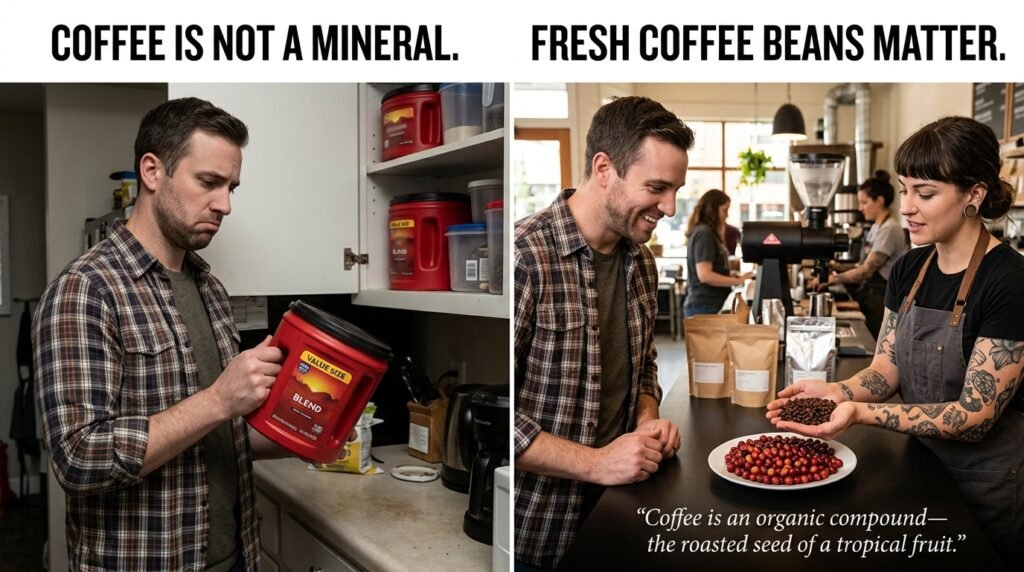
This is a massive agricultural misunderstanding. Coffee is not a mineral. It is the roasted seed of a tropical fruit. It is an organic compound. The moment a green coffee bean enters a hot roasting drum, a violent chemical countdown begins.
Recognizing this chemical reality was exactly The Day I Finally Understood Why Fresh Coffee Beans Matter and why I permanently stopped buying massive, anonymous plastic tubs. You cannot pause biological decay.
Phase One: The Violent Exhalation
To understand the timeline, I started my experiment with the brand new bag of Ethiopian beans. The roast date was only forty eight hours old.
I weighed twenty grams of the ultra fresh beans and poured them into my hand grinder. The ceramic burrs crushed the hard seeds. A massive, aggressive wave of sharp floral aroma exploded from the catch bin. It smelled incredibly intense.
I placed the grounds into my glass V60 pour over cone. I boiled my gooseneck kettle and poured forty grams of hot water to start the bloom.
The reaction was chaotic. The coffee bed violently erupted. Massive bubbles formed and popped on the surface. The grounds swelled up like a dark, muddy volcano.
This visual chaos is the physical manifestation of carbon dioxide. During the intense heat of the roasting process, the coffee bean traps massive amounts of gas inside its cellular walls. When the bean is only two days old, it is physically bloated with this gas.
The Invisible Shield of Gas
I finished pouring the water and waited for the drawdown. The liquid dripping into my mug looked pale and thin.
I took a sip. The flavor was highly disappointing. It did not taste like the sweet peaches and jasmine flowers I expected from an Ethiopian Guji. It tasted thin, sharp, and unpleasantly sour. The heavy, syrupy body was completely missing.
The problem was the carbon dioxide gas.
When you pour hot water over ultra fresh coffee, the gas rapidly escapes. This escaping gas creates an invisible, microscopic shield around every single coffee particle. The gas actively repels the hot water. The water cannot penetrate the cellular walls to dissolve the complex sugars. It simply washes the sharp, sour acids off the surface and flows straight to the bottom of the filter.
Coffee that is too fresh is chemically impossible to extract properly.
Phase Two: The Golden Window
I realized I needed a middle ground. Luckily, I already knew exactly what this Ethiopian coffee tasted like when it was brewed perfectly.
Coffee enters its golden window of flavor after the violent exhalation phase ends. This process is called degassing.
The beans need to sit in a sealed bag with a one way plastic valve. They need to slowly exhale the carbon dioxide into the surrounding air over a period of several days. For a dense, light roasted African coffee, this degassing phase usually takes between ten and fourteen days.
If I had brewed that bag of Ethiopian beans on day fourteen, the experience would have been flawless.
On day fourteen, the invisible shield of gas is gone. When you pour the hot water, the bloom is calm and controlled. The water easily penetrates the coffee particles. It dissolves the heavy fruit sugars. It extracts the delicate jasmine oils. The resulting beverage is perfectly balanced, intensely sweet, and beautifully articulate.
Phase Three: The Onset of Oxidation
I pushed the mug of sour, ultra fresh coffee aside. It was time to test the three month old bag I found in the back of my pantry.
I opened the old paper bag. I brought it to my nose and took a deep breath.
The difference was immediately obvious. The sharp, vibrant aroma of spring flowers was entirely gone. The bag smelled flat, dusty, and vaguely like old wood.
I weighed twenty grams of the old beans and poured them into my hand grinder. Turning the handle felt slightly different. The beans felt a little softer and less dense. When I opened the catch bin, the smell of the dry grounds confirmed my fears. It smelled exactly like dry cardboard.
The biological clock had run out.
The Enemy Called Oxygen
The loss of aroma is a direct result of oxidation.
Coffee beans are full of delicate organic lipids and volatile aromatic compounds. These compounds are the exact source of the sweet fruit and floral flavors. But these compounds are incredibly fragile. They are highly reactive to oxygen.
The moment the coffee leaves the roasting machine, oxygen begins attacking the cellular structure. It slowly degrades the natural oils. It causes the complex sugars to break down. It literally turns the organic matter stale.
Over a period of three months, the oxygen in my pantry had completely destroyed the Ethiopian genetics.
The volatile compounds that create the jasmine scent had completely evaporated into the atmosphere. There was nothing left but the dead, woody skeleton of the seed. Understanding this destructive process was the core lesson in How I Discovered Coffee Freshness Matters More Than I Thought because it proved that air is the ultimate enemy of flavor.
The Lifeless Bloom
I poured the old, dusty grounds into a fresh paper filter. I boiled my kettle and poured forty grams of hot water.
I watched the coffee bed closely. I expected a reaction. Nothing happened.
The coffee bed did not expand. No bubbles formed on the surface. The dark slurry just sat there, completely flat and lifeless. It looked like wet sand.
Because the coffee was three months old, it had exhaled absolutely all of its carbon dioxide gas weeks ago. There was no internal pressure left. The lack of a physical bloom is the absolute best visual indicator that a coffee bean is chemically dead.
Tasting the Cardboard
I finished pouring the water. The liquid drained through the filter incredibly fast. I picked up the ceramic mug and took a slow sip.
The flavor was incredibly depressing.
There was absolutely zero peach acidity. There was zero floral sweetness. The coffee tasted hollow, dusty, and entirely flat. It lacked any heavy texture on the palate. The lingering aftertaste was reminiscent of stale peanuts and old paper.
It was a completely generic, boring cup of brown water. The three months of oxygen exposure had completely erased the unique identity of the volcanic African soil.
The Importance of the Valve
Sitting at my kitchen table, looking at the two extreme ends of the coffee timeline, I finally understood the importance of packaging.
If you look at a high quality bag of specialty coffee, you will always see a small plastic circle embedded near the top. This is a one way degassing valve.
This tiny piece of plastic is a brilliant feat of engineering. It solves the biological problem of the coffee timeline. It allows the trapped carbon dioxide gas to escape the bag safely during the first two weeks. If the gas could not escape, the bag would inflate and eventually explode.
More importantly, the valve completely blocks outside oxygen from entering the bag. It protects the volatile aromatic compounds from degrading.
If you buy coffee in a paper bag without a plastic valve, the oxygen will destroy the beans in a matter of days.
The Myth of the Refrigerator
My failed experiment with the three month old coffee forced me to reevaluate how I protect my inventory.
Many people believe that putting coffee beans in the refrigerator or the freezer will stop the biological clock. They think the cold temperature will preserve the flavor indefinitely.
This is a terrible mistake.
Coffee beans are highly porous. They act like dry sponges. If you put them in a refrigerator, they will immediately absorb all the ambient moisture and condensation in the cold air. They will also absorb the ambient odors of the surrounding food.
If you leave a bag of beautiful Ethiopian coffee next to a sliced onion in your fridge, your morning mug will taste exactly like an onion.
Finding the Perfect Environment
You cannot stop the biological clock of a roasted coffee bean. You can only manage it gracefully.
Protecting your beans is entirely about controlling the environment. Learning to master this environment was exactly How I Learned Coffee Storage Affects Flavor and it saved me from throwing away expensive bags. You have to fight the elements.
Coffee hates oxygen, moisture, heat, and direct sunlight.
The absolute best place to store your coffee is right inside the original bag with the one way plastic valve. Roll the top of the bag down tightly to push out any excess air. Place that bag inside a dark, cool kitchen cabinet, far away from the heat of the stove or the oven.
Do not transfer the beans to a clear glass jar on your counter. The direct sunlight will heat the beans and accelerate the degradation of the delicate oils. Keep them in the dark.
Buying with Intention
Understanding the strict timeline of a coffee bean completely changed how I purchase my supplies.
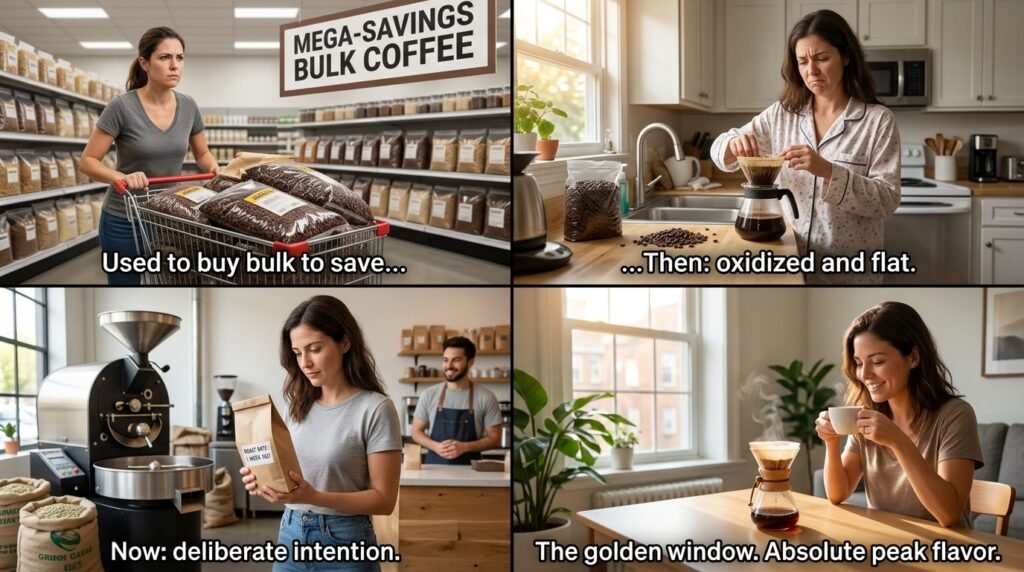
I no longer buy coffee in bulk. I do not buy three bags at a time to save money on shipping. If I buy three bags, the third bag will be completely stale and oxidized by the time I finally open it.
I buy my coffee with deliberate intention. I only buy one bag at a time.
I walk to my local roastery and look at the roast dates. I buy a bag that was roasted roughly one week ago. I bring it home. By the time I start brewing it, the coffee has entered its golden window. I finish the bag over the next two weeks while the flavor is still at its absolute peak. When the bag is empty, I repeat the cycle.
A Living Ingredient
We are surrounded by highly processed, shelf stable foods. We forget that the best things we consume are inherently fragile.
A roasted coffee bean is a delicate, ticking clock of organic chemistry. It requires patience immediately after roasting, and it requires urgency a month later.
Tomorrow morning, look at the bag of coffee on your counter. Find the roast date. Think about where that bean currently exists on its biological timeline. Is it too fresh and full of gas? Is it in the sweet spot? Or has it already started to fade into dusty cardboard?
When you stop treating coffee like a static, immortal pantry staple, your entire perspective shifts. You begin to treat the bean with the respect it deserves. You manage your inventory carefully. You brew with intention. You realize that a perfect cup of coffee is a fleeting moment in time, and you learn to appreciate that golden window before it disappears forever.
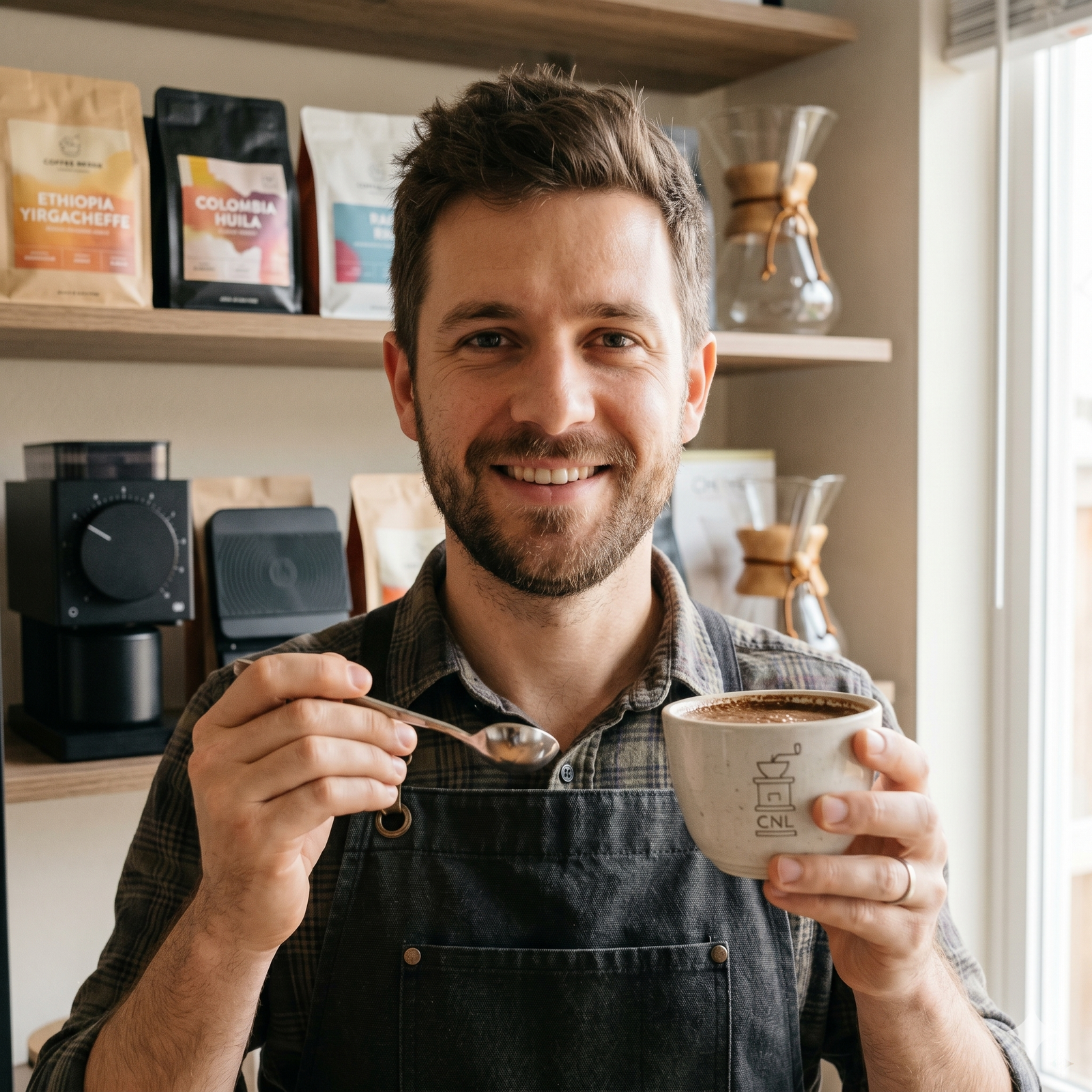
Hi, I’m the coffee enthusiast behind Coffee Nerd Lab.
Like many people, I started drinking coffee simply because it helped me wake up in the morning. Over time, that daily habit turned into a genuine interest in understanding what makes a great cup of coffee. I began experimenting with different beans, brewing methods, grinders, and coffee gear, learning through trial and error along the way.
This blog is where I document that journey. Every article is inspired by real experiences, discoveries, and lessons I’ve learned while exploring the world of coffee. From brewing guides and equipment reviews to practical tips and coffee basics, my goal is to share useful information in a way that’s easy to understand and enjoyable to read.
Thanks for stopping by, and I hope Coffee Nerd Lab helps you enjoy your next cup a little more than the last.