I build digital language learning platforms. I spend my days researching how the human brain acquires new vocabulary and memorizes complex grammar rules. You cannot learn a foreign language by staring at an entire dictionary. The human brain cannot process that massive volume of information all at once. You have to isolate the words. You have to break the sentences down into tiny, digestible pieces. You study the parts to understand the whole.
I use this isolation technique constantly in my digital work in Rio de Janeiro. For a very long time, I completely failed to apply this exact same logic to my coffee mug.
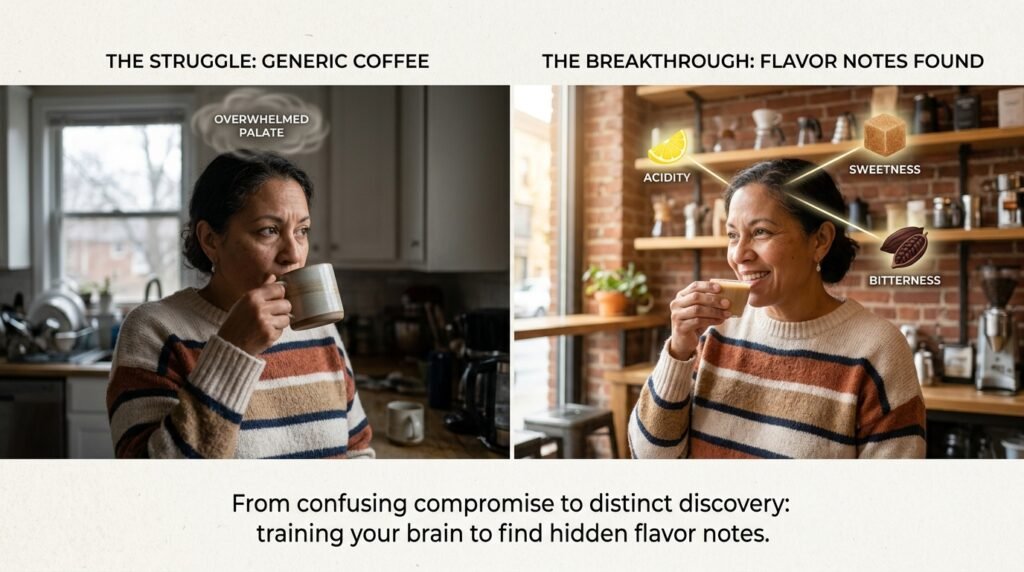
I was buying expensive Ethiopian coffee beans. I was reading the flavor notes printed on the bags. The labels promised sweet peach, bright lemon, and blooming jasmine. But when I brewed the coffee and took a sip, I just tasted a massive, confusing wall of hot liquid. My palate was completely overwhelmed. I could not identify the individual flavors. The coffee experiment that helped me understand flavor better forced me to completely deconstruct the beverage. I applied my language learning logic to the extraction process. I isolated the chemistry. I chopped the brewing time into pieces.
The Wall of Generic Flavor
When you brew a standard cup of coffee, the final liquid is a massive chemical compromise.
The hot water pulls hundreds of different chemical compounds out of the roasted seed. It pulls sharp acids. It pulls heavy sugars. It pulls bitter plant fibers. All of these compounds mix together inside the carafe.
When you take a sip, your tongue is hit with all of these conflicting signals at the exact same millisecond.
If you are a beginner, your brain simply gives up. It cannot process the bright lemon and the dark bitterness simultaneously. It averages the data out. It tells you that you are just drinking generic coffee. Breaking through this generic sensory wall was the entire goal of How I Started Noticing Flavor Notes in Coffee because I knew the complex flavors were hiding inside the mug. I just needed to train my brain to find them.
The Chronology of Extraction
To train my brain, I had to understand how the hot water actually interacts with the dry coffee grounds.
Coffee extraction is not a random event. It is a highly strict chronological sequence. The chemical compounds inside the roasted seed have different molecular weights. They dissolve into the hot water at completely different speeds.
The water extracts the lightest compounds instantly. It extracts the medium compounds next. It extracts the heaviest compounds last.
If you let the entire extraction fall into one single mug, you lose the timeline. You destroy the chronological evidence. I realized I needed to capture the timeline in real time. I needed to physically separate the beginning, the middle, and the end of the pour.
The Salami Technique
The specialty coffee industry calls this specific experiment extraction slicing. Some people call it the salami technique. You are slicing the timeline exactly like a butcher slices a piece of cured meat.
I waited until a quiet Sunday morning. I walked into my kitchen and cleared my counter.
I grabbed three identical small ceramic tasting cups. I lined them up in a row next to my digital scale. I weighed exactly fifteen grams of light roasted Ethiopian Yirgacheffe. I crushed the hard seeds in my manual burr grinder. I placed my plastic V60 cone directly over the first small ceramic cup.
Slicing the Timeline
I filled my electric gooseneck kettle with filtered water and brought it to a violent boil.
I started my digital stopwatch. I poured exactly forty grams of hot water over the dry coffee to initiate the bloom phase. The trapped carbon dioxide gas erupted. I waited forty five seconds.
I began my main concentric pour. I poured smoothly and steadily. The dark red liquid started draining from the bottom of the plastic cone into the first ceramic cup.
When the stopwatch hit exactly one minute and fifteen seconds, I executed the slice. I physically grabbed the plastic V60 cone, lifted it up, and quickly moved it over the second ceramic cup. I did not stop pouring water. I just changed the destination.
Capturing the Final Phase
The water continued to flow through the coffee bed. The liquid was now draining directly into the second cup.
I watched the digital scale carefully. I maintained a perfect laminar flow from the kettle spout. When the stopwatch hit two minutes exactly, I executed the second physical slice.
I lifted the plastic cone again and moved it directly over the third ceramic cup. I stopped pouring water. I let the final, weak drops of the extraction drain completely into this final vessel.
I removed the plastic brewer and placed it in the kitchen sink.
The Visual Diagnosis
I stepped back and looked at the three ceramic cups sitting on my counter. The visual evidence was absolutely staggering. The liquids looked entirely different.
The first cup contained the liquid from the very beginning of the pour. It was pitch black. It looked thick, heavy, and completely opaque.
The second cup contained the middle of the pour. It was a beautiful, translucent ruby red. It looked exactly like a light herbal tea.
The third cup contained the very end of the pour. It barely looked like coffee at all. The liquid was a pale, watery yellow. It looked completely transparent. The hot water had clearly exhausted the coffee beans.
Tasting the Acids
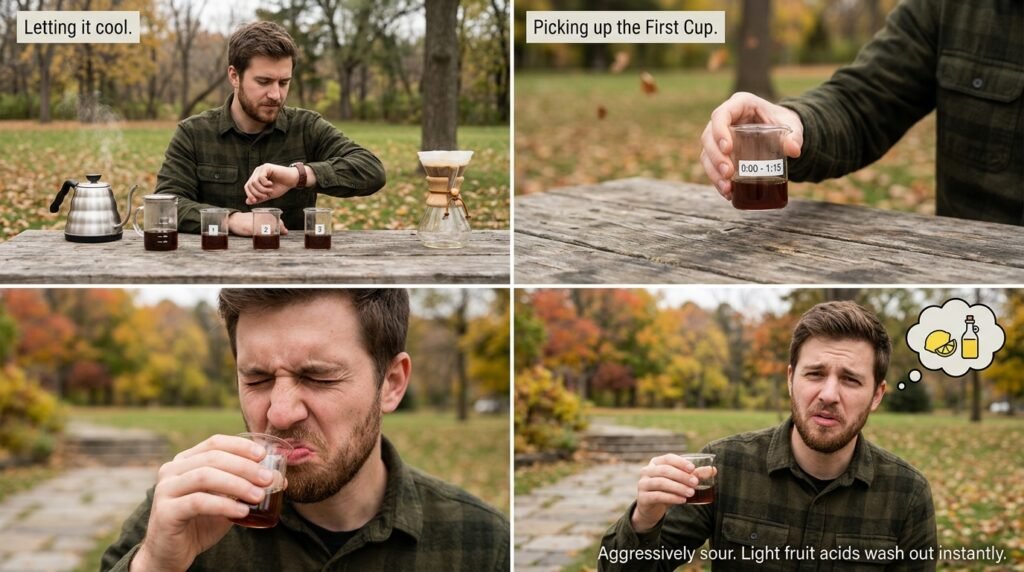
I waited five minutes for the thermal energy to drop. Drinking boiling liquid blinds your sensory receptors. You must let the coffee cool down to actually taste the chemistry.
I picked up the first cup. This cup contained the exact extraction from zero seconds to one minute and fifteen seconds.
I took a small sip. My face physically contorted. The liquid was violently sour.
It tasted like raw lemon juice mixed with sharp vinegar. It was aggressively bright. This extreme sourness happens because the organic fruit acids are the absolute lightest chemical compounds in the coffee bean. They wash out into the water instantly.
If your daily coffee tastes sour and thin, you are only drinking the contents of this first cup. The water is moving too fast and entirely failing to reach the heavier compounds.
Tasting the Sugars
I put the first cup down and picked up the second cup. This cup captured the timeline between one minute and two minutes.
I took a sip. The transformation was completely unbelievable.
The sharp, violent sourness was entirely gone. This liquid was incredibly heavy and deeply sweet. It tasted exactly like a thick peach syrup. The floral jasmine notes were explosive. There was absolutely no harshness.
This middle phase is the absolute peak of the agricultural product. The complex fruit lipids and the heavy natural sugars take longer to dissolve. They require more physical contact time with the hot water. Unlocking this specific layer of heavy sweetness was the entire focus of What I Learned After Brewing Coffee More Carefully because it requires complete physical discipline to extract these sugars properly.
Tasting the Tannins
I put the sweet second cup down. I picked up the third cup. This cup held the final thirty seconds of the extraction.
I took a sip. It was immediately terrible.
The liquid tasted hollow, dry, and aggressively bitter. It tasted exactly like burnt wood and old cardboard. It left a highly astringent, chalky feeling on the back of my tongue.
This happens because the acids and the sugars are already gone. By the two minute mark, the coffee bean is basically an empty shell. The hot water starts dissolving the heavy, dark plant fibers and the bitter tannins deep inside the core of the seed. You are literally extracting the woody structure of the plant.
The Illusion of the Whole
This physical experiment completely dismantled the illusion of the generic coffee flavor.
Coffee is not one single flavor. It is a sequence of three distinct chemical events. It is a sharp acid, followed immediately by a heavy sugar, followed immediately by a bitter tannin.
I realized the ultimate goal of manual brewing. The goal is to perfectly balance the first cup and the second cup while completely avoiding the third cup. You want the bright lemon acidity to lift the heavy peach sweetness, but you want to cut the water off before the bitter cardboard enters the mug.
The Symphony of Balance
To prove this theory of balance, I performed the final step of the experiment.
I took the violently sour first cup. I poured it directly into the heavy, sweet second cup. I took a clean metal spoon and stirred the two liquids together aggressively.
I took a sip of the combined mixture.
It was absolute perfection. The extreme sourness of the first cup was completely neutralized by the heavy sugars of the second cup. The heavy syrup of the second cup was brightened and energized by the crisp acids of the first cup. They fixed each other.
Discovering this exact chemical harmony was exactly What I Learned About Coffee Strength and Flavor Balance because I finally understood that a great cup of coffee relies on structural tension. The flavors must hold each other up.
The Diagnostic Superpower
Performing this simple slicing experiment gave me a massive diagnostic superpower for my daily life.
I no longer guess when my morning routine fails. If I brew a cup of coffee tomorrow and it tastes sharply sour, I know exactly what happened chemically. The extraction stopped at cup one. The water drained too fast. I need to turn my manual grinder one click finer to slow the water down and force it to extract the heavy sugars.
If I brew a cup and it tastes dry and bitter, I know the extraction pushed too far into cup three. The water stalled. I need to turn my grinder one click coarser to speed the water up and escape the bitter tannins.
Removing the Mystery
Coffee brewing feels like magic to most beginners. It feels like an unpredictable gamble every single morning.
It is not magic. It is basic fluid dynamics and molecular weight.
You control the timeline. You dictate exactly which chemicals end up in your mug. The physical size of your coffee grounds determines how fast the water moves. The speed of the water determines which flavor layer you extract.
When you understand the exact chronological order of the flavors, the mystery completely vanishes. You transform from a passive consumer hoping for a good result into an active engineer building a specific beverage.
The Vocabulary of Taste
This experiment also permanently fixed my palate.
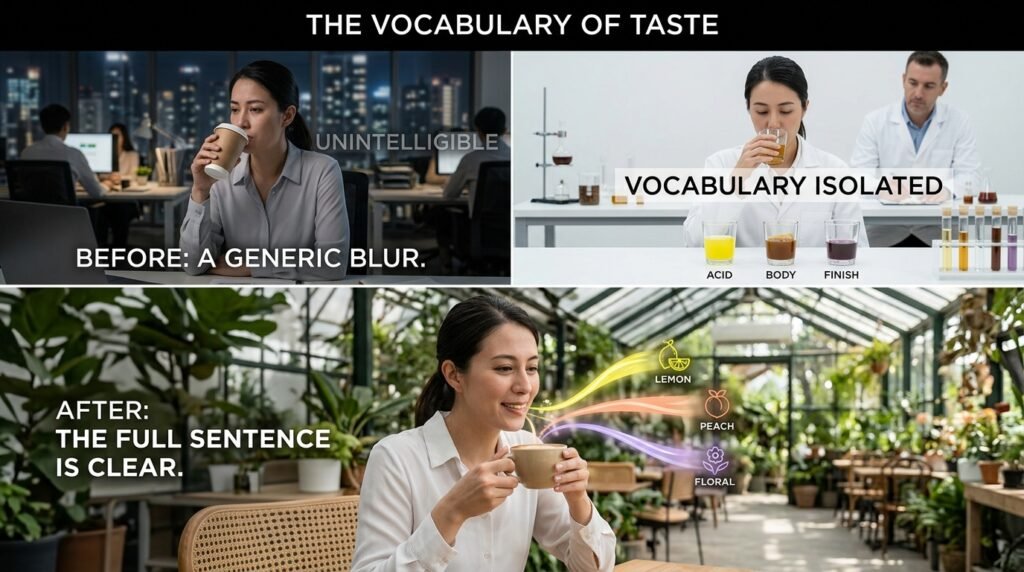
Just like learning a new language, I needed to isolate the vocabulary words before I could understand the full sentence. Because I tasted the violent acid, the heavy sugar, and the dry tannin completely separately, my brain finally categorized the data.
Now, when I drink a normal, fully mixed cup of coffee, the wall of generic flavor is gone.
My brain can easily pick the individual notes apart. I can feel the lemon acidity hit the front of my tongue. I can feel the heavy peach body coat the middle of my palate. I can detect the slight floral finish. The vocabulary is finally clear.
Execute the Slice
You cannot learn this lesson by simply reading text on a screen. You have to force your own palate to experience the extreme chemical contrasts.
This weekend, clear your kitchen counter. Line up three small cups. Grind your fresh coffee beans. Start your pour.
Move the brewer at one minute. Move the brewer again at two minutes. Let the liquids cool down completely. Taste the sour acid. Taste the heavy sugar. Taste the bitter ash. Mix the first two cups together and experience the perfect harmony.
When you physically break the extraction apart, you will never look at your morning routine the same way again. You will finally understand the hidden architecture of the roasted seed, and you will permanently unlock the ability to engineer the perfect flavor in your own home.

Hi, I’m the coffee enthusiast behind Coffee Nerd Lab.
Like many people, I started drinking coffee simply because it helped me wake up in the morning. Over time, that daily habit turned into a genuine interest in understanding what makes a great cup of coffee. I began experimenting with different beans, brewing methods, grinders, and coffee gear, learning through trial and error along the way.
This blog is where I document that journey. Every article is inspired by real experiences, discoveries, and lessons I’ve learned while exploring the world of coffee. From brewing guides and equipment reviews to practical tips and coffee basics, my goal is to share useful information in a way that’s easy to understand and enjoyable to read.
Thanks for stopping by, and I hope Coffee Nerd Lab helps you enjoy your next cup a little more than the last.