
I closed my laptop and rubbed my eyes. I had just spent six uninterrupted hours staring at a bright screen. I was optimizing content, organizing digital workflows, and managing server backends. My brain felt completely fried by the digital noise. I needed a break. I needed to step away from the glowing rectangle and touch something real in the physical world.
I walked out of my home office and went straight into the kitchen. My partner was already there, unpacking a few groceries.
She reached into a paper bag and pulled out a small pouch of coffee. She bought it from a local specialty roaster down the street. She handed it to me. I turned the bag over and looked at the label on the back.
Usually, I just look for the country of origin and the roast date. But this label was different. It was incredibly detailed.
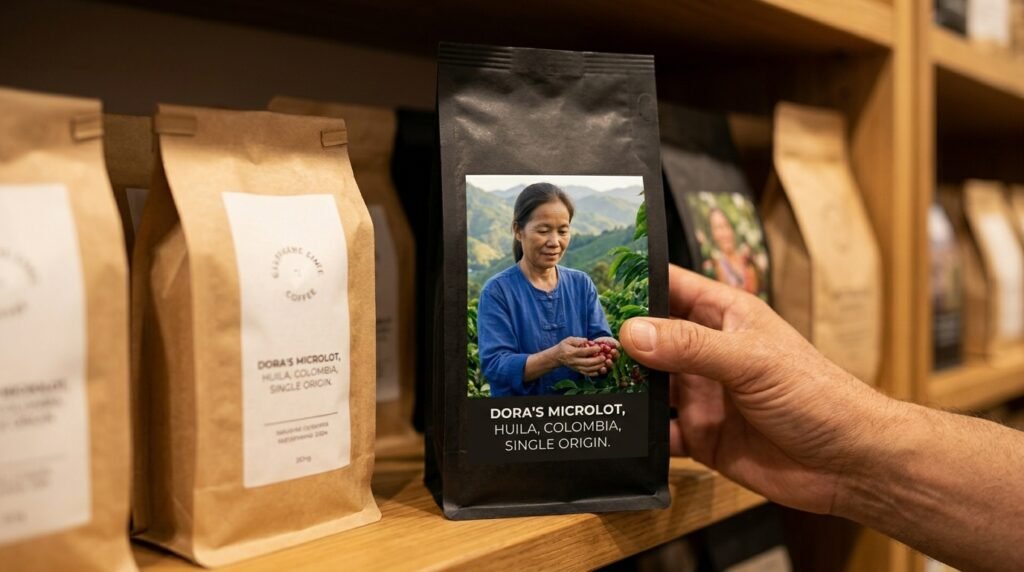
It did not just say “Ethiopia.” It said the coffee was grown in the Guji zone. It listed the exact altitude of the farm. It listed the botanical variety as Heirloom. Most importantly, it listed the name of the actual farmer who grew the crop.
I stood in my kitchen holding the bag. I read the farmer’s name out loud.
Something clicked in my brain. I suddenly saw the brown seeds inside that bag in a completely different light. They were no longer just a generic morning utility. The moment I realized coffee beans tell a story fundamentally changed my relationship with the beverage. It turned my daily caffeine habit into an act of profound culinary respect.
The Faceless Commodity
To understand why this specific label struck me so hard, you have to look at how we usually buy coffee.
For most of the world, coffee is an entirely faceless commodity. We buy massive plastic tubs of pre ground powder at the supermarket. We buy shiny foil bags with pictures of generic mountains and smiling donkeys.
The massive corporations that sell this coffee want you to believe it comes from a magical factory. They intentionally hide the agricultural reality. They mix cheap beans from Vietnam, Brazil, and Honduras into giant silos. They burn them into a dark, oily oblivion.
They erase the origin because the origin is flawed. They erase the farmer because acknowledging the farmer would require paying them a fair wage.
Drinking commercial coffee is like reading a book with the cover torn off and half the pages missing. There is no context. There is no author. There is just a bitter, generic liquid.
Finding the Author
The bag of Ethiopian Guji I was holding was the exact opposite of a faceless commodity.
By printing the farmer’s name on the label, the roaster was completely transparent about the supply chain. They were giving the agricultural artist the credit they deserved.
I realized that every single detail on that label was a chapter in a story. The altitude was the setting. The processing method was the plot. The genetics were the characters.
When you buy coffee that provides this level of detail, you are not just buying a drink. You are buying a highly specific snapshot of a place and time. You are buying a harvest. Grasping this concept is precisely Why Single-Origin Coffee Changed the Way I Drink Coffee and completely eliminated blends from my kitchen. I wanted to read a single story, not a chaotic summary of five different books.
The Setting: High Altitude
I looked closely at the altitude listed on the Guji bag. It said the farm was located at two thousand meters above sea level.
That number is not just a random geological fact. It is a vital piece of the narrative.
At two thousand meters, the air is thin. The days are warm, but the nights are freezing cold. The coffee tree hates freezing cold nights. The plant goes into survival mode. It slows down its entire biological process to protect its fruit.
Because the cherry matures so slowly, it has weeks of extra time to pull nutrients from the volcanic soil. It packs the seed with dense, complex organic acids and heavy natural sugars.
When I read that altitude number, I knew exactly what the story was going to be about. It was going to be a story about intense, concentrated sweetness born from environmental stress.
The Characters: Heirloom Genetics
The next chapter of the story was the botanical variety. The label proudly stated “Heirloom.”
Ethiopia is the biological birthplace of the coffee plant. Unlike modern farms in South America that plant perfectly organized rows of identical, scientifically modified hybrid clones, Ethiopian farms are wild.
The farmers harvest from wild trees that have grown in the deep forests for centuries. There are thousands of undocumented genetic mutations growing side by side. It is a massive, chaotic genetic soup.
You cannot replicate this genetic soup anywhere else on the planet. It is an exclusive feature of the African landscape.
This genetic chaos creates flavors that defy logic. It produces notes of jasmine flowers, ripe blueberries, and bergamot. The word “Heirloom” on the label was a promise. It promised me a wild, unpredictable cast of characters in my mug.
The Plot: Washed Processing
The final piece of data on the label detailed the post harvest processing. It said the coffee was “Fully Washed.”
When a farmer picks a coffee cherry, they have to remove the sticky, sweet fruit to get to the seed inside. How they remove that fruit drastically alters the final flavor.
In a washed process, the farmers use mechanical depulpers to strip the fruit away immediately. Then, they soak the seeds in massive fermentation tanks filled with fresh water. The water eats away any remaining sticky mucilage. The seed is left perfectly bare and completely clean before it is dried in the sun.
This processing method is the editor of the story.
By washing the fruit away, the farmer removes any heavy, fermented distractions. They force the seed to stand entirely on its own. A washed coffee is a transparent window directly to the soil and the genetics. It is clean, crisp, and articulate.
The Roaster as the Publisher
I finally opened the bag. The dry aroma filled my kitchen. It smelled vibrantly sweet, like a basket of fresh peaches and spring flowers.
I poured the pale, matte brown beans onto my digital scale.
I thought about the local roaster who sold my partner this bag. The roaster did not write the story. The farmer in Ethiopia wrote the story. The roaster is simply the publisher.
Their only job is to take the raw manuscript and print it without making any typos. If the roaster applies too much heat, they burn the pages. They incinerate the delicate peach notes and destroy the floral aroma.
By roasting the beans very lightly, this specific roaster had protected the farmer’s hard work. They ensured the translation from raw agriculture to roasted seed was absolutely flawless.
Reading the Pages
I weighed out twenty grams of the Guji beans and poured them into my hand grinder.
As I turned the crank, the ceramic burrs crushed the dense, high altitude seeds. The physical effort required to break the beans was a tactile reminder of their tough environment.
I set up my glass V60 pour over cone. I placed a paper filter inside and rinsed it with boiling water.
I dumped the fragrant grounds into the damp filter. I poured forty grams of hot water to begin the bloom phase. The coffee bed expanded beautifully. The carbon dioxide gas escaped, carrying the heavy scent of black tea and jasmine directly into my sinuses.
The Climax of the Pour
I focused intensely on my pouring technique. I wanted to extract the story perfectly.
I poured the hot water in slow, tight concentric circles. I kept the water level incredibly steady. I watched the bright ruby liquid pass through the paper filter and drip into my ceramic mug.
The entire process took three minutes. I was not rushing. I was not thinking about the digital spreadsheets waiting for me in my home office. I was entirely present in the physical moment.
I removed the glass cone and tossed the spent grounds into the trash. I picked up the warm mug and walked over to my kitchen table.
Tasting the Narrative
I waited a few minutes for the coffee to cool. Heat acts as a sensory blanket. I wanted the liquid to be warm so my tongue could detect every single nuance.
I took a slow, deliberate sip.
The flavor was absolutely spectacular. It hit the front of my palate with a bright, sparkling flash of lemon zest. That sharp citrus acidity immediately dissolved into a heavy, syrupy sweetness that tasted exactly like ripe peaches.
As I swallowed, the aroma traveled up the back of my throat into my nasal cavity. A distinct, beautiful note of jasmine flowers lingered long after the liquid was gone.
I sat at my table in pure silence. The complexity was staggering. Understanding exactly what my palate was experiencing was the direct result of How I Started Noticing Flavor Notes in Coffee through careful, deliberate practice. The fruit notes were not an illusion. They were the physical evidence of the Ethiopian soil.
The Human Connection
I took another sip and looked back at the empty bag sitting on the counter. I looked at the farmer’s name again.
I realized that this cup of coffee was a massive global collaboration.
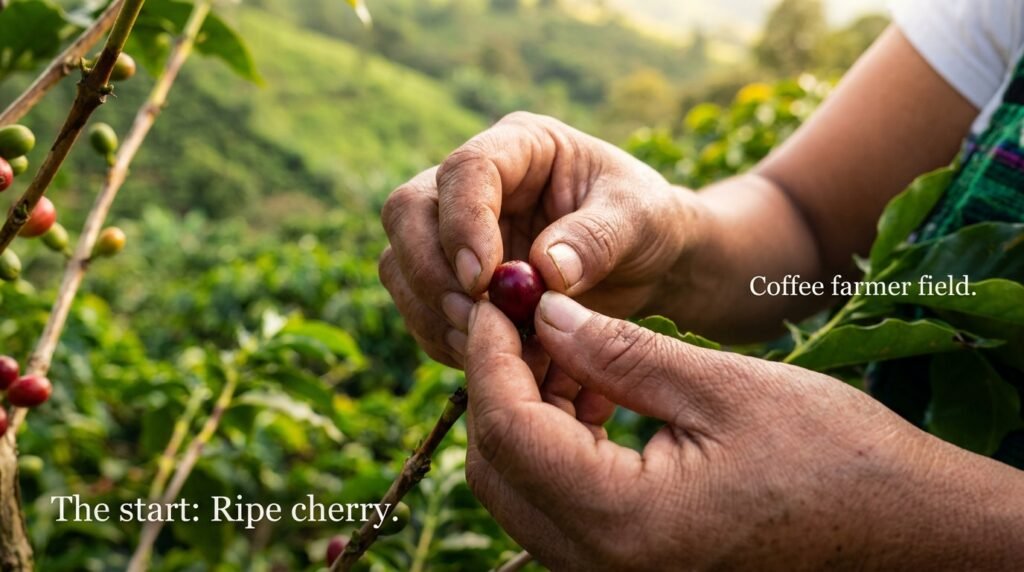
A farmer stood on a steep, volcanic mountainside in Africa. They carefully inspected a wild coffee tree. They reached out with their own hands and picked a perfectly ripe, red cherry. They carried baskets of those cherries down the mountain. They carefully washed and dried the seeds under the sun.
They packed those seeds into a burlap sack. The sack crossed an ocean. A skilled roaster in my city carefully applied heat to those seeds in a cast iron drum. My partner walked into the shop and bought the bag. I stood in my kitchen and poured hot water over the grounds.
The True Value of the Mug
When you recognize that massive chain of human labor, the beverage completely transforms.
It becomes impossible to complain about the price of specialty coffee. Paying twenty dollars for a bag of single origin beans is an absolute bargain when you understand the agricultural risk and physical effort required to produce it.
You are paying for transparency. You are paying for ethics. You are paying for a story.
If you buy a cheap plastic tub of dark, oily powder from the supermarket, you are actively choosing ignorance. You are drinking a product that has been stripped of its identity. You are drinking a silent, anonymous liquid.
Developing the Habit of Curiosity
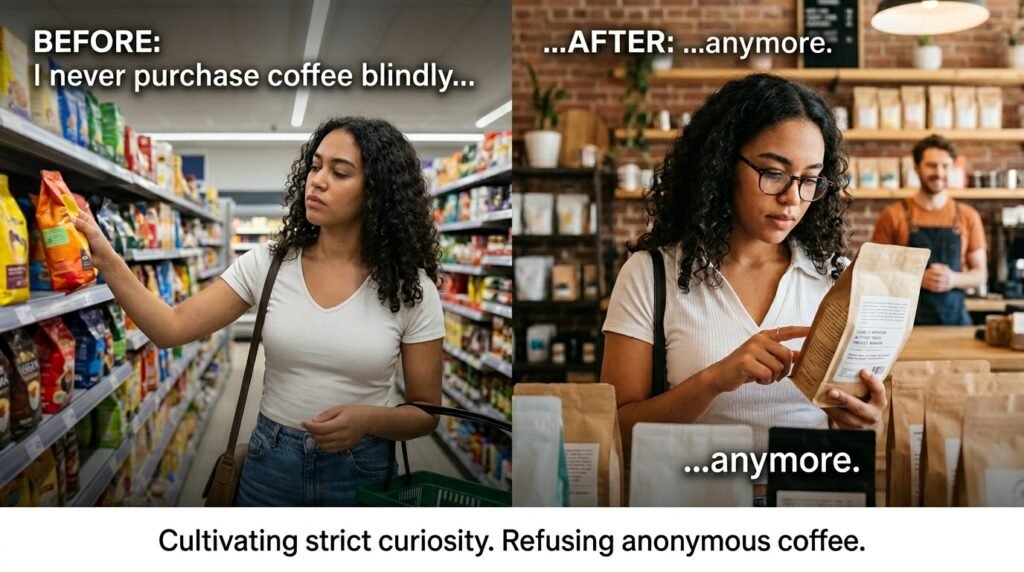
That single afternoon fundamentally shifted my buying behavior. I never purchase coffee blindly anymore.
Before I hand my credit card to a barista, I interrogate the packaging. I want to know everything. Cultivating this strict curiosity is the exact premise of Why I Started Reading Labels Before Buying Coffee Beans to ensure my money supports the right people. If a bag cannot tell me the altitude, the process, and the farm, I put it back on the shelf.
I refuse to drink anonymous coffee. I want to know who authored the book before I commit to reading it.
Listen to Your Coffee Tomorrow
The next time you walk into your kitchen to make your morning coffee, I want you to look closely at the packaging.
Does your bag tell a story? Does it have a name? Does it tell you about the soil, the elevation, and the processing method?
If your bag only says “Premium Blend” and features a generic corporate logo, throw it in the trash. You are missing the most beautiful, human element of the entire industry.
Go to a local specialty roaster. Find a bag that reads like an agricultural biography. Bring it home. Grind it fresh. Brew it carefully. Take a slow sip and close your eyes. If you pay close enough attention, you will taste the rain, the volcanic dirt, and the intense labor of a farmer on the other side of the planet. Stop drinking anonymous caffeine, and start drinking the story.
