
A sudden afternoon thunderstorm caught me completely off guard. I was walking through an industrial neighborhood downtown, blocks away from my parked car. The sky turned dark gray, and heavy rain started falling instantly.
I started running to find cover. I saw an old brick building with a large metal garage door propped open. I ducked inside to escape the downpour.
I stood near the entrance and shook the water off my jacket. I closed my eyes for a second. When I opened them, I realized I had not just stepped into an empty warehouse.
The air inside the building was incredibly warm. It smelled thick, sweet, and slightly smoky. It smelled like toasted sugar and baking bread. The noise was deafening. A massive metal machine was humming and spinning in the center of the concrete floor.
I had accidentally stumbled directly into a working specialty coffee roastery.
A man wearing a heavy canvas apron noticed me standing by the door. He smiled, handed me a small paper cup of warm black liquid, and invited me to look around while the rain passed. I spent the next two hours completely captivated by the operation. How visiting a local roastery changed the way I see coffee beans was a profound shift in perspective. It destroyed my supermarket mindset and introduced me to the raw, beautiful reality of agricultural science.
The Mountain of Burlap
I walked past the front counter and looked at the storage area. I expected to see massive plastic bins or shiny commercial packaging.
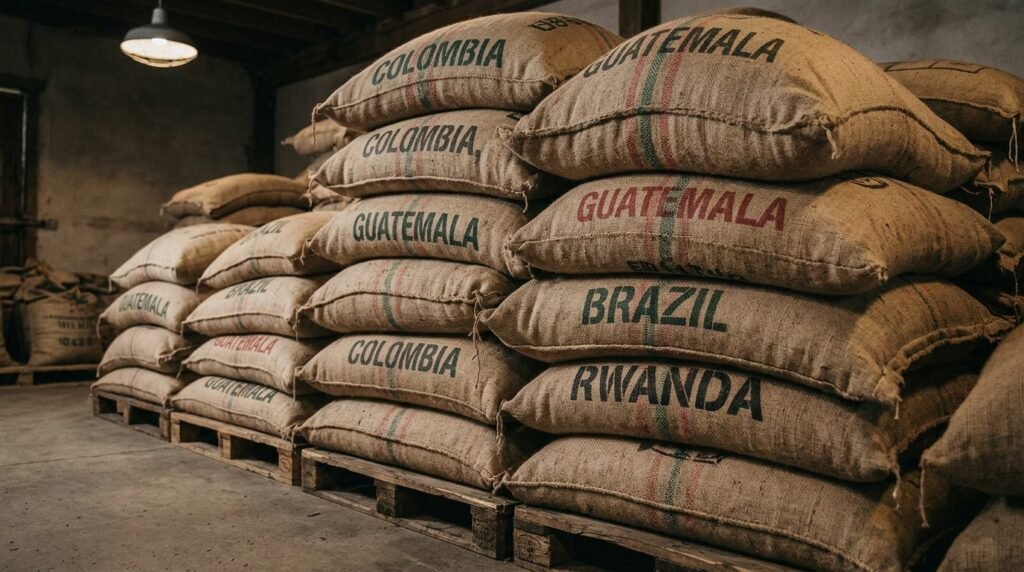
Instead, I saw a towering mountain of heavy burlap sacks stacked on wooden pallets.
The sacks were covered in brightly colored stamps and thick black ink. I walked closer to read the labels. They did not feature corporate logos. They featured the names of specific countries. I saw stamps from Colombia, Rwanda, Guatemala, and Brazil.
The man in the canvas apron walked over and introduced himself as the head roaster. I pointed to the mountain of burlap and asked him what was inside.
He pulled a small pocket knife out of his apron. He walked up to a sack stamped with the word Ethiopia. He carefully sliced a tiny hole in the rough fabric. He held his hand under the hole, and a stream of small, hard objects poured into his palm.
The Shock of the Green Seed
He held his hand out toward me. I looked down at the objects.
My brain completely stalled. I was expecting to see shiny, dark brown, oily coffee beans. The objects in his hand did not look like coffee at all.
They were a pale, dusty green color. They looked like split peas or dried lentils. They were incredibly small and perfectly uniform.
I picked one up. It felt completely rock hard. I brought it up to my nose and smelled it. It did not smell like a morning beverage. It smelled like dry hay, fresh grass, and sweet green peas.
The roaster laughed at my confused expression. He explained that coffee does not grow on a shelf in a grocery store. It grows on a tree. The dark brown object I put in my grinder every morning is actually the roasted pit of a tropical cherry.
Seeing the raw, green seed in person completely shattered my illusion. I suddenly understood the concept perfectly. It was the exact physical proof behind What I Learned About Coffee Processing Methods because I was finally holding the raw agricultural output in my own hands.
The Influence of the Dirt
The roaster pointed back to the specific burlap sack he had just cut open. He told me it was a Yirgacheffe variety from Ethiopia.
He explained that the flavor of the final cup does not come from the roasting machine. The flavor comes directly from the dirt. He told me about the ancient volcanic soil in the Yirgacheffe region. The rich, mineral dense volcanic earth, combined with the extreme high altitude of the mountains, stresses the coffee plant.
When the plant is stressed, it pushes all of its energy into the fruit. That biological survival mechanism creates a highly concentrated, incredibly sweet seed.
He told me that his only job as a roaster is to pull the flavor of that volcanic soil out of the seed without destroying it. If he applies too much heat, he burns the soil flavor away.
I had never thought about dirt while drinking my morning mug. I realized that treating coffee like an industrial product is a massive insult to the biology of the plant.
The Massive Metal Drum
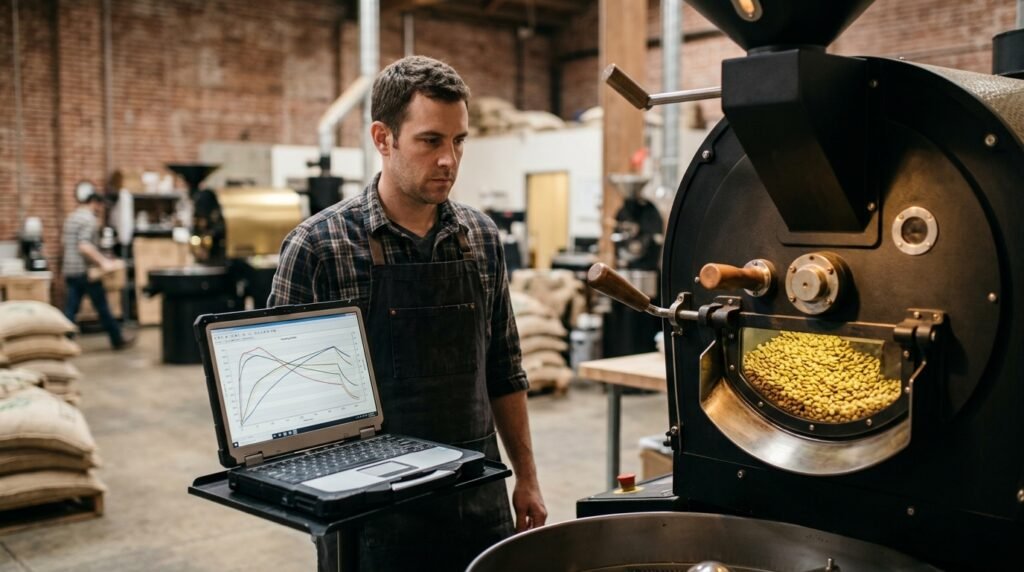
The roaster invited me to step closer to the loud, spinning machine in the center of the room. It looked like a vintage locomotive engine. It was made of heavy cast iron and polished steel.
He told me he was about to start a new batch.
He grabbed a heavy plastic bucket filled with raw green seeds. He climbed a small set of metal stairs and dumped the green seeds into a massive funnel at the very top of the machine. The seeds rattled loudly as they fell into the spinning drum below.
The digital temperature gauge on the control panel immediately plummeted. The cold, dense seeds were absorbing the intense thermal energy inside the drum.
I stood a few feet away and watched the process through a tiny glass window on the front of the machine. The raw seeds tumbled over each other in a chaotic, hypnotic rhythm.
The Chemistry of Caramelization
The roaster did not walk away from the machine. He stood completely still, staring at a laptop screen connected to the roaster. The screen displayed a complex graph of curving lines.
He explained that roasting is a highly sensitive chemical reaction. It is a race against time.
The heat slowly drives the trapped moisture out of the green seeds. As the moisture leaves, the seeds physically change color. I looked through the glass window. The pale green color faded into a bright, vibrant yellow.
The smell in the warehouse shifted immediately. The smell of dry hay vanished. The air suddenly smelled like baking bread and toasted oats.
As the temperature continued to rise, the complex carbohydrates inside the seeds began to break down. This is the Maillard reaction. It is the exact same chemical process that turns a raw steak brown on a hot grill. The yellow seeds turned into a light, tan brown.
The Sound of the First Crack
The tension in the room suddenly increased. The roaster placed his hand on a heavy metal lever. He told me to listen closely.
The tumbling noise of the beans was loud, but a new sound suddenly emerged. It sounded exactly like popcorn popping in a microwave.
Pop. Pop. Pop.
The roaster called this the first crack. The internal moisture of the seed had reached a boiling point. The steam pressure inside the dense little seed became too great. The cellular walls physically shattered, releasing the steam and expanding the bean.
The smell in the air shifted one final time. The baking bread aroma disappeared. The warehouse filled with the unmistakable, heavy, sweet scent of actual roasted coffee.
The roaster pulled the heavy metal lever. The front door of the drum swung open. A massive waterfall of hot, brown coffee beans poured out into a circular cooling tray. Metal arms spun rapidly, stirring the beans to bring their temperature down instantly.
The Reality of Freshness
We stood next to the cooling tray. The roasted beans looked beautiful. They were completely matte, with no oil shining on the surface.
I reached out to grab one, but the roaster warned me they were still incredibly hot. He told me I could not drink this coffee today. He said I could not even drink it tomorrow.
I was confused. I assumed coffee was best immediately out of the oven.
He explained the physics of degassing. During the violent chemical reactions inside the drum, the beans trap massive amounts of carbon dioxide gas. If you grind and brew the beans immediately, the gas violently repels the hot water. The extraction is chaotic and terrible.
The beans need to rest in a sealed bag with a one way valve for at least five days. They need to exhale.
This simple biological fact completely ruined my perspective on supermarket coffee. I realized the coffee sitting on grocery store shelves had been roasted months ago. It had exhaled all of its gas. It had oxidized. It was completely dead. Grasping this timeline was the defining moment of How I Realized Freshness Affects Every Sip of Coffee and why I never went back to the commercial aisle.
The Ritual of the Cupping Table
The rain outside had finally stopped, but I did not want to leave. The roaster asked if I wanted to taste some of his recent batches. He led me to a high wooden table in the back of the room.
There were dozens of small ceramic bowls sitting on the table. He was preparing a professional tasting session. In the industry, this is called cupping.
He poured hot water directly over coarse coffee grounds in each bowl. We did not use paper filters. We did not use glass cones. It was just coffee and water steeping together.
A thick crust of wet coffee grounds formed at the top of each bowl. He handed me a large silver spoon. He showed me how to break the crust by pushing the spoon through the surface.
When I broke the crust on the first bowl, a massive burst of concentrated aroma hit my face. It was the most intense sensory experience I had ever had with a beverage.
Tasting the Origin
He instructed me to scoop a small amount of the liquid into my spoon. He told me to slurp it as loudly as possible.
Slurping forcefully sprays the liquid across your entire palate. It coats all of your taste buds simultaneously. It feels incredibly rude and awkward, but it is highly effective.
I slurped the liquid from the first bowl. It was the Ethiopian Yirgacheffe.
My eyes widened instantly. The flavor was spectacular. It did not taste like the dark, bitter diner coffee I was used to drinking. It tasted like sweet black tea mixed with bright lemon juice and a heavy note of jasmine flowers. It was light, vibrant, and completely clean.
I moved to the next bowl. It was a coffee from Brazil.
I slurped it loudly. The contrast was shocking. The Brazilian coffee had absolutely zero lemon or jasmine notes. It tasted heavy, round, and rich. It tasted exactly like dark chocolate and toasted peanuts.
I was tasting two identical looking brown seeds, roasted on the exact same machine. But the flavors were worlds apart. I was literally tasting the difference in the global dirt.
The Human Element
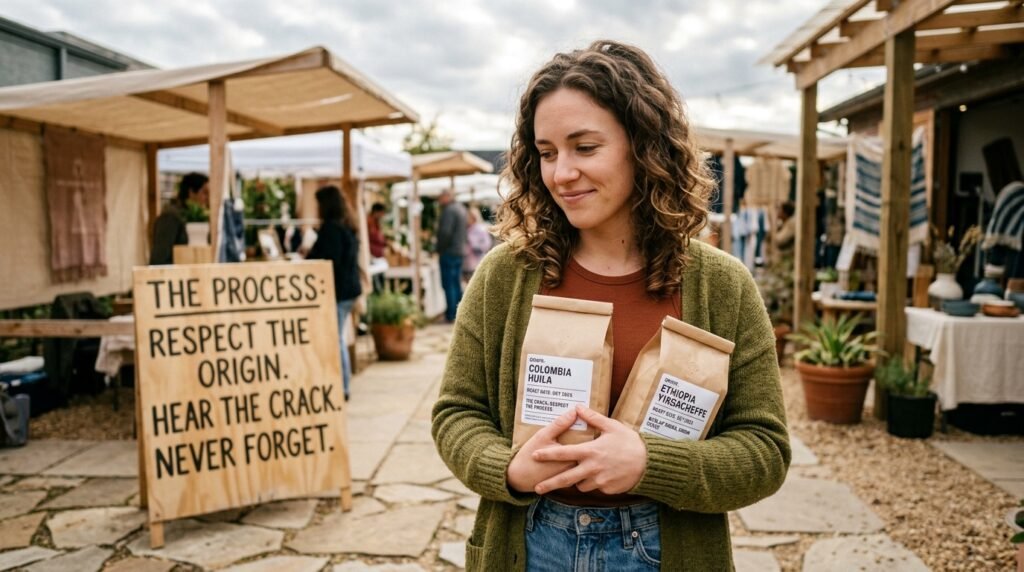
We finished the tasting session. I thanked the roaster profusely for his time and his patience. I bought two bags of the Ethiopian Yirgacheffe to take home.
As he handed me the bags, he pointed to a specific name printed on the label. It was not a brand name. It was the name of the actual farmer who grew the coffee in Africa.
He told me he had visited that specific farm last year. He shook the hand of the man who planted the trees.
That single detail struck me harder than anything else I learned that afternoon. When you buy cheap coffee at a massive commercial store, the human element is completely erased. The coffee is an anonymous commodity.
When you buy from a small local roastery, the supply chain becomes visible. You realize that your morning beverage is the final step in a massive global collaboration. Understanding this connection is the exact premise of The Roaster That Showed Me Coffee Has Personality because it turns a faceless product into a human story.
A Permanent Change in Behavior
I walked out of the brick building and back onto the wet sidewalk. The sun was starting to shine through the clouds.
I held the two bags of coffee tightly in my hands. I knew my morning routine would never be the same.
I could never go back to blindly scooping dark, oily powder into a plastic machine. I could never ignore the origin of the beans. I could never ignore the roast date stamped on the back of the bag.
Once you see the mountain of burlap sacks, you cannot unsee it. Once you smell the sweet hay of the raw green seed, you cannot forget it. Once you hear the violent crack of the roasting drum, you respect the intense chemistry of the process.
Find Your Local Roaster
We spend so much time obsessing over brewing equipment. We buy expensive kettles, precision digital scales, and fancy glass cones. We treat the kitchen like a laboratory.
But none of that equipment matters if you do not respect the ingredient.
If you truly want to elevate your morning coffee, stop looking at equipment reviews online. Go search for a local, independent coffee roaster in your city. Find an industrial building with a loud metal machine inside.
Walk through the front door. Look at the burlap sacks. Smell the air. Buy a bag of coffee that was roasted three days ago. Ask the barista where the beans were grown.
Visiting a local roastery removes the curtain of commercial marketing. It exposes the raw, beautiful reality of agricultural science. It teaches you that coffee is not just a dark liquid designed to keep you awake. It is a highly sensitive, wildly complex tropical fruit. Change where you buy your beans, and you will permanently change the way you see your mug.
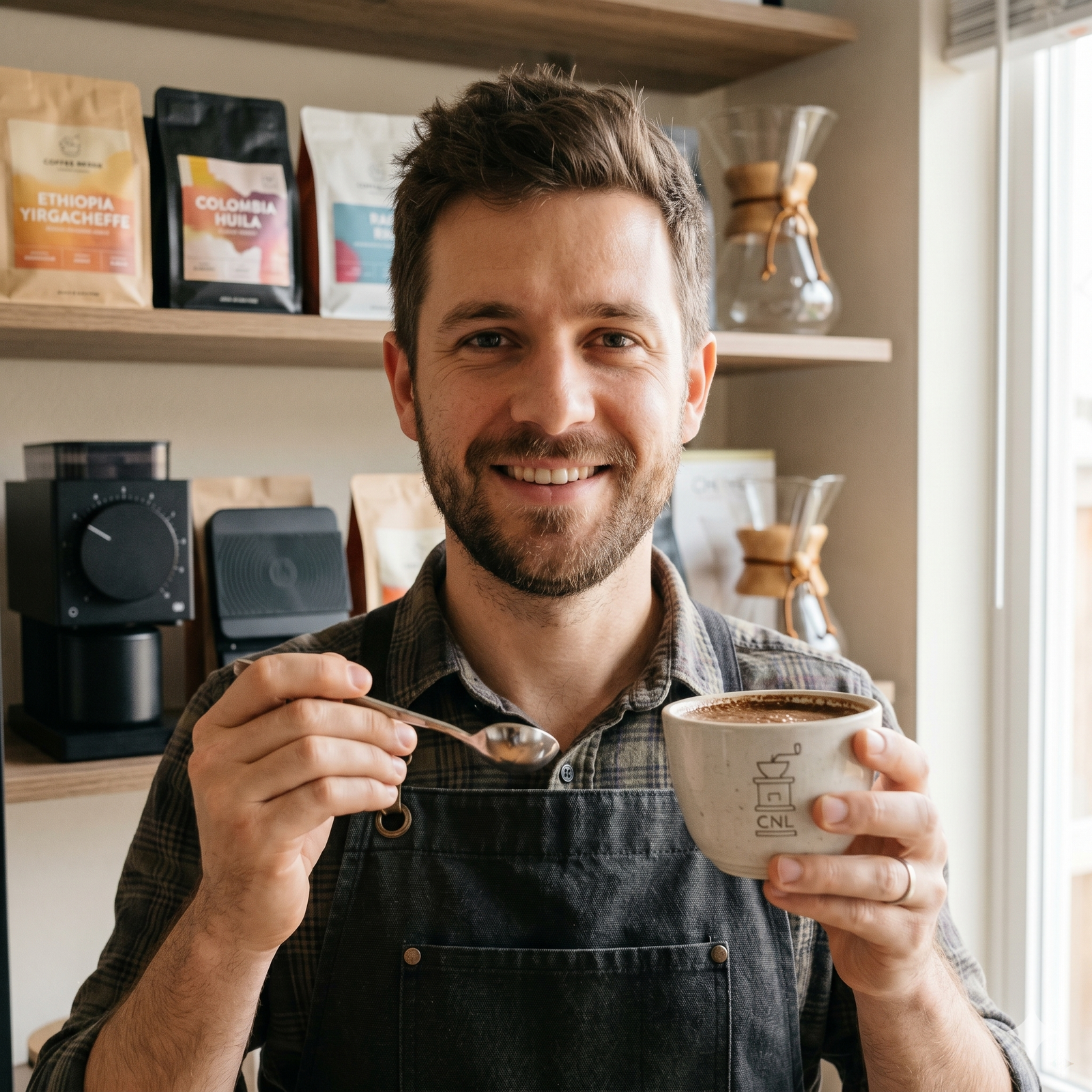
Hi, I’m the coffee enthusiast behind Coffee Nerd Lab.
Like many people, I started drinking coffee simply because it helped me wake up in the morning. Over time, that daily habit turned into a genuine interest in understanding what makes a great cup of coffee. I began experimenting with different beans, brewing methods, grinders, and coffee gear, learning through trial and error along the way.
This blog is where I document that journey. Every article is inspired by real experiences, discoveries, and lessons I’ve learned while exploring the world of coffee. From brewing guides and equipment reviews to practical tips and coffee basics, my goal is to share useful information in a way that’s easy to understand and enjoyable to read.
Thanks for stopping by, and I hope Coffee Nerd Lab helps you enjoy your next cup a little more than the last.