
I was sitting at a high wooden counter inside a specialized local roastery. The shop was quiet on a Tuesday afternoon. I ordered a single origin pour over coffee from Honduras. I chose to sit right by the brewing station. I wanted to watch the barista work.
I am a highly observant person when it comes to coffee. I watched him place a glass dripper on a digital scale. I watched him rinse the paper filter. I watched him grind the beans and pour them into the cone.
Everything looked completely standard. He grabbed his hot kettle and poured a small amount of water to start the blooming process.
Then, he did something that completely broke my internal rules.
He did not let the coffee sit peacefully. He picked up the glass dripper with his bare hand. He violently swirled the glass in tight, aggressive circles. The wet coffee grounds spun like a dark, muddy tornado inside the paper filter. He set the glass back down on the scale and waited for the timer to tick forward.
I was shocked. Every single guide I had ever read told me to pour the water gently and never touch the coffee bed. I thought physical agitation would ruin the delicate extraction process. I thought it would create a bitter, over extracted nightmare.
A few minutes later, he handed me the mug. I took a sip. It was one of the sweetest, most vibrant cups of coffee I had ever tasted. There was absolutely zero bitterness.
I drove home that afternoon completely obsessed with what I had just witnessed. That tiny, two second physical movement completely challenged my rigid kitchen habits. It became the exact catalyst for a massive leap in my own brewing quality. Here is exactly why that violent swirl was the small brewing adjustment that made my coffee better.
The Fragile Coffee Myth
For years, I treated my morning coffee routine like a delicate surgery.
When I poured hot water over my fresh grounds, I was terrified of disturbing them. I would pour the water in the slowest, most gentle stream possible. Once the water was in the filter, I stepped back. I treated the glass cone like a fragile museum exhibit. I refused to touch it.
I believed that if I moved the brewer, I would push the coffee grounds into the paper filter and clog the pores. I thought I was protecting the flavor.
But my flavor was incredibly inconsistent. Some mornings, my coffee tasted great. Other mornings, using the exact same beans and the exact same recipe, the coffee tasted horribly sour and grassy. It tasted like unripe fruit and raw vegetables.
I could not figure out what was causing the wild fluctuations. I blamed the weather. I blamed my grinder. I even blamed the water coming out of my kitchen sink. I never once blamed my own gentle technique.
The Hidden Problem of Dry Pockets
When I saw the barista swirl his glass dripper, I realized he was solving a problem I did not even know existed. He was fighting the physics of dry coffee.
Freshly ground coffee is extremely porous. But it also aggressively resists water. When you pour hot water over a dry bed of coffee, the water does not instantly soak into every single particle.
Water is inherently lazy. It always seeks the path of least resistance.
If you pour water gently over a pile of dry grounds, the water will find a small crack or a weak spot. It will drill a tiny tunnel straight down to the bottom of the filter. It will flow entirely through that specific tunnel, completely ignoring the rest of the coffee.
In the coffee industry, this is called channeling.
While the water is rushing through that narrow channel, massive clumps of coffee grounds remain completely bone dry hidden underneath the surface. You cannot see them. The top of your coffee bed looks completely wet. But underneath the surface, entire pockets of expensive coffee are hiding from the water.
The Chemistry of the Sour Cup
Having dry pockets hidden inside your brewer is a culinary disaster. It completely ruins the complex chemistry of the extraction.
If water never touches a specific clump of coffee grounds, those grounds contribute absolutely zero flavor to your mug. You are effectively wasting a large percentage of your expensive beans.
But the problem is actually much worse than simple waste.
Because the water is ignoring the dry clumps, all of the water is being forced through the narrow channels. The coffee grounds caught inside those channels are being assaulted by too much water. They become severely over extracted. They release harsh, dark, bitter tannins.
Meanwhile, the water dripping into your mug is severely diluted. You end up with a weak beverage that carries a sharp, sour bite from the uneven extraction.
Fixing this invisible problem was The Coffee Trick That Took Me Years to Discover simply because I could not see the dry spots hidden underneath. I was operating completely blind. I needed a way to guarantee that every single particle of coffee was touching the hot water.
The Power of the Bloom Phase
To fix the dry pocket problem, you have to attack it at the very beginning of the brewing process. You have to intervene during the bloom.
The bloom is the first forty five seconds of the brew. You pour a tiny amount of water over the dry grounds to release the trapped carbon dioxide gas. The coffee swells and bubbles.
In my old routine, I would pour this initial water and just stare at it. I would watch the bubbles pop and wait.
But the carbon dioxide gas actively pushes water away. It acts like an invisible shield protecting the dry clumps inside the filter. If you do not break that shield, the water cannot do its job.

Executing the Swirl
The next morning in my kitchen, I decided to steal the barista technique. I was ready to break my own rules.
I placed my glass pour over cone on my digital scale. I added twenty grams of freshly ground Ethiopian coffee. I grabbed my gooseneck kettle.
I poured exactly sixty grams of hot water to start the bloom phase. The coffee grounds started to swell and bubble.
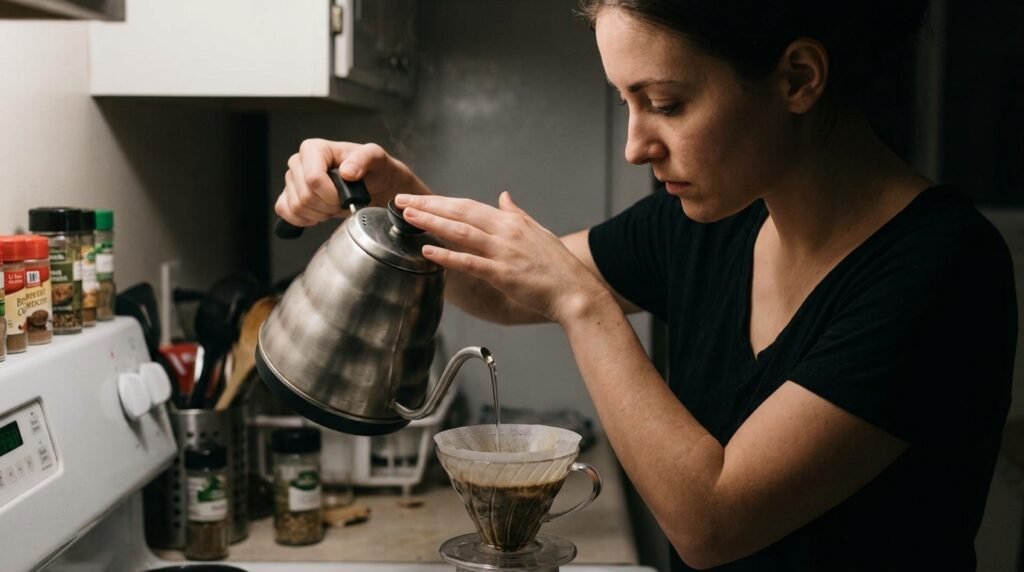
I immediately put the kettle down on the stove. I grabbed the base of the glass cone with my right hand. I lifted it slightly off the digital scale. I gave the entire glass vessel a firm, aggressive swirl in a tight circle.
The wet coffee grounds spun rapidly inside the paper filter. I swirled it for three seconds and placed it back down on the scale.
The physical difference was instantly visible. The coffee bed no longer looked like a lumpy, uneven mountain. The violent motion had completely mixed the water and the coffee together. The slurry looked like smooth, dark melted chocolate. The top surface was perfectly flat and even.
The Immediate Sensory Shift
I let the coffee bloom for another thirty seconds. Then, I finished pouring the rest of my hot water in slow, concentric circles.
I watched the final drops of liquid fall into my ceramic mug. I looked inside the glass cone. The spent coffee grounds formed a perfectly flat bed at the bottom of the filter. There were no deep craters. There were no high walls of dry coffee clinging to the paper.
I picked up the mug and took a sip.
The flavor hit my palate with an incredible, vibrant intensity. The harsh, sour grassy notes that had plagued my mornings for weeks were entirely gone.
Instead, the coffee was deeply sweet. It tasted like ripe berries and dark honey. The body of the beverage felt heavier and more substantial on my tongue. The extraction was perfectly uniform. Every single grain of coffee had contributed its natural sugars to the final cup.
This aggressive physical intervention was exactly The First Coffee Tip That Truly Changed My Brewing because it destroyed a bad habit. It taught me that coffee grounds are not fragile. They actually require a firm hand to behave properly.
The Spoon Alternative
Swirling the glass dripper is an incredibly effective technique. But I quickly learned that it does not work perfectly for every single piece of equipment.
If you use a very heavy ceramic dripper, swirling it safely with one hand is quite difficult. If you use a plastic brewer that sits directly on top of a narrow mug, swirling it can easily knock the entire setup over and cause a massive kitchen flood.
Thankfully, there is a safer alternative that accomplishes the exact same goal. You can use a tool.
I went to my silverware drawer and found a small, wooden stirring spoon.
The next day, I tested the spoon method. I poured the initial hot water to start the bloom. Instead of picking up the brewer, I took the wooden spoon and gently dug it straight down to the bottom of the filter.
I stirred the wet coffee grounds firmly. I made sure to scrape the bottom point of the paper cone where the dry pockets love to hide. I stirred it in a tight circle exactly three times and pulled the spoon out.
The result was completely identical to the swirl. The dry clumps were destroyed. The carbon dioxide gas was forcefully expelled. The coffee grounds were fully saturated, and the resulting beverage was incredibly sweet and balanced.
Consistency Above All Else
The true beauty of the bloom swirl is not just the elevated flavor. The true beauty is the complete elimination of random variables.
Before I started swirling my coffee, my mornings were a gamble. I never knew if the water was going to find a dry pocket or not. I never knew if my cup was going to taste sweet or sour. I was rolling the dice every single time I turned on my kettle.
By physically agitating the coffee bed, I removed the gamble.
I guarantee that every single particle of coffee gets completely soaked in the first ten seconds of the brew. I force the water to do its job. I take the control away from the lazy water and put it directly into my own hands.
It was undeniably The Small Coffee Adjustment That Made a Big Impact on my morning routine. It takes exactly three seconds of physical effort, but it provides total peace of mind. I know my coffee will taste exactly the way I want it to taste, every single day.
Why Old Rules Fail
You might wonder why so many old coffee manuals and instruction booklets tell you to never touch the coffee bed.
The answer comes down to outdated equipment. Decades ago, coffee filters were made of very cheap, highly porous paper. The coffee grinders available to normal consumers were terrible. They produced a massive amount of fine, microscopic dust.
If you violently stirred a bed of poorly ground coffee inside a cheap paper filter, the fine dust would instantly clog the pores of the paper. The water would stall completely. The brew would take ten minutes to drain, resulting in a cup of bitter sludge.
The old rules were written to protect people from bad equipment.
Today, the landscape is entirely different. We have access to incredibly sharp, precise burr grinders. We have access to dense, high quality paper filters designed specifically for specialty coffee.
Our modern equipment can handle physical agitation easily. The fine dust does not clog the high quality paper. The water flows smoothly. We no longer need to treat our coffee makers like fragile antiques. We can use modern physics to extract the absolute best flavor possible.

Try It Tomorrow Morning
If you use a pour over method at home, and your coffee constantly tastes slightly hollow or unpleasantly sour, you likely have dry pockets hiding in your filter.
You do not need to buy a new bag of expensive beans. You do not need to buy a new digital scale. You just need to change your physical approach.
Tomorrow morning, brew your coffee exactly the way you normally do. Weigh your beans. Boil your water.
When you pour that first tiny splash of water to start the blooming process, do not walk away. Do not just stare at the bubbles.
Grab the dripper and swirl it in a tight circle. Or, grab a small spoon and stir the wet grounds firmly. Dig down to the bottom of the filter and make sure everything is completely soaked. Make the slurry look like smooth, dark chocolate.
Then, finish your normal pouring routine.
The physical difference in your mug will completely shock you. The sweetness will push to the front of your palate. The sour bite will disappear entirely. You will finally extract all the complex flavors you paid for at the local roastery. A three second swirl changes the entire trajectory of the extraction. Stop being gentle, start agitating the grounds, and enjoy a perfectly balanced cup.
