
My wife and I were celebrating our wedding anniversary at a highly regarded, traditional European restaurant in the city. The entire evening was flawless. We finished our heavy dessert, and the waiter quietly approached our table. He asked if we would care for some coffee to end the meal.
I eagerly agreed. I expected him to bring out two standard ceramic mugs filled with dark drip coffee.
Instead, he returned a few minutes later carrying a heavy silver tray. Sitting on the tray was a gorgeous, polished silver French press. He placed two delicate porcelain cups in front of us. He grabbed the handle of the silver press, pushed the metal plunger down in one smooth motion, and poured the dark liquid into our cups.
I was secretly disappointed. I owned a cheap glass French press at home. I rarely used it. Every time I tried to make coffee with it, I ended up drinking a harsh, bitter, muddy swamp. I hated the gritty sand that coated the bottom of the mug. I assumed this expensive restaurant was about to serve me that exact same gritty mud.
I brought the delicate porcelain cup to my lips and took a sip.
My eyes went wide. The liquid was incredibly thick and heavy, but it was absolutely perfectly smooth. There was not a single speck of dirt or grit. The flavor was intensely sweet. It tasted like melted dark chocolate and toasted hazelnuts. It was completely free of any burnt, harsh bitterness.
It was arguably the best cup of coffee I had ever consumed.
I looked at the silver vessel sitting on our table. I realized the problem was not the brewing method. The French press was an incredible tool. The problem was the user. I was doing something fundamentally wrong in my own kitchen.
That incredible anniversary dinner sparked a massive culinary investigation. It completely changed my morning routine. The first time my French press coffee actually tasted perfect at home, I realized that everything I thought I knew about this classic brewer was completely backward.
The Myth on the Box
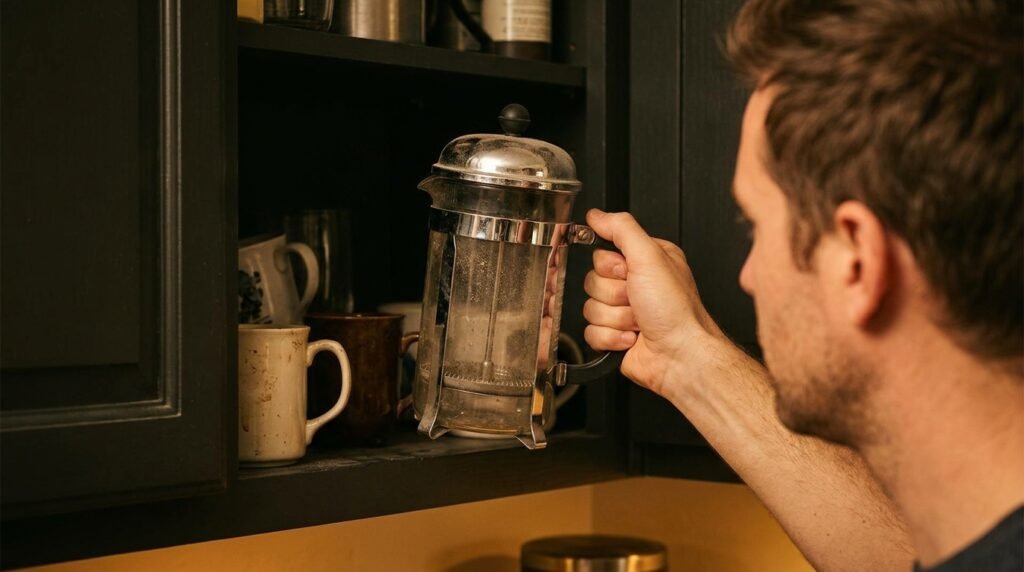
The next morning, I dug my old glass French press out from the back of my kitchen cabinet.
I sat down at my table and started searching for brewing techniques online. I quickly discovered that almost everyone makes the exact same mistakes. The instructions printed on the back of the cardboard box are completely flawed.
The box tells you to put coffee in the glass. It tells you to add boiling water. It tells you to wait four minutes. Finally, it tells you to aggressively push the plunger all the way to the bottom and immediately pour the coffee.
If you follow those instructions, you will ruin your beverage.
You will create severe agitation inside the glass. You will force microscopic coffee dust through the metal filter. You will squeeze the bitter oils out of the coffee grounds at the absolute bottom of the beaker. You will end up with a mug full of harsh, gritty sludge.
I realized I had to stop treating the French press like a juicer. I was not trying to squeeze liquid out of the beans. I was trying to gently coax the flavor out. I had to completely rewrite my physical approach to the device.
Fixing the Foundation
The very first step to fixing my muddy coffee had nothing to do with the glass brewer. It had everything to do with my grinder.
For years, I had been buying bags of finely ground coffee from the supermarket aisle. The fine powder is designed for standard paper filters. A paper filter is dense enough to trap that fine dust.
The metal mesh screen of a French press is completely different. The holes in the metal screen are relatively large. If you put fine coffee dust into a French press, the dust will simply float right through the metal holes and end up in your teeth.
I needed to change the physical shape of the ingredient.
I took out my manual hand grinder. I adjusted the ceramic burrs to create a very wide gap. I poured fresh, whole coffee beans into the top and started cranking the handle. I was aiming for a very coarse grind.
When I finished, the coffee looked like heavy sea salt or rough breadcrumbs. The large, jagged pieces were thick enough to be easily trapped by the metal screen. Fixing this raw ingredient was the core theme of What Happened When I Stopped Buying Pre-Ground Coffee because it gave me total control over the physical extraction. I could finally keep the dirt out of my cup.
The Initial Pour
With my coarse coffee grounds ready, I was prepared to start the actual brewing process.
I weighed exactly thirty grams of the coarse coffee and poured it into the bottom of the empty glass beaker. I boiled a kettle of filtered water.
I did not pour the boiling water immediately. Boiling water scorches the delicate sugars in the coffee. I took the kettle off the heat and waited sixty seconds. I wanted the water to be hot, but calm.
I placed the glass French press on my digital kitchen scale. I slowly poured five hundred grams of hot water over the coarse grounds.
I made sure to saturate every single dry piece of coffee. I poured in a steady, circular motion. When the scale hit my target weight, I put the kettle down.
The Crust Forms
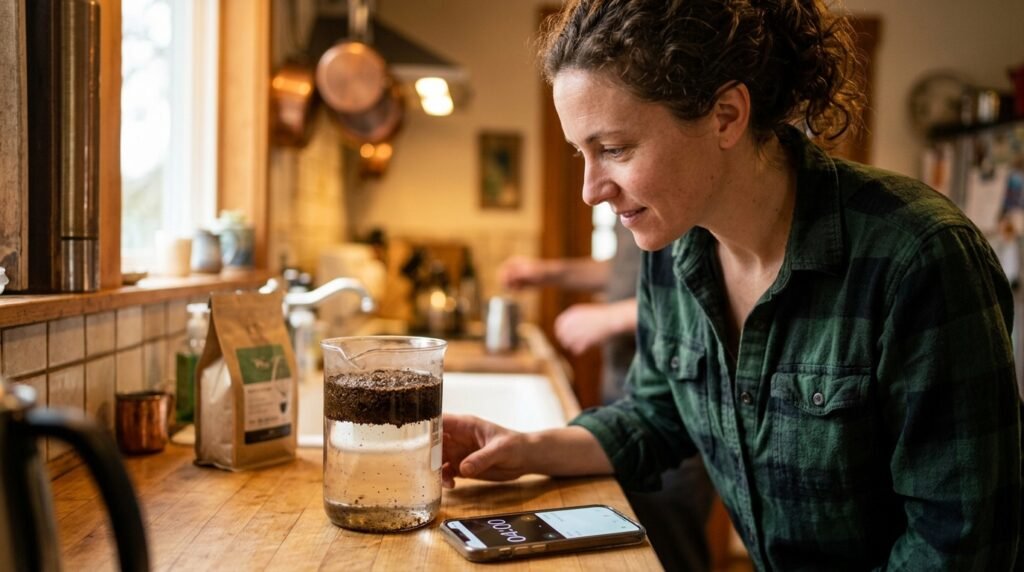
I looked closely at the glass beaker. The hot water reacted instantly with the fresh coffee.
The grounds did not sink to the bottom. They floated straight to the top of the water. The escaping carbon dioxide gas pushed all the solid particles upward. They locked together to form a thick, solid layer of wet coffee blocking the surface of the liquid.
This floating layer is known as the crust.
I did not touch the crust. I did not place the lid on the glass. I simply started the timer on my phone.
I stood in my kitchen and watched the dark liquid steep. The coffee grounds were fully immersed in the hot water. The water was slowly breaking down the complex biological structure of the roasted seeds. It was extracting the heavy, sweet chocolate notes and the natural oils.
I waited for exactly four minutes.
Breaking the Surface
When the four minute mark arrived, I did not reach for the plunger. This is the exact moment where the instructions on the box completely fail.
Instead of plunging, I grabbed a clean metal spoon from my kitchen drawer.
I gently pressed the back of the spoon against the thick, floating crust of coffee grounds. I pushed the crust down into the hot liquid. I stirred the top layer exactly three times in a gentle, circular motion.
The reaction was immediate and beautiful. The solid crust instantly broke apart. A thick, tan layer of aromatic foam bloomed across the surface.
More importantly, the heavy, coarse coffee grounds lost their buoyancy. Without the trapped carbon dioxide holding them up, they immediately began to sink. I watched a dark cloud of heavy particles fall gracefully to the absolute bottom of the glass beaker.
The Most Important Step
Breaking the crust caused the heavy grounds to sink. But the surface of the coffee was not perfectly clean.
A thin layer of tan foam remained floating on top. Mixed into that foam were tiny, microscopic flecks of coffee dust and bitter plant fibers. These tiny particles were too light to sink.
If I plunged the coffee right now, the metal screen would push those bitter particles directly into my final beverage.
I kept my metal spoon in my hand. I carefully skimmed the surface of the coffee. I scooped up the pale foam and the floating debris. I dumped the foam into my kitchen sink. I skimmed the surface two more times until the top of the dark liquid looked perfectly clear.
Removing that bitter, floating debris was the ultimate secret to a clean cup. Discovering this physical technique completely revolutionized my mornings. It was The Coffee Trick That Took Me Years to Discover because nobody ever talks about the foam. Getting rid of the foam gets rid of the harshness.
The Agony of the Second Wait
My coffee was now sitting in the glass beaker. The heavy grounds were at the bottom. The surface was skimmed clean.
My instincts told me it was time to drink. I wanted to pour the coffee immediately.
But I had to resist the urge. I had to practice extreme patience.
When you stir the crust and agitate the liquid, you create tiny currents in the water. Those microscopic currents keep the fine coffee dust suspended in the liquid. If you pour the coffee while the water is still moving, you will pour that suspended dust directly into your mug.
You have to let the liquid settle. You have to let gravity do the work of a paper filter.
I stepped away from the kitchen counter. I set another timer on my phone. I waited for an agonizingly long five minutes.
Waiting a total of nine minutes for a cup of coffee feels ridiculous. It feels like a massive waste of time. But those extra five minutes of resting time are absolutely critical. Gravity slowly pulled every single suspended particle of dust down to the bottom of the glass. The liquid clarified itself.
Redefining the Plunge
The five minute settling period finally ended. The liquid inside the glass looked like dark, translucent syrup.
It was finally time to use the defining feature of the brewer. I grabbed the metal lid and placed it gently on top of the glass beaker.
The instructions on the cardboard box tell you to push the plunger all the way down to the bottom. They tell you to crush the coffee grounds against the base of the glass.
I completely ignored those instructions.
I rested my hand on the top knob. I pushed the metal plunger down exactly one inch. I pushed it just far enough so the metal screen rested gently on the absolute top surface of the hot liquid.
I did not push it any further.
The metal screen acts as a strainer, not a press. If you push the plunger all the way down, you create violent turbulence inside the glass. You kick all the settled mud back up into the clear liquid. You completely ruin the five minutes of patient waiting you just endured.
Refusing to plunge the device was a massive psychological hurdle. It felt completely wrong. But leaving the plunger at the top was The Small Coffee Adjustment That Made a Big Impact and secured the clarity of my final beverage. The grounds were already sitting safely at the bottom. They did not need to be crushed.
The Perfect Pour
With the metal screen resting gently on the surface, I picked up the heavy glass beaker.
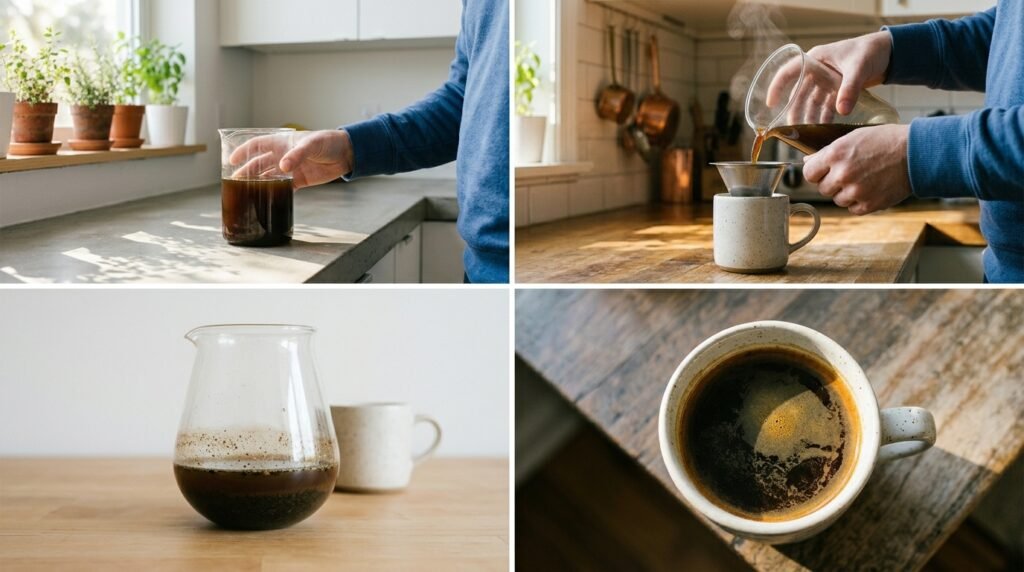
I held a clean ceramic mug in my other hand. I tilted the glass very slowly. I poured the dark liquid through the metal spout in a smooth, gentle stream.
I did not pour the entire contents of the beaker into my mug. I stopped pouring when I had about an inch of liquid left at the bottom of the glass. The remaining liquid contained all the heavy sludge and the fine silt. I sacrificed that small amount of liquid to save the integrity of my mug.
I set the glass beaker down on the counter. I looked inside my ceramic mug.
The coffee was beautiful. It was deeply dark, but it had a rich, clear amber edge. A thick layer of natural coffee oils floated on the surface, catching the light in my kitchen. There was absolutely zero mud.
The First Taste of Success
I brought the ceramic mug to my lips and blew gently on the hot surface. I took a slow sip.
The flavor completely mirrored my experience at the fancy anniversary dinner. It was absolutely stunning.
The texture was heavy and luxurious. It coated my palate like a thick velvet blanket. But despite the heavy body, the flavor was incredibly clean. There was no gritty sand stuck in my teeth. There was no harsh, dry bitterness scratching the back of my throat.
The coarse grind size and the gentle extraction had perfectly captured the sweet, comforting notes of the roasted bean. I tasted rich cocoa, toasted pecans, and a deep, lingering caramel sweetness.
It was a masterpiece of manual brewing. I had taken a cheap glass tool and produced a luxury culinary experience.
A Tool Worth Respecting
Drinking that perfect cup of coffee completely changed my perspective on the French press.
I used to view it as a crude, outdated tool. I thought it was only good for making cheap, muddy diner coffee. I thought modern pour over cones and complex paper filters were the only way to get a clean cup.
I was wrong. The French press is an incredibly sophisticated extraction device. It allows you to retain all the beautiful natural oils that paper filters steal away. It gives you a heavy, massive body that no other brewing method can replicate.
It simply demands your patience.
You cannot rush the process. You cannot aggressively crush the grounds. You have to understand the basic physics of water, gas, and gravity. You have to let the coffee do the work for you.
If you have a glass French press sitting dusty in the back of your kitchen cabinet, I challenge you to pull it out tomorrow morning. Do not follow the instructions on the box.
Grind your beans coarsely. Pour the water and wait four minutes. Break the crust with a spoon. Skim the bitter foam off the top. Wait another five minutes for gravity to settle the dust. Place the plunger gently on the surface and pour slowly.
It takes nearly ten minutes. It requires focus. But the first time you taste that perfectly clean, heavy, sweet liquid, you will realize the wait is entirely justified. You will finally experience the true, delicious potential of a classic tool.
