I was standing in the middle of the brightly lit produce aisle at my local grocery store, holding a small, clear plastic clamshell of fresh blueberries.
I popped the lid open right there in the aisle, lowered my face, and took a deep, deliberate breath through my nose. I closed my eyes and tried to mentally isolate exactly what made a blueberry smell like a blueberry. It was sweet, slightly tart, and earthy. It had a very specific, dark, juicy character to it.
An older woman pushing a shopping cart gave me a very strange look as she walked past the apples, but I didn’t care. I was on a mission.
I wasn’t standing in the grocery store smelling fruit because I wanted to bake a pie. I was doing it because of a deeply frustrating bag of coffee sitting on my kitchen counter at home.
The label on that expensive bag of Ethiopian beans proudly declared: Tasting Notes of Blueberry, Jasmine, and Milk Chocolate. I had brewed that coffee three mornings in a row. And for three mornings in a row, it just tasted like… coffee. It tasted like warm, brown, slightly bitter water.
I felt like an absolute fraud. I was convinced that coffee tasting notes were just a pretentious marketing scam designed to sell expensive beans to gullible people. But standing there in the produce aisle, actively engaging my senses with a piece of real fruit, I finally unlocked the secret.
That strange exercise in the grocery store was the beginning of the simple way I started understanding coffee flavor. It didn’t require an incredibly refined palate, and it didn’t require years of professional barista training. It just required me to stop drinking my coffee on autopilot and start actually paying attention.
The Frustration of the Flavor Label
If you have recently transitioned from drinking mass-produced, dark-roast supermarket coffee to exploring the world of specialty, single-origin beans, you likely know exactly how I felt.
You buy a beautiful bag of coffee from a local roaster. The packaging is gorgeous. The label promises you a wild, exotic flavor journey. It tells you that you are going to taste toasted marshmallows, ripe peaches, and complex floral honey.
You go home, carefully grind the beans, brew the coffee, take a sip, and… nothing.
You frantically take another sip, swishing it around your mouth, desperate to find the toasted marshmallow. But all your brain registers is the generic, roasted flavor of a morning beverage.
This is the exact point where most people give up. They assume their tastebuds are broken. They assume that “coffee people” are just making things up to sound sophisticated. I was incredibly close to throwing in the towel myself.
But the truth is, your tastebuds aren’t broken. Your brain is simply out of practice.

Building a Mental Flavor Library
The reason I couldn’t taste the blueberry in my Ethiopian coffee wasn’t that the coffee was bad. It was because I hadn’t actively thought about the taste of a real blueberry in years.
When we eat food in our daily lives, we rarely pay attention to it. We eat a piece of fruit while staring at our phones. We eat chocolate while watching television. We know what these things taste like on a subconscious level, but we don’t actively catalog them in our conscious minds.
To taste the delicate, subtle notes in a cup of coffee, you have to have a mental reference point to compare them to. You have to build a “flavor library” in your brain.
That is why I was smelling fruit in the grocery store. I realized that if I wanted to find the blueberry note in my morning mug, I needed to remind my brain exactly what a fresh blueberry smelled and tasted like in the real world.
I started doing this with everything. If a bag of coffee said it tasted like almonds, I bought a bag of raw almonds and actually chewed them slowly, paying attention to the dry, woody sweetness. If it said milk chocolate, I bought a high-quality chocolate bar and let it melt on my tongue, analyzing the creamy texture and the rich cocoa flavor.
It sounds silly, but this deliberate calibration of my senses was a massive turning point. It was the exact method I used to experience The Coffee Flavor That Made Me Want to Learn More, finally connecting the dots between a roasted seed and a piece of natural fruit. I wasn’t just drinking anymore; I was actively searching for familiar memories.
The Temperature Trap
Even with my newly calibrated flavor library, I was still struggling to taste the nuances in my mug. I would brew my coffee, pour it into my cup, and immediately take a large gulp.
And immediately, my tongue would go numb.
This brings us to the biggest, most common physical mistake people make when trying to taste coffee: we drink it entirely too hot.
When you brew coffee, the water is usually right around 200 degrees Fahrenheit (93 degrees Celsius). When you pour that nearly boiling liquid directly into your mouth, your body’s defense mechanisms instantly kick in. Your pain receptors completely override your tastebuds.
You physically cannot taste delicate flavor compounds when your tongue is being actively scalded. The heat acts as a massive, heavy blanket that smothers all the nuance, leaving you with nothing but a generic sense of “hot and roasted.”

The Magic of the Cool Down
I learned that to actually understand coffee flavor, I had to practice extreme patience.
I would brew my coffee, pour it into a ceramic mug, and then walk away. I would leave it sitting on the kitchen counter for at least ten to fifteen minutes.
Initially, this drove me crazy. I wanted my caffeine, and I wanted it immediately. But when I finally returned to the mug and took a sip of the lukewarm liquid, the transformation was staggering.
As the temperature drops, the heavy blanket of heat is lifted. The human palate is incredibly efficient at processing flavors at body temperature, or slightly below. When the coffee cooled down to around 130 degrees Fahrenheit, it was like someone had turned on the lights in a dark room.
Suddenly, the bitter, roasty dominance faded into the background. The bright, juicy acidity of the beans pushed forward. The natural sugars became incredibly apparent, coating the palate with a distinct sweetness.
Discovering this scientific reality was a revelation, and I documented the entire trial-and-error process in my article explaining How I Learned Coffee Temperature Changes Flavor. I realized that a truly great cup of coffee will actually taste better and more complex as it cools down, whereas a terrible cup of coffee will only taste worse.
The Art of the Slurp
Once I had my mental flavor library built, and I was letting my coffee cool to a drinkable temperature, I had to learn one final, slightly embarrassing physical technique.
If you have ever watched professional coffee tasters (called Q-Graders) evaluate coffee in a laboratory setting, you will notice that they are incredibly loud. They don’t take quiet, polite sips. They forcefully slurp the liquid from a silver spoon.
It sounds like someone violently vacuuming a rug.
There is a very specific biological reason for this. When you take a normal, quiet sip from a mug, the liquid simply rolls over the front of your tongue and goes straight down your throat. You are only engaging a tiny fraction of your tastebuds.
Furthermore, you are ignoring your olfactory system (your sense of smell), which is actually responsible for up to 80% of what we perceive as “flavor.”
When you slurp coffee forcefully, you are aerating it. You are pulling a massive amount of oxygen into your mouth along with the liquid. This atomizes the coffee, turning it into a fine mist that coats your entire palate—the front, the sides, and the very back of your tongue.
The oxygen also carries the volatile aromatic compounds directly up into your nasal cavity from the back of your throat. You are simultaneously tasting and smelling the coffee in one explosive sensory action.
Trying It at Home
I felt ridiculous the first time I tried it in my own kitchen. I made sure no one else was in the house. I let my coffee cool down, I brought the mug to my lips, and I took a sharp, loud, aggressive slurp, inhaling oxygen through my teeth.
The difference was instantaneous.
Instead of a heavy, singular liquid hitting my stomach, the coffee exploded across my palate. The flavors separated. I could taste a distinct, sharp acidity on the sides of my tongue (like biting into a green apple), while a heavy, chocolatey sweetness rested on the middle of my tongue.
The blueberry note I had been desperately searching for in my Ethiopian coffee suddenly drifted up into my nasal cavity. It was unmistakable. It wasn’t artificial or syrupy; it was the delicate, earthy scent of the fresh fruit I had smelled in the grocery store aisle days earlier.
The Ultimate Cheat Code: Side-by-Side Comparison
If you try all of these techniques—building a flavor library, letting the coffee cool, and aggressively slurping—and you still feel like you can’t identify specific notes, there is one final cheat code that will forcefully open your eyes.
You have to drink two different coffees at the exact same time.
If you only drink one type of coffee every single morning, your brain establishes that specific flavor as the absolute baseline for what “coffee” is. It becomes your default, and it is very hard to pull nuance out of a default setting.
But contrast is the greatest teacher.
Go to a local specialty coffee shop and buy a bag of washed coffee from Africa (like Ethiopia or Kenya) and a bag of washed coffee from South America (like Colombia or Peru).
Brew a small cup of both on a Saturday morning. Place the two mugs side-by-side on your kitchen table. Let them cool. Then, take a loud slurp of the African coffee, swallow, and immediately take a loud slurp of the South American coffee.
The differences will violently collide on your palate. The African coffee will suddenly seem incredibly bright, tea-like, and fruity. The South American coffee will suddenly seem incredibly heavy, comforting, and chocolatey.
By comparing them directly against one another, you strip away the generic “coffee” baseline and force your brain to acknowledge the geographical characteristics of the beans.
Slowing Down the Morning
Learning to understand coffee flavor did not happen overnight. It was a slow, deliberate process of retraining my brain to actually pay attention to the things I was consuming.
It forced me to stop viewing my morning coffee as a biological utility—a bitter medicine required to wake up—and start viewing it as a culinary experience.
I couldn’t just chug my coffee while frantically answering emails anymore. I had to sit down. I had to wait for the temperature to drop. I had to engage my senses and focus entirely on the liquid in the mug for at least a few minutes.
This mandatory pause completely transformed the rhythm of my entire day, an evolution I detailed heavily in my post about Why I Started Drinking Coffee Slowly Instead of Quickly. It gave me a moment of quiet, deliberate mindfulness before the chaos of the workday began.

You Already Have the Tools
The most important thing I learned on this sensory journey is that nobody is born with a magical, superhuman palate. The baristas who can identify notes of “bergamot and graham cracker” in a blind taste test aren’t genetic anomalies.
They are simply people who have spent a lot of time actively paying attention to the world around them.
You already have all the tools you need to understand coffee flavor. You know what a strawberry tastes like. You know what dark chocolate smells like. You know the sensation of biting into a sour lemon.
You just have to give your coffee the time and respect required to reveal those familiar notes.
Tomorrow morning, when you brew your cup, don’t rush. Put your phone down. Let the mug sit on the counter for ten minutes until it cools down. Take a loud, embarrassing slurp. Close your eyes and search your memory for a familiar flavor.
You might not find the exact notes printed on the fancy label right away. You might just taste something vaguely sweet or slightly fruity. But that single moment of recognition—that tiny realization that coffee can taste like more than just roasted ash—is the first step into a massive, infinitely delicious world. Once you open that door, every single morning becomes a tasting adventure.
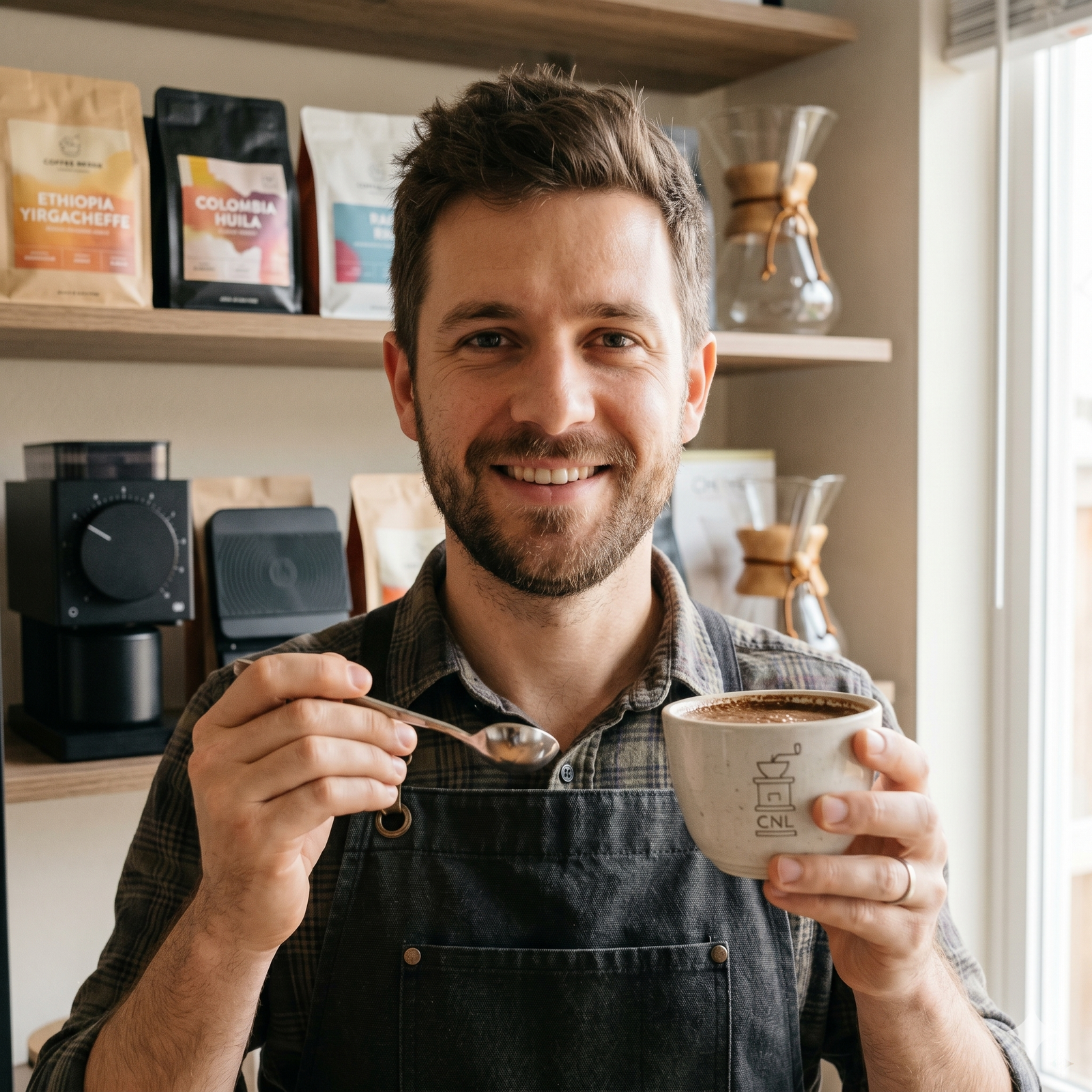
Hi, I’m the coffee enthusiast behind Coffee Nerd Lab.
Like many people, I started drinking coffee simply because it helped me wake up in the morning. Over time, that daily habit turned into a genuine interest in understanding what makes a great cup of coffee. I began experimenting with different beans, brewing methods, grinders, and coffee gear, learning through trial and error along the way.
This blog is where I document that journey. Every article is inspired by real experiences, discoveries, and lessons I’ve learned while exploring the world of coffee. From brewing guides and equipment reviews to practical tips and coffee basics, my goal is to share useful information in a way that’s easy to understand and enjoyable to read.
Thanks for stopping by, and I hope Coffee Nerd Lab helps you enjoy your next cup a little more than the last.