
Heavy tropical rain was hammering against the windows of my apartment in Rio de Janeiro. It was a dark, slow afternoon. I was sitting at my kitchen table, staring at my smartphone.
I was using a new productivity application to organize my digital notes. I use this app to track my daily tasks, but I also use it to log my coffee brewing recipes. I like keeping a strict record of my water ratios and grinder settings.
I scrolled through weeks of data. I noticed a massive blind spot in my own research.
I had pages of notes about different coffee origins. I had detailed logs about Ethiopian beans and Brazilian beans. But I realized I had never actually run a direct, simultaneous comparison of the roasting process itself. I had never tasted the extreme ends of the thermal spectrum at the exact same moment.
I locked my phone and stood up. I decided to fix that gap in my data immediately.
I walked over to my coffee station. I had a bag of incredibly light roasted Ethiopian Guji beans. I also had a bag of pitch black, dark roasted commercial coffee left over from a family visit. The first time I compared two roast levels side by side was a deliberate scientific experiment. It proved that the roasting oven completely overwrites the biology of the plant, and it permanently changed how I program my daily brews.
Setting Up the Laboratory
I wanted this test to be as objective as possible. I cleared my kitchen counter.
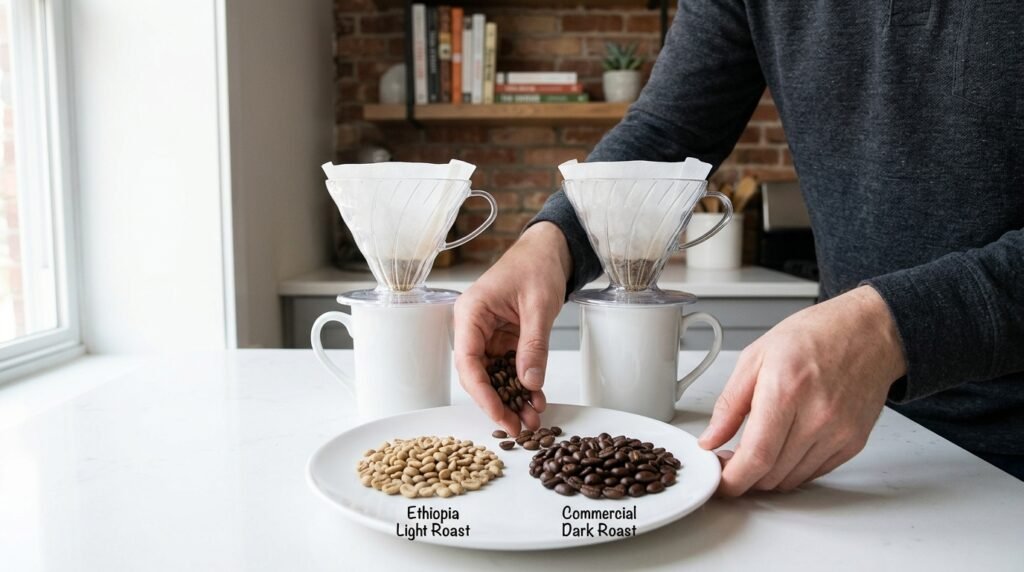
I pulled out two identical glass V60 pour over cones. I placed a paper filter in each cone and rinsed them with hot water. I placed two identical ceramic mugs directly beneath them.
My goal was to isolate the physical differences before I ever tasted the liquid. I needed to see how the fire changed the structure of the seed.
I opened both bags of coffee. I poured a handful of the light roasted Ethiopian beans onto the left side of a white plate. I poured a handful of the dark roasted commercial beans onto the right side of the plate.
The visual contrast was absolutely jarring. They did not look like they belonged to the same species of plant.
The Physical Expansion
The dark roasted beans were massive. They were puffed up and swollen. They were entirely black and coated in a thick, wet layer of heavy oil. They looked like tiny pieces of polished coal.
The light roasted beans were incredibly small. They were tightly packed and dense. They were a pale, matte tan color. There was absolutely no oil visible on their surface.
This visual difference revealed the violent reality of the roasting drum.
When a coffee bean is exposed to extreme heat, the moisture inside turns to steam. The seed physically expands. If you leave the bean in the oven until it turns black, the cellular walls completely shatter. The intense heat forces the internal oils to the surface.
The dark roast is physically larger, but it is structurally empty. It is hollow. The light roast retains its original, tight botanical structure.
The Resistance of the Grinder
I needed to grind twenty grams of each coffee. I started with the dark roast.
I poured the black, oily beans into my manual hand grinder. I grabbed the metal handle and started turning. There was almost zero physical resistance. The ceramic burrs sliced through the dark beans effortlessly. The beans felt brittle and fragile. They shattered like dry autumn leaves.
I emptied the catch bin and wiped the grinder clean. I poured twenty grams of the light roasted Ethiopian beans into the hopper.
I grabbed the handle and tried to turn it. The resistance was massive. The handle violently jerked in my hand. The light roasted beans felt like solid gravel. I had to brace the grinder against my chest and use real physical force to make the burrs spin.
This tactile struggle was a profound lesson in cellular density. Experiencing this mechanical difference was the exact foundation for What I Discovered About Grinding Coffee Too Fine because I realized brittle beans create significantly more microscopic dust than dense beans. The oven changes how the grinder behaves.
The Aromatic Divide
I placed the dark grounds into the first glass cone. I placed the light grounds into the second glass cone.
I leaned over the counter and took a deep breath. The dry aromas were completely opposed to each other.
The dark roast smelled heavy and aggressive. It smelled exactly like a campfire. The dominant notes were charred wood, dark cocoa powder, and burnt sugar. It was a very thick, pungent scent that filled the entire kitchen.
The light roast smelled delicate and sweet. There was no smoke. There was no wood. The dry grounds smelled intensely of spring flowers and ripe peaches. It smelled like a high quality herbal tea.
The fire had completely erased the floral notes from the dark roast. The intense heat replaced the fruit with carbon.
Managing the Thermal Energy
I reached for my gooseneck kettle. I knew I could not use the exact same water temperature for both glass cones. That would ruin the experiment.
Different physical densities require different extraction strategies.
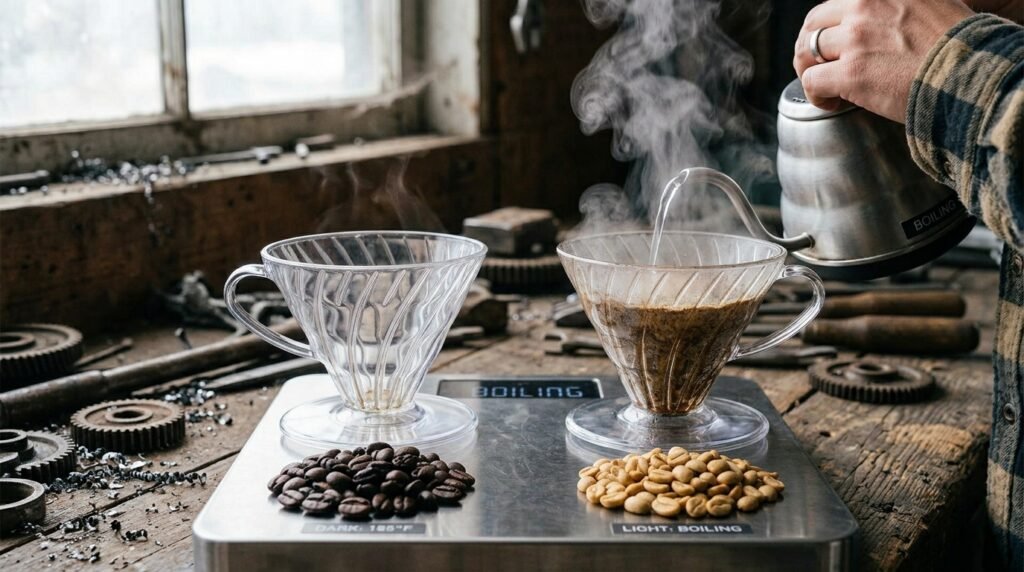
The dark roast was hollow and highly porous. Water would rush into those broken cell walls immediately. If I used violently boiling water, I would over extract the coffee and pull harsh, bitter tannins into the mug. I had to use water that was around one hundred and eighty five degrees Fahrenheit to protect the fragile grounds.
The light roast was dense and hard. It actively resisted water. If I used cool water, I would only wash the sharp acids off the surface. I had to use water directly off a rolling boil to force the dense bean to surrender its heavy sugars.
Learning how to navigate this thermal puzzle was exactly How I Learned Coffee Temperature Changes Flavor and it saved me from drinking hundreds of terrible cups. I boiled my kettle, poured the light roast first, then waited for the water to cool before pouring the dark roast.
The Violence of the Bloom
I poured forty grams of hot water into both glass cones to start the bloom phase.
The dark roast reacted violently. The coffee bed erupted. The massive amount of exposed oil and shattered cell walls allowed the trapped carbon dioxide gas to escape instantly. The dark grounds swelled into a massive, bubbling dome.
The light roast barely moved. A few gentle bubbles popped on the surface. Because the cellular structure was still tightly packed, the water had to work much harder to penetrate the grounds. The reaction was slow and calm.
Watching the Drawdown
I finished pouring the water into both cones. I watched the liquid drain through the paper filters.
The dark roast drained incredibly fast. The brittle grounds offered very little resistance to the water flow. The liquid dripping into the mug was completely opaque. It looked like thick motor oil.
The light roast drained much slower. The dense, hard particles packed tightly together at the bottom of the filter, restricting the water flow. The liquid dripping into the mug was not black. It was a bright, translucent ruby red.
I removed both glass cones and threw the paper filters in the trash. The physical brewing process was complete. It was time to taste the data.
Tasting the Dark Fire
I grabbed a glass of cold water to cleanse my palate. I picked up the mug containing the dark roast.
I took a slow sip. The flavor was a massive, blunt object.
The liquid felt incredibly heavy on my tongue. The exposed oils coated my entire mouth. The flavor was dominated by an intense, drying bitterness. It tasted like unsweetened baker’s chocolate mixed with burnt walnuts and ash. There was absolutely zero acidity. There was zero fruit.
It was bold, aggressive, and highly predictable. It tasted exactly like a commercial diner.
Tasting the Light Earth
I drank a large gulp of cold water. I waited thirty seconds. I picked up the mug containing the light roast.
I took a sip. The contrast was absolutely shocking.
The heavy, oily blanket was completely gone. The liquid felt crisp and clean. Instead of dark bitterness, a massive wave of bright, juicy acidity washed over my palate. It tasted exactly like biting into a ripe peach.
The floral notes of jasmine I smelled earlier were perfectly preserved in the flavor. The coffee finished with a clean, lingering sweetness that reminded me of raw honey. It was complex, vibrant, and completely alive.
The Erasure of the Farm
I sat at my kitchen table and looked at the two mugs. This direct comparison made the reality of the coffee industry incredibly clear.
The light roast tasted like the African dirt it grew in. The roaster pulled the beans out of the oven early enough to protect the delicate genetics of the plant. The light roast was a transparent window directly to the farm.
The dark roast tasted like the oven. The roaster left the beans in the drum until the heat incinerated the delicate fruit acids. The fire burned the floral sugars away.
A dark roasted bean from Ethiopia will taste almost exactly identical to a dark roasted bean from Brazil. The intense fire erases the geography. The heavy, smoky, bitter flavor is simply the flavor of carbonization.
The Illusion of Caffeine Strength
As I typed my notes into my digital app, I thought about the biggest myth in coffee culture.
People constantly buy dark roasts because they believe the bold, bitter flavor means the coffee is physically stronger. They think a dark roast has more caffeine to wake them up.
This is a massive chemical lie.
Caffeine is a highly stable molecule. It does not burn away in the roasting drum. A single light roasted bean and a single dark roasted bean contain roughly the exact same amount of caffeine.
However, remember the visual inspection. The dark roast puffed up and expanded. It lost physical mass. If you use a plastic scoop to measure your coffee, a scoop of dark roast contains fewer actual beans than a scoop of dense light roast.
By volume, a cup of light roasted coffee actually contains slightly more caffeine than a cup of dark roast. The heavy bitterness is just a sensory trick.
A Necessary Education
Running this physical experiment was the most important educational moment in my coffee journey.
Reading about the differences online is helpful. But you cannot truly understand the chemistry until you feel the mechanical resistance in your grinder and taste the extreme flavor contrast on your own tongue.
This dual tasting session completely shaped How I Learned the Subtle Differences Between Roasts and allowed me to confidently navigate the middle ground of medium roasts later on. I now understood the exact boundaries of the playing field.
Log Your Own Data
We rely heavily on digital applications to organize our lives. We track our steps, our sleep, and our daily tasks. But we often consume our food and drinks completely blindly.
If you want to truly understand your morning coffee, you need to collect your own data.
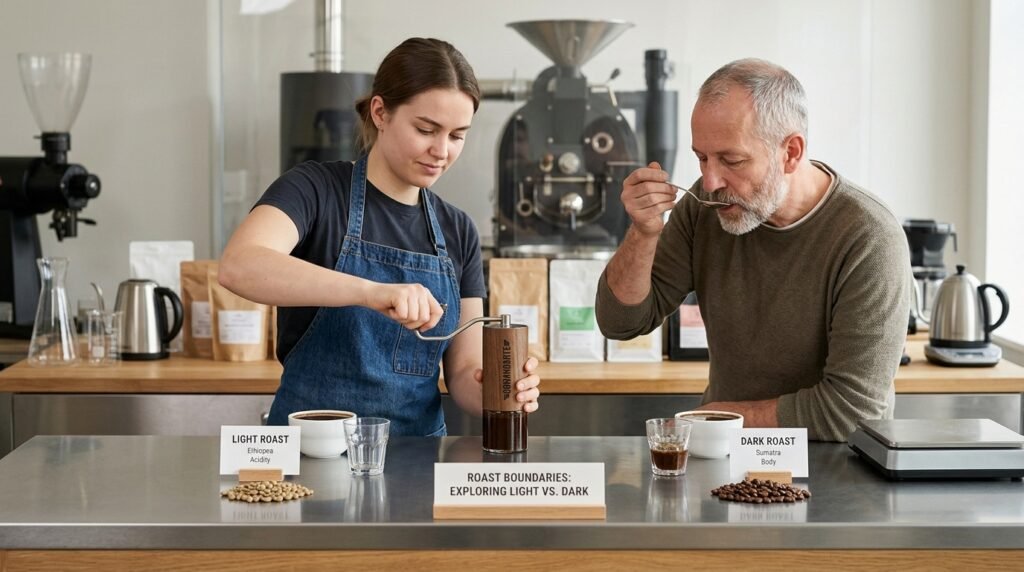
I highly encourage you to run this exact experiment in your own kitchen this weekend. Go to a local specialty coffee shop. Buy a small bag of their darkest roast. Buy a small bag of a light roasted African or Central American coffee.
Take them home. Look at the beans side by side. Grind them back to back. Brew them simultaneously.
Taste the heavy, smoky bitterness of the dark roast. Then immediately taste the bright, floral sweetness of the light roast. Once you experience this massive spectrum of flavor in a single sitting, the mystery of the roasting process disappears entirely. You will finally understand that the chef operating the roasting oven dictates the entire reality of your mug.
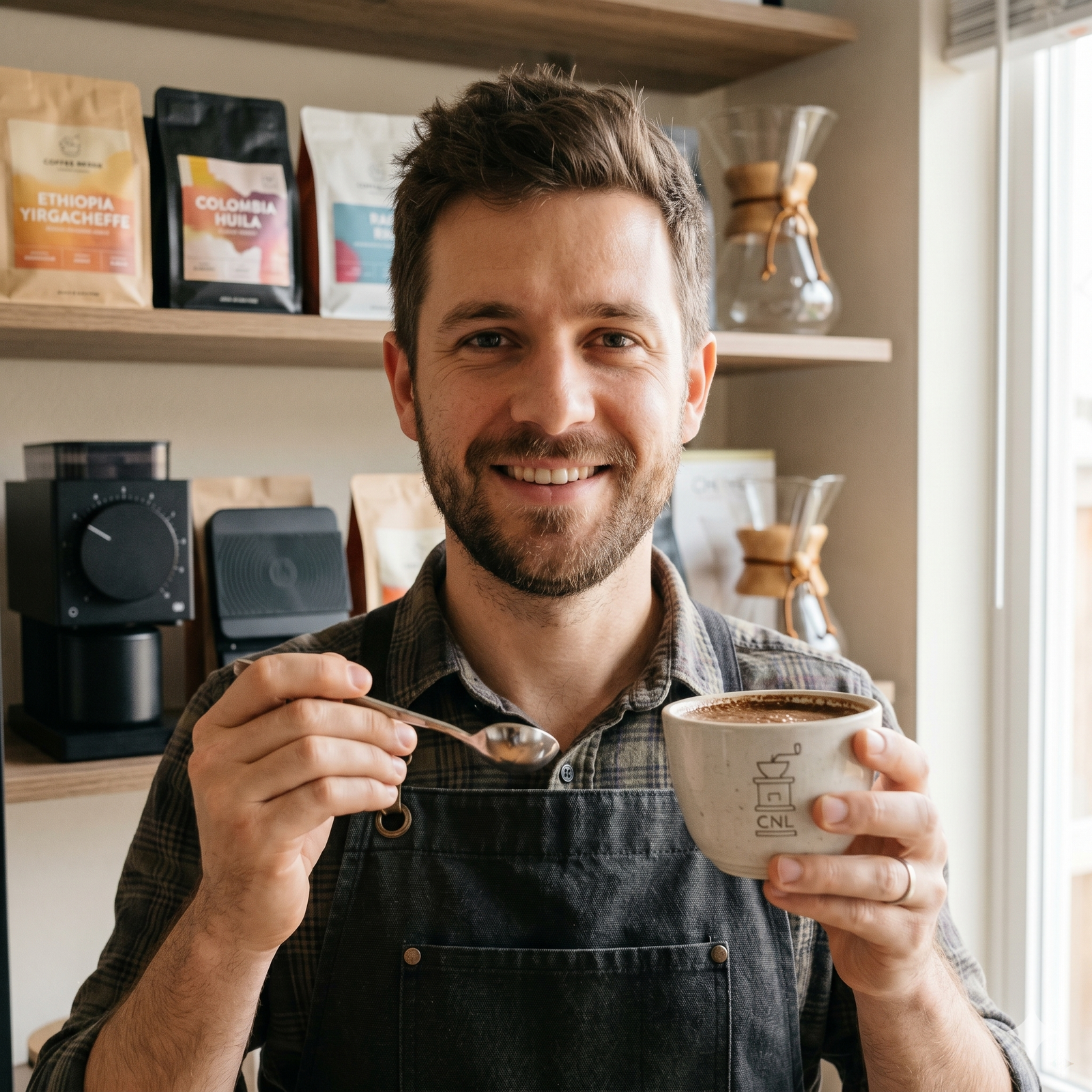
Hi, I’m the coffee enthusiast behind Coffee Nerd Lab.
Like many people, I started drinking coffee simply because it helped me wake up in the morning. Over time, that daily habit turned into a genuine interest in understanding what makes a great cup of coffee. I began experimenting with different beans, brewing methods, grinders, and coffee gear, learning through trial and error along the way.
This blog is where I document that journey. Every article is inspired by real experiences, discoveries, and lessons I’ve learned while exploring the world of coffee. From brewing guides and equipment reviews to practical tips and coffee basics, my goal is to share useful information in a way that’s easy to understand and enjoyable to read.
Thanks for stopping by, and I hope Coffee Nerd Lab helps you enjoy your next cup a little more than the last.