
I sat at my computer desk in Rio de Janeiro on a rainy Tuesday morning. I was facing a massive digital workload. I had to migrate three client websites to a new server, update dozens of plugins, and audit a massive database for errors. I knew I was going to be locked in my chair for the next eight hours.
I needed coffee. I did not just need one cup. I needed an entire pot.
I walked into my kitchen and looked at my beloved glass V60 cone. I love the manual pour over process. I love controlling the water flow with my gooseneck kettle. But making a single cup of coffee takes five minutes of absolute, undivided attention. I did not have five minutes to spare. I definitely did not have twenty minutes to spare to make four consecutive cups.
I realized my manual routine was holding my productivity hostage.
I needed an automated machine to handle the volume. But I was terrified of machines. The first coffee machine I truly enjoyed using completely cured that fear. It proved that automation does not have to destroy quality. It taught me that when a machine is engineered with the exact same physical logic as a professional barista, you can actually step away and let the hardware do the work.
The Trauma of the Plastic Drip
My hesitation was rooted in deep culinary trauma.
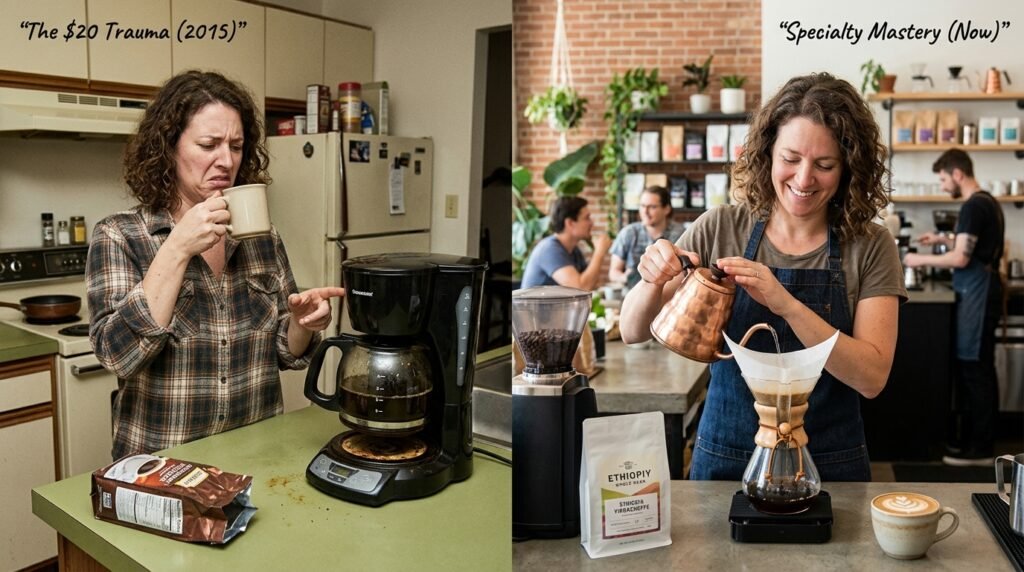
Before I learned how to brew specialty coffee, I owned a standard automatic drip machine. It was a cheap plastic box I bought at a local supermarket. It cost twenty dollars.
That plastic machine was a physical nightmare. It violated every single rule of extraction chemistry. The internal heating element was completely unregulated. It never brought the water to a proper boil. It simply spit lukewarm water over the center of the coffee grounds.
It also featured a burning hot metal plate under the glass carafe. This plate literally cooked the brewed coffee. If I left the carafe on the machine for twenty minutes, the liquid turned into thick, bitter mud. It tasted exactly like burnt tires.
I associated all coffee machines with that terrible, bitter flavor.
The Refusal to Compromise
I refused to put my expensive specialty coffee beans into a cheap plastic machine.
I buy high altitude, light roasted African coffees. I pay a premium price for Ethiopian beans because I want to taste the delicate jasmine flowers and the bright peach acidity.
Recalling that initial sensory discovery was exactly The Day I Explored Ethiopian Coffee for the First Time and it permanently raised my standards. I knew a cheap machine would completely incinerate those fragile fruit notes. The lukewarm water would fail to extract the heavy sugars. The hot plate would destroy whatever flavor managed to survive.
I needed a machine, but I refused to compromise the raw ingredient.
Analyzing the Mechanics of a Pour Over
I decided to approach the problem like a programmer. If I wanted a machine to replicate my manual pour over, I had to define the exact variables the machine needed to execute.
My manual pour over success relied on three strict rules.
First, I needed water heated to exactly two hundred degrees Fahrenheit. Second, I needed the water to fall gently and evenly across the entire coffee bed, not just in the center. Third, I needed the brewed liquid to stay warm without applying direct, burning heat to the bottom of the vessel.
I opened my laptop and started searching for hardware that met those exact three parameters.
Discovering the Precision Brewer
I quickly realized I had to ignore the appliance aisle at the local department store. I had to look at specialized, professional grade equipment.
I found a category of machines certified by the specialty coffee industry. They did not look like normal coffee makers. They looked like pieces of industrial laboratory equipment. They were built entirely from heavy metal and thick glass. There were no digital screens. There were no cheap plastic buttons.
I ordered one of these precision brewers. It cost ten times more than my old plastic machine. It was a massive financial investment.
The Heavy Metal Unboxing
The machine arrived at my apartment a few days later. I pulled it out of the heavy cardboard box.
The build quality immediately justified the price. It was incredibly heavy. The main tower was constructed from solid extruded aluminum. The water reservoir was made from crystal clear glass.
It looked brutal and highly efficient. There were absolutely no unnecessary features. There was a single, heavy metal switch on the side. You flip the switch up to turn it on. You flip the switch down to turn it off. That was the entire user interface.
I placed it on my kitchen counter next to my manual burr grinder. It looked like it belonged in a professional workshop.
The Copper Heating Element
The most important part of the machine was completely hidden from view.
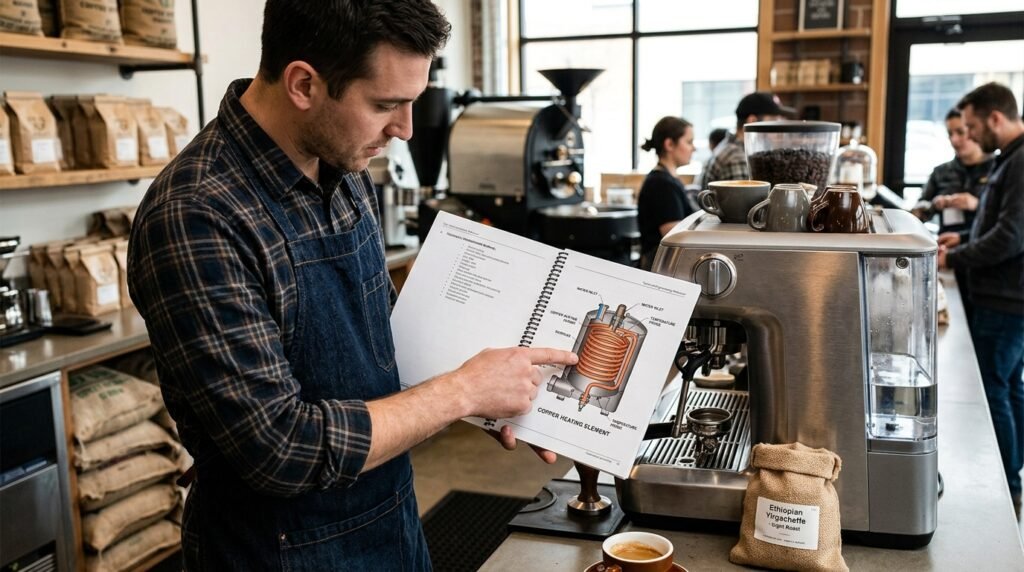
I read the engineering manual. Inside the aluminum tower, the machine utilized a massive, heavy duty copper heating element. This was the fundamental difference between this precision tool and a cheap supermarket appliance.
Copper is a brilliant conductor of heat. When the machine pulled cold water from the glass reservoir, the copper element flash boiled it instantly. It guaranteed that the water exiting the machine would hit the coffee grounds at precisely two hundred degrees Fahrenheit every single time.
It solved the temperature variable completely. I finally had the massive thermal energy required to penetrate my dense, light roasted Ethiopian seeds.
The Geometry of the Showerhead
The second massive upgrade was the water delivery system.
My old plastic machine had a single, tiny hole that aggressively spit water directly into the center of the filter. It drilled a deep crater and violently over extracted the middle of the coffee bed.
The precision brewer featured a heavy stainless steel showerhead. It consisted of a wide metal arm with nine distinct holes spread evenly across the surface.
When the boiling water traveled up the glass tube, it dispersed across the nine holes. It fell onto the coffee grounds like a gentle, even rainstorm. It completely replicated the slow, concentric pouring motion of my manual gooseneck kettle. It solved the agitation variable entirely.
The Thermal Carafe Solution
The final piece of the puzzle was the carafe.
I specifically ordered a model that did not have a glass pot or a hot metal plate. I refused to let my coffee cook.
Instead, the machine brewed directly into a heavy, double walled stainless steel thermal carafe. The physics of the carafe were brilliant. The vacuum seal between the two layers of steel trapped the heat inside perfectly.
The machine brewed the coffee and completely shut itself off. The thermal carafe kept the liquid piping hot for hours without applying a single drop of external energy. The flavor profile remained perfectly static. It never turned bitter. It never degraded.
The First Batch Test
I was ready to test the machine. My digital workload was piling up, and I needed caffeine immediately.
I placed my digital scale on the counter. Because I was brewing a massive batch, the math scaled up. I weighed out exactly sixty grams of my dense Ethiopian Guji beans. I poured them into my manual hand grinder.
Grinding sixty grams of light roasted coffee by hand is a serious physical workout. It took me nearly two minutes of intense cranking.
I poured the massive pile of uniform coffee grounds into the paper filter. I filled the glass reservoir with exactly one thousand grams of clean, filtered water.
Watching the Machine Work
I flipped the heavy metal switch on the side of the aluminum tower.
The machine was completely silent for exactly ten seconds. Then, a deep, aggressive rumbling sound came from the copper heating element. The water instantly shot up the central glass tube.
I watched the stainless steel showerhead. The boiling water fell evenly across the massive bed of dry coffee grounds.
Because the coffee was freshly ground, the visual reaction was spectacular. The massive bed of coffee erupted. The trapped carbon dioxide gas violently escaped, swelling the grounds into a massive, dark dome. The machine actually paused for a few seconds, allowing the coffee to bloom, before resuming the steady rainstorm.
The Aroma of Automation
I stood in my kitchen and watched the machine execute the perfect extraction.
The smell was incredible. The heavy, sweet aroma of ripe peaches and jasmine flowers filled the entire room. It smelled exactly like my manual pour over routine. There was absolutely no smell of burnt plastic or scorching metal.
The machine finished brewing the entire liter of coffee in exactly six minutes. The water stopped flowing. The machine automatically powered down.
I removed the filter basket and looked inside. The spent coffee grounds formed a perfectly flat, even bed of wet sand. The showerhead had successfully extracted the entire mass uniformly.
The Moment of Truth
I poured a cup of the dark red liquid from the heavy thermal carafe into my ceramic mug.
I walked back to my computer desk. The server migration was waiting for me. I took a slow sip of the coffee.
My brain completely stalled. The flavor was absolutely stunning. It was crisp, bright, and deeply complex. The sharp lemon acidity hit the front of my palate and melted seamlessly into the heavy peach sweetness. The floral jasmine notes lingered in my throat.
It tasted entirely identical to the single cup of pour over I made the day before. The machine had successfully replicated my manual logic.
A Massive Productivity Shift
This precision brewer completely revolutionized my workflow.
Finding this specific workflow balance was exactly The Brewing Method That Suits My Busy Mornings and it proved that automation has a valid place in my kitchen. I no longer had to choose between flavor quality and time management.
When I have a massive coding project, I grind my beans, flip the metal switch, and walk away. I can spend those six minutes answering critical emails or monitoring website traffic. When I finish my first cup of coffee, I do not have to boil more water. I just reach for the thermal carafe and pour another steaming hot cup of perfect Ethiopian coffee.
The Necessity of Maintenance
The only drawback to this precision tool is the strict maintenance required to keep it functioning.
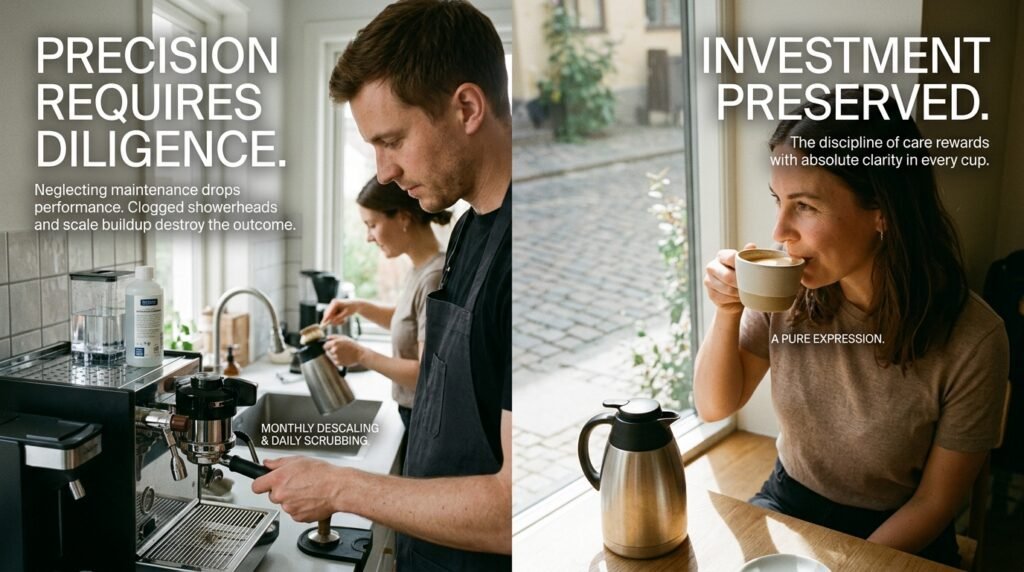
You cannot ignore a high end machine. If the internal copper heating element builds up mineral scale from hard water, the temperature drops. If the stainless steel showerhead gets clogged with old coffee oils, the even distribution fails.
I run a specialized descaling powder through the water reservoir every single month. I scrub the thermal carafe with a heavy brush every single night.
Maintaining this pristine condition was exactly The Morning I Learned the Importance of Clean Equipment and it completely preserves my financial investment. I treat the machine like a surgical tool, and it rewards me with absolute clarity.
Reevaluating Your Kitchen Appliances
If you are currently struggling with a cheap plastic coffee maker, you are actively destroying your daily routine.
You are buying expensive beans and running them through a broken system. You are drinking burnt, muddy water because the internal mechanics of your machine are fundamentally flawed.
You do not have to abandon automation to get good coffee. You just have to buy automation that respects the laws of physics.
Look for machines certified by the Specialty Coffee Association. Look for heavy metal construction, copper heating elements, wide showerheads, and thermal carafes. They are expensive, but they are a permanent investment in your daily productivity.
When you finally flip a heavy metal switch, walk away to focus on your actual work, and return to a flawlessly extracted liter of high altitude coffee, you will never look at an appliance the same way again. The right machine does not replace the barista. It simply automates their precision.

Hi, I’m the coffee enthusiast behind Coffee Nerd Lab.
Like many people, I started drinking coffee simply because it helped me wake up in the morning. Over time, that daily habit turned into a genuine interest in understanding what makes a great cup of coffee. I began experimenting with different beans, brewing methods, grinders, and coffee gear, learning through trial and error along the way.
This blog is where I document that journey. Every article is inspired by real experiences, discoveries, and lessons I’ve learned while exploring the world of coffee. From brewing guides and equipment reviews to practical tips and coffee basics, my goal is to share useful information in a way that’s easy to understand and enjoyable to read.
Thanks for stopping by, and I hope Coffee Nerd Lab helps you enjoy your next cup a little more than the last.