
The heavy glass doors hissed shut behind me, completely cutting off the howling, freezing winter wind.
I unzipped my heavy winter coat and took a deep breath. I had ducked into the massive, domed conservatory of the city’s botanical garden just to escape the bitter January cold for an hour. The air inside the pavilion was thick, intensely humid, and smelled of damp earth and blooming orchids.
I wandered aimlessly down the winding stone paths, completely surrounded by towering palm trees, massive ferns, and thick tropical vines.
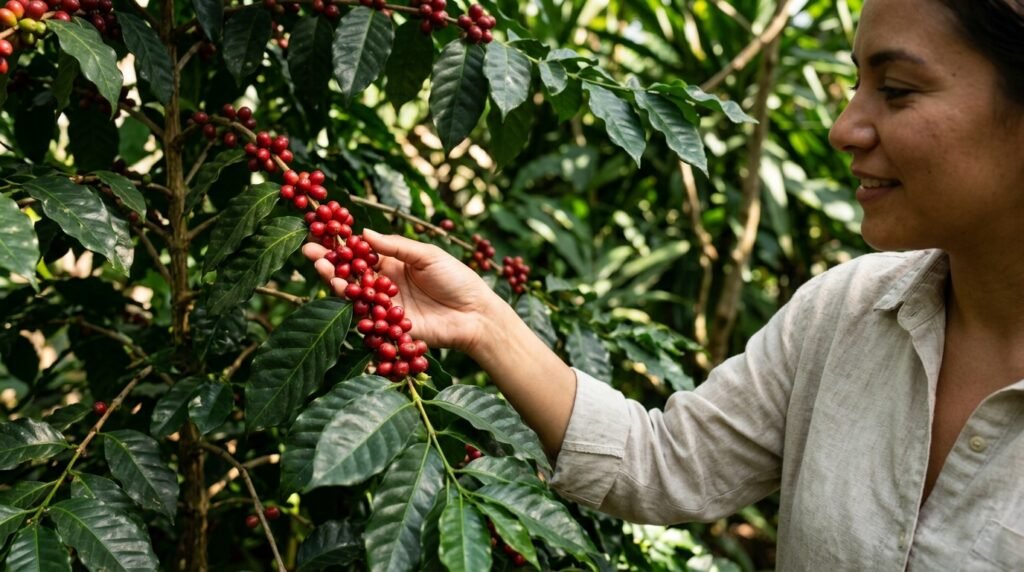
As I turned a corner near the back of the greenhouse, I noticed a small, unassuming tree. It stood about six feet tall. It had glossy, dark green leaves with slightly ruffled edges. Clustered tightly along its thin branches were dozens of bright, crimson-red berries that looked remarkably like small cherries or cranberries.
I stepped closer and leaned down to read the small brass plaque staked into the dirt at the base of the trunk.
It read: Coffea arabica.
I froze. I looked from the brass plaque back up to the bright red fruit hanging on the branches. I had been drinking coffee every single morning for over a decade. I had consumed thousands of gallons of the dark, bitter liquid. Yet, standing there in the humid air of the conservatory, I realized I had never actually seen the plant it came from.
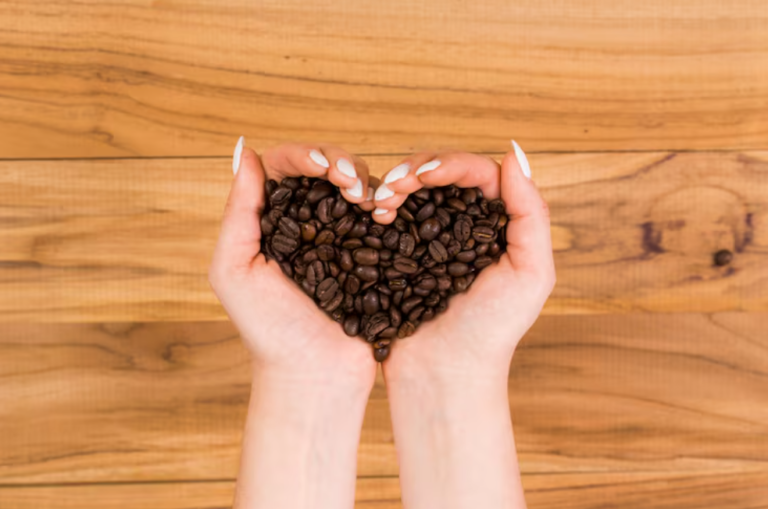
I thought coffee was just a brown powder that existed in plastic tubs. I thought it was a dry, manufactured pantry staple. Seeing it as a vibrant, living, breathing piece of tropical agriculture broke my brain.
That quiet afternoon in the botanical garden was the exact moment the illusion shattered. It was the day I realized coffee is more complex than I ever could have imagined, sending me down a rabbit hole of biology, chemistry, and physics that forever changed my morning routine.
The Anatomy of a Cherry
When I got home from the botanical garden, I immediately opened my laptop and started researching the red berries I had seen on that tree.
I quickly learned that the coffee we drink is not a bean at all. It is the seed of that specific red fruit, which the industry appropriately calls a “coffee cherry.”
But the complexity doesn’t stop there. The anatomy of a coffee cherry is incredibly intricate. It isn’t just a skin with a seed inside. There are multiple, distinct layers protecting the precious cargo.
On the outside, there is the tough outer skin. Beneath that is a layer of sweet, sticky, and highly fermentable fruit pulp, often called the mucilage. If you were to bite into a ripe coffee cherry, it would taste vaguely like a sweet, floral watermelon or a yellow plum.
Beneath that sticky pulp is a stiff, papery envelope called the parchment. And beneath the parchment is an incredibly thin, translucent membrane called the silverskin.
Finally, buried beneath all of those defensive layers, are the two pale green seeds facing each other.
Getting those two seeds out of that fruit without ruining them is an incredibly delicate agricultural science. Learning about how farmers use massive concrete fermentation tanks and raised drying beds to strip these layers away was a revelation, and it was the exact reason I wrote about What I Learned About Coffee Processing Methods. I realized that the flavor in my mug was heavily dictated by how the farmer decided to remove the fruit from the seed.
The Botanical Demand
As I dug deeper into the biology of the Coffea arabica plant, I realized just how fragile and demanding this species actually is.
You cannot just plant a coffee tree in your backyard and expect it to survive. It is the ultimate botanical diva.
Arabica coffee requires a highly specific set of environmental conditions to thrive. It needs to grow in a precise geographical band around the equator, known as the “Coffee Belt.” It requires abundant, consistent rainfall, but it absolutely hates sitting in waterlogged soil. It needs warm tropical days, but it despises harsh, direct, blistering sunlight.
Because of these demanding preferences, the best coffee in the world is usually grown high up on the slopes of volcanic mountains, often under the shade of much larger canopy trees.
The volcanic soil provides essential minerals, the slope of the mountain provides natural water drainage, and the altitude provides cool, misty nights.
The Altitude Equation
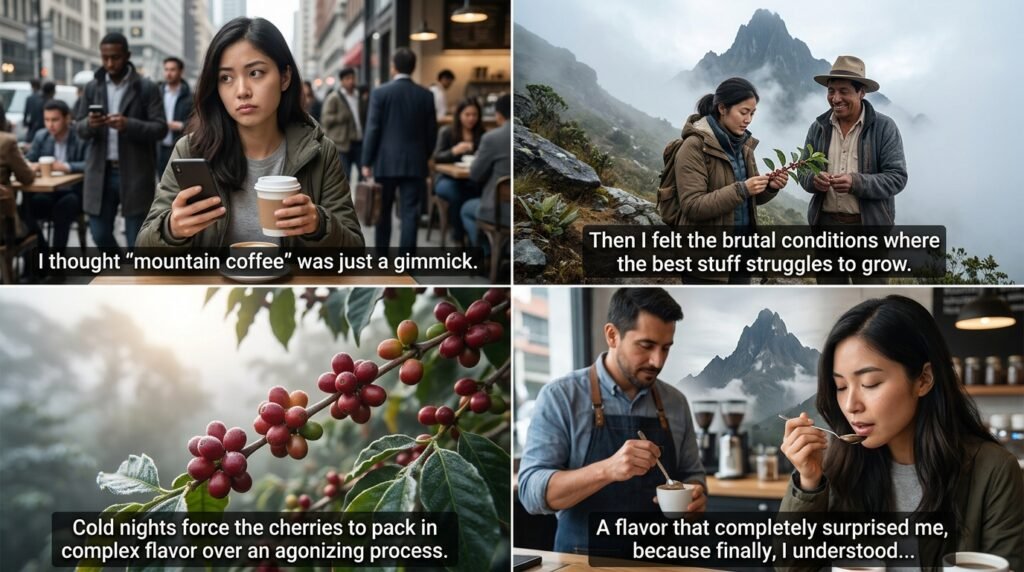
Learning about altitude was the second major shock to my system. I had always assumed that mountain-grown coffee was just a marketing buzzword used to make commercials look more adventurous.
But altitude is actually a brutal, scientifically proven flavor multiplier.
When coffee trees are planted at extreme elevations—sometimes over 6,000 feet above sea level—they have to fight for survival. The air is thinner. The nights are significantly colder. Because of these harsh conditions, the coffee cherries mature and ripen much, much slower than they would at sea level.
This extended, agonizing ripening process is the secret to specialty coffee. It gives the tree more time to pack complex sugars, organic acids, and dense nutrients tightly into the seed.
A high-altitude coffee bean is physically harder and denser than a low-altitude bean. When it is roasted and brewed, that density translates into brilliant, sparkling acidity and incredibly complex flavor notes. Exploring this geographical nuance was what inspired my deep dive into The Coffee Origin That Completely Surprised Me, because I finally understood that I was tasting the climate of a specific mountain peak.
The Chemical Chaos of Roasting
Understanding the agricultural side of coffee was mind-bending, but the sheer complexity of the roasting process was what truly intimidated me.
Once the green seeds are harvested, washed, and dried, they are shipped across the world. At this stage, they smell like dried grass and are completely unbrewable. To make them drinkable, human beings have to apply extreme thermal energy.
Roasting coffee is not like baking a potato. It is a highly volatile, split-second chemical transformation.
When the green beans are dropped into a massive, spinning steel drum heated to over 400 degrees Fahrenheit, thousands of chemical reactions happen simultaneously. The most important is the Maillard reaction—the same process that browns a steak or toasts a marshmallow. Amino acids and reducing sugars violently collide and degrade, creating hundreds of brand new aromatic compounds.
During this process, the internal moisture of the bean boils into steam, building massive pressure until the cellular walls physically fracture. The bean pops and expands, emitting a loud cracking sound.
If a roaster leaves the beans in the machine for just thirty seconds too long, the delicate organic acids will be incinerated, the sugars will turn into bitter carbon, and the unique flavor of the farm will be destroyed forever. The margin for error is razor-thin. It is a masterpiece of thermodynamics.
The Science of the Solvent
By the time I fully grasped the farming and the roasting, I looked at my own kitchen counter with a deep sense of guilt.
Thousands of people had worked tirelessly, fighting weather patterns and monitoring chemical reactions, just to deliver a bag of roasted beans to my house. And how was I treating them? I was violently chopping them with a cheap blade grinder and flooding them with boiling tap water in a plastic machine.
I realized that the final step of the coffee journey—the brewing—was entirely on my shoulders. And brewing is nothing more than applied chemistry.
Coffee brewing is the act of using a solvent (water) to dissolve soluble compounds out of a solid structure (the roasted bean).
But coffee beans contain over a thousand different chemical compounds. Some of them are bright and fruity acids. Some are heavy, sweet sugars. And some are incredibly harsh, bitter tannins.
The goal of brewing isn’t to extract everything. If you extract everything, your coffee will taste like battery acid. The goal is to extract the good compounds and leave the bitter compounds trapped inside the grounds.
Controlling the Variables
To achieve this perfect extraction, you have to control a terrifying number of physical variables.
First, there is the grind size. If you grind the coffee too fine, you create too much surface area. The water acts too quickly, over-extracting the bitter compounds. If you grind it too coarse, the water flows right past the chunks without grabbing the sugars, resulting in a sour, watery mess.
Then, there is the water temperature. Water that is too hot will scorch the coffee and pull out astringency. Water that is too cold lacks the thermal energy required to dissolve the sweet sugars.
Then, there is the ratio of coffee to water. Then, there is the mineral content of the water itself.
Realizing that I had to act like a chemist in my own kitchen was intimidating, but it was also incredibly empowering. It was the driving force behind What I Learned After Brewing Coffee More Carefully. Once I stopped guessing and started measuring these variables with a digital scale and a thermometer, the chaotic bitterness of my mornings vanished entirely.
The Illusion of the Generic Cup
We live in a world that thrives on convenience. We want things fast, we want them cheap, and we want them to taste exactly the same every single time.
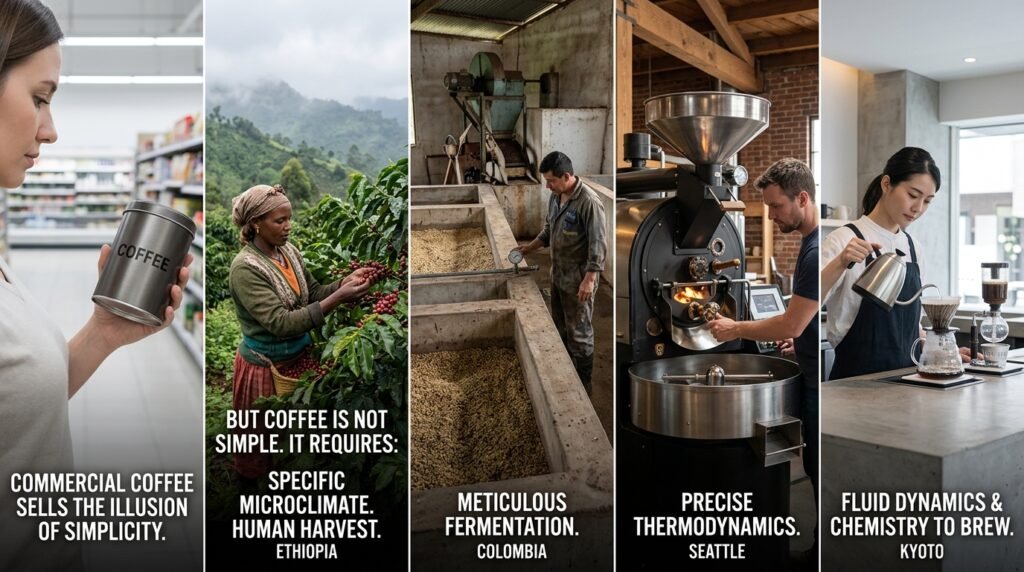
The commercial coffee industry has spent billions of dollars to convince us that coffee is a simple, generic, manufactured commodity. They package it in identical shiny cans. They roast it so dark that every batch tastes uniformly burnt. They grind it into a fine dust so you don’t have to think about it.
They sell us the illusion of simplicity.
But coffee is not simple. It is arguably the most complex, labor-intensive, chemically volatile, and geographically diverse food product legally available on planet Earth.
It requires a highly specific microclimate to grow. It requires the manual labor of human hands to harvest. It requires meticulous fermentation to process. It requires the precise application of thermodynamics to roast. And it requires a fundamental understanding of fluid dynamics and chemistry to brew.
A New Found Respect
Standing in that humid botanical garden, looking at that little tree with its red berries, my entire worldview shifted.
I walked out of the conservatory and back into the freezing winter air, but I felt completely different. I went home and immediately threw away my cheap plastic blade grinder. I ordered a digital kitchen scale. I stopped buying pre-ground coffee from the supermarket.
When you finally realize how incredibly complex coffee is, you can no longer treat it with disrespect. You cannot view it as a mere caffeine delivery system.
You begin to treat the brewing process as a privilege. You start to view every single cup as a minor miracle of global logistics and agricultural science.
Today, when I pour hot water over fresh grounds and watch them bloom in the filter, I don’t just see a dark liquid. I see the volcanic soil of a mountain in Central America. I see the hands of the farmer who picked the fruit. I see the precise, glowing graph on the laptop of a local roaster.
Coffee is infinitely more complex than I ever thought. And honestly, that is exactly why it tastes so incredibly good.

Hi, I’m the coffee enthusiast behind Coffee Nerd Lab.
Like many people, I started drinking coffee simply because it helped me wake up in the morning. Over time, that daily habit turned into a genuine interest in understanding what makes a great cup of coffee. I began experimenting with different beans, brewing methods, grinders, and coffee gear, learning through trial and error along the way.
This blog is where I document that journey. Every article is inspired by real experiences, discoveries, and lessons I’ve learned while exploring the world of coffee. From brewing guides and equipment reviews to practical tips and coffee basics, my goal is to share useful information in a way that’s easy to understand and enjoyable to read.
Thanks for stopping by, and I hope Coffee Nerd Lab helps you enjoy your next cup a little more than the last.