
I was hosting a Sunday brunch for a small group of friends in my apartment. I had spent the entire morning cooking. I made a massive spread of eggs, roasted potatoes, and fresh sourdough toast.
The meal was a huge success. Everyone was full and happy. As we cleared the plates from the dining table, one of my guests reached into her tote bag. She pulled out a beautiful, matte black bag of coffee beans.
She explained that she had just returned from a trip to the Pacific Northwest. She visited a highly famous, award winning roastery and bought these specific beans as a gift for me. She mentioned they were incredibly rare and cost nearly forty dollars for a small bag.
I was thrilled. I thanked her, took the bag, and confidently walked into my kitchen to brew a fresh pot for the table.
I operated under a very naive assumption. I believed that buying expensive coffee beans automatically guaranteed a delicious cup of coffee. I thought the farmer and the roaster did all the hard work. I thought my only job was to add hot water.
I casually dumped a random amount of the expensive beans into my grinder. I dumped the powder into a filter. I aggressively poured boiling water over the top. I brought a tray of ceramic mugs out to the dining room and poured the coffee for my friends.
I took my first sip. It was absolutely terrible.
The coffee tasted flat, sour, and incredibly weak. It had a strange, metallic aftertaste. I looked around the table. My friends were politely sipping their mugs in silence. Nobody complimented the coffee. The expensive gift had been completely ruined.
I felt a massive wave of embarrassment. That awkward Sunday afternoon was a brutal wake up call. It was the day I realized brewing coffee is a skill, and it is a skill I desperately needed to learn.
The Raw Ingredient Illusion
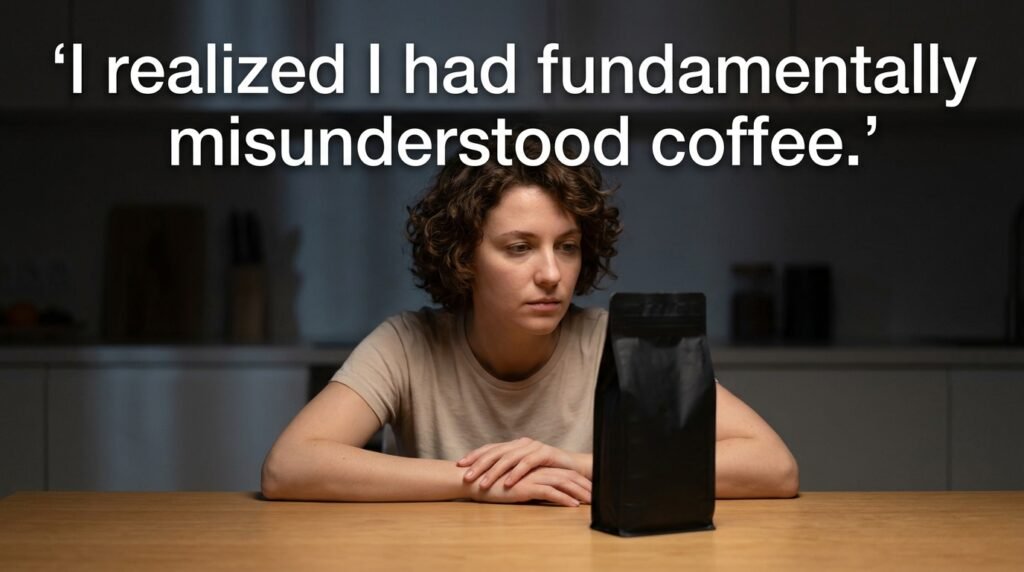
After my friends went home, I sat in my kitchen and stared at the matte black bag of coffee beans. I realized I had fundamentally misunderstood what coffee actually is.
I was treating coffee beans like a finished product. I was treating them like a bottle of wine. When you buy a good bottle of wine, you just pull the cork and pour the liquid. The wine maker has already completed the entire process.
Coffee beans are not a finished product. They are a raw, agricultural ingredient.
Think about a high quality, expensive cut of steak. You can go to a premium butcher and buy a beautiful piece of meat. But if you take that meat home and boil it in a pot of water for an hour, it will taste horrific. The quality of the raw ingredient does not matter if the chef ruins the cooking process.
I was boiling my steak. I was taking a delicate, chemically complex ingredient and destroying it through sheer negligence. I had to stop treating the brewing process as an automatic chore. I had to start treating it as a culinary discipline.
The Skill of Physical Manipulation
The first skill I had to learn was how to physically manipulate the raw ingredient. I had to learn how to grind coffee properly.
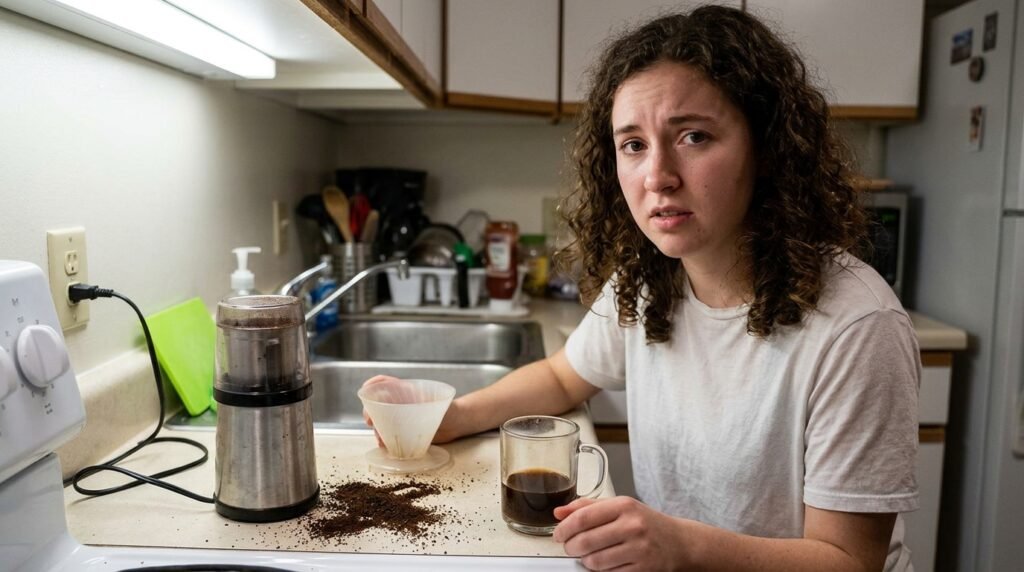
During my disastrous brunch, I used a cheap blade grinder. A blade grinder operates like a blender. It violently chops the coffee beans into random pieces. You end up with a chaotic mixture of giant boulders and microscopic dust.
When you pour water over a chaotic mixture, the extraction is a mess. The water over extracts the fine dust, creating harsh bitterness. At the exact same time, the water under extracts the large boulders, creating a sour bite.
I realized that a good cup of coffee requires perfect uniformity. Every single particle of coffee needs to be the exact same size. This allows the water to extract the flavors evenly.
Learning about this physical requirement changed my entire perspective. It was the exact reason I invested in a proper burr grinder. Upgrading my gear was not about showing off. It was about taking control. That specific purchase was The Coffee Equipment Upgrade I’m Glad I Made because it allowed me to physically shape the ingredient with absolute precision.
The Skill of Mathematical Balance
Once I figured out how to cut the coffee beans properly, I had to learn how to balance the chemistry.
During the brunch, I used a random plastic scoop. I did not measure my water. I just filled the kettle and poured until my mug was full. I was completely blind to the mathematics of extraction.
Brewing coffee is the act of using water as a solvent. If you use too much water, the solvent completely overwhelms the coffee. The liquid becomes weak, thin, and watery. If you use too little water, the solvent cannot do its job. The liquid becomes thick, intensely sour, and heavy.
You cannot guess these measurements. You have to weigh them perfectly.
I bought a digital kitchen scale. I started weighing my coffee beans to the exact gram. I started weighing my water to the exact gram. I learned that a ratio of one gram of coffee to sixteen grams of water is the golden standard.
Locking in this mathematical formula was an incredible breakthrough. Developing this strict discipline was the core lesson from What I Learned About Coffee Measurement Accuracy in my daily routine. The digital scale removed the guesswork and replaced it with scientific certainty.
The Skill of Thermal Management
The third skill I had to master was thermal management.
At my brunch, I took a kettle of violently boiling water and splashed it directly onto the coffee grounds. I thought hotter water meant a faster, better brew.
I did not realize that extreme heat physically destroys delicate flavor compounds. When boiling water hits ground coffee, it incinerates the natural fruit acids and the complex sugars. It leaves behind a dark, ashy, bitter profile. It literally burns the beverage.
I had to learn patience.
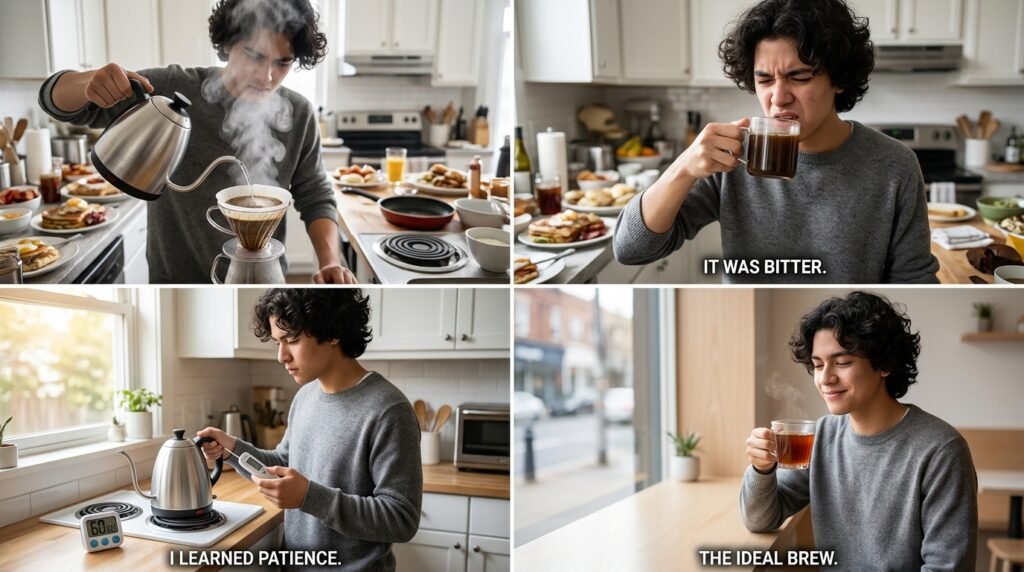
I started boiling my kettle and then taking it off the stove. I learned to wait sixty seconds. I allowed the rolling boil to calm down. I learned to target a water temperature around two hundred degrees.
This simple act of waiting completely transformed my coffee. The harsh, bitter bite disappeared. The sweet, smooth chocolate notes finally emerged. Managing the heat is a subtle skill, but it dictates the entire flavor profile of the cup.
The Skill of Water Delivery
The final skill I had to learn was the most difficult. It required physical coordination. I had to learn how to pour the water.
In the past, I dumped the water aggressively into the filter. The heavy splash created deep craters in the coffee bed. The water rushed through those craters, completely ignoring the rest of the coffee grounds.
I realized that a good barista does not dump water. A good barista applies water deliberately.
I bought a gooseneck kettle with a thin, curved spout. I learned to pour the water in slow, tight, concentric circles. I learned to saturate every single grain of coffee evenly. I learned to manage the flow rate so the water drained at a perfectly consistent speed.
Standing in my kitchen, focusing entirely on the circular motion of my wrist, was a profound experience. It forced me to be completely present in the moment. Taking control of the pouring speed was exactly The Coffee Moment That Made Me Curious About Brewing as an actual craft. I felt like a chef building a sauce from scratch.
The Second Attempt
A few weeks after the disastrous brunch, I invited the same friend over to my apartment. She still had half of the expensive bag of coffee beans left. I asked her to bring them. I wanted a second chance.
She sat at my kitchen counter. I did not rush the process.
I carefully weighed twenty grams of the beans on my digital scale. I ground them uniformly in my new burr grinder. I placed a glass pour over cone on my mug. I rinsed the paper filter with hot water.
I boiled my kettle and waited sixty seconds for the temperature to drop. I poured a small amount of water to let the fresh coffee bloom. I watched the carbon dioxide gas escape. Then, I slowly poured the remaining water in perfect, steady circles.
The entire process took exactly four minutes. It was quiet, deliberate, and highly controlled.
The Redemption Cup
I handed the ceramic mug to my friend. The liquid was a bright, translucent ruby color.
She brought the mug to her lips and took a sip. Her eyes widened immediately.
The coffee was spectacular. It tasted like sweet jasmine tea mixed with ripe strawberries. The finish was incredibly clean and crisp. There was absolutely zero bitterness. It was complex, vibrant, and perfectly balanced.
She looked at me and asked if I had bought a different bag of coffee. I smiled and pointed to her matte black bag sitting on my counter. It was the exact same raw ingredient from the terrible brunch.
The only thing that had changed was my skill level.
Stop Blaming the Beans
We live in a culture that loves to blame the equipment or the ingredients.
If a photograph looks bad, we blame the camera. If a meal tastes bad, we blame the grocery store. If a cup of coffee tastes bad, we assume the roaster burned the beans.
We rarely look in the mirror and question our own technique.
That terrible Sunday brunch forced me to question my technique. It forced me to realize that making coffee is an active, culinary discipline. You cannot just throw money at expensive beans and expect a miracle in your mug.
You have to earn the flavor.
The Joy of the Craft
Learning to brew coffee properly requires time. It requires a few bad cups along the way. It requires patience and a willingness to understand basic physics and chemistry.
But the reward is absolutely incredible.
When you finally master the skills, your kitchen transforms into a sanctuary. You stop relying on expensive cafes. You stop drinking bitter, generic diner coffee. You gain the power to create a luxury beverage with your own two hands.
You start waking up excited to execute the routine. You look forward to the quiet focus of weighing the beans and pouring the water. You find genuine joy in the physical craft.
A Challenge for Tomorrow
If you currently treat your morning coffee like a mindless chore, I challenge you to change your perspective tomorrow.
Stop treating the beans like a finished product. Treat them like a raw ingredient waiting to be cooked.
Slow down. Measure your water. Let your boiling kettle cool off for a minute. Pour the water gently. Pay attention to how the coffee reacts.
Brewing coffee is a skill. It is a highly satisfying, completely accessible skill that anyone can learn. Once you stop rushing and start practicing, you will never look at a bag of coffee the same way again. The potential is locked inside the bean, but your hands hold the key.
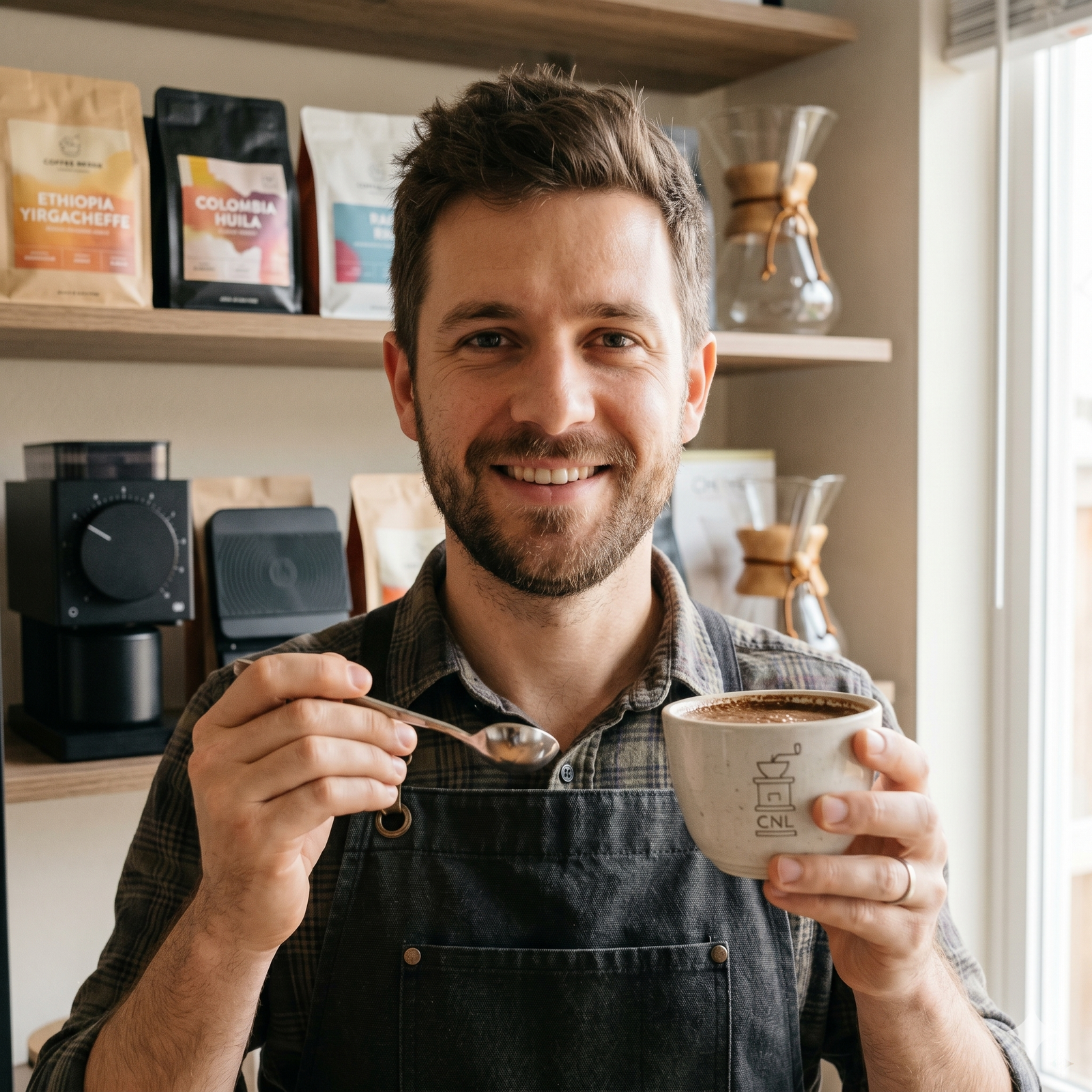
Hi, I’m the coffee enthusiast behind Coffee Nerd Lab.
Like many people, I started drinking coffee simply because it helped me wake up in the morning. Over time, that daily habit turned into a genuine interest in understanding what makes a great cup of coffee. I began experimenting with different beans, brewing methods, grinders, and coffee gear, learning through trial and error along the way.
This blog is where I document that journey. Every article is inspired by real experiences, discoveries, and lessons I’ve learned while exploring the world of coffee. From brewing guides and equipment reviews to practical tips and coffee basics, my goal is to share useful information in a way that’s easy to understand and enjoyable to read.
Thanks for stopping by, and I hope Coffee Nerd Lab helps you enjoy your next cup a little more than the last.