
I write digital content for a living. I manage multiple blogs from my apartment in Rio de Janeiro. My entire professional life is governed by strict analytics. I track page views. I monitor bounce rates. I record exactly which keywords perform well and which ones fail. If I do not write the data down, the data effectively does not exist.
I trust written data completely. It removes emotion and human error from the workflow.
Yet for a very long time I completely abandoned this logic when I walked into my kitchen. I owned incredible coffee equipment. I used a premium manual burr grinder. I used a highly accurate digital scale. I bought expensive light roasted Ethiopian coffee beans.
Despite having perfect hardware, my morning coffee was highly unpredictable. One day it tasted like a sweet peach. The next day it tasted like a bitter lemon. The coffee tool that helped me brew more consistently was not a machine. It was a cheap paper notebook. It taught me that precision hardware is completely useless if you do not actively track the data you feed into it.
The Frustration of the Random Cup
Before I bought the notebook, my morning routine was a stressful guessing game.
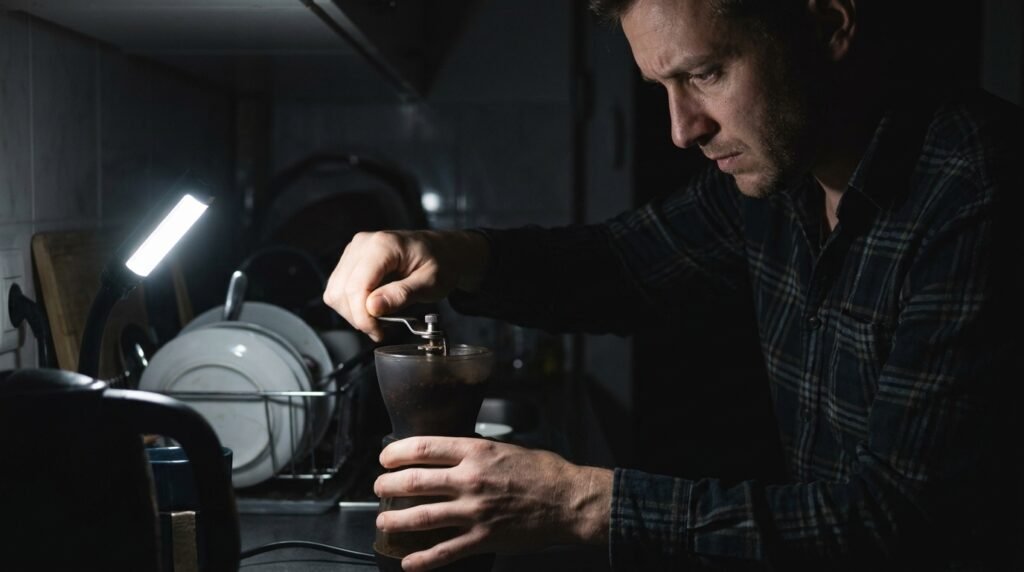
I would wake up early while my partner was still asleep. I would walk into the dark kitchen and prepare my glass V60 pour over. I would weigh my beans, grind them, and pour the boiling water.
Sometimes, the resulting beverage was absolutely spectacular. It would hit my palate with bright, vibrant acidity and a heavy floral finish. I would sit at my desk, drink the perfect cup, and feel incredibly proud of my brewing skills.
I would go to sleep excited to drink that exact same cup of coffee the next morning.
The Illusion of Morning Memory
The next morning would arrive. I would repeat the exact same physical motions. I would take a sip of the new coffee.
The magic was entirely gone. The liquid would taste harsh, dry, and bitter.
I would stand in my kitchen completely confused. I used the same Ethiopian beans. I used the same grinder. I used the same glass cone. I assumed I was repeating the process perfectly.
I was lying to myself. Human memory is incredibly fragile. Human memory at six o’clock in the morning before caffeine is completely nonexistent. I thought I remembered the exact grind setting and the exact water temperature from the day before. I was entirely wrong.
The Missing Variable
I realized I was treating an expensive culinary science experiment like a casual hobby.
Coffee extraction is a highly sensitive chemical reaction. A single gram of water or a microscopic change in the grind size drastically alters the final flavor profile.
If you do not record the exact variables you used, you cannot replicate your successes. You also cannot learn from your failures. You are simply rolling the dice every single morning and hoping the chemistry magically works out in your favor.
I needed a system to capture the data. Implementing a strict tracking method was The Tip That Helped Me Brew Consistently Every Morning because it finally removed the chaotic guesswork from my kitchen counter.
The Analog Anchor
My first instinct was to use a digital tool. I build websites. I could easily create a custom spreadsheet on my phone to track my coffee data.
I decided against it. I stare at digital screens all day long. My eyes get tired. My brain gets overwhelmed by notifications. I wanted my morning coffee routine to remain a peaceful, tactile escape from the digital world.
I went to a local stationery store. I bought a small, pocket sized paper notebook with a heavy black cover. I bought a smooth writing ink pen.
I placed the notebook directly next to my manual burr grinder. This physical paper logbook became the most important piece of coffee gear I own.
Setting Up the Data Columns
The next morning, I opened the blank notebook. I drew strict columns across the paper. I needed to isolate every single variable that impacts the chemical extraction.
The first column was the date. Coffee is an agricultural product that degrades over time. I needed to know exactly how old the beans were.
The second column was the name of the coffee. I wrote down the origin country, the specific region, and the processing method. If I was drinking a washed Ethiopian Yirgacheffe, I documented it.
Tracking the Input Mass
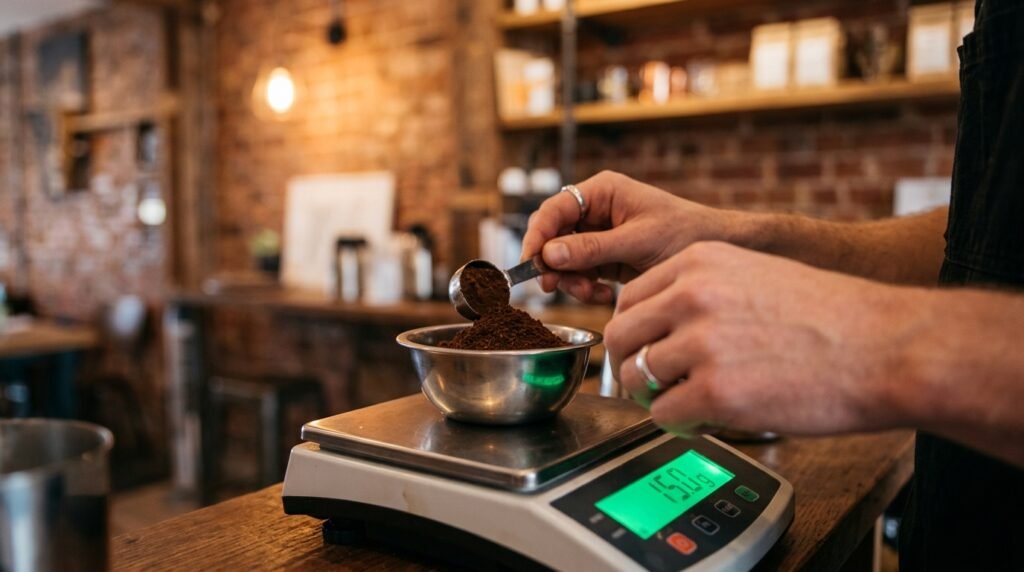
The third column was the dry dose. This is the exact weight of the whole coffee beans before grinding.
You cannot guess this number. You cannot use a plastic scoop. Grasping the absolute necessity of the digital scale was What I Learned About Coffee Measurement Accuracy and it provided the mathematical baseline for my entire notebook.
I placed my ceramic cup on the scale. I poured the Ethiopian beans until the screen hit exactly fifteen grams. I grabbed my pen and wrote the number fifteen in the third column. The input mass was officially locked into the historical record.
Recording the Output Yield
The fourth column was the total water weight.
Coffee brewing relies on a strict mathematical ratio. If I use fifteen grams of coffee, I need a specific amount of water to achieve a balanced extraction. My standard target is a one to sixteen ratio. Fifteen multiplied by sixteen is two hundred and forty.
I placed my glass V60 cone on the scale. I poured the hot water slowly. I stopped the flow exactly when the digital screen reached two hundred and forty grams.
I wrote that specific number down in the fourth column. The chemical ratio was now permanently documented.
The Critical Grind Setting
The fifth column was the most important variable of all. It was the grind size.
My manual burr grinder uses a metal click dial at the bottom of the burr set. You turn the dial to physically move the sharp ceramic gears closer together or further apart. This dictates the exact size of the coffee particles.
Before the notebook, I would constantly forget where the dial was set. I would accidentally bump it while cleaning the grinder.
I checked the dial. It was set to exactly sixteen clicks from zero. I wrote the number sixteen in the logbook. This single piece of data saved me from countless bitter mornings.
Monitoring the Thermal Energy
The sixth column tracked the water temperature.
I use a variable temperature electric kettle. The heat of the water dictates how aggressively the solvent extracts the complex sugars from the roasted seed.
I was brewing a dense, light roasted African coffee. I needed high heat to penetrate the tough cellular walls. I set the digital base station to exactly two hundred and five degrees Fahrenheit. I wrote that temperature down.
If I later decided the coffee tasted too harsh or burnt, I could look at my notebook, see the high temperature, and lower it the next day.
Watching the Clock
The seventh column was the total drawdown time.
Time is the ultimate physical indicator of your grind size. If your coffee particles are too coarse, the water will rush through the filter in ninety seconds. If your particles are too fine, the microscopic dust will clog the paper and the water will stall for five minutes.
Recording the exact time was The Simple Step That Improved My Coffee Every Day and it gave me a strict physical boundary to work within.
I started a timer on my scale when the first drop of water hit the grounds. I stopped the timer when the last drop of liquid fell into my mug. The total time was three minutes and ten seconds. I documented the data.
Documenting the Flavor
The final column was dedicated to the subjective result. I carried my ceramic mug to my desk and took a sip.
I had to be honest with myself. I could not just write that the coffee was good or bad. I needed specific descriptive language.
The coffee was highly acidic. The lemon notes were sharp. However, the finish was slightly dry and astringent. It left a faint, bitter feeling on the back of my tongue.
I wrote these exact tasting notes in the final column. The data entry for the morning was completely finished.
The Chemical Feedback Loop
The true power of the paper logbook does not exist on the first day. The power is unlocked on the second day.
The notebook creates a strict chemical feedback loop. You use the flavor data from yesterday to correct the mechanical variables for today. You are no longer guessing. You are executing targeted, deliberate adjustments.
I woke up the next morning. I opened a brand new bag of washed Ethiopian Guji coffee.
I did not know exactly how this specific farm would react to the hot water. But I had my notebook. I looked at my baseline data from the previous week. I used the exact same fifteen gram dose. I used the exact same sixteen click grind setting. I used the exact same two hundred and five degree water.
The Day One Baseline
I brewed the new coffee using my established baseline data. I sat at my desk and tasted the result.
The coffee was incredibly weak. It tasted like sour water. The heavy peach sweetness was completely absent. The floral aroma was entirely missing.
Before I owned the notebook, this result would have ruined my morning. I would have been angry at the expensive beans.
With the notebook, I remained completely calm. I wrote down the tasting notes. The coffee was severely under extracted. The solvent failed to pull the heavy sugars out of the cellular walls. I knew exactly what I needed to change for tomorrow.
The Day Two Adjustment
The next morning, I opened the notebook. I reviewed the weak, sour flavor data.
I had to increase the extraction yield. I had two primary options. I could increase the water temperature, or I could make the grind size smaller. I decided to change the grind size.
I turned the metal dial on my grinder. I moved it from sixteen clicks down to fourteen clicks. This pushed the ceramic burrs closer together. The smaller particles would provide more surface area for the water to attack.
I kept every other variable completely identical. I used the exact same dose and the exact same temperature. You can only change one variable at a time, or the data becomes useless.
The Day Three Perfection
I brewed the coffee with the finer grind setting. The drawdown time increased from two minutes to exactly three minutes.
I tasted the liquid. The transformation was massive. The sour, watery flavor was gone. The bright lemon acidity was perfectly balanced by a massive, heavy peach sweetness. The jasmine aroma filled the room.
I wrote the new data into the logbook. I had successfully dialed in the new bag of coffee.
For the next twelve days, I simply looked at the notebook every morning. I set the grinder to fourteen clicks. I used the exact same temperature. Every single morning, the coffee tasted absolutely flawless. The consistency was guaranteed.
The Financial Savings
The paper logbook is the cheapest tool on my entire kitchen counter. It costs less than a cup of commercial coffee. Yet it saves me a massive amount of money.
Specialty coffee from independent roasters is expensive. When you open a new bag and blindly guess your settings, you usually ruin the first three or four cups. You pour bitter sludge down the kitchen sink. You are literally throwing your hard earned money into the drain.
The logbook eliminates that waste. It allows you to hit the perfect sweet spot on the second or third attempt. You get to actually drink and enjoy the vast majority of the bag.
The Comfort of the Analog
Writing in the notebook has become my favorite part of the morning ritual.
My professional life moves incredibly fast. Digital content is transient. It disappears in a flood of endless updates.
The ink on the thick paper feels permanent. It forces me to slow down. I have to look at the clock. I have to smell the wet coffee grounds. I have to physically document the reality of the physical world. The act of writing grounds me before the chaos of the digital workday begins.
Build Your Own Ledger
You do not need to buy an expensive leather bound journal to start tracking your coffee.
Find a cheap notebook in your house. Grab a pen. Tomorrow morning, before you pour the boiling water, write down exactly what you are doing.
Write down the weight of the beans. Write down the weight of the water. Write down the setting on your grinder dial. Start the timer on your phone and write down how long the water takes to drain.
When you drink the coffee, be critical. Ask yourself if it tastes sour, bitter, weak, or heavy. Write that specific feeling down.
When you finally embrace the strict discipline of the data ledger, the mystery of the kitchen completely vanishes. You stop fighting the raw ingredient. You stop hoping for a lucky extraction. You build a highly reliable system that guarantees a perfectly articulate, pristine cup of coffee every single morning.

Hi, I’m the coffee enthusiast behind Coffee Nerd Lab.
Like many people, I started drinking coffee simply because it helped me wake up in the morning. Over time, that daily habit turned into a genuine interest in understanding what makes a great cup of coffee. I began experimenting with different beans, brewing methods, grinders, and coffee gear, learning through trial and error along the way.
This blog is where I document that journey. Every article is inspired by real experiences, discoveries, and lessons I’ve learned while exploring the world of coffee. From brewing guides and equipment reviews to practical tips and coffee basics, my goal is to share useful information in a way that’s easy to understand and enjoyable to read.
Thanks for stopping by, and I hope Coffee Nerd Lab helps you enjoy your next cup a little more than the last.