

I spent hundreds of dollars on coffee equipment before I realized I was ruining my morning cup with the cheapest ingredient in the kitchen.
Water.
It sounds entirely obvious now. A cup of coffee is about 98 percent water. Yet, for years, I treated water as a neutral carrier. I assumed hot water was just hot water. As long as it was clean and safe to drink, I thought it was perfectly fine for brewing.
I was completely wrong. My tap water was actively sabotaging every bag of specialty coffee I brought into my house.
I was buying incredible, light-roasted Ethiopian Heirloom beans. The bags promised bright notes of peach, jasmine, and Earl Grey tea. I would bring them home, grind them perfectly, and pour my heart into the brewing process.
The result was always a flat, chalky, disappointing liquid.
I thought I was doing something wrong with my technique. I bought a more expensive scale. I bought a better grinder. I watched endless tutorials on pour-over methods. Nothing fixed the issue. The coffee always tasted hollow.
The breakthrough happened by accident.
I went to visit a friend in another state. I packed my travel coffee kit. I brought my hand grinder, my brewer, and a fresh bag of a washed Sidamo I had been struggling to extract properly at home.
The next morning, I stood in my friend’s kitchen and brewed a cup exactly the same way I always did. Same grind size. Same ratio. Same technique.
I took a sip and stopped in my tracks.
The coffee exploded with flavor. It was vibrant. The peach note was clear and sweet. The floral aroma filled the room. It was one of the best cups of coffee I had ever made.
I looked at my equipment. I looked at the bag of beans. Then I looked at the faucet.
The only variable that had changed was the water.
The Hidden Chemistry of Brewing
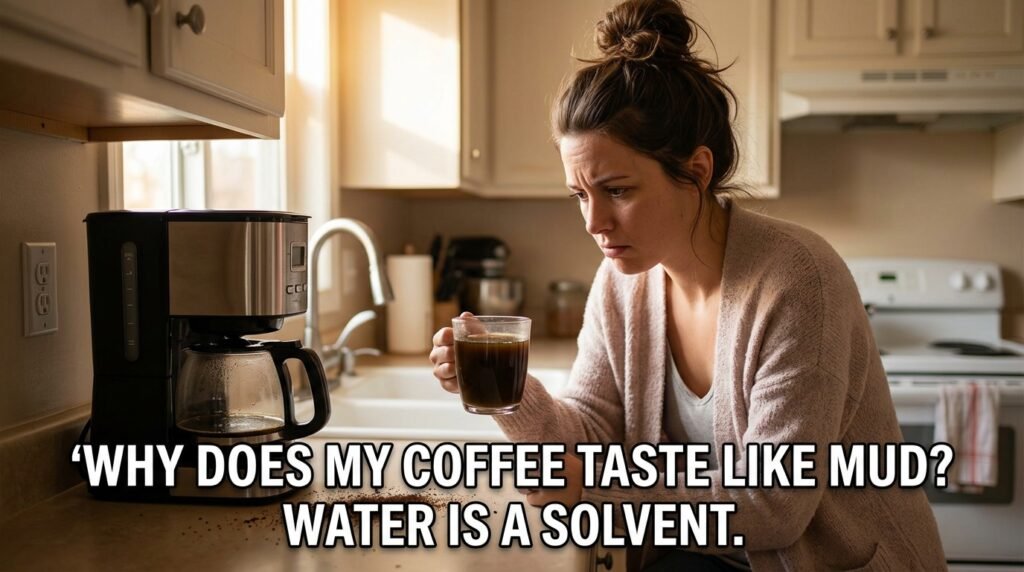
When I got back home, I started reading. I needed to understand why the water from my tap turned beautiful coffee into mud, while the water from my friend’s tap unlocked all the flavor.
Coffee brewing is just a chemical extraction process. You use water as a solvent to pull flavor compounds out of the roasted coffee bean.
But water is rarely just water. Unless it is distilled, water carries invisible dissolved minerals. These minerals are the key to the entire extraction process. They act like magnets. They pull the flavor out of the coffee grounds.
If your water has the wrong minerals, or the wrong amount of them, the extraction fails.
There are three main components in your water that dictate how your coffee will taste. They are magnesium, calcium, and bicarbonate.
Magnesium is your best friend. It is highly reactive. It pulls out the sweet, fruity, and complex flavor notes from the coffee bean. If you love light roasts with bright acidity, you need magnesium in your water.
Calcium is also important, but it behaves differently. Calcium pulls out the heavier, creamier notes. It gives the coffee body and mouthfeel. It highlights chocolate and nutty flavors.
Bicarbonate acts as a buffer. It manages the acidity. If your water has too much bicarbonate, it will completely neutralize the bright, pleasant acids in your coffee. The cup will taste flat, dull, and boring. If your water has too little bicarbonate, the coffee will taste sharp and overwhelmingly sour.
Testing the Variables
Learning the science was one thing. Tasting the difference was another. I wanted to test this theory properly.
I set up an experiment in my kitchen. I wanted to see the contrast clearly. It reminded me of The Day I Compared Two Different Coffee Beans Side by Side because side-by-side tasting is the only way to find the truth.
I prepared three identical brewers. I measured exactly 15 grams of coffee into each one. I used my precision burr grinder to ensure the particle size was uniform. I had previously calibrated my grinder carefully. I knew exactly What I Discovered About Grinding Coffee Too Fine and I was avoiding that bitter mistake.
The only difference across the three cups was the water.
Cup A was brewed with my standard tap water. Cup B was brewed with standard filtered water from my fridge dispenser. Cup C was brewed with plain distilled water from the grocery store.
I boiled the water. I controlled the heat perfectly. Getting the heat right was crucial, similar to How I Discovered the Right Water Temperature for Coffee which also took a lot of trial and error to master.
I poured the water, waited for the coffee to cool slightly, and tasted them blindly.
The Eye-Opening Results
Cup A, the tap water, was exactly as I remembered. It was heavy. It tasted like cardboard. The delicate floral notes of the Ethiopian beans were completely crushed. I later bought a cheap water testing kit online and found out my tap water was incredibly hard. It was packed with calcium and had an extremely high bicarbonate level. The buffer was so strong it killed all the acidity.
Cup B, the fridge filtered water, was slightly better. The carbon filter removed the chlorine taste. The coffee tasted cleaner, but it was still hollow. A standard carbon filter does not remove dissolved minerals. It just removes odors and large particles. My water was still too hard for specialty coffee.
Cup C, the distilled water, was a disaster. It tasted intensely sour and totally unbalanced. Distilled water has zero minerals. It has nothing to act as a magnet for the sweet flavors, and it has zero buffer to control the acidity. The water just aggressively ripped the sharpest acids out of the beans and left everything else behind.
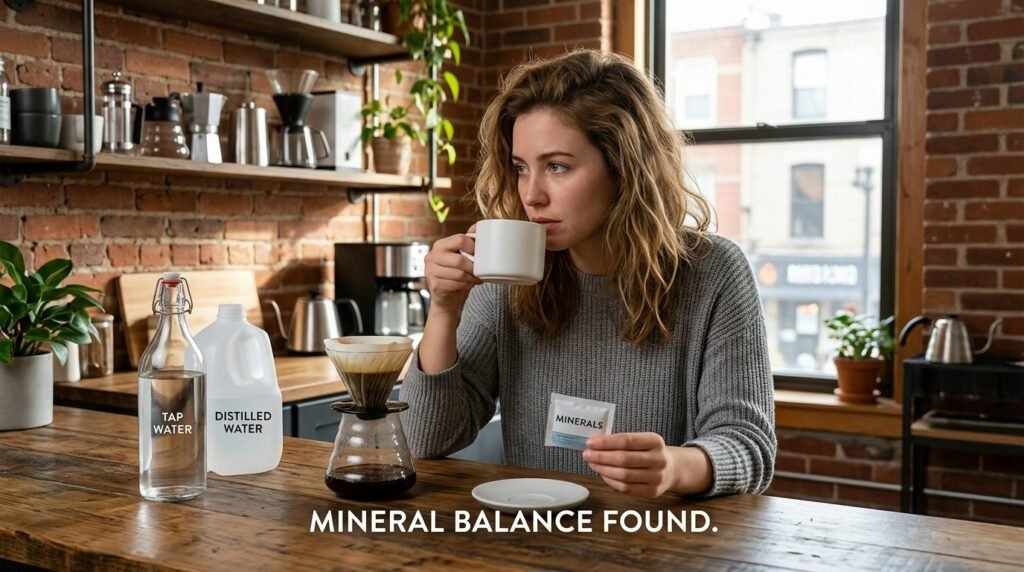
I realized then that good coffee needs water that sits perfectly in the middle. It needs to be clean, but it also needs a specific mineral profile to do the heavy lifting.
Building the Perfect Water
Once I understood the problem, I had to find a solution. I could not move to a new city just for better tap water.
I started looking into water recipes. Yes, people actually follow recipes to build water for coffee.
The easiest solution was buying cheap distilled water in bulk and adding minerals back into it. This approach gives you a complete blank canvas. You remove all the unpredictable variables of your local tap water and replace them with a calculated, precise mineral mix.
I bought a small box of mineral packets designed specifically for coffee. They contain the exact ratio of magnesium, calcium, and bicarbonate needed to optimize extraction.
I poured a gallon of distilled water into a pitcher. I opened one small packet of minerals and dumped it in. I shook the pitcher until the powder dissolved.
I brewed a fourth cup of coffee using this custom water.
The difference was staggering. The coffee tasted exactly like the description on the bag. The acidity was bright but balanced. The sweetness was prominent. The finish was clean. It tasted like a professional barista had brewed it in a high-end cafe.
All I did was change the water.
The Cost of Ignoring Water
Think about how much money you spend on coffee beans. If you are buying specialty coffee from local roasters, you are likely paying a premium.
You are paying for the farmer’s hard work. You are paying for the careful processing. You are paying for the roaster’s skill and precision.
If you take those expensive beans and brew them with hard tap water, you are throwing your money away. You are actively preventing yourself from tasting the product you paid for.
Optimizing your water is the cheapest and most effective upgrade you can make to your coffee routine. It is vastly more important than buying a more expensive brewer or upgrading your kettle.
A cheap plastic dripper with excellent water will always produce better coffee than a five-hundred-dollar machine using bad tap water.
How to Test Your Own Situation
You do not need to become a chemist to improve your morning cup. You just need to run a simple baseline test.
If you suspect your tap water is holding your coffee back, do this tomorrow morning.
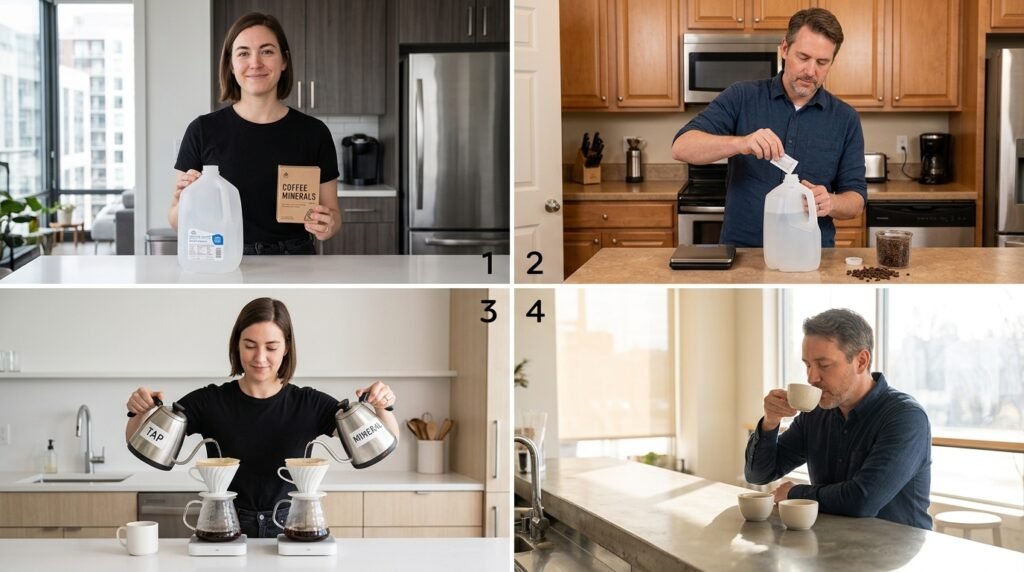
Go to the store and buy one gallon of distilled water. Buy a small box of coffee mineral packets online. They are inexpensive and last for months.
Mix the minerals into the distilled water.
The next morning, brew two cups of coffee side by side. Use your tap water for one. Use your new custom mineral water for the other.
Taste them as they cool down.
If your tap water cup tastes just as good, congratulations. You are lucky enough to live in an area with excellent municipal water for coffee brewing. You can keep using your tap.
But if the custom water cup tastes significantly better—if it tastes sweeter, cleaner, and more vibrant—you have found your problem.
The Permanent Shift in My Routine
I never went back to tap water.
Building my own brewing water is now just a normal part of my weekly routine. Every Sunday, I prepare two gallons of water for the week. It takes less than two minutes.
It guarantees that every single cup I make will taste the way it is supposed to.
When I buy a new bag of beans, I do not have to worry if my water is ruining the profile. I know my water is a constant. If a cup tastes bad, I know I need to adjust my grind size or my ratio. I never have to guess if the water is to blame.
This single realization completely changed my relationship with coffee. It removed the frustration. It removed the inconsistency.
We obsess over the beans. We obsess over the gear. But we forget the foundation of the beverage.
Respect the water. It makes up almost the entirety of the cup you are holding. Once you get the water right, the coffee practically brews itself.

Hi, I’m the coffee enthusiast behind Coffee Nerd Lab.
Like many people, I started drinking coffee simply because it helped me wake up in the morning. Over time, that daily habit turned into a genuine interest in understanding what makes a great cup of coffee. I began experimenting with different beans, brewing methods, grinders, and coffee gear, learning through trial and error along the way.
This blog is where I document that journey. Every article is inspired by real experiences, discoveries, and lessons I’ve learned while exploring the world of coffee. From brewing guides and equipment reviews to practical tips and coffee basics, my goal is to share useful information in a way that’s easy to understand and enjoyable to read.
Thanks for stopping by, and I hope Coffee Nerd Lab helps you enjoy your next cup a little more than the last.