

I stayed in my seat at a quiet corner cafe in Rio de Janeiro. I needed a severe break from my computer screen. I spend my entire week managing content for multiple websites and building digital automations to handle repetitive tasks. My brain usually feels completely fried by Friday afternoon.
My partner and I walked to our favorite local coffee shop to disconnect from the digital noise.
I walked up to the counter and ordered a manual pour over. The barista knows my palate well. He knows I love bright, complex African coffees. Last week, he brewed a spectacular Ethiopian Guji for me. It was incredibly vibrant. It tasted like fresh peaches, jasmine flowers, and sweet black tea.
I took my ceramic mug back to our table. I waited a few minutes for the liquid to cool down. I took a slow sip.
The flavor completely surprised me. It did not taste like peaches or jasmine. It tasted incredibly heavy. The dominant notes were dark chocolate, toasted almonds, and a hint of sweet smoke. It was a delicious cup of coffee, but it was entirely different from the bright fruit bomb I drank a few days prior.
I walked back to the counter. I asked the barista what new country he was featuring today.
He laughed and shook his head. He told me it was the exact same Ethiopian Guji bean from the exact same farm. He simply opened a new bag that had been roasted by a different person on a different machine.
I was completely stunned. I could not comprehend how the same agricultural product could produce two radically different beverages. How coffee roasting affects flavor more than I expected became the most important lesson of my culinary journey. It proved that the roasting oven is not just a cooking tool. It is an active ingredient.
The Raw Green Seed
To understand this massive flavor shift, you have to look at the raw material.
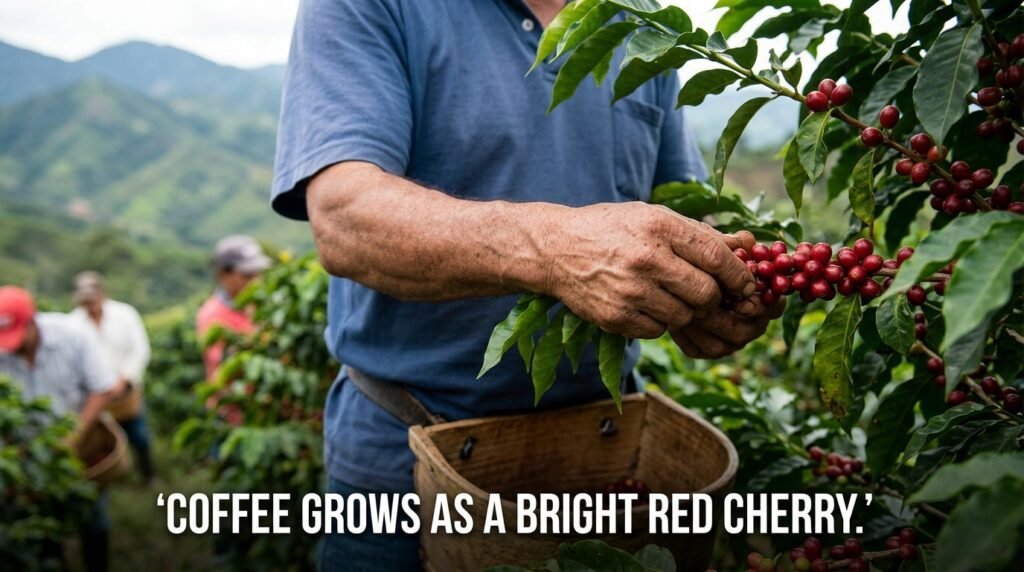
Coffee does not grow on trees as a brown, brittle bean. It grows as a bright red cherry. Inside that cherry is a small, pale green seed. This raw green seed is incredibly dense. It feels like a small pebble.
If you take a raw green coffee bean and boil it in hot water, you will not get a cup of coffee. You will get a terrible, bitter liquid. It tastes like dirt and wet grass.
The green seed contains all the genetic potential for flavor, but that flavor is locked inside complex chemical structures. The Ethiopian Guji beans I love are a perfect example. They are harvested from a wild genetic soup of ancient heirloom varieties. They contain massive amounts of potential fruit sugars and floral acids. But without heat, those flavors remain completely invisible.
The Chemical Laboratory
The coffee roaster is a massive, spinning metal drum. It acts as a highly sensitive chemical laboratory.
When the green seeds drop into the hot drum, a violent reaction begins. The intense heat slowly drives the moisture out of the dense seeds. The seeds turn from pale green to a bright, golden yellow. They start to smell like baking bread.
This is the start of the Maillard reaction. It is the exact same chemical process that turns a raw steak brown on a hot grill. The complex carbohydrates inside the seed begin to break down into simple sugars.
The person operating the machine must monitor this reaction with absolute precision. A mistake of just ten seconds can completely ruin an entire harvest. Understanding this delicate thermal balance was The First Bag of Coffee Beans That Made Me Curious About Roasting and forced me to respect the invisible chef behind the scenes.
The Sound of the First Crack
As the temperature inside the drum climbs higher, the steam pressure inside the beans reaches a critical point.
The cellular walls of the seeds can no longer contain the pressure. They forcefully shatter open. This event creates a loud popping sound inside the machine. It sounds exactly like popcorn cooking in a microwave.
Roasters call this the first crack. It is the most important acoustic marker in the entire coffee industry.
The first crack signifies that the bean is finally soluble. Water can now penetrate the cellular structure and extract the flavors. The decisions the roaster makes immediately after this popping sound dictate the entire reality of your morning mug.
The Preservation of the Light Roast
If the roaster opens the door of the drum and removes the beans shortly after the first crack, you get a light roast.
This was the profile of the first Ethiopian cup I drank. The beans remain a pale, matte brown color. The physical structure of the seed is still incredibly dense and hard.
A light roast is an act of agricultural preservation. The roaster applied just enough heat to make the sugars soluble, but they stopped the fire before it could destroy the delicate organic compounds. The bright peach acidity and the fragile jasmine aroma survive the oven.
When you drink a light roast, you are tasting the dirt. You are tasting the high altitude and the wild genetics of the African forest. The roaster gets out of the way and lets the farmer speak.
The Sweetness of the Medium Roast
If the roaster ignores the first crack and leaves the beans in the hot drum, the chemistry changes drastically.
The temperature continues to rise. The intense heat begins to attack the delicate fruit acids. The bright peach and lemon flavors physically incinerate and evaporate into the air.
At the exact same time, the simple sugars inside the bean begin to rapidly caramelize. This is exactly what happened to my second cup of Ethiopian coffee. The roaster pushed the heat further. The bright fruit acidity died, but a heavy, rich, chocolate sweetness took its place.
A medium roast is a compromise. You sacrifice the unique, vibrant identity of the farm in exchange for a highly comforting, sugary body.
The Violence of the Dark Roast
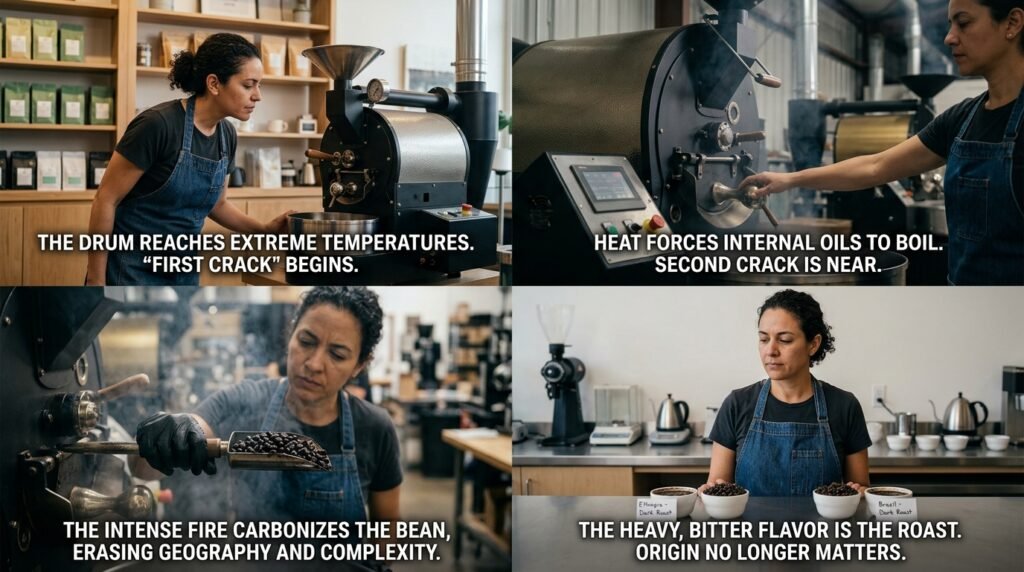
If the roaster leaves the beans in the machine even longer, the drum reaches extreme temperatures.
A second violent popping sound occurs. Roasters call this the second crack. At this stage, the cellular structure of the bean completely collapses. The extreme heat forces the internal oils to boil and push through the broken cell walls. The beans turn pitch black and incredibly greasy.
A dark roast is an act of agricultural destruction.
The volcanic soil no longer matters. The complex genetic soup of the heirloom plant no longer matters. The intense fire has completely carbonized the organic material. The heavy, smoky, bitter flavor in the cup is simply the flavor of the roasting oven.
A dark roasted bean from Ethiopia will taste almost exactly identical to a dark roasted bean from Brazil. The fire completely erases the geography.
The Myth of Commercial Consistency
This chemical reality explains exactly why massive commercial coffee companies burn their beans.
If a giant corporation buys cheap, defective beans from a lowland commercial farm, those beans will taste terrible. They will taste like mold, dirt, and rotting fruit. If you roast them lightly, the consumer will taste all of those flaws.
By roasting the beans until they are completely black, the corporation destroys the defective flavors. They replace the bad taste with a uniform, generic bitterness.
Dark roasting is an industrial camouflage technique. It allows massive companies to maintain absolute consistency across millions of bags. Grasping this corporate strategy was The Day I Finally Understood Why Fresh Coffee Beans Matter and why I permanently stopped buying anonymous supermarket brands. I want to taste the farm, not the factory.
The Physical Density Problem
The roasting level does not just change the flavor. It completely alters the physical physics of your kitchen.
You cannot use the same brewing recipe for a light roast and a dark roast. The oven changes the structural density of the seed.
Because light roasted beans are pulled from the oven early, they remain incredibly hard. If you pour lukewarm water over them, the water will fail to penetrate the tight cell walls. You will brew a weak, sour cup. You must use violently boiling water to force the dense bean to surrender its sugars.
Dark roasted beans are completely different. The extreme heat of the oven shatters their structure. They are hollow, fragile, and highly porous. If you use boiling water on a dark roast, the water will rush inside and aggressively over extract the carbonized material. You will pull massive amounts of bitter tannins into your mug.
You must lower your water temperature to protect the fragile dark roast. The roasting oven dictates your kettle temperature.
The Grinder Resistance
You can actually feel the impact of the roasting machine in your own hands.
If you use a manual hand grinder, pay close attention to the physical resistance of the metal handle. When you grind a light roasted Ethiopian bean, you have to grip the grinder tightly. The dense seeds fight back against the ceramic burrs. You have to use real physical force.
When you grind a dark roasted commercial bean, there is almost zero resistance. The brittle, hollow beans shatter instantly. They feel like dry leaves.
This mechanical feedback is a direct physical connection to the roasting drum. The chef decided how hard your morning workout was going to be.
The Impact on Processing Methods
The roast level also interacts heavily with the post harvest processing of the coffee cherry.
Farmers use different methods to remove the fruit from the seed. If they wash the fruit off with water, the coffee tastes clean and crisp. If they leave the fruit on the seed to dry in the sun, the coffee ferments and absorbs massive amounts of sweet strawberry and blueberry notes.
The processing method sets the stage. This agricultural step is the core topic of What I Learned About Coffee Processing Methods because it builds the flavor potential.
But the roaster has the final say. If a farmer spends weeks carefully drying a natural processed coffee to build those explosive blueberry flavors, the roaster can destroy all that hard work in thirty seconds. A dark roast will incinerate the fermented fruit sugars just as easily as it incinerates the natural plant acids.
Finding Your Preferred Chef
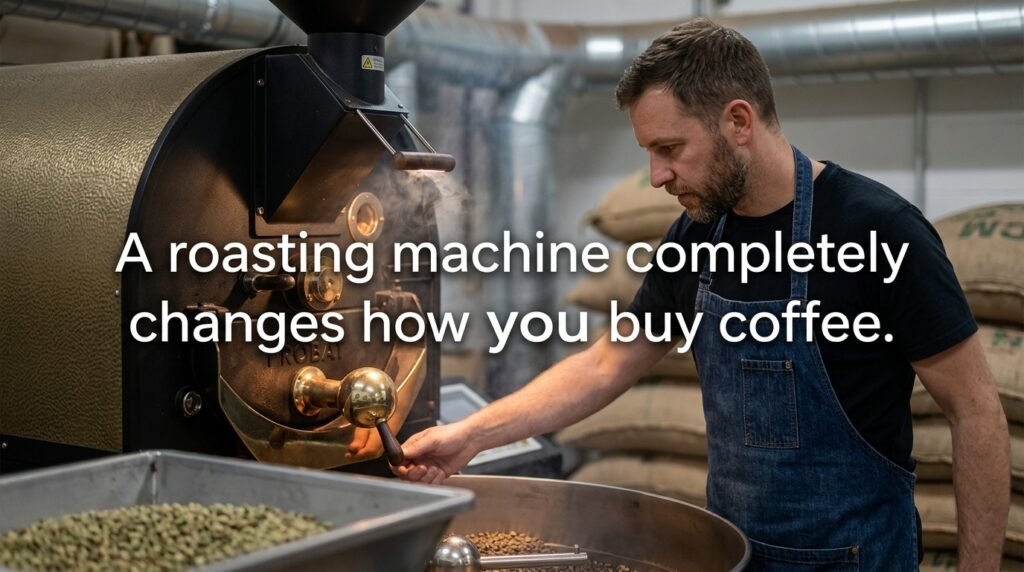
Understanding the massive power of the roasting machine completely changes how you buy coffee.
You cannot simply look for your favorite country of origin. You have to find a roaster whose philosophy matches your palate.
If you love adding heavy cream and sugar to your morning beverage, you need a roaster who focuses on medium to dark profiles. A bright, acidic light roast will clash violently with dairy. You need the heavy chocolate and caramelized sugars to pierce through the milk.
If you prefer to drink your coffee black and you want to taste the specific agricultural origin of the dirt, you must seek out light roasters. You need a chef who is willing to get out of the way and let the farmer take the credit.
A New Layer of Appreciation
That Friday afternoon tasting session in Rio de Janeiro opened my eyes to a completely new layer of the coffee industry.
I stopped viewing the coffee bean as a static ingredient. I realized it is a highly volatile, highly malleable canvas. The farmer stretches the canvas and applies the primer. The roaster paints the actual picture.
The next time you buy a bag of specialty coffee, pay close attention to the color of the beans. Smell the dry grounds. Try to identify the specific caramelization of the sugars. When you finally take a sip, remember the intense heat of the metal drum. Remember the loud pop of the first crack.
Coffee is a brilliant collaboration between agriculture and chemistry. Once you understand how the fire rewrites the flavor, your morning mug becomes a fascinating scientific experiment.
Hi, I’m the coffee enthusiast behind Coffee Nerd Lab.
Like many people, I started drinking coffee simply because it helped me wake up in the morning. Over time, that daily habit turned into a genuine interest in understanding what makes a great cup of coffee. I began experimenting with different beans, brewing methods, grinders, and coffee gear, learning through trial and error along the way.
This blog is where I document that journey. Every article is inspired by real experiences, discoveries, and lessons I’ve learned while exploring the world of coffee. From brewing guides and equipment reviews to practical tips and coffee basics, my goal is to share useful information in a way that’s easy to understand and enjoyable to read.
Thanks for stopping by, and I hope Coffee Nerd Lab helps you enjoy your next cup a little more than the last.