
I was working late on a Thursday afternoon in Rio de Janeiro. I was configuring strict digital spam filters for a new client website. A good digital filter is a highly sensitive editor. It blocks the malicious noise and lets the clean, valuable data pass through to the server.
I successfully deployed the code and walked into my kitchen to take a break.
I looked at my glass V60 cone and my AeroPress. I realized I was entirely focused on the coffee beans and the water temperature. I completely ignored the physical barrier sitting between the raw ingredient and my ceramic mug. I viewed the coffee filter as a simple trash can for wet grounds.
I decided to stop taking that physical barrier for granted. I ordered three different types of filters online. I bought a stack of unbleached brown paper filters. I bought a reusable stainless steel mesh disk. I bought a traditional cotton cloth filter.
What I learned after trying different coffee filters completely shifted my understanding of culinary texture. The filter is not just a trash can. It is an active editor. It dictates the exact physical weight of the liquid on your tongue.
The Illusion of Neutrality
When I first started brewing specialty coffee, I assumed all filters were neutral. I thought their only job was to stop the solid pieces of dirt from falling into my cup.
This assumption is a massive mechanical failure.
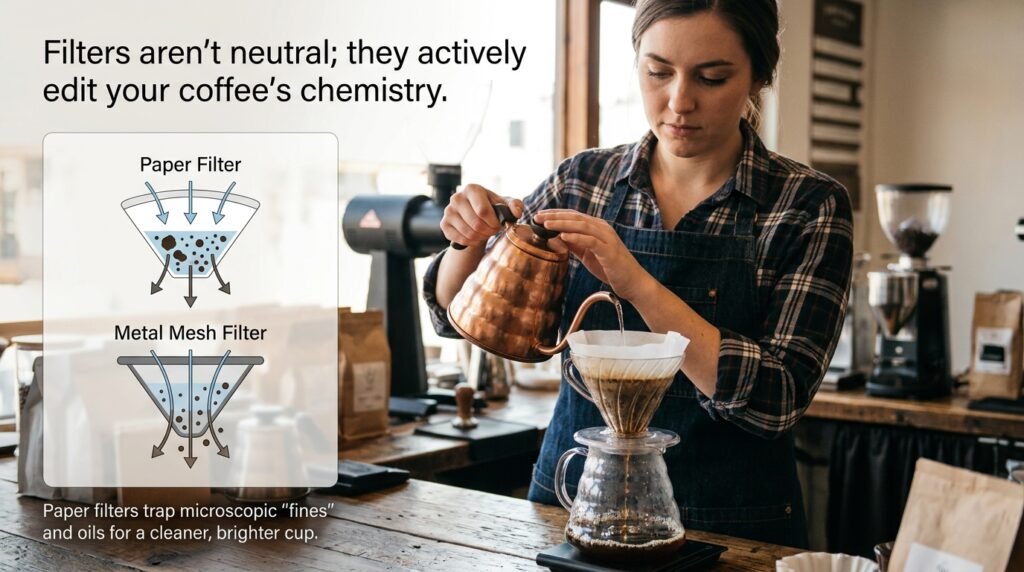
Hot water dissolves coffee. It pulls out complex organic acids, sweet fruit sugars, and heavy lipids. These compounds do not travel alone. They are accompanied by microscopic particles of shattered coffee beans. The coffee industry calls this microscopic dust the fines.
The barrier you place at the bottom of your brewer decides exactly which of these elements make it into the final beverage. The filter actively edits the chemistry.
The Brown Paper Mistake
I started my experiment with the most basic option available. I bought a cheap box of brown, unbleached paper filters from a local supermarket.
I wanted to brew my expensive, light roasted Ethiopian Guji beans. I placed the brown paper inside my glass V60 cone. I ground fifteen grams of the dense African seeds in my manual burr grinder. I poured the hot water and waited for the extraction to finish.
I took a sip of the coffee. I immediately spit it out into the kitchen sink.
The liquid tasted exactly like a wet cardboard box. The beautiful, delicate peach and jasmine notes of the Ethiopian coffee were completely destroyed. They were smothered by the heavy, dry flavor of cheap paper pulp.
Rinsing the Editor
I realized the unbleached paper was actively injecting its own terrible flavor into my expensive beverage.
Experiencing this disgusting cardboard taste was exactly What I Learned After Making Coffee With Filter Papers and it forced me to adopt a strict daily habit. You must wash your equipment before you use it.
I threw the rest of the brown filters in the trash. I bought a pack of high quality, oxygen bleached white paper filters. These white filters are designed to be entirely flavorless.
Before I added my ground coffee, I placed the empty white filter into the glass cone. I poured fifty grams of violently boiling water directly over the paper. The hot water flushed out any remaining paper dust and preheated the thick glass cone. I dumped the rinse water into the sink. The editor was finally clean.
The Absolute Clarity of Paper
I brewed a fresh batch of the Ethiopian Guji using the rinsed white paper filter. The result was spectacular.
Paper filters are incredibly dense. They are woven with microscopic pores. These tiny pores act like a strict security guard. They trap every single piece of microscopic coffee dust. They also trap almost all of the heavy, natural coffee oils.
Because the paper traps the heavy oils and the muddy dust, the liquid that drips into your mug is perfectly pristine. It is completely transparent. It looks like a bright ruby red tea.
The flavor profile is incredibly sharp. Without the heavy oils coating your tongue, the delicate fruit acids shine brilliantly. The peach notes are vibrant. The floral aromas are highly articulate. Paper filters provide the absolute highest level of flavor clarity.
Testing the Metal Mesh
I enjoyed the clarity of the paper, but I wanted to know what I was missing. I wanted to taste the data the paper was blocking.
I pulled out my AeroPress. I removed the standard paper filter and replaced it with a reusable stainless steel mesh disk. The metal disk had thousands of tiny, laser cut holes.
I weighed fifteen grams of coffee. I ground the beans slightly coarser to compensate for the metal holes. I poured the hot water, stirred the slurry, and pushed the plastic plunger down.
The physical resistance was significantly lower. The liquid shot through the metal disk much faster than it pushed through the dense paper.
The Heavy Weight of Oil
I poured the dark liquid into my ceramic mug. It looked entirely different.
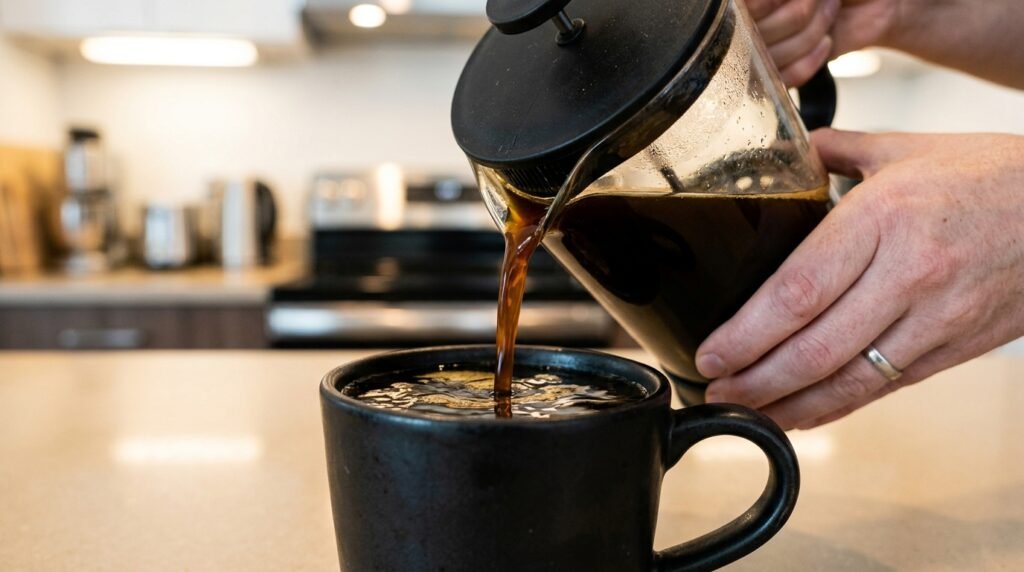
The coffee was completely opaque. I could not see the bottom of the mug. The surface of the liquid was coated in a thick, slick layer of floating oil. It reflected the lights in my kitchen ceiling.
I took a slow sip. The texture was massive.
The liquid felt incredibly heavy and syrupy on my palate. It coated my throat like melted chocolate. The bright, sharp peach acidity I loved was completely muted. It was smothered by the heavy blanket of natural lipids. The coffee tasted rich, bold, and deeply comforting. It felt like a decadent dessert.
The Problem of the Fines
The metal filter provided an incredible body, but it came with a massive drawback.
As I reached the bottom of the mug, the texture changed. The smooth syrup turned into a gritty, dry powder. I looked at the bottom of the empty ceramic cup. It was covered in a thick layer of dark brown sludge.
The laser cut holes in the metal disk were small, but they were not microscopic. They could not stop the finest coffee dust from escaping the brewing chamber.
Dealing with this harsh, bitter sludge was precisely What I Discovered About Grinding Coffee Too Fine because those tiny particles continue to extract inside the mug. They release aggressive, dry tannins. The metal filter gives you massive texture, but it completely destroys the clean finish of the beverage.
The Cloth Compromise
I had tested absolute clarity with the paper. I had tested heavy, muddy texture with the metal. I needed to find a middle ground.
I ordered a traditional cotton cloth filter. Cloth filters are heavily used in traditional Japanese coffee houses. They are known for producing a highly unique texture called the nel drip.
The physical structure of the cotton cloth sits directly between paper and metal. The woven cotton threads are tight enough to catch the microscopic coffee dust, but they are porous enough to let the heavy, natural coffee oils pass through.
I secured the cloth filter to a wire hoop and placed it over my mug. I poured the hot water slowly.
The Silky Mouthfeel
The resulting beverage was an absolute revelation.
I looked at the liquid. It was not transparent like the paper brew, but it was not muddy like the metal brew. It had a beautiful, glowing translucence.
I took a sip. The texture was stunning. It did not feel watery. It did not feel gritty. It felt incredibly silky. The cotton cloth allowed the sweet natural oils into the cup, providing a luxurious, round mouthfeel. But because the cloth successfully trapped the microscopic dust, the bitter sludge was completely absent.
The delicate fruit notes of the Ethiopian coffee were perfectly balanced by the rich, oily texture. It was a flawless compromise.
The Maintenance Nightmare
The cloth filter produced the best overall cup of coffee. But I rarely use it today.
The physical maintenance required to keep a cloth filter clean is an absolute nightmare. You cannot simply throw it in the trash like a paper filter. You cannot just rinse it under the faucet like a metal disk.
Cotton is highly absorbent. It permanently traps the old coffee oils deep inside its threads.
If you rinse a cloth filter and leave it on your dish rack to dry, those trapped oils immediately oxidize. They turn completely rancid. The cloth begins to smell like rotting fish. If you brew coffee through a rancid cloth, the beverage becomes toxic.
The Boiling Routine
To maintain a cloth filter, you have to adopt a brutal kitchen routine.
Immediately after brewing, you have to scrub the cloth vigorously with boiling water. You cannot use dish soap, or your next cup of coffee will taste like chemical soap.
After scrubbing the cloth, you must submerge it completely in a glass of clean water. You must store that glass of water inside your refrigerator. The cold temperature and the total submersion prevent the trapped oils from contacting the oxygen in the air.
You have to change that water every single day. Before you brew coffee again, you have to boil the cloth in a pot of fresh water to sterilize it.
Navigating this highly complex, demanding routine reminded me heavily of My Honest Experience Trying Pour Over Coffee for the First Time because it requires absolute patience and dedication. A cloth filter is not a tool for a busy Tuesday morning. It is a tool for a slow, deliberate Sunday afternoon.
Matching the Filter to the Bean
This massive physical experiment completely changed how I operate my kitchen. I stopped viewing filters as interchangeable trash cans. I started viewing them as targeted culinary tools.
You must match the filter to the specific agricultural product you are brewing.
If I buy a bag of incredibly complex, expensive light roasted coffee from East Africa, I always use a rinsed white paper filter. I want to taste the bright acidity. I want to taste the delicate floral notes. I need the paper to strip away the heavy oils so the clarity of the dirt can shine.
If I buy a bag of dark roasted, heavy chocolate coffee from Brazil, I do not want clarity. I want comfort.
I reach for the reusable metal mesh filter. The dark roast does not have delicate fruit notes to protect. I use the metal filter to extract massive amounts of heavy oil and rich texture. I accept the muddy bottom of the cup because I want the heavy, syrupy body.
The Environmental Variable
There is also a massive environmental factor to consider.
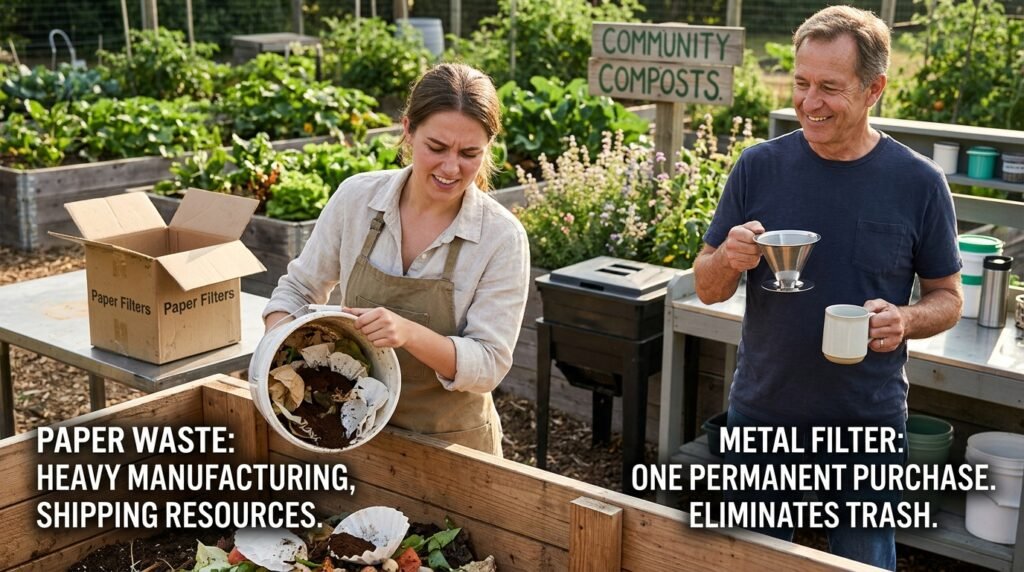
Using two paper filters every single day generates a significant amount of physical waste. While high quality paper filters are biodegradable and can be tossed into a compost bin, it still requires heavy manufacturing and shipping resources to put a box of paper in your kitchen cabinet.
The stainless steel metal filter is a permanent purchase. You buy it once, and it lasts for a decade. It completely eliminates your paper waste. If reducing your daily trash output is a high priority, you must accept the heavy, oily texture of the metal mesh.
Evaluate Your Own Cup
Take a critical look at your current coffee setup tomorrow morning.
Look at the barrier sitting between the ground beans and your ceramic mug. If you are using cheap, unbleached brown paper filters from the supermarket, you are actively injecting the flavor of wet cardboard into your expensive specialty coffee. You are ruining the extraction before the water even hits the grounds.
Switch to oxygen bleached white paper immediately. Always rinse the paper with boiling water before adding your coffee.
If you find that your coffee tastes too thin or too watery, stop buying different beans. Stop changing your grinder settings. Simply buy a reusable metal filter. Let the heavy natural oils fall into your mug.
Once you realize that the filter is an active editor, you gain total control over the physical texture of your beverage. You stop accepting the default setting, and you finally start shaping the coffee to match your exact palate.
