
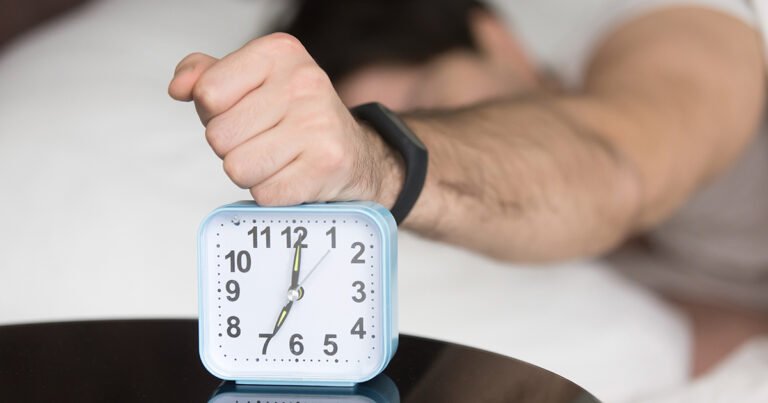
I woke up on a Tuesday morning in Rio de Janeiro to a massive digital crisis. A crucial database for one of my largest client websites had crashed overnight. The server was completely unresponsive. I had dozens of automated alerts sitting on my phone screen. I needed to sit at my computer and write complex recovery code immediately.
I also desperately needed caffeine to wake my brain up.
Normally, I treat my morning coffee as a slow, peaceful ritual. I weigh my light roasted Ethiopian beans. I use a manual hand grinder. I stand over my glass V60 cone and pour boiling water in slow, perfect concentric circles for three minutes.
On this specific Tuesday, I did not have three minutes to stand still. I did not have the mental bandwidth to monitor fluid dynamics. I needed coffee instantly, but I refused to drink bitter, stale instant powder.
I opened the bottom drawer of my kitchen cabinet. Sitting in the dark was a completely bizarre plastic tube I had purchased months ago and completely ignored. It was the AeroPress. The coffee brewing tool I wish I had bought earlier completely saved my morning workflow. It taught me to stop judging equipment by its visual aesthetic and to start respecting pure, indestructible mechanical efficiency.
The Aesthetic Snobbery
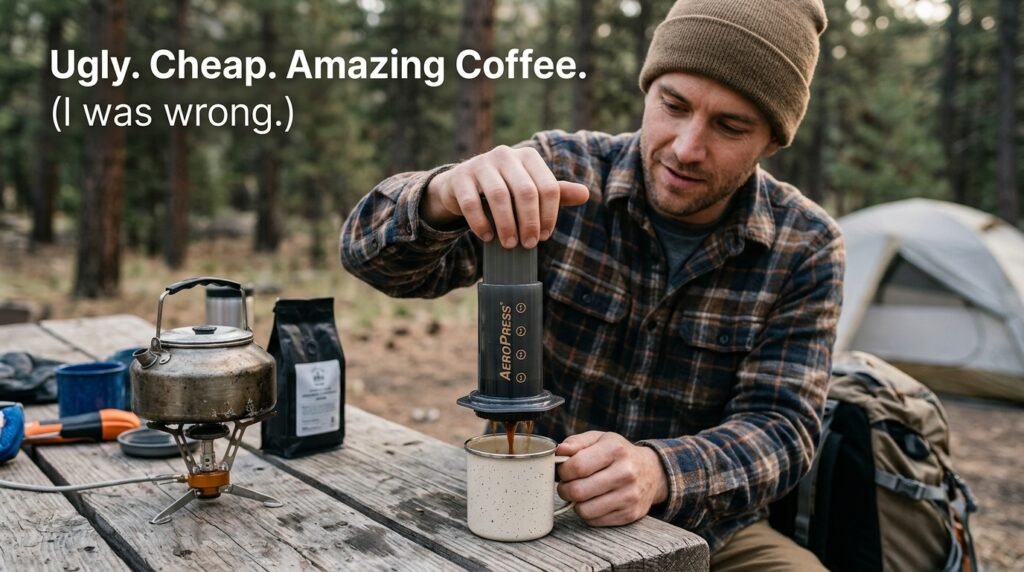
I must admit my own foolish arrogance. I ignored the AeroPress for months simply because it looked ugly.
When you get deep into specialty coffee, you start to romanticize the visual tools. You want your kitchen counter to look like a high end chemistry laboratory. You want thick borosilicate glass. You want polished stainless steel. You want heavy ceramic drippers.
The AeroPress looks like a giant plastic medical syringe.
It is constructed from thick, dark polycarbonate plastic. It has a massive rubber plunger. It comes with a cheap plastic stirring paddle and a plastic funnel. It does not look like a premium culinary tool. It looks like a cheap toy you would find in a camping supply store.
I bought one because coffee professionals constantly praise it, but I felt embarrassed to put it on my clean, minimalist counter. I hid it in a drawer.
The Failure of Percolation
To understand why this plastic tube is so brilliant, you have to understand why my glass V60 pour over cone was useless during my server crisis.
A V60 uses a brewing method called percolation. In percolation, the hot water is constantly moving. Gravity pulls the water down through the bed of coffee grounds. The solvent is highly active.
Percolation demands absolute physical perfection from the user. If you rush your pouring technique, you ruin the extraction. If you dump the water too fast, the liquid will drill a deep crater into the coffee bed. The water will channel straight through the paper filter. You will end up with a mug full of weak, sour, terrible water.
You cannot rush gravity. You cannot speed up a pour over.
The Magic of Immersion
The AeroPress operates on an entirely different law of physics. It uses a method called immersion.
In immersion brewing, the water does not flow constantly. The hot water and the ground coffee sit together in a closed chamber. They steep like tea leaves in a pot. The solvent is completely static.
This simple chemical difference completely eliminates human error.
Because the water simply sits inside the plastic tube, channeling is physically impossible. You do not have to worry about digging craters. You do not need a specialized gooseneck kettle. You do not need to pour in slow, tight concentric circles. You just dump the water into the plastic chamber and walk away.
The Crisis Workflow
Standing in my kitchen with the server crisis looming, I grabbed the plastic tube.
I placed the bottom half of the cylinder onto my heavy ceramic mug. I locked the small plastic cap into place. The cap held a tiny, perfectly circular paper filter. I dumped fifteen grams of freshly ground Ethiopian Guji beans directly into the open chamber.
I did not bother using my precision gooseneck kettle. I just poured hot water from a standard pot directly into the top of the dark plastic tube. I filled it to the top.
I grabbed the plastic paddle and stirred the dark slurry violently for three seconds. Then, I walked away.
A highly Forgiving System
I went back to my computer desk. I typed a few lines of code to stabilize the database. My heart rate started to slow down. I realized the server was not permanently dead. I just needed to rebuild the index.
I walked back into the kitchen two minutes later. The coffee was still sitting in the plastic tube.
This is the ultimate beauty of immersion brewing. It is incredibly forgiving. If you leave a pour over unattended, the water drains completely and the extraction dies. If you leave an AeroPress unattended, the extraction just continues slowly and gently.
The heavy plastic walls hold the thermal energy perfectly. The coffee particles continue to release their sweet sugars into the static water pool.
The Physical Application of Pressure
I grabbed the heavy plastic plunger with the thick rubber seal. I inserted it into the top of the brewing chamber.
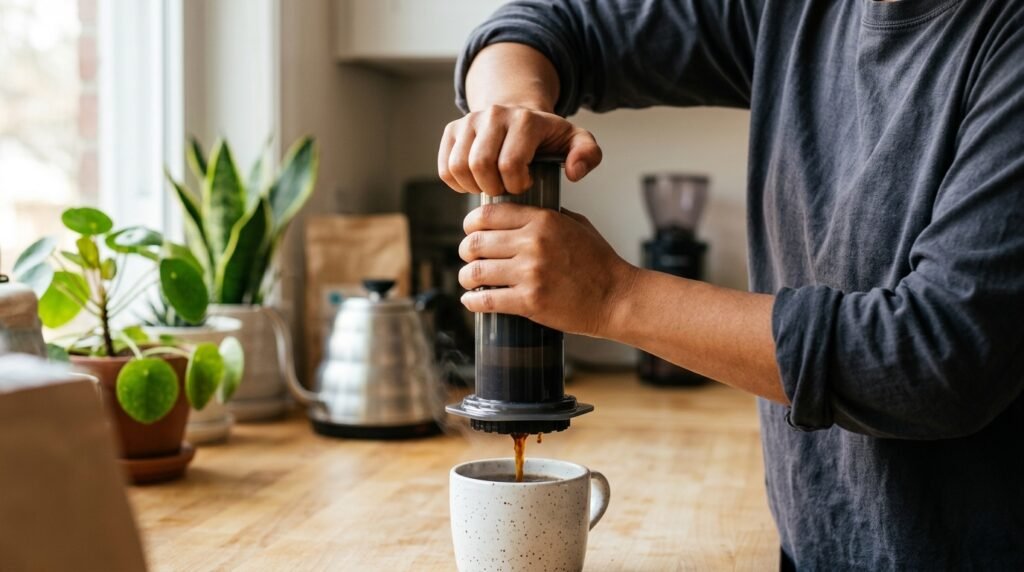
Now I had to execute the final step. I placed both of my hands on top of the plunger and pushed down. The physical resistance was intense. The hot air trapped inside the cylinder compressed.
I applied steady, downward physical force. I could hear a soft hissing sound as the pressurized water was forced through the dense bed of coffee grounds and through the tiny paper filter.
Unlike a French press, which relies entirely on passive steeping, the AeroPress utilizes active pressure. This pressure acts like a massive chemical accelerator. It violently forces the heavy natural lipids and complex oils out of the coffee cells in the final ten seconds of the brew.
Tasting the Heavy Output
I pushed the plunger all the way to the bottom until I heard a loud, satisfying hiss of escaping air. I removed the plastic machine and picked up my mug.
I took my first sip. My brain immediately stalled.
The flavor was completely different from my delicate glass pour over. The coffee was massive. It felt incredibly heavy and syrupy on my palate. The bright lemon acidity of the Ethiopian beans was perfectly intact, but it was wrapped in a thick, rich blanket of sweet fruit jam.
It tasted bold, aggressive, and incredibly comforting. It was exactly the high density fuel I needed to fix my broken web servers.
Integrating the Speed
I sat at my desk and drank the entire mug in ten minutes. The database issue was resolved.
I looked back at the kitchen. I realized I had just brewed an absolute professional grade cup of coffee with zero pouring technique, zero waiting, and zero stress.
Implementing this specific tool was exactly The Brewing Method That Suits My Busy Mornings because it completely disconnected my physical focus from the extraction quality. I could brew a perfect beverage while aggressively typing on my keyboard. The plastic tube did all the heavy lifting for me.
The Ease of Thermal Control
As I continued to use the AeroPress over the next few weeks, I discovered another incredible advantage. It is highly tolerant of wild temperature fluctuations.
With a traditional V60 pour over, you need boiling hot water. If the water temperature drops, the extraction stalls immediately. The coffee tastes incredibly sour.
Because the AeroPress combines static immersion with active pressure, you can extract coffee at much lower temperatures. Dialing in this specific thermal variable was exactly How I Discovered the Right Water Temperature for Coffee and it opened up an entirely new flavor map.
I started brewing dark roasted Brazilian beans using water that was only one hundred and seventy five degrees Fahrenheit. The low temperature protected the dark beans from releasing their bitter ash flavors, while the intense physical pressure ensured a full, heavy extraction of the sweet chocolate notes.
The Advanced Inverted Method
The AeroPress community is incredibly creative. Because the plastic tube is practically indestructible, people have invented countless ways to modify the mechanics.
I soon discovered the inverted technique.
Instead of placing the filter on the bottom and brewing directly over a mug, you flip the entire plastic cylinder upside down. You insert the rubber plunger just slightly into the top chamber to create a seal. The machine sits on the counter upside down like a massive plastic tower.
You pour the coffee and the water into the open bottom. Because the rubber plunger blocks the exit, absolutely zero water drips through prematurely. It becomes a perfect, one hundred percent sealed immersion chamber.
Pushing the Limits of Flavor
You let the coffee steep in this inverted tower for two or three minutes. Then, you screw the paper filter cap onto the top. You place your mug carefully over the filter. Finally, you flip the entire assembly right side up and push the plunger down.
Learning this advanced physical maneuver was exactly The Morning I Finally Got My AeroPress Recipe Right because it maximized the total extraction yield.
By preventing any water from escaping early, every single drop of solvent remains in constant contact with the coffee particles. The resulting beverage is even thicker, sweeter, and more concentrated than the standard method. It produces a flavor profile that sits comfortably between a standard drip coffee and a thick shot of espresso.
The Genius of the Cleanup
The flavor and the speed are incredible, but the absolute greatest engineering achievement of the AeroPress is the cleanup process.
If you own a French press, you know the absolute horror of washing it. You have to scoop wet, muddy grounds out of the bottom of the glass beaker. You have to scrub the metal mesh screen to remove the trapped oils. It is a terrible, messy chore.
The AeroPress cleans itself.
When you push the rubber plunger completely to the bottom, it perfectly squeegees the plastic walls of the cylinder. It compresses the wet coffee grounds into a tight, solid hockey puck against the paper filter.
You unscrew the plastic cap. You hold the cylinder over your kitchen trash can. You push the plunger one final inch. The solid puck of coffee and the paper filter shoot cleanly into the garbage with a satisfying pop.
You rinse the rubber tip under the sink for exactly two seconds. The machine is completely spotless and ready for tomorrow.
A Tool for the Road
The indestructible plastic construction also provides a massive lifestyle advantage.
You cannot pack a fragile glass carafe or an expensive ceramic cone into a suitcase. If you travel, you are usually forced to drink terrible hotel coffee or spend ten dollars a cup at a generic cafe.
The AeroPress is the ultimate travel companion. The plastic cylinder is lighter than a smartphone. It cannot shatter. You can throw it directly into the bottom of a backpack.
I recently took a weekend trip to a cabin outside of Rio de Janeiro. I packed my manual steel hand grinder, a bag of fresh Ethiopian beans, and my plastic AeroPress. I boiled water in a cheap metal pot over a campfire. I dumped the water into the plastic tube, stirred the grounds, and pushed the plunger. I drank a world class specialty coffee while sitting in the middle of a forest.
Reevaluating the Aesthetics
I look at my kitchen counter today with a completely different perspective.
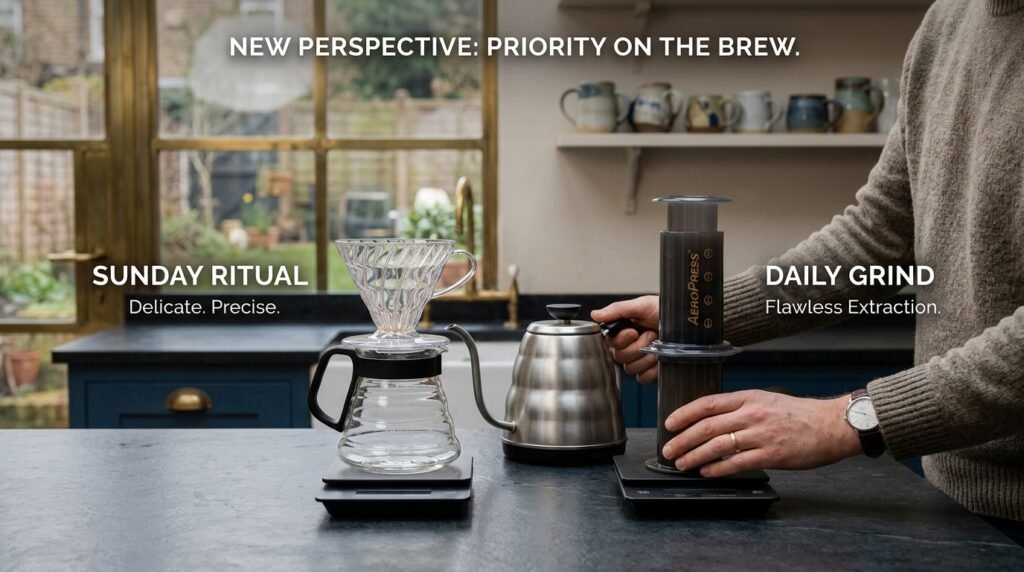
I still love my beautiful glass V60 setup. I use it on quiet Sunday mornings when I have the time and the patience to execute the perfect concentric pouring technique. I respect the delicate clarity of the paper filter.
But the dark plastic AeroPress is no longer hidden in the bottom drawer. It sits proudly next to my digital scale.
I stopped caring about how the equipment looks to visitors. I care entirely about what the equipment actually does. The AeroPress delivers a massive, heavy, flawlessly extracted cup of coffee in under two minutes with absolutely zero technical skill required. It is a masterclass in industrial engineering.
Stop Fighting the Morning Clock
If you are a professional with a demanding digital workload, you need reliable systems. You cannot rely on a brewing method that breaks down the second you look at an urgent email.
You need a tool that forgives your lack of attention.
Go online and order an AeroPress today. It costs thirty dollars. It is completely immune to human error. It will outlast every single glass beaker in your kitchen. When you finally experience the heavy, sweet body of an immersion brew, and you realize you can clean the entire machine in three seconds, you will completely understand why this strange plastic tube is the most valuable asset on your kitchen counter. Function will always defeat form.
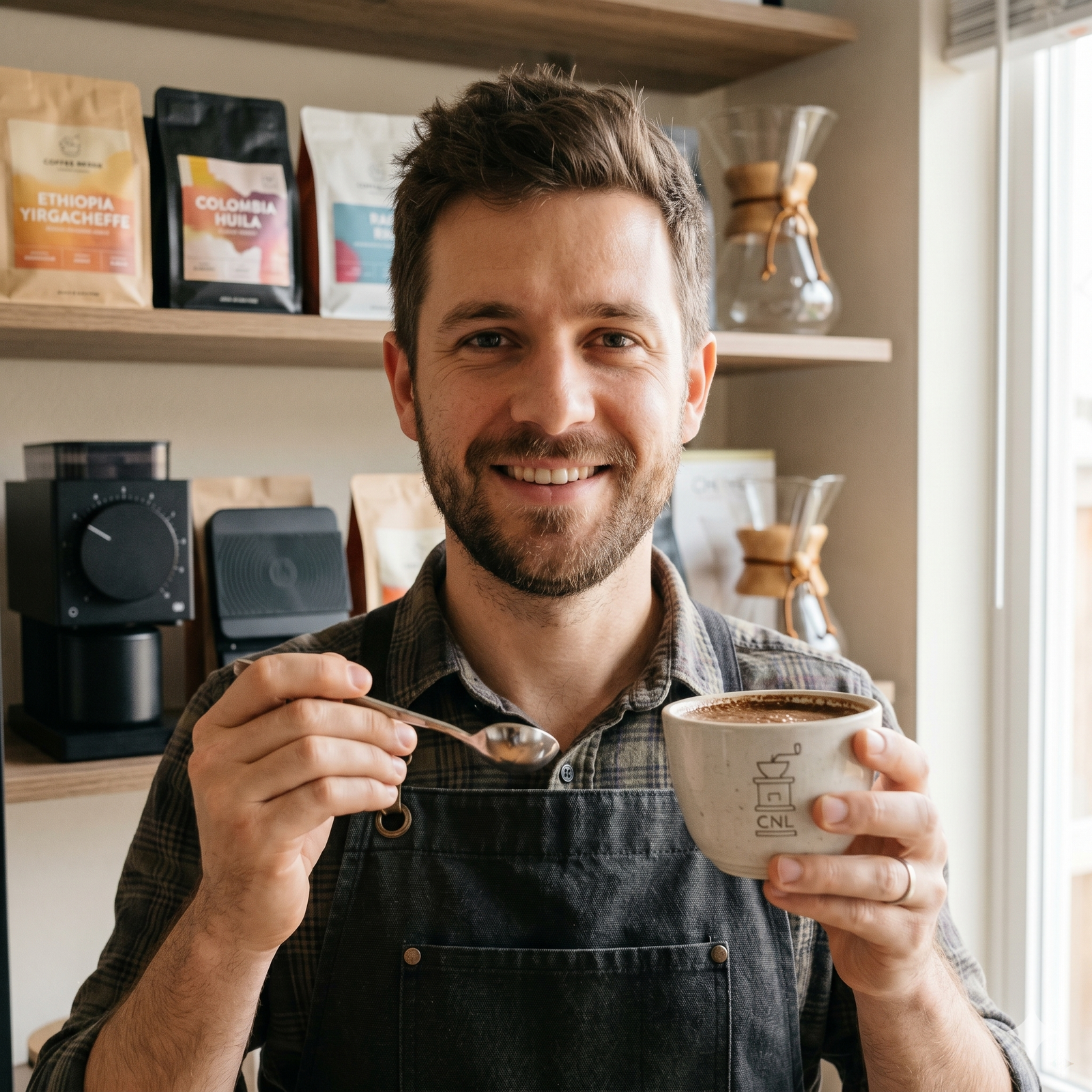
Hi, I’m the coffee enthusiast behind Coffee Nerd Lab.
Like many people, I started drinking coffee simply because it helped me wake up in the morning. Over time, that daily habit turned into a genuine interest in understanding what makes a great cup of coffee. I began experimenting with different beans, brewing methods, grinders, and coffee gear, learning through trial and error along the way.
This blog is where I document that journey. Every article is inspired by real experiences, discoveries, and lessons I’ve learned while exploring the world of coffee. From brewing guides and equipment reviews to practical tips and coffee basics, my goal is to share useful information in a way that’s easy to understand and enjoyable to read.
Thanks for stopping by, and I hope Coffee Nerd Lab helps you enjoy your next cup a little more than the last.