

I had just moved into a new apartment. A few of my closest friends came over on a Saturday afternoon to help me unpack boxes and arrange furniture. One of them handed me a small, rectangular cardboard box wrapped in brown paper. It was a housewarming gift.
I tore the paper off and opened the box. Inside sat a delicate, V-shaped glass cone, a glass serving carafe, and a pack of white paper filters.
I held the glass cone up to the light. It looked like a piece of chemistry lab equipment. I rotated the box, looking for a power cord. There was no cord. There were no buttons. There was no digital screen.
My friend smiled and told me it was a manual pour over dripper. He said it would change my life. I thanked him politely, but internally, I was highly skeptical. I was used to pushing a button on a plastic machine and walking away. The idea of manually pouring hot water over coffee grounds seemed like an unnecessary step backward in technology.
I placed the beautiful glass cone on my kitchen counter. It sat there for three weeks completely untouched.
Eventually, a lazy Sunday morning arrived. My automatic machine was out of paper filters, but I still had the pack of special cone filters from my housewarming gift. I decided it was time to bite the bullet. My honest experience trying pour over coffee for the first time was an absolute disaster of epic proportions, but that failure paved the way for the best cups of coffee I have ever made.
The Arrogance of the Uninformed
My first mistake was pure arrogance. I assumed that making coffee manually was just a matter of gravity. You put coffee in a funnel, you add hot water, and the coffee falls into the cup. How hard could it possibly be?
I did not read any instructions. I did not watch a single tutorial video.
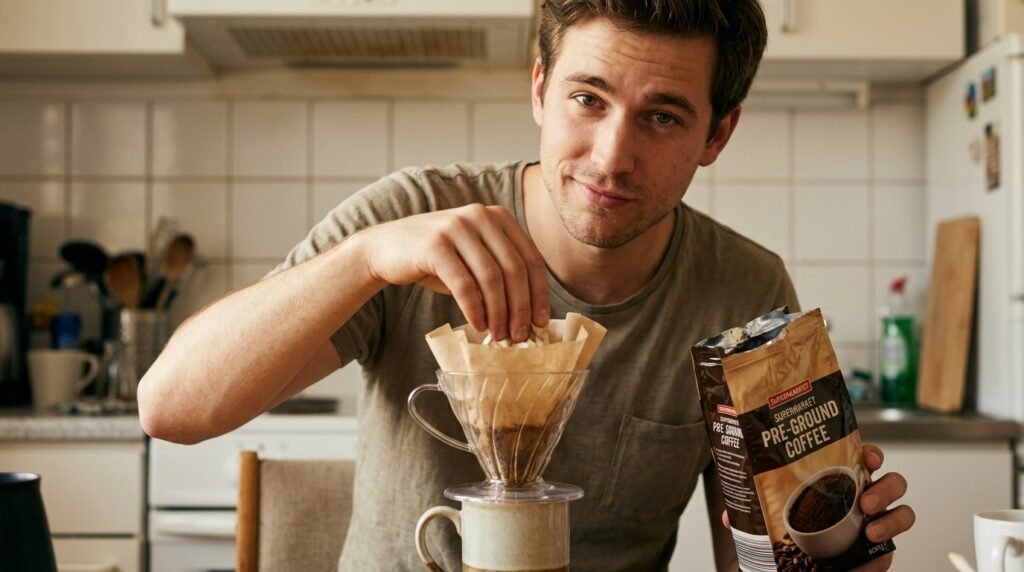
I grabbed a standard cooking pot from the cabinet. I filled it with tap water and placed it on the stove to boil. While the water was heating up, I took a paper filter, shoved it into the glass cone, and placed the cone directly on top of my favorite ceramic mug.
I opened a bag of pre-ground supermarket coffee. I grabbed a random metal spoon from the drawer and blindly scooped three heaping mounds of dark powder into the paper filter. I did not measure anything.
The water in the pot started boiling aggressively. I grabbed the handle of the pot, walked over to the mug, and tipped the pot forward.
The Kitchen Flood
Pouring boiling water from a wide cooking pot into a small paper cone is a terrible idea.
A massive, uncontrollable wave of boiling water cascaded out of the pot. It slammed into the dry coffee grounds with violent force. The water immediately filled the paper cone to the absolute brim.
The coffee grounds floated to the top and formed a thick, impenetrable crust. The water had nowhere to go. It completely stalled. I stood there watching the dark brown swamp sit stagnant in the glass cone.
After a few seconds, the water finally broke through the crust. But it did not drip slowly. Because I had poured so violently, the water drilled a massive hole right down the side of the paper filter. It bypassed the coffee grounds entirely.
The liquid poured straight through the filter and filled my mug in less than ten seconds. It actually overflowed, spilling a puddle of hot brown water all over my clean kitchen counter.
The Taste of Failure
I grabbed some paper towels and cleaned up the flood. I looked down at the mug. The liquid inside looked incredibly weak. It was almost transparent. It looked like a cup of dirty dishwater.
I took a cautious sip. It was worse than I expected.
It was overwhelmingly sour. It tasted like hot lemon water mixed with stale cardboard. There was absolutely zero sweetness. There was no heavy body. The coffee was thin, acidic, and completely undrinkable.
I poured the entire mug down the kitchen sink. I stared at the glass cone. I realized my friend had not gifted me a magical device. He had gifted me a tool. And just like a musical instrument, a tool is completely useless if you do not know how to play it.
Respecting the Science
That terrible cup of sour water forced me to humble myself. I sat down at my laptop and started doing some actual research.
I learned that manual coffee brewing is an exercise in precise chemical extraction. You are trying to dissolve the exact right amount of solids from the roasted bean. If the water passes through the coffee too fast, you get a sour, under-extracted cup. If the water sits in the coffee for too long, you get a bitter, over-extracted cup.
My violent pour from the cooking pot had ruined the extraction. I had created a channel right down the side of the filter. The water took the path of least resistance. It completely ignored the coffee grounds and just pulled out the harsh surface acids.
Understanding this physical reality was a massive turning point. I started to see the logic behind the method. This research phase became the foundation for What I Learned After Brewing Coffee More Carefully later in my journey. I realized I had to control the flow of the water.
Gathering the Necessary Gear
I knew I could not try the pour over method again until I had the proper equipment. The glass cone alone was not enough.
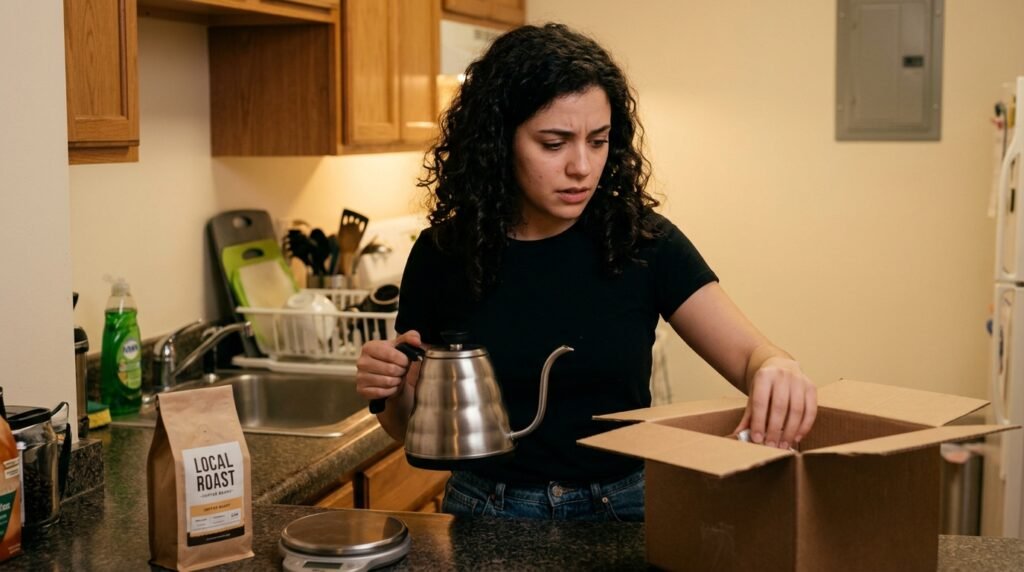
I needed a way to control the water. I went online and ordered a stainless steel gooseneck kettle. The long, thin, curved spout restricts the flow of water to a precise, delicate stream.
I also needed a way to control my variables. I bought a cheap digital kitchen scale. Measuring coffee by volume with a spoon is incredibly inaccurate. Different coffees have different densities. Measuring by weight in grams is the only way to achieve consistency.
Finally, I bought a bag of high-quality, whole bean coffee from a local roaster. I wanted to start fresh with a premium ingredient.
Getting all this gear felt like a huge commitment. I was nervous to try again. I spent an entire evening reading about My First Experience With a Manual Pour Over Setup to mentally prepare myself for the next morning. I wanted to execute the process flawlessly.
The Second Attempt
The new gear arrived on a Thursday. Friday morning, I woke up early and walked into the kitchen with a clear plan.
I placed the glass cone on top of my mug. I put a fresh paper filter inside.
I boiled water in my new gooseneck kettle. I poured a small amount of hot water directly onto the empty paper filter. This step rinses away the papery taste and pre-heats the ceramic mug below. I discarded the rinse water.
I placed my hand grinder on the digital scale. I weighed out exactly 15 grams of whole coffee beans. I ground them to a medium consistency. They looked like coarse sand.
I poured the 15 grams of fresh grounds into the damp paper filter. I tapped the side of the glass to level the coffee bed. I placed the entire setup on the digital scale and pressed the tare button to zero it out.
I was ready to brew.
The Magic of the Bloom
I took the gooseneck kettle off the heat. I waited thirty seconds for the boiling water to calm down.
I started pouring. I poured very slowly, moving in a small circle. I watched the scale hit 30 grams of water and I stopped pouring immediately.
The hot water hit the fresh coffee grounds. The reaction was beautiful. The coffee bed aggressively swelled upward. It bubbled and expanded. This is called the bloom. The hot water forces the trapped carbon dioxide out of the fresh beans.
I stood in my kitchen and watched the gas escape. I waited exactly forty five seconds.
The smell was intoxicating. A massive cloud of aroma filled the room. It smelled like dark chocolate and toasted almonds. The sensory experience of watching the bloom is entirely absent when you use an automatic machine. You are forced to be present.
The Slow Extraction
After the forty five second bloom, I began pouring again.
The gooseneck kettle made this incredibly easy. The water fell in a gentle, controlled stream. I started in the center of the coffee bed and slowly spiraled outward toward the edge of the paper filter.
I watched the digital scale climb. I poured until the scale read 150 grams. I stopped pouring and let the water level drop slightly.
Then, I started pouring again. I continued this slow, pulsing rhythm. I was carefully managing the water level inside the cone. I made sure all the coffee grounds were evenly saturated. I did not let them dry out, but I also did not flood the filter like I had on my first attempt.
I kept my eyes glued to the numbers on the scale. I wanted a final weight of 250 grams of water.
The Perfect Drawdown
When the scale hit 250 grams, I put the kettle down.
I watched the final amount of water slowly drip through the coffee bed. The liquid dripping into the mug was a rich, dark amber color.
When the last drop fell, I looked inside the glass cone. The remaining wet coffee grounds formed a perfectly flat, even bed at the bottom of the filter. There were no deep craters. There were no dry spots. The extraction was perfectly uniform.
The entire process took exactly three minutes. I removed the glass cone and tossed the paper filter in the trash.
I held the warm ceramic mug in my hands. I was incredibly proud of myself. The technique felt like a massive victory. I finally understood the mechanics behind The Pour Over Technique That Finally Worked for Me after failing so miserably just a few weeks prior.

The Moment of Truth
I walked over to the kitchen table and sat down. I did not add any milk. I did not add any sugar.
I brought the mug to my lips and took a sip.
The difference was absolute night and day. The sour, weak dishwater from my first attempt was entirely gone.
This cup of coffee was incredibly smooth. It felt light and clean on my palate. The heavy, muddy bitterness that usually coats my tongue from an automatic drip machine was completely absent. The paper filter had trapped all the harsh oils.
Instead, I tasted a vibrant, sweet clarity. The coffee had a bright, crisp apple acidity on the front. As I swallowed, a deep, comforting note of sweet caramel lingered in my mouth.
It was perfect. It was exactly what my friend had promised when he handed me that cardboard box.
The Ultimate Morning Ritual
My honest experience with manual pour over coffee started with arrogance and ended with complete devotion.
I never plugged my automatic drip machine back into the wall. I eventually threw it away.
The pour over method requires your full attention. It demands precision. You cannot multitask while doing it. You have to stand in your kitchen and focus on a single, analog task for three minutes.
That requirement is exactly why I love it. It is a forced pause in my morning. It is a quiet, meditative ritual before the chaos of the workday begins.
If you are intimidated by the glass cones and the gooseneck kettles you see in specialty cafes, I urge you to let go of that fear. It is not an elite, complicated science. It is just a matter of respecting the ingredients and controlling the flow of water.
Buy a cheap plastic or glass dripper. Buy a scale. Take your time. Watch the coffee bloom. Once you taste the incredible clarity that this simple method provides, you will never want to push a plastic button on an automatic machine ever again.

Hi, I’m the coffee enthusiast behind Coffee Nerd Lab.
Like many people, I started drinking coffee simply because it helped me wake up in the morning. Over time, that daily habit turned into a genuine interest in understanding what makes a great cup of coffee. I began experimenting with different beans, brewing methods, grinders, and coffee gear, learning through trial and error along the way.
This blog is where I document that journey. Every article is inspired by real experiences, discoveries, and lessons I’ve learned while exploring the world of coffee. From brewing guides and equipment reviews to practical tips and coffee basics, my goal is to share useful information in a way that’s easy to understand and enjoyable to read.
Thanks for stopping by, and I hope Coffee Nerd Lab helps you enjoy your next cup a little more than the last.