
The glow of my smartphone screen was burning my retinas. It was 2:14 AM on a random Wednesday, and I was lying in bed, completely exhausted but entirely unable to sleep. In a desperate attempt to bore my brain into unconsciousness, I was blindly scrolling through the website of a coffee roaster I had recently discovered.
My intention was purely practical. I was running dangerously low on my daily driver—a reliable, inexpensive, medium-roast house blend that I drank every morning. I just needed to add a standard 12-ounce bag to my cart, hit checkout, and go to sleep.
I found the coffee, tapped the “Add to Cart” button, hurried through the express checkout using my saved payment details, and tossed my phone onto the nightstand. Mission accomplished.
Or so I thought.
When I woke up the next morning and checked my email for the order confirmation, my heart sank. I hadn’t ordered a standard 12-ounce bag of the house blend. Through a combination of sleep deprivation, a tiny mobile screen, and a clumsy thumb, I had accidentally clicked on a different listing located right below my usual coffee.
I had purchased an 8-ounce bag of something called a “Limited Edition Colombian Pink Bourbon Anaerobic Natural.”
And then I saw the price. It was nearly three times the cost of my usual bag, and for significantly less coffee. Panic set in. I immediately scrambled to find a “Cancel Order” button, but the roaster was astonishingly efficient. A second email had already arrived: Your order has shipped!
I was stuck with it. I spent the next three days experiencing intense buyer’s remorse. I was furious with myself for making such an expensive mistake. I had no idea what “Pink Bourbon” meant, and “Anaerobic Natural” sounded like a high school biology experiment, not a beverage.
I was convinced I had wasted my money. But when that tiny, beautifully packaged box finally arrived on my porch, my anger slowly transformed into curiosity. And that curiosity eventually led to the single greatest culinary shock of my life.
The Arrival of the Mystery Box
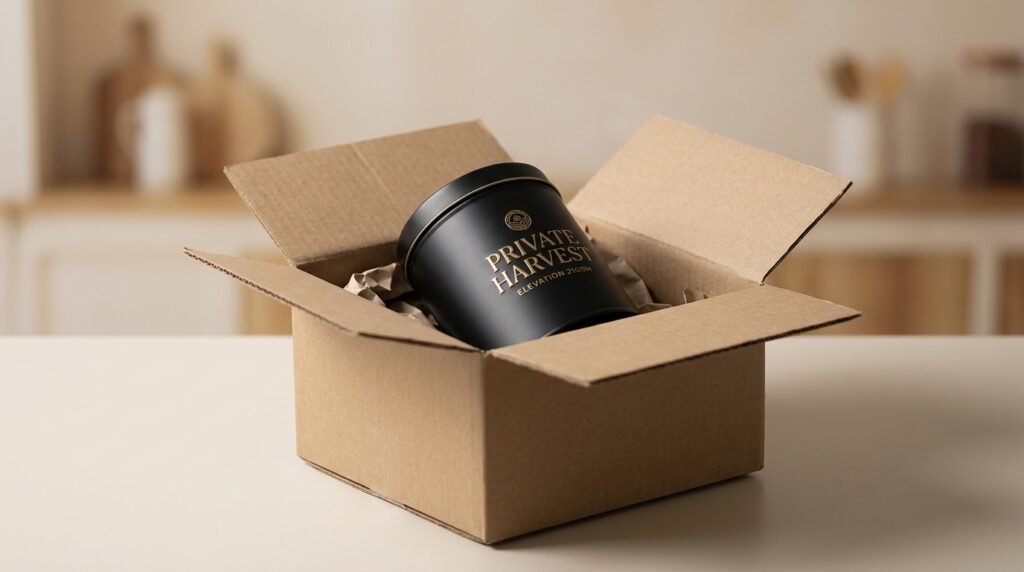
When I opened the cardboard shipping box, the presentation immediately told me I was dealing with something outside of my normal tax bracket.
Instead of a standard paper bag with a plastic valve, this coffee came in a beautiful, cylindrical tin. Inside the tin was a vacuum-sealed, foil-lined pouch. The label was incredibly detailed. It didn’t just list the country of origin; it listed the specific farm, the name of the farmer, the elevation in meters, and the bizarre processing method I had accidentally paid for.
I grabbed a pair of scissors and snipped the corner of the vacuum-sealed pouch.
I was expecting the familiar, comforting smell of dark chocolate and roasted nuts—the standard “coffee” smell I woke up to every day. Instead, my kitchen was instantly filled with an aroma so sweet, so intense, and so wildly fruity that I actually pulled the bag away from my face in shock.
The Aromatic Shockwave
I leaned back in and took a deep breath.
It didn’t smell like coffee. It smelled like a freshly opened jar of strawberry jam mixed with dark rum and tropical mango. There was a heavy, intoxicating sweetness to it that genuinely confused my brain. I actually poured a few of the beans out into the palm of my hand to inspect them, half-expecting to find dried pieces of fruit mixed in with the coffee.
But it was just coffee beans. They were a beautiful, matte, light cinnamon color, completely devoid of the dark, oily sheen I was used to seeing.
The complexity of the smell was staggering. It wasn’t just a single note; it was a layered bouquet of aromas. Experiencing that level of depth from a roasted seed was the exact catalyst that made me want to explore how we talk about flavor, a realization I explored deeply in my post about How I Learned Coffee Profiles Are Like Wine Notes. I realized right then that I was dealing with a completely different caliber of ingredient.
The High-Stakes Brewing Process
Because this coffee was so wildly expensive, and because the bag was so incredibly small, I was terrified of ruining it. I couldn’t afford to waste a single gram on a bad extraction.
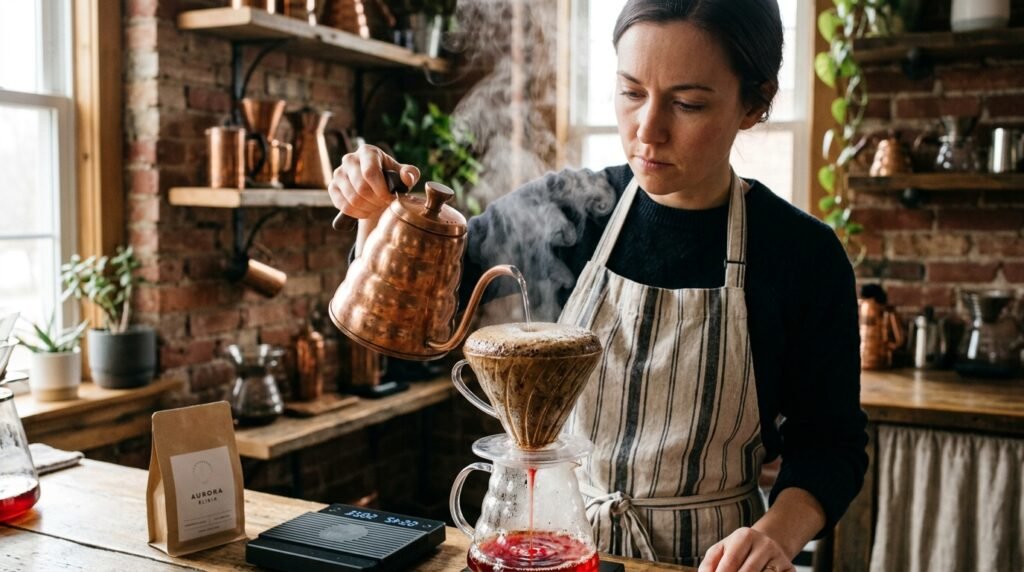
I bypassed my standard automatic drip machine. There was no way I was trusting this precious accident to a machine that couldn’t control the water temperature. Instead, I pulled out my digital scale, my gooseneck kettle, and my glass pour-over dripper.
I treated the brewing process like a delicate scientific procedure. I weighed exactly 15 grams of the light brown beans. I ground them fresh, noticing how dense and hard the beans were in my hand grinder. The dry fragrance that erupted from the grinder was even more intense than the smell in the bag. It was explosive.
I heated my water to exactly 205 degrees Fahrenheit, knowing that light roasts need higher temperatures to properly extract. I wet the paper filter, added the grounds, and started pouring.
To make sure I got every single drop of flavor out of these beans, I leaned heavily on The Pour Over Technique That Finally Worked for Me, focusing on a slow, controlled, circular pour.
When the hot water hit the grounds, the coffee bloomed aggressively. It puffed up into a thick, fragrant dome, releasing a cloud of steam that smelled heavily of fermented fruit, rose petals, and brown sugar. I stood in my kitchen, utterly mesmerized, watching the ruby-red liquid slowly drip into my glass carafe.
The Sip That Stopped Time
When the brewing was finished, I poured the coffee into my favorite ceramic mug. The liquid was surprisingly translucent. It looked more like a heavy herbal tea or a light Pinot Noir than a cup of morning coffee.
I let it cool for a minute, knowing that extreme heat hides delicate flavors. Then, I took my first sip.
Time practically stopped.
My brain scrambled to process what was happening on my palate. There was absolutely zero bitterness. None. There was no harsh, ashy aftertaste. Instead, a wave of vibrant, juicy acidity washed over my tongue, immediately followed by a profound, syrup-like sweetness.
It tasted exactly like eating a handful of ripe raspberries, followed by a lingering finish of milk chocolate and sweet wine. The flavor was so thick and persistent that I could still taste the strawberries minutes after I had swallowed the coffee.
I sat down at my kitchen table, alone in the quiet house, and literally laughed out loud. It was absurd. It was completely ridiculous that a hot beverage made from water and ground-up seeds could taste like a tropical fruit cocktail.
I drank the entire cup in a state of absolute reverence. I didn’t add a drop of milk. I didn’t add a single grain of sugar. To alter that cup in any way would have been an absolute crime against agriculture.
Decoding the Accident
As soon as I finished the cup, I grabbed my laptop. I needed to understand what sort of witchcraft had occurred inside that bag. Why did this coffee taste so remarkably, unbelievably different from anything I had ever consumed in my entire life?
My research led me to the strange, scientific words printed on the bag: “Pink Bourbon” and “Anaerobic Natural.”
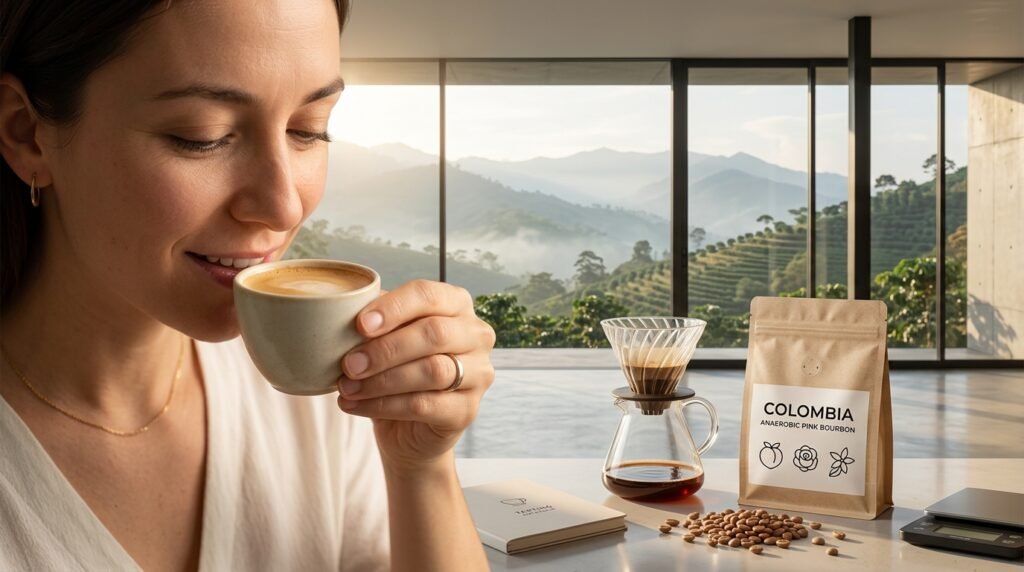
First, the Pink Bourbon. I learned that this is a highly rare, incredibly sought-after genetic mutation of the coffee plant, primarily grown in Colombia. Unlike standard coffee cherries that turn bright red or yellow when ripe, the cherries on a Pink Bourbon tree turn a distinct, beautiful shade of salmon pink. This specific variety is famous in the specialty coffee world for its immense sweetness and complex floral notes.
But the real secret to the insane, boozy fruit flavor I was experiencing was the processing method: Anaerobic Natural.
This discovery sent me down a massive rabbit hole of farm-level agriculture, fundamentally changing my understanding of the industry, which I detailed in What I Learned About Coffee Processing Methods.
Normally, coffee is picked, washed, and dried. But in an anaerobic fermentation, the farmers take the whole, freshly picked coffee cherries and seal them inside airtight, oxygen-deprived barrels. They leave them sealed in these barrels for days.
Because there is no oxygen, a very specific type of wild yeast and bacteria begins to ferment the sugars inside the coffee fruit. This highly controlled, oxygen-free fermentation creates wild, complex, and deeply fruity chemical compounds that soak directly into the coffee seed. After the fermentation, the cherries are taken out and dried in the sun.
When the roaster finally gets the beans, those wild, fermented fruit flavors are locked inside, just waiting to be released by hot water.
The Cost of the Epiphany
That accidental purchase was a double-edged sword.
On one hand, it provided me with the single most incredible, mind-blowing culinary experience of my adult life. It proved to me that the ceiling for coffee quality is infinitely higher than I had ever imagined. It showed me that coffee isn’t just a bitter morning fuel; it is a complex, delicate, and vibrant fruit that can rival the most expensive wines in the world in terms of nuance and depth.
On the other hand, it completely ruined “normal” coffee for me forever.
Once you have tasted a flawlessly roasted, anaerobically fermented Pink Bourbon from Colombia, going back to a standard, mass-produced grocery store blend feels like going from a Michelin-starred steakhouse back to a fast-food drive-thru.
I realized why that tiny 8-ounce bag cost what it did. I wasn’t just paying for a brand name. I was paying for an incredibly rare botanical mutation. I was paying for the extreme risk and intense labor the farmer took by sealing their crop in oxygen-deprived barrels, hoping the fermentation wouldn’t ruin the harvest. I was paying for a masterpiece of agricultural science.
The Beauty of the Mistake
I made that 8-ounce bag last as long as humanly possible. I only drank it on weekends. I weighed every single bean with the precision of a jeweler. When the final cup was brewed and the bag was empty, I actually felt a genuine sense of sadness.
I never would have bought that coffee on purpose. My logical brain would have looked at the price tag, scoffed, and scrolled right past it. I was too comfortable in my routine, too attached to my budget, and too skeptical of “fancy” coffee marketing to take that leap voluntarily.
It took a sleep-deprived, clumsy fat-finger on a smartphone screen to force me out of my comfort zone.
If you are reading this, and you find yourself in a coffee rut—drinking the same brand, the same roast, the same way, every single morning—I highly encourage you to make a deliberate “mistake.”
Take a risk. Find a local specialty roaster or a highly-rated online shop. Look for the weirdest, most intimidating bag of coffee they sell. Look for words like “Anaerobic,” “Carbonic Maceration,” or “Honey Process.” Look for rare varieties like Geisha or Pink Bourbon. Yes, it will be expensive. Yes, it will be a small bag.
But buy it anyway. Treat the brewing process like a ritual. Taste it without milk or sugar.
You might hate it. You might find it too fruity, too acidic, or too weird. But there is a very good chance that, just like me, you will take one sip and have your entire perspective of what coffee can be shattered in an instant. Sometimes, the best things in life are the ones we never intended to buy.
