
I was staring at lines of code on my computer monitor. It was early on a Tuesday morning in Rio de Janeiro. I was trying to deploy a new website domain for a client. The server was returning error messages, and my patience was running incredibly thin.
I needed caffeine immediately to fix the problem. I walked away from my desk and went into the kitchen.
A friend of mine had visited my apartment the previous night. He works in the specialty coffee industry. He left a small, unmarked silver bag of coffee beans on my kitchen counter as a gift. It had no label. It had no text. It was a complete mystery.
My brain was entirely focused on the broken website server. I was operating on pure muscle memory. I tore the silver bag open. I weighed the beans, ground them, and poured hot water over my glass V60 cone. I did not pay attention to the smell. I did not pay attention to the bloom.
I carried the warm ceramic mug back to my desk. I sat down, kept my eyes locked on the monitor, and took a large sip.
My hands froze on the keyboard. I completely forgot about the server error. The liquid inside my mug completely hijacked my brain. The coffee flavor that made me curious about origins did not taste like coffee at all. It tasted exactly like a spoonful of thick, sweet strawberry jam. That single sip destroyed my entire worldview of the beverage.
The Shock of the Fruit
I put the mug down on my desk. I stared at the dark red liquid.
I grew up drinking traditional Brazilian coffee. I knew exactly what coffee was supposed to taste like. It was supposed to taste heavy, dark, and slightly bitter. It was supposed to taste like roasted peanuts and dark cocoa powder.
The liquid in my mug had absolutely zero bitterness. It had no heavy chocolate notes.
Instead, a massive wave of juicy, vibrant fruit acidity washed over my palate. The strawberry flavor was not subtle. It was not a vague suggestion. It was aggressive and intensely sweet. It tasted like someone had melted a basket of fresh berries directly into the hot water.
Experiencing that shocking fruit note was exactly The Coffee Flavor That Made Me Want to Learn More and forced me to abandon my work. I needed to solve the mystery of the silver bag.

The Investigation Begins
I picked up my phone and texted my friend. I demanded to know what he had left on my counter.
He replied a few minutes later with a laughing emoji. He told me the coffee was a single origin bean from the Guji zone in Ethiopia. He told me it was a naturally processed Heirloom variety.
Those words meant absolutely nothing to me at the time. I was just a guy who liked strong caffeine. I had never heard of the Guji zone. I did not know what natural processing meant.
I closed my code editor and opened a search engine. I spent the next three hours reading agricultural science articles instead of fixing my client’s website. I fell completely down the rabbit hole of global coffee geography.
The Myth of the Flavoring
My first assumption was that the roaster had cheated.
When you buy cheap coffee at a massive commercial grocery store, you often see bags labeled “Hazelnut” or “French Vanilla.” Those coffees are sprayed with synthetic, artificial chemical oils after they are roasted. They are fake flavors designed to hide terrible quality beans.
I assumed the roaster had sprayed the Ethiopian beans with a synthetic strawberry oil.
I quickly learned I was completely wrong. In the specialty coffee industry, adding artificial flavor is a massive insult. The strawberry flavor in my mug was one hundred percent natural. It was an organic chemical compound created entirely by the dirt, the weather, and the farmer.
The Genetic Soup of Ethiopia
The first piece of the strawberry puzzle was the genetics of the plant.
In places like South America, coffee farms rely on highly engineered hybrid clones. Farmers plant these specific hybrids to maximize their crop yield and prevent agricultural diseases. These cloned plants produce very consistent, safe flavor profiles.
Ethiopia operates on a completely different biological level. Ethiopia is the ancient, original birthplace of the Arabica coffee tree.
The forests in regions like Guji and Sidamo are filled with wild coffee trees. These trees have grown unbothered for centuries. They contain thousands of undocumented, naturally occurring genetic mutations. Botanists refer to this as Heirloom or Landrace genetics.
When an Ethiopian farmer picks their crop, they are harvesting a wild genetic soup. That chaotic botanical diversity is the baseline requirement for complex fruit flavors.
The Power of the High Altitude
The second piece of the puzzle was the geographical map.
I looked at topographical maps of the Guji zone. The elevation is staggering. The coffee farms are situated at altitudes well over two thousand meters above sea level.
Altitude is a biological stressor. The air is very thin. The equatorial sun is brutally hot during the day, but the temperatures drop to freezing levels at night.
The coffee tree responds to this extreme weather by slowing down its metabolism. The coffee cherry matures incredibly slowly to protect itself from the cold nights.
Because the fruit grows so slowly, the roots have weeks of extra time to pull heavy minerals from the ancient volcanic soil. The plant packs the developing seed with massive amounts of complex organic acids and dense natural sugars. You cannot replicate this high altitude sweetness in a low altitude greenhouse.
The Magic of the Natural Process
The final piece of the puzzle was the most important. It explained the exact source of the heavy strawberry jam flavor.
When a farmer picks a coffee cherry, they have to remove the fruit to extract the seed inside. This is called post harvest processing. Most of the coffee I drank in my life was fully washed. The farmers used machines and water to strip the fruit away immediately. This creates a clean, crisp flavor.
The text message from my friend said the Ethiopian coffee was naturally processed.
In the natural process, the farmer does not remove the fruit. They take the whole, intact coffee cherries and lay them out on raised wooden beds under the hot African sun. They leave the fruit there for weeks.
The cherries slowly dry and shrivel up like raisins. As they bake in the hot sun, the sweet, sticky fruit begins to ferment.
Absorbing the Fruit
This sun baking fermentation is where the magic happens.
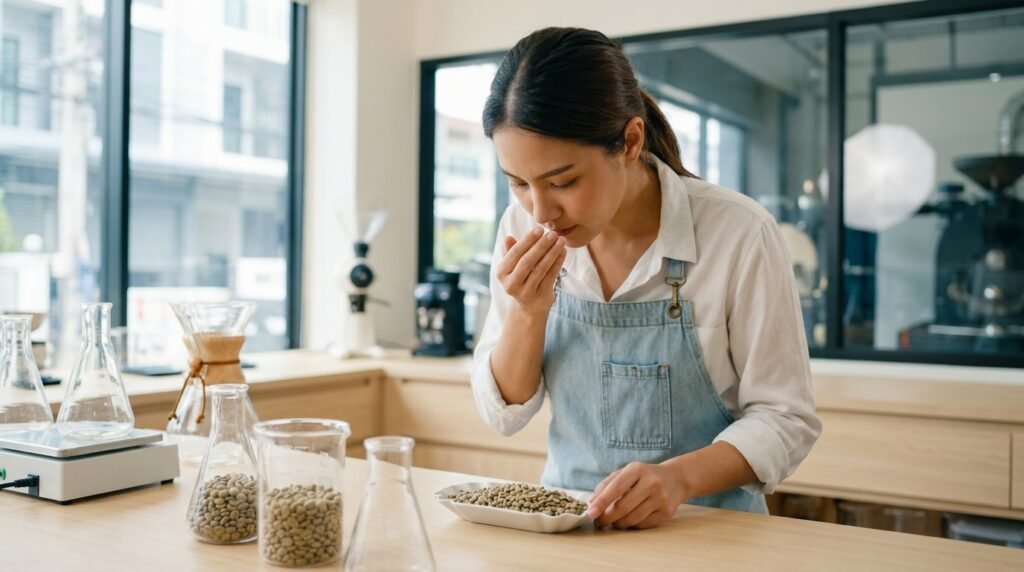
The coffee seed is incredibly porous. As the fruit ferments and breaks down on the raised beds, the seed acts like a biological sponge. It physically absorbs the heavy fruit sugars directly into its cellular structure.
The strawberry flavor was not added in a factory. It was baked into the seed by the African sun.
Understanding this wild agricultural fermentation was What I Learned About Coffee Processing Methods and it completely changed my respect for the farmer. The farmer has to turn the cherries constantly by hand to prevent mold. It is an incredibly risky, labor intensive process. When done perfectly, it produces a fruit explosion.
The Roaster’s Restraint
The farmer creates the potential for the strawberry flavor, but the roaster has to protect it.
I went back to my kitchen and looked at the beans inside the silver bag. They were a pale, matte brown color. They were very light.
If the roaster had left those beans in the hot roasting drum for two more minutes, the intense fire would have completely incinerated the fermented fruit sugars. The bright strawberry acidity would have burned away entirely. It would have been replaced by the heavy, bitter taste of carbon.
The roaster deliberately stopped the machine early. They applied just enough heat to make the sugars soluble, but they stepped out of the way to let the Ethiopian agriculture speak for itself.
The Contrast of the Continents
I poured another cup from my V60 cone and sat back at my desk. The website server was still broken, but I no longer cared.
I thought about the massive contrast between this Ethiopian cup and my usual Brazilian cup. The Brazilian coffee was grown at a lower altitude. It used hybrid genetics. It produced heavy chocolate notes.
The Ethiopian coffee was grown at extreme altitude. It used wild genetics. It was fermented in the sun. It produced explosive strawberry notes.
Realizing the massive biological gap between these two countries was The Moment I Realized Not All Coffee Beans Are the Same and I knew my palate could never go back. I had been treating coffee like a single, monolithic ingredient. I realized coffee is actually a sprawling, diverse global map.
Breaking the Culinary Bubble
Most people live inside a very strict culinary bubble when it comes to their morning beverage.
We find a flavor profile that feels safe and comforting. We buy the exact same bag of commercial coffee every single week. We never question where it came from. We never question how it was processed. We treat it exactly like a pharmaceutical drug designed to keep us awake at work.
That single sip of strawberry coffee popped my bubble entirely.
It proved that coffee is a highly sensitive culinary ingredient. It proved that a brown seed can carry the exact flavor of the dirt, the weather, and the human hands that touched it.
Changing the Kitchen Routine
The next morning, I completely changed how I operated in my kitchen.
I stopped brewing my coffee on autopilot. I stopped looking at my phone while I poured the water. I realized that treating an incredible agricultural product with disrespect is a massive waste.
I started paying close attention to the physical density of the beans when I turned the handle of my grinder. The Ethiopian beans were rock hard because of the extreme mountain altitude.
I started paying attention to the water temperature. I realized that I needed violently boiling water to force those dense African seeds to surrender their sweet fruit sugars. If I used lukewarm water, the strawberry flavor disappeared entirely.
Hunting for New Origins
That mysterious silver bag triggered an absolute obsession. I started hunting for new geographical regions.
I went to local specialty roasters and actively asked for the strangest coffees they had on the shelf. I bought a wet hulled coffee from Sumatra to taste the heavy, earthy cedar notes of the Asian jungle. I bought a washed coffee from Colombia to taste the clean, bright apple acidity of the Andes mountains.
I treated my kitchen counter like a passport. Every new bag of coffee was an opportunity to travel to a different continent.
The Reward of Curiosity
You do not need to be a certified sensory expert to taste these incredible differences. You just need an open mind and a willingness to be surprised.
The human palate is highly adaptable. If you are used to drinking heavy, dark, bitter coffee, a bright strawberry Ethiopian cup will initially shock your tongue. It might even taste slightly sour to you at first.
Do not reject that shock. Embrace the acidity.
Let the liquid cool down in your mug. Take a slow breath through your nose before you swallow. Let your brain process the complex organic compounds. Once your palate adjusts to the natural fruit sweetness, you will realize how incredibly boring commercial coffee actually is.

Start Your Own Investigation
I challenge you to run your own geographical investigation this weekend.
Do not go to the supermarket. Go to a small, independent coffee roaster. Tell the barista you want to try something completely different. Ask them if they have any naturally processed African coffees. Look for regions like Guji, Sidamo, or Yirgacheffe.
Take the bag home. Do not add milk. Do not add sugar.
Grind the beans fresh and brew them with boiling water. When you take that first sip, close your eyes. When the massive wave of bright fruit hits your palate, your brain will struggle to understand how a simple bean can taste like a fresh berry. That confusion is the absolute best part of the experience. It means you have finally stopped drinking a generic factory product, and you have started drinking the wild, incredible reality of global agriculture.
