
I was sitting at my desk in Rio de Janeiro on a bright Friday morning. I was deeply focused on a complex digital art project. I was trying to recreate a very specific vintage photography aesthetic. I spent hours tweaking the visual parameters to perfectly simulate a classic Canon IXUS camera and the harsh, direct light of a thirty five millimeter lens flash.
I was obsessing over capturing exact facial geometry and cranial proportions on my monitor. My eyes were completely exhausted from staring at the glowing pixels. I needed to step away from the digital world.
I walked into my kitchen to make a fresh cup of coffee.
I opened a brand new bag of single origin beans. They were from the Sidamo region of Ethiopia. Instead of just blindly dumping the beans into my grinder, I poured a small handful into the palm of my hand. I walked over to the window and looked at them under the natural sunlight.
I noticed every single physical detail. They were tiny, pale, and completely matte. They looked wild and unrefined.
Standing by that window, my digital photography project completely merged with my morning ritual. I had a massive realization. The coffee bean discovery that made me appreciate coffee more was a simple shift in perspective. I realized that a coffee bean is a biological recording device. It captures the physical world with the exact same high fidelity as an expensive camera lens.
The Botanical Camera
In photography, the quality of the lens dictates the entire reality of the final image. A cheap plastic lens produces a muddy, distorted picture. A premium glass lens captures perfect clarity, sharp contrast, and vibrant color.
A coffee plant operates on the exact same mechanical principle.
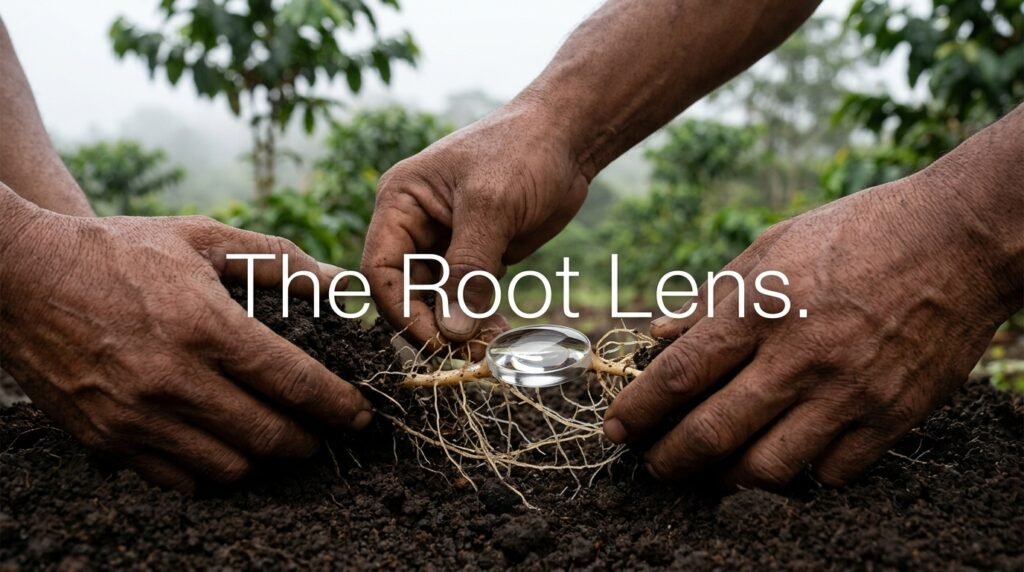
The roots of the coffee tree act as the lens. They absorb the specific chemical reality of the surrounding environment. They pull heavy minerals out of the dirt. They absorb the local rainfall. The leaves absorb the direct equatorial sunlight.
The plant takes all of this environmental data and stores it securely inside the hard cellular structure of the green seed. When you buy a bag of coffee, you are buying a biological photograph of a specific mountain on a specific day in history.
The High Resolution of Sidamo
The beans resting in my hand were a perfect example of high resolution agriculture.
The Sidamo region of Ethiopia is globally famous for producing incredibly complex coffee. The secret is the extreme geographical parameters. The farms are located at staggering altitudes. The air is thin. The days are hot, but the nights drop to freezing temperatures.
This extreme weather stresses the coffee plant. The cold nights force the plant to slow down its biological metabolism.
Because the cherry matures so incredibly slowly, the roots have weeks of extra time to pull nutrients from the ancient volcanic soil. The plant packs the seed with dense, complex organic acids and massive amounts of natural fruit sugars. This slow maturation creates an incredibly sharp, high resolution flavor profile.
The Genetic Noise
I looked closer at the handful of beans. I noticed they were all slightly different shapes and sizes. Some were perfectly round. Some were long and jagged.
This visual inconsistency is the hallmark of Ethiopian coffee. It is entirely different from the perfectly uniform, genetically modified hybrid clones grown on massive commercial farms in South America.
Ethiopia is the birthplace of the coffee plant. The farmers in Sidamo harvest their crops from wild, ancient forests. These forests contain thousands of undocumented, naturally occurring plant mutations. Botanists call this a genetic soup of Heirloom varieties.
This genetic chaos adds beautiful noise to the final cup. Just like the subtle grain of a vintage film photograph gives the image character, the wild Heirloom genetics give Ethiopian coffee its unpredictable, floral complexity.
Processing as the Filter
The farmer applies the final visual filter to the raw data. They do this through post harvest processing.
When the farmer picks the ripe red cherry, they must remove the fruit to extract the seed. The method they choose dramatically alters the final flavor.
My bag of Sidamo was fully washed. The farmers used mechanical depulpers and massive fermentation tanks of fresh water to strip every single trace of the sticky fruit away from the seed. This method removes all the heavy, fermented noise. It produces a completely clean, transparent flavor profile.
Understanding how the farmer edits the crop was a massive revelation. It was the exact premise of What I Learned About Coffee Processing Methods because it proved that human choices dictate the clarity of the cup. The washed process acts like a polarizing filter, removing the glare and letting the raw soil shine through.
The Developer in the Darkroom
If the farmer captures the image, the coffee roaster develops the film.
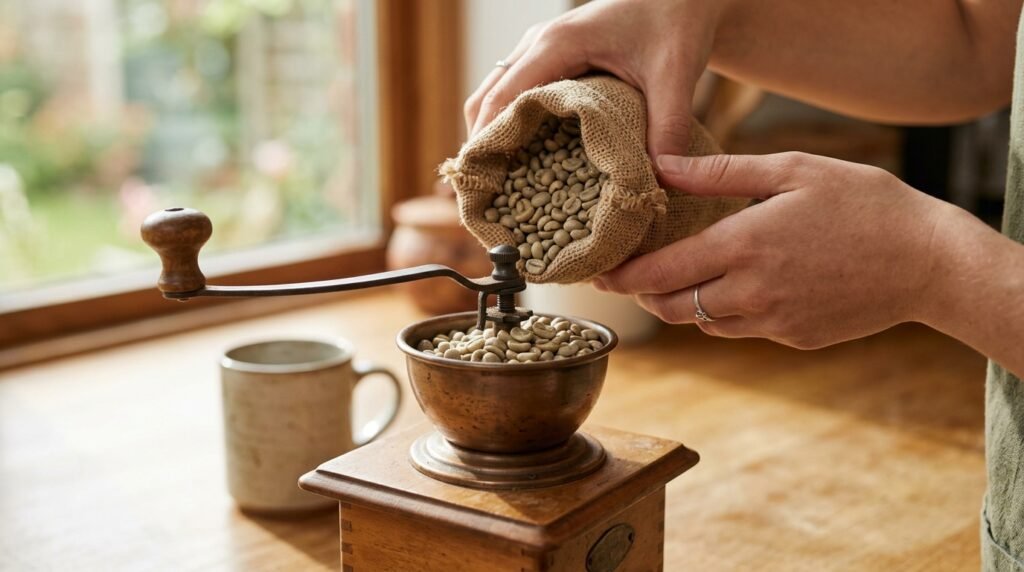
I poured the twenty grams of pale beans into my manual hand grinder. I thought about the person who operated the roasting machine. Their job is incredibly delicate.
Green coffee beans taste like dry grass. The flavors are completely invisible. The roaster must apply intense thermal energy to trigger the Maillard reaction. This heat caramelizes the complex carbohydrates into simple sugars.
But if the roaster applies too much heat, the film burns. The extreme fire incinerates the delicate fruit acids and the fragile floral compounds. The unique biological photograph of the Ethiopian mountain is completely erased and replaced by the generic taste of carbon.
The roaster who prepared my bag of Sidamo stopped the machine early. They roasted the beans very lightly to protect the fragile organic acids. They developed the film perfectly.
The Precision of the Chemistry
I had the perfectly developed beans in my kitchen. Now, I had to extract the data into water.
I grabbed my gooseneck kettle and turned on the stove. I placed my glass V60 pour over cone on my digital scale.
If you want a high fidelity extraction, you cannot guess your parameters. You cannot throw random scoops of coffee into a plastic machine and hope for the best. You must control the chemistry with absolute rigidity.
Discovering the necessity of this control was The First Week I Brewed Coffee with Precision Scales and permanently eliminated the chaos from my morning routine. I lock in a strict ratio of one gram of coffee to sixteen grams of water. I leave absolutely nothing to chance.
Cracking the Cellular Vault
I began turning the handle of my manual grinder. The ceramic burrs crushed the dense, high altitude seeds.
Grinding the coffee is the first step of the chemical extraction. By shattering the hard cellular walls, you drastically increase the total surface area of the coffee. You expose the trapped volatile compounds to the open air.
A massive aromatic cloud immediately rose from the catch bin. The dry grounds did not smell like smoke or wood. They smelled intensely of sweet spring flowers, bright lemon zest, and raw honey.
I poured the fragrant grounds into the paper filter. I was ready to apply the solvent.
The Thermal Catalyst
Because the light roasted Sidamo beans were incredibly dense, I knew I needed maximum thermal energy. Lukewarm water would fail to penetrate the tight cellular walls. It would only wash the sharp acids off the surface and leave the heavy sugars trapped inside.
I used water directly off a rolling boil.
I poured forty grams of boiling water over the dry grounds to initiate the bloom phase. The hot water acted as a violent thermal catalyst.
The coffee bed immediately swelled upward. The boiling water forced the trapped carbon dioxide gas to rapidly expand and escape the broken cell walls. As the gas evaporated, it carried the heavy, sweet scent of jasmine flowers directly into my sinuses. My entire kitchen smelled like a botanical garden.
The Controlled Flow
I waited forty five seconds for the bloom to finish. The gas completely escaped. The coffee bed relaxed.
I resumed pouring the boiling water. I kept the stream from the gooseneck kettle incredibly thin and perfectly steady. I poured in slow, tight concentric circles.
The speed of the water dictates the speed of the extraction. If the water flows too quickly, you get a weak, sour beverage. If the water sits in the cone for too long, you pull out harsh, bitter tannins. I carefully managed the flow rate to keep the total brew time right at three minutes.
I watched the scale hit three hundred and twenty grams. I pulled the kettle away. The liquid dripping into my ceramic mug was a brilliant, translucent ruby color.
Tasting the Photograph
I removed the glass cone and threw the paper filter in the trash. I carried the warm mug back to my computer desk.
I sat down and looked at my monitor. The vintage camera aesthetic was still glowing on the screen. I looked down at the red liquid in my mug. I took a slow, deliberate sip.
The flavor completely validated the entire agricultural process.
The liquid was incredibly crisp. A sharp, vibrant flash of sweet lemon acidity hit the front of my tongue. That bright citrus note immediately melted into a heavy, syrupy sweetness that tasted exactly like ripe peaches. As I swallowed, a clean, lingering note of black tea coated my palate.
There was absolutely zero harsh bitterness. The extraction was flawless.
The Contrast of Reality
I sat at my desk in complete silence. The complexity of the beverage was staggering.
It was the exact opposite of the dark, oily, anonymous commercial coffee I drank for most of my adult life. This cup had a distinct, undeniable identity. Tasting this level of clarity was The Coffee Bean I Tried That Blew Me Away because it proved that coffee is a dynamic culinary ingredient, not just a caffeine delivery system.
The African soil, the wild genetics, and the careful light roast were all screaming their identity into the cup.
Respecting the Chain of Labor
This deep realization permanently changed my relationship with the global coffee industry.
When you understand that a coffee bean is a biological recording device, you stop taking it for granted. You stop complaining about the price of specialty coffee.
You realize that a twenty dollar bag of single origin beans is actually a massive bargain. You are paying for a farmer in Ethiopia to navigate steep volcanic mountains. You are paying them to hand pick the ripest cherries. You are paying a skilled roaster to perfectly develop the sugars in a hot metal drum.
You are paying for a massive chain of intense human labor and precise agricultural science.
The Rejection of the Anonymous
I refuse to drink anonymous coffee anymore.
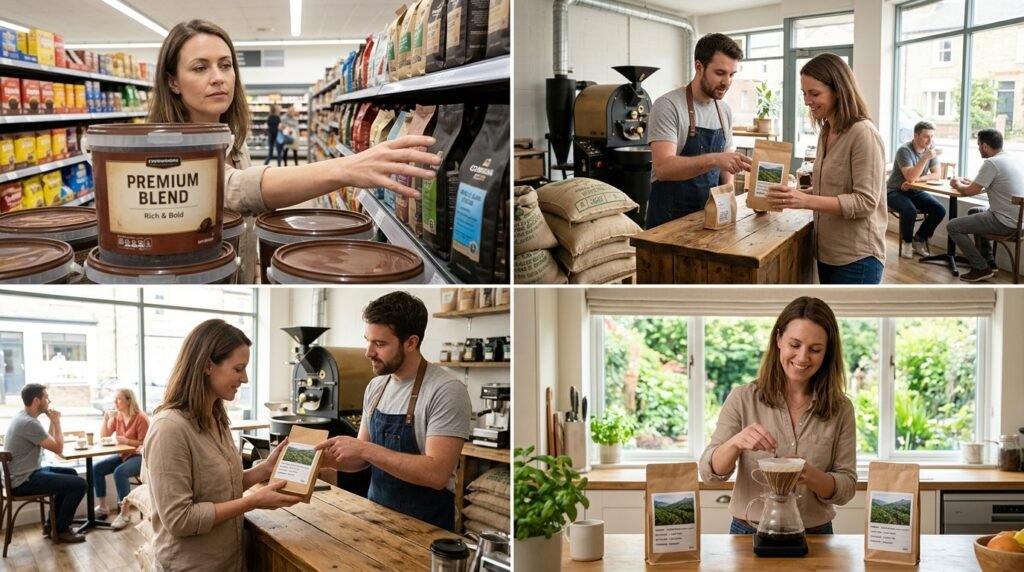
If I see a plastic tub of pre ground coffee at the supermarket with a generic “Premium Blend” label, I walk right past it. That product has been stripped of its identity. The massive corporations mixed cheap beans from five different countries together and burned them to a crisp. They destroyed the photograph.
I only buy coffee that provides the raw data. I want to know the country. I want to know the altitude. I want to know the processing method. I want the bag to tell me exactly what environment I am about to extract.
Elevate Your Daily Ritual
We perform so many mindless routines every single day. We scroll through our phones. We sit in traffic. We drink generic beverages simply to survive the morning.
You have the opportunity to turn one of those mindless routines into a profound sensory experience.
Tomorrow morning, do not just push a button on a plastic machine. Buy a bag of fresh, light roasted, single origin whole bean coffee. Look at the visual texture of the seeds. Grind them yourself and inhale the volatile aromatic compounds.
Boil your water and control the extraction. When you take that first sip, close your eyes. If you pay close enough attention, you will taste the rain, the soil, and the sunlight of a mountain on the other side of the planet. Treat your coffee beans like the high resolution lenses they are, and your morning mug will become a daily masterpiece.
