
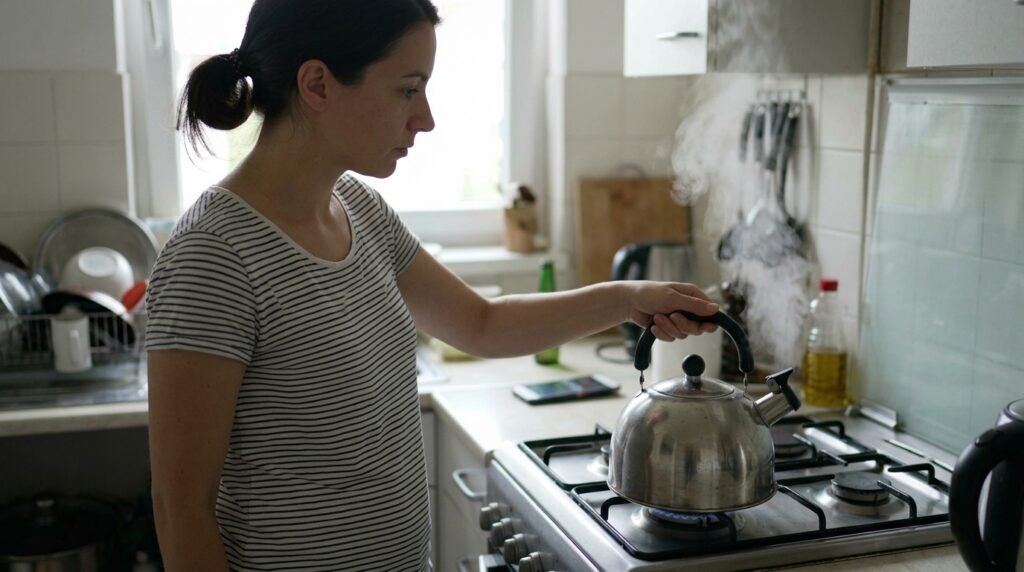
For the better part of a decade, that deafening, high-pitched shriek was the soundtrack to my mornings. It was the sound of my dented stainless steel stovetop kettle letting me know the water was boiling.
Most people use an alarm clock to wake up. I used my alarm clock to drag myself out of bed, but it was the screaming kettle that actually forced my brain into a conscious state. I would stumble into the kitchen, eyes half-open, turn off the gas burner, and immediately grab the handle.
Without a second thought, I would violently pour that violently bubbling, 212-degree Fahrenheit (100°C) water directly over my waiting coffee grounds.
The coffee would bubble, hiss, and release a massive cloud of steam. A few minutes later, I would pour the resulting dark liquid into my travel mug and head out the door. The coffee was always incredibly harsh. It was intensely bitter, leaving an ashy, dry sensation on the roof of my mouth that lingered for hours.
I thought this was just the price of admission for adulthood. I thought coffee was supposed to aggressively punch you in the tastebuds. It wasn’t until a completely random accident occurred that I realized I was actively ruining my own mornings. I was committing the most common, yet most destructive, brewing sin imaginable.
The Morning Everything Paused
The revelation didn’t happen in a fancy specialty café, and it wasn’t taught to me by a tattooed barista wearing a leather apron. It happened in my own kitchen, and it was entirely my mother’s fault.
It was a standard Tuesday. I had the kettle on the stove, the coffee grounds in my French press, and I was going through the motions. The kettle started to whistle. I turned off the heat, reached for the handle, and right at that exact second, my phone rang.
It was my mom. I answered, putting her on speakerphone, expecting a quick question. Instead, she launched into a highly detailed, deeply complicated story about her neighbor’s landscaping dispute.
I stood in the kitchen, listening, nodding, and occasionally saying “Wow, really?” The kettle sat silently on the cool burner.
By the time the phone call ended, a full five or six minutes had passed. I looked at the kettle. The water was no longer boiling. It wasn’t even producing steam anymore. I sighed, assuming my coffee was going to be ruined because the water was “too cold.” But I was already running late, and I didn’t have time to re-boil it.
I poured the hot—but not boiling—water over the grounds, pushed the plunger down a few minutes later, and poured a cup.
The Accidental Masterpiece
I took a sip while tying my shoes, fully expecting a lukewarm, watery disappointment.
Instead, I stopped dead in my tracks.
The coffee wasn’t bitter. The harsh, ashy, burnt-tire flavor that I had tolerated for years was completely gone. In its place was a smooth, rich, and deeply comforting beverage. I could actually taste a hint of chocolate. It was round, it was balanced, and it went down incredibly easily.
I stared at the mug in absolute disbelief. It was the exact same cheap bag of coffee beans I had been drinking all month. It was the exact same grinder. It was the exact same water from the same kitchen tap.
The only variable that had changed was the temperature of the water.
For years, I had blamed my brewing gear for my bad coffee. I used to think I needed a thousand-dollar espresso machine to get a decent cup, a misconception I detailed thoroughly in The Equipment Mistake I Made When I Started Brewing Coffee. But my equipment wasn’t the problem. My impatience was. I was literally incinerating my coffee beans every single day.
The Science of Scorching
As soon as I had a free moment that afternoon, I dove into the internet to figure out what had happened. The science behind it is both fascinating and incredibly simple to understand.
Brewing coffee is essentially a delicate chemical extraction process. You are using hot water as a solvent to pull flavors, oils, and compounds out of the roasted coffee seed.
However, not all compounds inside the coffee bean taste good.
There are bright, fruity acids. There are sweet, complex sugars. And then, deeply embedded in the cellular structure of the bean, there are heavy, astringent, and highly bitter compounds (like tannins).
The goal of brewing is to extract the good stuff (the acids and the sugars) while leaving as much of the bad stuff (the extreme bitterness) trapped inside the grounds as possible.
Heat accelerates extraction. The hotter the water, the faster it pulls compounds out of the coffee.
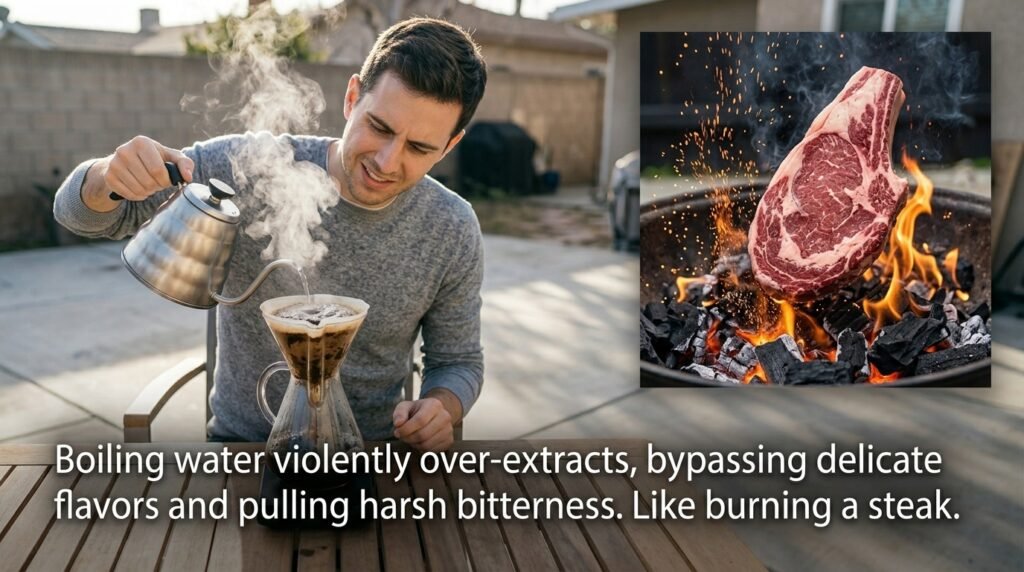
When you take water that is at a rolling boil (212°F / 100°C) and dump it directly onto ground coffee, the extraction happens so violently and so rapidly that you instantly bypass the delicate sugars and immediately start extracting the harsh, bitter compounds. You are effectively over-extracting the coffee in a matter of seconds.
You wouldn’t take a beautiful, expensive piece of steak, throw it into a raging fire, and expect it to taste tender. You would expect it to taste like charcoal. I was doing the exact same thing to my coffee. I was burning it.
Finding the Golden Zone
The specialty coffee industry has spent decades analyzing the perfect temperature for brewing coffee, and the consensus is nearly universal.
The ideal water temperature for extracting the perfect balance of flavors is between 195°F and 205°F (90°C to 96°C).
This temperature range is hot enough to dissolve the pleasant acids and caramelized sugars, but it is just cool enough to prevent those aggressive, bitter compounds from overwhelming the cup.
When my mother called me that morning, she inadvertently allowed my boiling kettle to sit and cool down. By the time I poured the water, it had naturally dropped from a destructive 212°F right down into that beautiful, magical 200°F sweet spot.
It was a revelation. It cost absolutely zero dollars to implement, and it changed my mornings forever. If you want to talk about maximum return on minimal investment, this is precisely The Small Coffee Adjustment That Made a Big Impact. It is the single easiest way to upgrade your coffee without buying anything new.
The Dark Roast Dilemma
Understanding water temperature became even more crucial when I started exploring different types of coffee roasts. I quickly learned that not all beans handle heat the same way.
When a coffee roaster creates a dark roast (think French roast, Italian roast, or espresso blends), they leave the beans in the roasting drum for a very long time. This prolonged exposure to heat breaks down the cellular structure of the bean, making it incredibly porous, fragile, and brittle.
Because dark roasts are so porous, water can penetrate them incredibly easily. They give up their flavors very quickly.
If you hit a dark roast with water that is too hot, it is a recipe for disaster. You will extract overwhelming bitterness in the blink of an eye. If you prefer dark, oily beans, you actually want to aim for the lower end of the golden zone—around 195°F (90°C). Some people even drop it down to 190°F (88°C) to keep the brew smooth and mellow.
The Light Roast Exception
Light roasts, on the other hand, are the exact opposite.
Because they are roasted for a much shorter period, the cellular structure of the bean remains very dense and intact. They are tough little seeds. It is actually quite difficult for water to penetrate a light roast and dissolve the sugars inside.
If you use water that is too cool on a light roast, you will end up with under-extracted coffee. It will taste weak, thin, and aggressively sour, like lemon juice.
To properly extract a dense light roast, you need more heat energy. You want to aim for the very top of the golden zone, right around 205°F (96°C). The extra heat helps break down the dense walls of the bean and pulls out those hidden, delicate floral and fruity notes.
Understanding this dynamic between roast level and temperature was a massive turning point in my coffee journey.
How to Fix the Mistake (Without Buying a Thermometer)
Now, you might be thinking that to fix this simple coffee mistake, you need to go out and buy a fancy, expensive variable-temperature electric kettle with a digital screen.
You absolutely do not.
While those kettles are wonderful tools and certainly make life easier, you can achieve the exact same results with the old, dented stovetop kettle you already own. You just need to practice a little bit of patience.
Here is the foolproof, zero-cost method I used for months after my accidental discovery:
-
Bring your water to a rolling, aggressive boil. Let the kettle scream.
-
Turn off the heat and remove the kettle from the hot burner.
-
Wait exactly 60 seconds. That’s it. That is the entire secret.
If you take a kettle of boiling water off the heat and let it sit at room temperature for one minute with the lid on, the temperature will naturally drop from 212°F down to roughly 200°F to 205°F.
It drops you right into the golden zone.
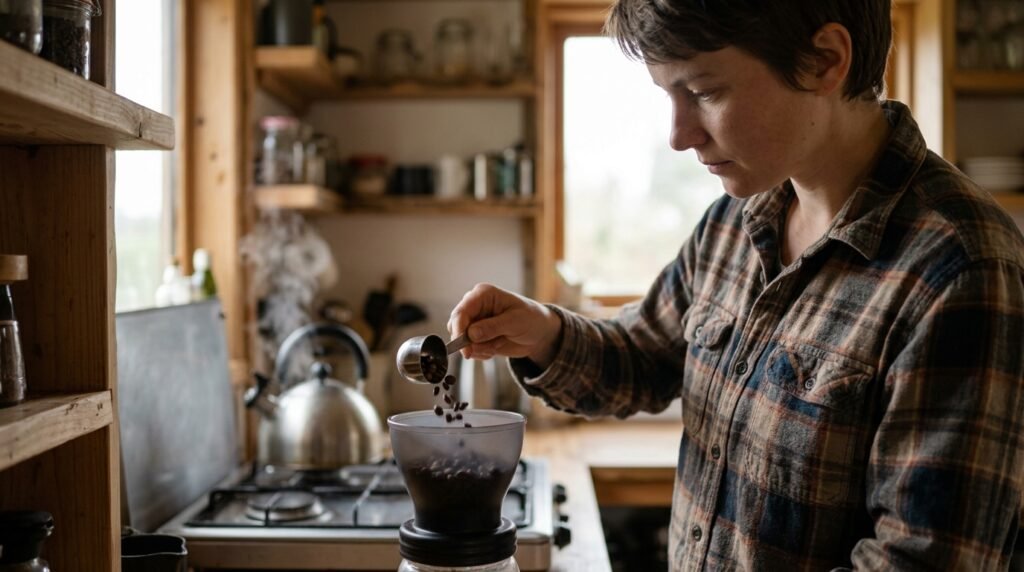
Instead of frantically rushing to pour the water the second it boils, I learned to embrace that one-minute pause. I would use those 60 seconds to calmly weigh out my beans, grind the coffee, and rinse my paper filter. It transformed a chaotic, rushed process into a moment of calm, and the results were undeniable, a shift in mindset I detailed in What I Learned After Brewing Coffee More Carefully. That single minute of waiting became my favorite part of the morning.
The Immediate Difference
If you have been pouring boiling water over your coffee your entire life, I challenge you to try this tomorrow morning.
Change nothing else about your routine. Use the same beans, the same grinder, and the same coffee maker. Just boil your water, take it off the heat, set a timer on your phone for one minute, and then pour it over your grounds.
The physical reaction of the coffee will look different. It won’t aggressively hiss and spit at you. The smell rising from the mug will be sweeter and less pungent.
But the real magic happens when you take that first sip.
The absence of that harsh, biting bitterness is shocking. You will suddenly realize that your coffee doesn’t need to be masked by heavy creams or tons of sugar to be palatable. You will taste the actual flavor of the roasted bean, rather than the flavor of a scorched, over-extracted mistake.
A Lesson in Patience
Looking back, the mistake of using boiling water was a symptom of a larger problem in my life. I was viewing my morning coffee not as a culinary experience to be enjoyed, but as a biological necessary to be completed as fast as humanly possible. I wanted the caffeine, and I didn’t care how I got it.
But coffee is an incredibly complex, beautifully nuanced agricultural product. It responds to care, to precision, and most importantly, it responds to patience.
You can buy the most expensive, highly-rated, award-winning coffee beans on the planet. But if you rush the process and attack them with a torrent of violently boiling water, you are throwing your money straight down the drain.
The simple act of waiting 60 seconds taught me that sometimes, the best way to improve something isn’t to buy new gear or learn complicated new techniques. Sometimes, you just need to step back, take a breath, let things cool down, and give the process the time it deserves. Your mornings—and your tastebuds—will thank you for it.
