
I walked to my mailbox on a crisp Thursday afternoon. I found a small cardboard box sitting inside. I carried it to my kitchen counter and used a pocket knife to slice the packing tape.
Inside the box were two identical, unlabeled brown paper bags.
A few weeks prior, I had signed up for a unique educational tasting program. Trying this service was exactly My First Experience With a Specialty Coffee Subscription and I was completely eager to test my palate. The company promised to send me the exact same coffee bean from the exact same farm in Ethiopia. However, they roasted one batch very light and the other batch very dark.
My instructions were simple. I had to brew both bags simultaneously and taste them side by side.
I thought I already knew the difference. I assumed the dark bag would taste a little stronger and the light bag would taste a little weaker. I assumed the difference would be subtle.
I was completely wrong.
That Thursday afternoon fundamentally changed my understanding of culinary chemistry. The day I discovered the difference between light and dark roast proved that the roasting oven is just as important as the farm. I realized that applying heat physically rewrites the entire biological structure of the coffee bean.
The Visual Inspection
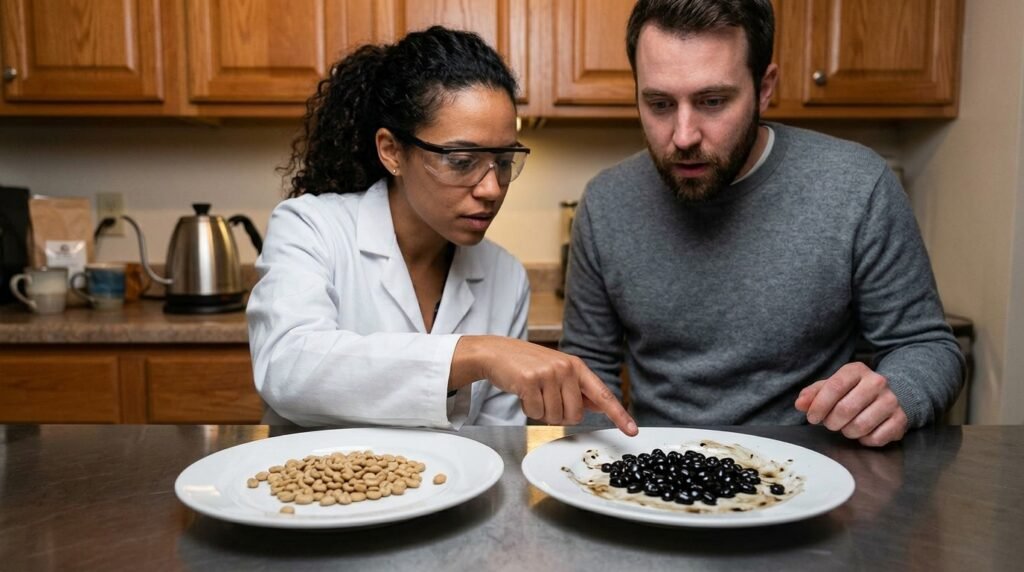
Before I even turned on my kettle, I wanted to observe the physical differences. I pulled two white ceramic plates out of my cabinet. I poured a handful of beans from the first bag onto the left plate. I poured a handful of beans from the second bag onto the right plate.
The visual contrast was absolutely shocking.
The beans on the left plate were a pale, muted tan color. They looked like dry, roasted peanuts. Their surface was completely matte. There was absolutely zero oil visible anywhere on the beans.
The beans on the right plate looked entirely different. They were pitch black. They looked like tiny pieces of shiny obsidian. The surface of every single bean was coated in a thick, wet layer of slick oil. They left dark, greasy smudges on the white ceramic plate.
It was incredibly difficult to believe these two piles of seeds came from the exact same tropical fruit tree.
The Sound of the Grinder
I decided to weigh out twenty grams of the dark roasted beans first. I poured them into my manual hand grinder.
I grabbed the metal handle and started turning. The physical sensation was surprisingly easy. The burrs sliced through the dark beans effortlessly. It felt like I was crushing dry, brittle autumn leaves. The grinding process took less than thirty seconds.
I emptied the grinder and wiped it clean. I weighed twenty grams of the pale, light roasted beans. I poured them into the hopper and grabbed the handle.
The physical resistance was massive. The handle violently jerked in my hand. The light roasted beans felt like solid gravel. I had to grip the grinder tightly against my chest and use real physical strength to force the burrs to spin. The process took nearly a full minute.
This physical struggle was a profound lesson in cellular density.
The Physics of the Oven
The reason the light roast beans were so incredibly hard comes down to how much time they spent in the roaster.
When a green coffee bean enters a hot roasting drum, it is very dense and full of moisture. As the heat rises, that moisture turns into steam. The steam pressure builds up inside the seed until it forcefully cracks open.
If the roaster stops the machine right after that first crack, you get a light roast. The bean loses some moisture, but it retains a massive amount of its original, hard cellular structure.
If the roaster leaves the beans in the hot drum, a second violent crack occurs. The extreme heat completely destroys the cellular walls. The bean puffs up and becomes highly porous. The heat actually forces the internal oils to melt and push through the broken cellular walls onto the surface of the bean.
The dark roast shatters easily in the grinder because the oven already destroyed its structural integrity.
The Battle of the Bloom
With both coffees ground to a medium setting, I set up two identical glass pour over cones. I boiled a large kettle of water. I let the water cool for sixty seconds.
I poured forty grams of hot water over the dark roast to start the bloom phase. The reaction was aggressive. The dark grounds violently bubbled and expanded. The massive amount of exposed oil and broken cell walls allowed the trapped carbon dioxide gas to escape instantly.
I moved my kettle and poured forty grams of hot water over the light roast. The reaction was entirely different.
The light roast barely moved. A few gentle bubbles appeared on the surface, but there was no violent expansion. Because the cellular structure of the light roast was still tightly packed, the water had to work much harder to penetrate the grounds.
The Aromatic Divide
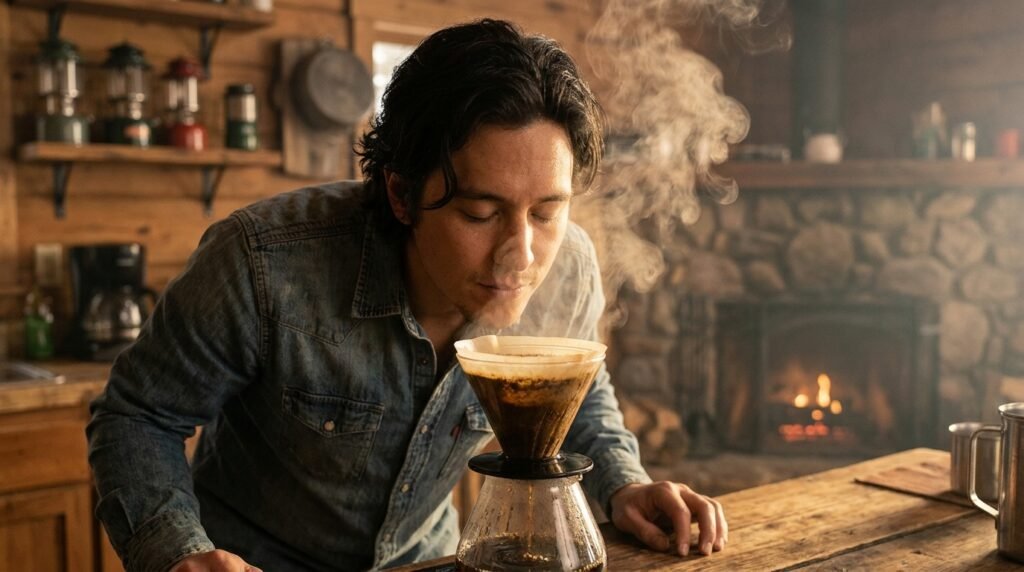
While the two coffees were blooming, I leaned over the glass cones and took a deep breath.
The steam rising from the dark roast smelled incredibly heavy. It smelled exactly like a campfire. It smelled like toasted wood, dark cocoa powder, and burnt sugar. It was a very comforting, classic scent.
I moved my face over the light roast cone. The aroma completely shocked me.
There was no smoke. There was no wood. The steam smelled vibrantly sweet. It smelled intensely of fresh jasmine flowers and bright lemon zest. It smelled more like an expensive herbal tea than a cup of morning coffee.
I finished pouring the water for both cones. I watched the dark liquid drip into the left mug and the translucent ruby liquid drip into the right mug.
Tasting the Dark Fire
I grabbed a glass of cold water to cleanse my palate. I was ready to taste the results of my dual extraction. Running this test was exactly like The Day I Compared Two Different Coffee Beans Side by Side but this time the variable was the fire, not the farm.
I picked up the mug containing the dark roast. I took a slow sip.
The flavor hit my tongue with a massive, heavy weight. The body of the coffee was incredibly thick and syrupy. The exposed oils coated my palate immediately.
The flavor was dominated by a deep, dark bitterness. It tasted like unsweetened baker’s chocolate and toasted walnuts. It finished with a slightly dry, smoky sensation in the back of my throat. There was absolutely zero acidity. It was bold, aggressive, and highly predictable.
Tasting the Light Earth
I drank a large gulp of cold water. I waited a moment. Then I picked up the mug containing the light roast.
I took a sip. My brain struggled to process the contrast.
The heavy, oily blanket was completely gone. The liquid felt crisp and light on my tongue. Instead of dark bitterness, a massive wave of bright, juicy acidity washed over my palate. It tasted exactly like biting into a ripe peach.
The floral notes of jasmine I smelled earlier were clearly present in the flavor. The coffee finished with a clean, lingering sweetness that reminded me of raw honey. It was incredibly complex. It changed flavor slightly as the liquid cooled down in the mug.
The Death of the Origin
I sat at my kitchen table and stared at the two mugs. The experiment was a complete success. I finally understood the core philosophy of modern specialty coffee.
The coffee in both mugs came from the exact same farm in Ethiopia. They grew in the exact same volcanic soil.
The light roast preserved that soil. By removing the beans from the oven early, the roaster protected the delicate fruit acids and the floral sugars that the Ethiopian dirt provided. The light roast was a transparent window directly to the farm.
The dark roast destroyed that soil. By leaving the beans in the oven until they turned black, the roaster incinerated the delicate peach notes. The intense fire burned the floral sugars away. The resulting flavor was just the flavor of the roasting drum.
A dark roasted bean from Ethiopia will taste almost exactly identical to a dark roasted bean from Brazil. The fire erases the origin.
The Myth of Caffeine Strength
As I drank the two cups of coffee, I thought about the biggest myth in the entire coffee industry.
For decades, coffee commercials have conditioned us to believe that dark, black coffee is physically stronger. People buy dark roasts because they think they need more caffeine to wake up in the morning.
This is a massive chemical misunderstanding.
Caffeine is an incredibly stable molecule. It is not easily destroyed by the heat of a roasting oven. A light roast bean and a dark roast bean contain roughly the exact same amount of total caffeine.
However, because the dark roast puffs up and expands in the oven, it loses physical mass. If you measure your coffee with a plastic scoop, a scoop of dark roast contains fewer actual beans than a scoop of dense light roast.
By volume, a cup of light roast coffee actually contains slightly more caffeine than a cup of dark roast. The heavy, bitter flavor of the dark roast is just a sensory illusion of strength.
Adjusting Your Brewing Strategy
Understanding the physical differences between the two roasts completely changed how I operate in the kitchen.
You cannot brew a light roast and a dark roast using the exact same recipe. They require completely different physical approaches. Mastering this concept was the core lesson in How I Learned the Subtle Differences Between Roasts and it saved me from drinking hundreds of bad cups.
Because dark roasts are highly porous and fragile, they extract incredibly fast. If you use boiling water, you will over extract the beans and pull out harsh, ashy flavors. You must lower your water temperature to around one hundred and ninety degrees. You must grind the beans slightly coarser to slow the extraction down.
Light roasts demand the exact opposite treatment. Because they are incredibly dense and hard, they resist the water. You must use water directly off a rolling boil. You must grind the beans finer to expose more surface area. You have to fight the light roast to force it to surrender its sweet sugars.
Choosing Your Morning Profile
There is no objectively correct choice between light and dark roast. They simply serve entirely different culinary purposes.
If you wake up on a cold, rainy Sunday morning and you want a comforting, heavy beverage to pair with a rich chocolate pastry, you should reach for a dark roast. The heavy body and the smoky notes will pair perfectly with the dessert.
If you wake up on a warm summer morning and you want a vibrant, energizing beverage to drink black, you should reach for a light roast. The crisp acidity and the juicy fruit notes will refresh your palate.
Run Your Own Contrast Test
We spend so much time debating brewing equipment and water chemistry. We often forget that the biggest flavor variable is decided before the bag ever enters our house.
If you have never experienced this massive flavor contrast, I highly encourage you to run your own experiment this weekend.
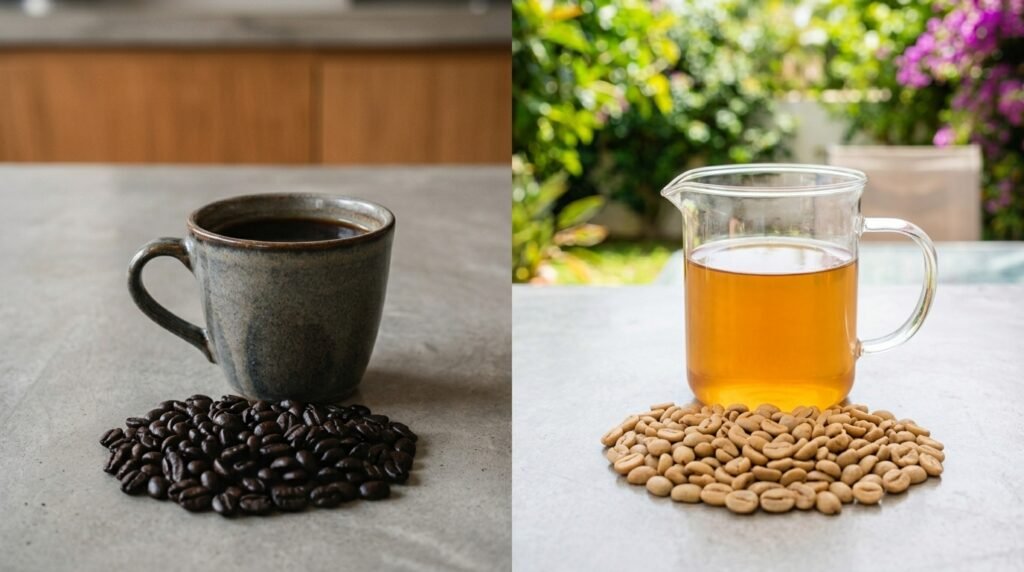
Go to a local specialty coffee shop. Buy a small bag of their darkest roast. Then, buy a small bag of a light roasted Ethiopian or Kenyan coffee.
Take them home. Look at the beans on a white plate. Feel the massive difference in density when you grind them. Brew them side by side.
Taste the heavy, smoky bitterness. Then taste the bright, floral sweetness. Once you experience the incredible spectrum of flavor that the roasting drum controls, you will stop buying anonymous coffee blends forever. You will finally understand that the color of the bean dictates the entire reality of the cup.
