
I woke up to a strange, heavy silence. I looked at the digital clock on my nightstand. It was 6:30 AM on a Tuesday. Normally, I would hear the distant rumble of commuter trains and the sharp honking of rush hour traffic outside my window.
But this morning, there was absolutely no sound.
I rolled out of bed, walked into the living room, and pulled back the heavy curtains. The entire city was buried under a massive, blinding layer of white snow. A blizzard had rolled in overnight. The streets were completely empty. There were no cars moving. The sidewalks were buried.
My phone vibrated on the table. It was an automated email from my office manager. The building was closed. All morning meetings were officially canceled.
I stood by the frozen window and took a deep breath. For the first time in months, I had absolutely nowhere to be. I did not have to put on a suit. I did not have to run to the subway station. The frantic, high speed ticking clock in my brain suddenly stopped.
I walked into my kitchen to make my morning coffee. I reached for my standard bag of pre-ground beans and my plastic automatic machine. But my hand stopped hovering over the power button.
I looked at the snow falling outside. I realized I had the entire morning to myself. I decided to leave the plastic machine alone. I pulled a dusty glass pour over cone from the top cabinet. That snowy Tuesday was the first time I brewed coffee slowly instead of rushing. It fundamentally changed my relationship with the beverage forever.
The Combat Coffee Routine
To understand the impact of this slow morning, you have to understand how I usually operated.
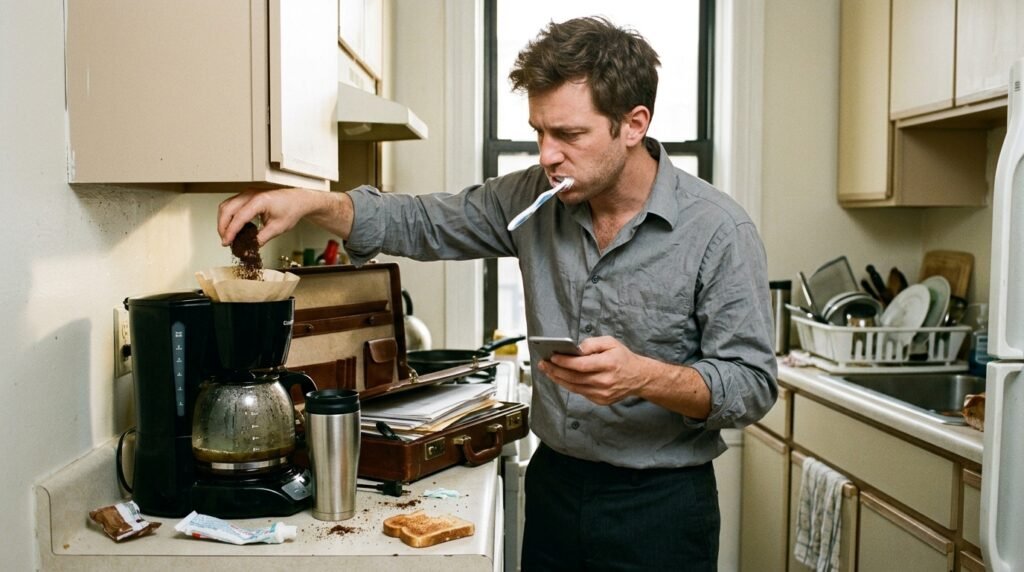
My normal morning coffee routine was basically a military combat drill. I treated the kitchen like an obstacle course. I would stumble out of bed, dump a random, unmeasured pile of coffee grounds into a paper filter, and hit the start button on my machine.
While the machine sputtered and spat lukewarm water, I would frantically brush my teeth. I would pack my briefcase. I would reply to work emails on my phone.
By the time the coffee was done, it was usually a bitter, burnt mess. I would pour it into a stainless steel travel mug, burn my tongue taking a tiny sip, and run out the front door.
I never looked at the coffee. I never smelled it. I just threw it down my throat for the caffeine. I was disrespecting the ingredient entirely out of habit.
Dusting Off the Manual Gear
Standing in the quiet kitchen, I decided to do things differently. I wanted to treat the coffee like a culinary project, not a biological utility.
I found a bag of whole coffee beans I had bought from a local roaster a few weeks prior. They were a light roast from Peru. I had avoided them because grinding whole beans took too much time on a normal weekday.
Today, time was irrelevant.
I grabbed my digital kitchen scale. I placed my manual hand grinder on the scale and carefully weighed out exactly twenty grams of the whole beans.
I started turning the metal crank of the hand grinder. The ceramic burrs crushed the hard seeds. It required physical effort. I could feel the resistance in my shoulder. I listened to the rhythmic crunching sound echoing in the silent apartment.
When I finished grinding, I opened the bottom catch bin. An explosive wave of sweet, floral aroma filled the cold kitchen air. It smelled like toasted almonds and milk chocolate. Just taking a moment to breathe in that dry fragrance completely shifted my mood. That simple physical act was exactly The Morning I Realized Coffee Could Be a Ritual rather than just a mindless daily chore.
The Importance of the Setup
I placed a paper filter inside my glass pour over cone.
Usually, I would just dump the dry coffee straight in. But since I was moving slowly, I decided to follow the proper scientific steps I had read about online but always ignored.
I boiled water in my gooseneck kettle. I took the kettle and poured a small amount of hot water directly over the empty paper filter. The hot water rinsed away the dusty, papery taste of the filter itself. It also pre-heated the glass cone and my ceramic mug underneath.
I dumped the rinse water in the sink. Then, I poured my twenty grams of freshly ground coffee into the damp filter. I gently tapped the side of the glass to make the bed of coffee perfectly flat and level.
I felt a strange sense of calm. I was setting up an experiment. I was paying attention to details I usually ran right past.
The Magic of the Bloom
I placed the entire brewing setup back onto my digital scale and pressed the tare button to zero it out. I wanted complete control over the water ratio.
I took the gooseneck kettle off the stove. I did not pour the water immediately. I waited sixty seconds for the violently boiling water to calm down to roughly two hundred degrees.
Then, I started pouring. I poured just enough water to wet all the dry grounds. The scale read forty grams. I put the kettle down and watched.
The coffee immediately reacted. The bed of wet grounds swelled upward. It bubbled and expanded like a dark chocolate muffin rising in an oven.
This reaction is called the bloom. Freshly roasted coffee contains a massive amount of trapped carbon dioxide. When hot water hits the grounds, that gas aggressively escapes. If you rush the brewing process and dump all your water in at once, the escaping gas pushes the water away. The water cannot touch the coffee, leading to a sour, weak extraction.
By pouring a tiny amount of water and waiting forty five seconds, I allowed all the gas to safely escape. I was clearing the path for flavor. I watched the bubbles pop. I smelled the wet aroma filling the room. It was mesmerizing.

Controlling the Flow
Once the bloom settled, I picked the kettle back up.
In my old routine, I would have just dumped the rest of the water into the cone as fast as humanly possible, creating a chaotic, muddy swamp.
This time, I used the curved spout of the gooseneck kettle to my advantage. I poured the hot water in a very slow, very delicate stream. I started in the center of the coffee bed and slowly moved outward in tight, concentric circles.
I kept my eyes glued to the digital scale. I wanted to reach a total of three hundred and twenty grams of water.
I realized that the speed of my pour directly affected the flavor in the cup. If I poured too fast, the water would drain too quickly, leaving the sweet sugars behind. If I poured too slowly, the water would sit too long, pulling out bitter, harsh tannins. Figuring out this precise, physical balance was the core lesson of How I Learned to Time My Coffee Pour Perfectly. I had to become the machine. I had to dictate the pace of the extraction.
I poured gently until the scale hit my target number. I put the kettle down.
The Drawdown Wait
The pouring was finished, but the brewing was not.
I stood by the kitchen counter and watched gravity do the final piece of the work. The dark liquid slowly dripped through the bottom of the glass cone into my warm ceramic mug.
The surface of the water in the cone slowly lowered. As the liquid disappeared, it left behind a perfectly flat, even bed of wet coffee grounds. There were no high walls of dry coffee stuck to the sides of the paper filter. There were no deep craters in the center.
The flat bed proved that my slow, circular pouring technique had worked. Every single particle of coffee had been extracted evenly.
I removed the glass cone from the mug and tossed the paper filter in the trash. The entire process, from grinding to the final drip, took about six minutes.
It was six minutes of absolute, undivided attention. I had not looked at my phone once.
The First Mindful Sip
I took my warm ceramic mug and walked over to my living room window. The snow was still falling heavily outside, blanketing the cars parked on the street.
I looked down at the liquid in my mug. It was not a murky, black sludge. It was a beautiful, clear, translucent amber color. I could see the bottom of the mug through the coffee.
I brought the mug to my lips and blew gently on the surface. I took a small sip.
The flavor completely shocked my palate. I was so used to drinking bitter, over extracted diner coffee that I had forgotten what a high quality bean actually tasted like.
Because I had taken the time to bloom the coffee, and because I had poured the water slowly and evenly, the resulting cup was incredibly sweet. It had a bright, juicy acidity that tasted exactly like green apples. As I swallowed, a heavy, comforting note of toasted caramel coated the back of my throat.
There was zero bitterness. I did not need to add a single drop of milk or a single grain of sugar. The coffee was perfectly balanced entirely on its own.
The Psychological Shift
Sitting by that snowy window, drinking that perfectly extracted cup of coffee, I felt a massive wave of clarity.
I realized that my frantic, rushing morning routine was not making me more productive. It was just making me stressed. I was starting every single day in a state of mild panic. I was aggressively throwing caffeine into my body to fuel a chaotic schedule.
By slowing down the coffee making process, I had accidentally created a pocket of peace.
The act of weighing the beans, pouring the water, and watching the bloom forced me to exist entirely in the present moment. I could not worry about my inbox while focusing on the digital scale. I could not stress about my commute while trying to pour perfectly concentric circles.
The slow brew was a forced meditation.
This snowy morning was the exact origin point for The Coffee Routine That Helped Me Slow Down. I decided right then and there that I would never rush this process again. I would wake up ten minutes earlier every single day just to protect this new ritual.

A Permanent Change of Pace
The snow eventually melted. The city woke back up. I had to go back to wearing suits and riding the crowded subway to the office.
But my mornings never went back to the way they were before.
I threw my plastic automatic drip machine in the garbage. I made a permanent spot on my kitchen counter for the glass pour over cone and the gooseneck kettle.
Even on my busiest, most stressful workdays, I refuse to rush the brew. I stand in my kitchen. I grind the beans by hand. I watch the coffee bloom. I pour the water slowly. I protect those six minutes fiercely, because those six minutes set the emotional tone for the next twelve hours of my life.
An Invitation to Stop Rushing
If you currently treat your coffee maker like a fast food drive thru window, I highly encourage you to hit the brakes.
You are likely buying good coffee. You are likely spending hard earned money on decent beans. But if you rush the extraction, you are destroying the flavor you paid for.
You do not need to wait for a massive winter blizzard to shut down your city. You can create this moment tomorrow morning.
Wake up slightly earlier. Leave your smartphone in the bedroom. Walk into your kitchen and turn on the lights. Pay attention to the dry smell of the coffee grounds. Boil the water and actually watch it pour. Take the time to understand the chemistry happening inside your filter.
Pour the coffee into a real ceramic mug. Sit down at a table. Do not look at a screen. Take a slow sip and actively search for the sweetness.
Brewing coffee slowly requires patience, but the reward is monumental. You get a significantly better tasting beverage, and more importantly, you get a calm, quiet start to your day. Stop rushing the mug. Let the flavor, and your mind, slowly unfold.
