

My alarm clock was not a gentle, melodic chime. It was a harsh, aggressive vibration against the wooden surface of my nightstand, accompanied by the blinding, artificial blue glare of a smartphone screen illuminating a pitch-black bedroom.
It was 6:00 AM. I reached out, blindly swatting at the device until the vibration stopped. But instead of putting the phone down and getting out of bed, my thumb instinctively swiped up.
Before my feet had even touched the floor, I was already knee-deep in the digital world. I was squinting at my screen, scrolling through a barrage of overnight emails, checking the daily news headlines, and instantly absorbing the collective stress of the entire internet.
My heart rate would elevate before I even stood up. I would carry the glowing rectangle with me as I stumbled into the kitchen, using one hand to scroll through social media feeds while using my other hand to blindly scoop coffee grounds into a filter.
I was making coffee, but I wasn’t present. My body was standing in my kitchen, but my brain was already at the office, or arguing with a stranger on the internet, or stressing about a news story happening a thousand miles away.
I lived like this for years. I thought I was being highly efficient by “catching up” on the world while my coffee brewed. But in reality, I was actively sabotaging the most important part of my day. It wasn’t until I made one fiercely strict, seemingly small adjustment to my mornings that everything shifted. This single coffee habit didn’t just change how my beverage tasted; it completely rescued my morning routine.
The Morning of the Cold Mug
The catalyst for this change happened on a particularly chaotic Tuesday.
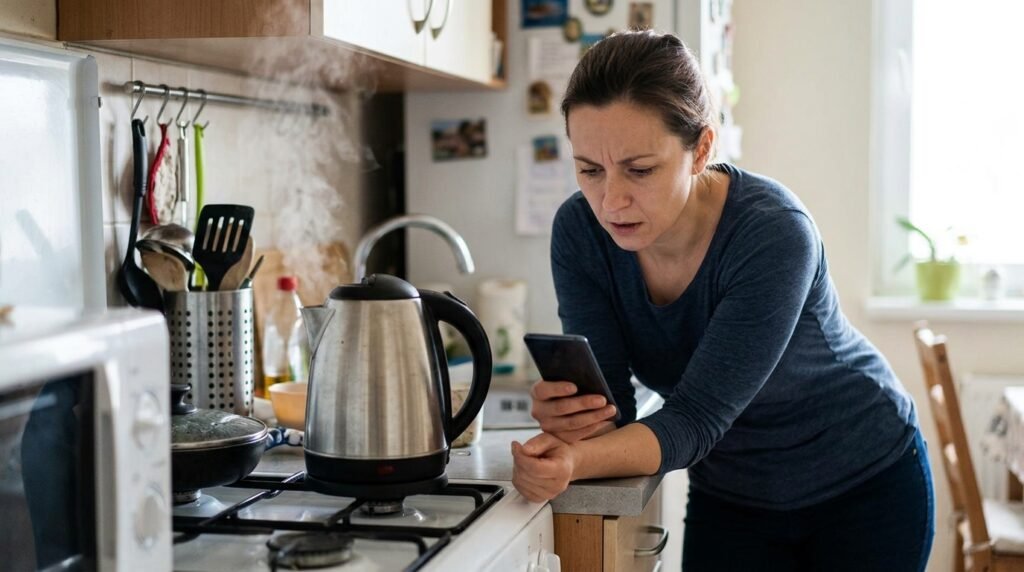
I was doing my usual routine: leaning against the kitchen counter, staring at my phone, waiting for the water in my kettle to boil. I opened an email from a highly demanding client. The email was long, complicated, and immediately flooded my brain with a massive wave of anxiety.
I mechanically poured the hot water over my coffee grounds, not paying attention to the bloom or the aroma. I poured the dark liquid into a mug, set it down on the counter, and started aggressively typing out a response on my phone’s tiny keyboard.
I got so consumed by the digital crisis that I completely forgot about the physical object sitting right next to me.
When I finally hit “send” and put the phone down, nearly thirty minutes had passed. I reached for my mug. The coffee was stone cold. It tasted flat, bitter, and lifeless. I ended up pouring the entire thing down the sink and driving to work with a massive headache.
As I watched that expensive, specialty coffee swirl down the drain, I had a harsh realization. The internet was stealing my coffee.
I was spending premium money on high-quality, freshly roasted beans, but I wasn’t actually experiencing them. I was treating my morning brew as a mere background activity to my digital life. I was consuming caffeine, but I wasn’t tasting anything.
The Airplane Mode Mandate
That evening, I decided to set a hard, unbreakable boundary. I created a new rule for my kitchen that I now refer to as the “Airplane Mode Mandate.”
The rule was incredibly simple, but shockingly difficult to execute: My smartphone was no longer allowed in the kitchen before 7:00 AM.
When my alarm went off the next morning, I turned it off and immediately placed the phone face-down on the nightstand. I did not unlock it. I did not check my email. I did not look at the news. I left the digital world trapped inside that little glass box in the bedroom, and I walked into the kitchen with empty hands.
The silence in the house was almost deafening.
Without the bright screen commanding my visual attention, and without the endless scroll occupying my brain, I suddenly had an overwhelming amount of mental bandwidth. I had nothing to look at except the objects right in front of me. I was forced to actually participate in the physical world.
The Return of the Senses
With my phone locked away in the other room, the act of making coffee was suddenly transformed from a blind, automated chore into a deeply tactile, sensory experience.
Because I wasn’t reading an article, I actually heard the sound of the bag opening. I noticed the satisfying, heavy rustle of the foil-lined paper.
When I poured the beans into my hand grinder, I actually felt the resistance of the ceramic burrs crushing the dense, roasted seeds. I heard the rhythmic, crunching sound echoing in the quiet kitchen.
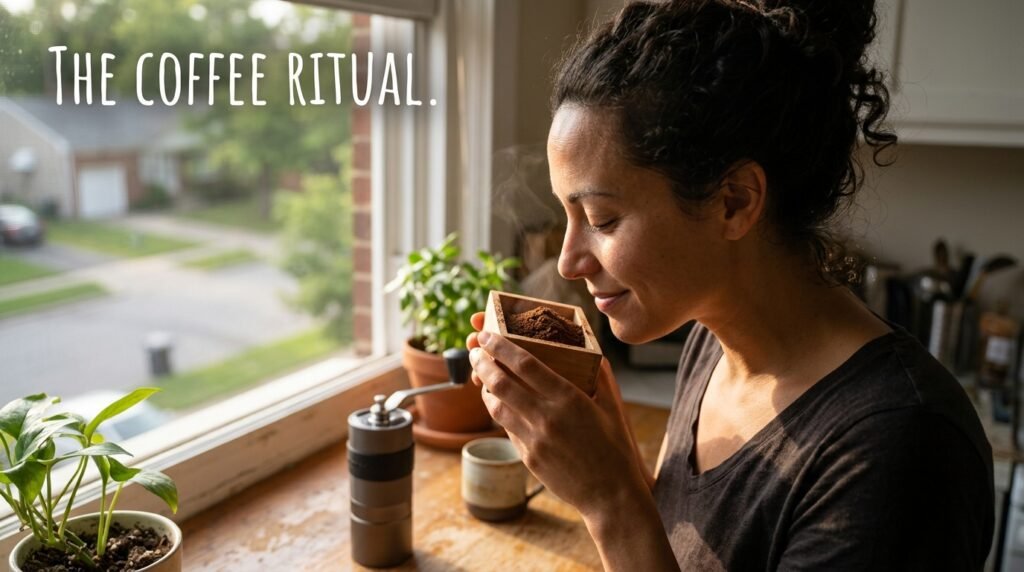
But the most profound change was the smell. When you aren’t distracted by anxiety-inducing emails, your olfactory system suddenly wakes up. As the freshly ground coffee fell into the catch bin, a massive, explosive cloud of aroma filled the air. I closed my eyes and breathed it in. It smelled like dark chocolate, toasted almonds, and a hint of wild berries.
It was a beautiful, grounding moment. That was exactly The Morning I Realized Coffee Could Be a Ritual, rather than just a chemical dependency. The sheer act of preparing the beverage became a form of active meditation.
Watching the Water
Without a screen to stare at while the water boiled, I was forced to observe the physical mechanics of the brewing process.
I watched the steam slowly rise from the spout of the gooseneck kettle. I watched the water hit the bed of dry coffee grounds. I watched the dark brown slurry aggressively bubble and expand, rising up the sides of the paper filter as the trapped carbon dioxide escaped.
I was paying attention to the extraction. I started noticing tiny variables that I had been completely blind to for years. I noticed that if I poured the water a little slower, the coffee bed remained flatter and more even. I noticed that the color of the liquid dripping into the glass carafe changed from a thick, dark syrup to a pale, translucent amber as the brewing cycle finished.
Because my brain wasn’t multitasking, I was actually learning how to brew better coffee simply by observing cause and effect. I was connecting with the ingredient.
The First Undistracted Sip
When the coffee was finally ready, I poured it into a heavy ceramic mug.
Normally, this is the exact moment I would grab my phone, head to the living room couch, and start scrolling while taking absent-minded gulps. But the phone was still in the bedroom.
Instead, I stood by the kitchen window. I watched the sun slowly starting to illuminate the trees in my backyard. I brought the mug to my lips and took a slow, deliberate sip.
The flavor was absolutely staggering.
It wasn’t that the coffee beans had magically changed overnight. It was simply that my brain finally had the processing power to register the complex chemical compounds hitting my tongue.
Taste is largely a psychological phenomenon. If your brain is overwhelmed by visual stimuli, reading comprehension, and emotional stress, it physically cannot dedicate resources to analyzing delicate flavor notes. The background noise mutes the palate.
By removing the digital distraction, I had cleared the runway for my tastebuds. I could clearly identify the bright, juicy acidity of the African beans I was brewing. I could feel the heavy, syrupy body of the liquid coating my mouth. The coffee tasted infinitely sweeter, more vibrant, and immensely more satisfying than it had the day before.
This sensory clarity was exactly Why I Started Drinking Coffee Slowly Instead of Quickly. I realized that savoring the beverage requires a quiet mind, and a quiet mind is impossible if you are holding the entire internet in the palm of your hand.
Establishing a Psychological Fortress
The benefits of the Airplane Mode Mandate quickly extended far beyond the walls of my kitchen and the taste of my coffee.
By refusing to look at my phone during my morning routine, I was establishing a massive, impenetrable psychological fortress around the first hour of my day.
When you wake up and immediately check your email, you are starting your day on defense. You are instantly reacting to other people’s emergencies, other people’s demands, and other people’s priorities. You surrender control of your own morning before you have even had a chance to wake up.
By leaving the phone in the bedroom, I reclaimed my autonomy.
For thirty uninterrupted minutes, the world could not reach me. The demands of my boss, the breaking news cycle, and the curated lives of people on social media simply did not exist. The only things that mattered were the temperature of the water, the grind size of the beans, and the quiet peace of my own kitchen.
Starting the day on offense—by prioritizing my own peace and my own culinary enjoyment—made me significantly more resilient to the stress that inevitably arrived later in the afternoon.
A Chain Reaction of Good Habits
Habits rarely exist in a vacuum. Once you change one fundamental keystone habit, it creates a domino effect that impacts everything else around it.
Because I wasn’t doom-scrolling, I found myself with extra, unoccupied time in the morning. I started using those quiet ten minutes while sipping my coffee to actually think. I would mentally outline the three most important tasks I wanted to accomplish that day. Sometimes I would grab a pen and physically write them down on a scrap of paper.
Because I was focused entirely on the brewing process, I became more meticulous. I started cleaning my grinder more often. I started rinsing my paper filters more carefully. I started exploring different brewing ratios and water temperatures, keeping a small notebook in a kitchen drawer to track my recipes.
This single boundary—separating the digital from the analog—was the cornerstone of How I Found the Perfect Coffee Routine for Myself. It transformed my kitchen from a chaotic, rushed thoroughfare into a dedicated laboratory of calm.
The Challenge of the First Week
I will not lie to you; the first few days of implementing this habit were incredibly uncomfortable.
We are deeply, chemically addicted to our smartphones. On the first morning, standing in the kitchen waiting for the water to boil, my hands literally twitched. I felt a phantom vibration in my empty pocket. My brain was screaming for a hit of dopamine, begging me to just quickly check my notifications to make sure the world hadn’t ended overnight.
I had to grip the edge of the kitchen counter and physically force myself to stare at the steam rising from the kettle.
But by day four, the anxiety began to fade. The twitching stopped. I started to actually look forward to that silent, analog isolation. I started waking up craving the peace just as much as I craved the caffeine.
Reclaiming Your Morning
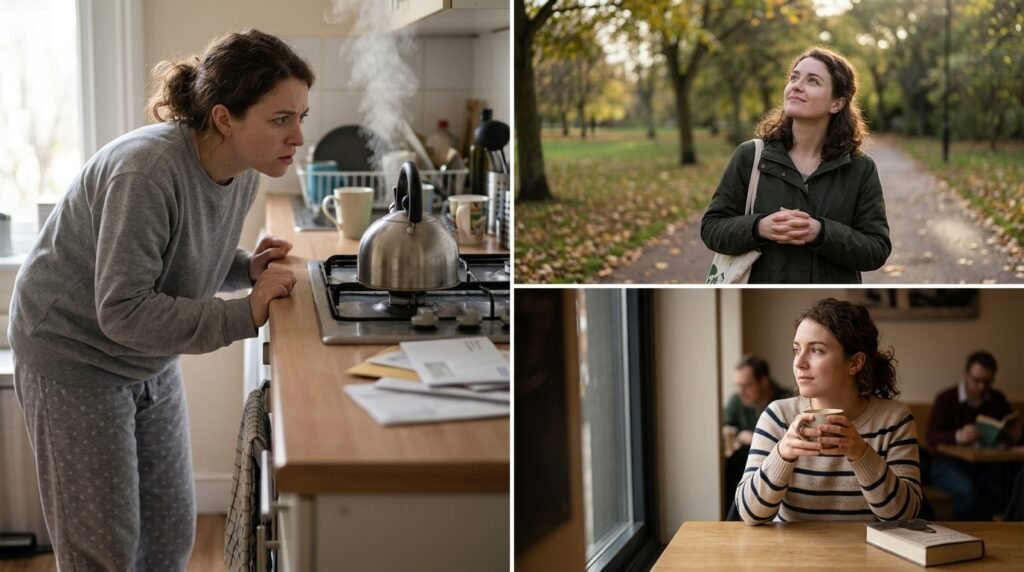
If you feel like your mornings are a frantic, stressful blur—if you feel like you are constantly rushing, constantly behind, and constantly drinking lukewarm, mediocre coffee out of sheer necessity—I strongly urge you to try this experiment.
You don’t need to buy a brand new espresso machine. You don’t need to source the most expensive, exotic beans on the planet. You don’t need to wake up at 4:00 AM to do an hour of yoga.
You just need to leave your phone in the bedroom.
Try it tomorrow. When your alarm goes off, turn it off and walk away. Leave the screen dark. Go into your kitchen and turn on the lights.
Pick up your bag of coffee and actually look at the label. Smell the beans. Listen to the water boil. Watch the grounds bloom in the filter. Pour the coffee into a real, heavy ceramic mug, not a stainless steel travel tumbler.
Stand by a window, look outside, and take a slow sip. Give your brain permission to do absolutely nothing else but process the flavor in your mouth.
I promise you, the email from your boss will still be there in twenty minutes. The news will not change. The internet will wait. But the fragile, beautiful complexity of a freshly brewed cup of coffee—and the quiet peace of an undisturbed morning—is a fleeting luxury that you deserve to experience. Reclaim your coffee, and you will reclaim your day.
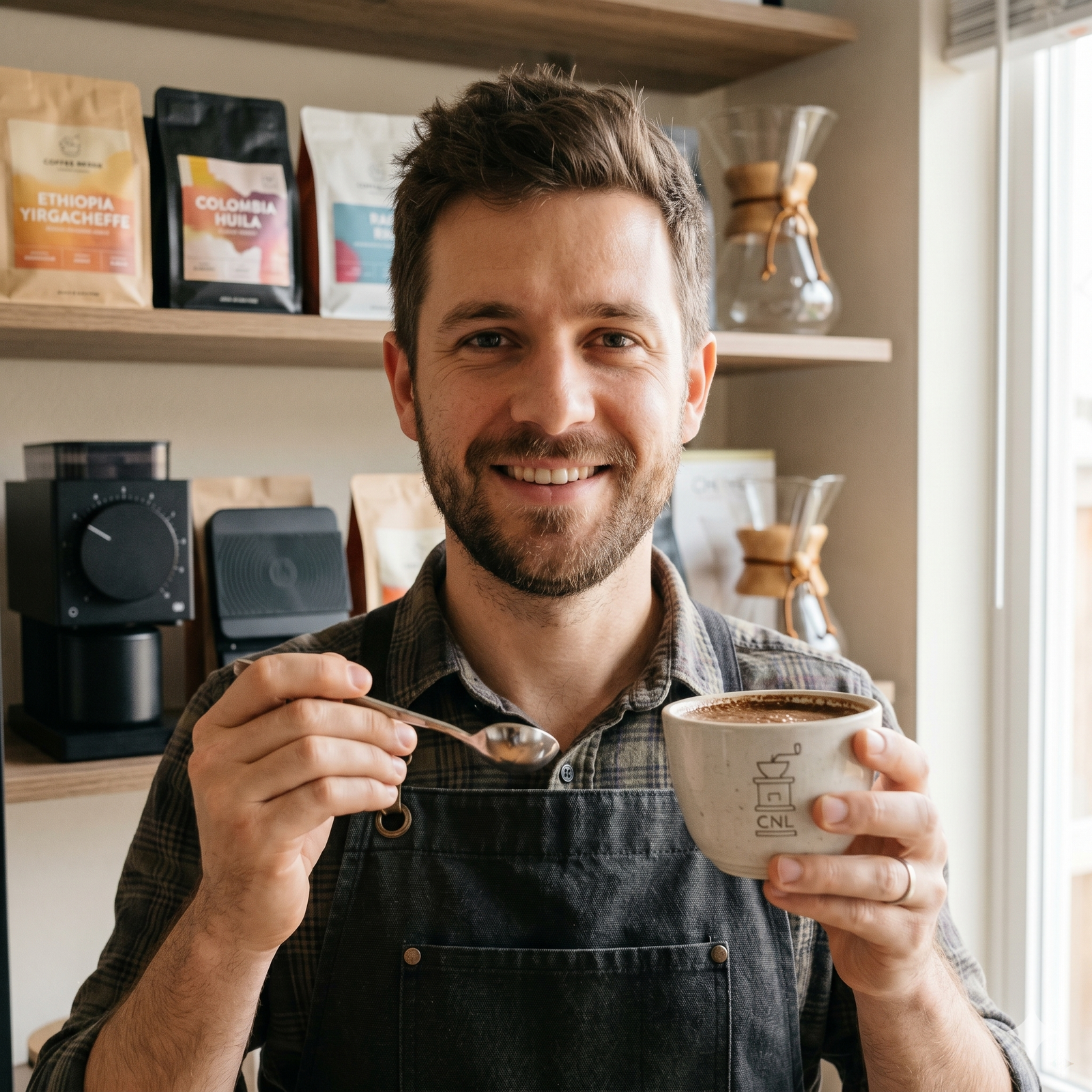
Hi, I’m the coffee enthusiast behind Coffee Nerd Lab.
Like many people, I started drinking coffee simply because it helped me wake up in the morning. Over time, that daily habit turned into a genuine interest in understanding what makes a great cup of coffee. I began experimenting with different beans, brewing methods, grinders, and coffee gear, learning through trial and error along the way.
This blog is where I document that journey. Every article is inspired by real experiences, discoveries, and lessons I’ve learned while exploring the world of coffee. From brewing guides and equipment reviews to practical tips and coffee basics, my goal is to share useful information in a way that’s easy to understand and enjoyable to read.
Thanks for stopping by, and I hope Coffee Nerd Lab helps you enjoy your next cup a little more than the last.