
I was in the middle of a massive weekend deep clean of my apartment. I was wiping down the kitchen counters and finally decided to tackle the bulky, black plastic drip coffee maker sitting in the corner.
It was a standard, programmable 12-cup machine. I had owned it for nearly three years. It was the appliance I relied on every single morning.
I unplugged the cord and dragged the heavy machine over to the sink. I took the glass carafe out and opened the top plastic lid to wipe down the water reservoir. It looked a little cloudy inside. I grabbed a small flashlight from a kitchen drawer and shined the beam directly down into the dark, narrow water tank.
My stomach completely dropped.
The bottom corners of the water reservoir were coated in a thick, hard layer of white mineral scale. Worse than that, a thin film of dark, unidentifiable slime coated the internal plastic tubes. The opening was too small for me to fit my hand inside with a sponge. It was physically impossible to scrub the internal plumbing.
I stood in my kitchen feeling absolutely disgusted. I realized I had been running boiling water through that dirty, plastic maze every single morning. I was brewing my expensive coffee beans with water that passed through a breeding ground for bacteria.
I immediately picked up the heavy machine, walked out the back door, and threw it directly into the apartment dumpster. I decided right then and there that I was done with automatic machines. That disgusting discovery was the catalyst for a massive change in my routine. It is exactly why I switched from a drip coffee maker to pour over, and I will never go back.
The Cheap Temporary Fix
Waking up the next morning without a coffee machine was slightly terrifying. I needed caffeine, but I absolutely refused to buy another massive plastic appliance.
I drove to a local specialty coffee shop down the street. I looked at their retail shelf and found a small, cone-shaped piece of clear plastic. It was a manual pour over dripper. It cost me exactly eight dollars. I bought it, along with a box of paper filters, and took it home.
My plan was simple. I was going to use this cheap plastic funnel as a temporary survival tool. I figured I would use it for a week or two while I researched and purchased a high-end, self-cleaning automatic brewer.
I boiled water in a standard cooking pot on my stove. I placed the plastic dripper on top of my favorite ceramic mug. I put a paper filter inside, added my ground coffee, and slowly poured the hot water over the top.
I watched the dark liquid drip down into the mug. The entire process took about four minutes. I took my first sip.
I instantly canceled my plans to buy a new machine. The coffee in my mug was miles better than anything my expensive automatic brewer had ever produced.

The Hidden Flaw of Machine Temperature
To understand why the eight dollar plastic cone beat the expensive automatic machine, you have to understand the physics of coffee extraction.
The most critical variable in making good coffee is water temperature. Lightly roasted, high-quality specialty coffee beans are incredibly dense. They require very hot water to properly dissolve their natural sugars. You need water that is right around 205 degrees Fahrenheit.
The vast majority of automatic drip coffee makers fail this basic test.
The internal heating elements in cheap drip machines are notoriously weak. They struggle to get the water above 180 degrees Fahrenheit. When you spray lukewarm water over dense coffee grounds, the water cannot penetrate the cellular structure of the bean. It only extracts the harsh, sour surface acids. It leaves all the sweet flavors trapped inside the grounds.
When I switched to the manual pour over method, I instantly solved the temperature problem. I was boiling the water myself. I could take the kettle off the stove and pour it over the coffee while it was still at peak thermal energy.
This simple temperature correction completely transformed the flavor profile of the beans I was buying.
The Showerhead Crater Effect
There is a second massive mechanical flaw in automatic drip machines. It involves how the water actually touches the coffee.
If you own an automatic machine, I want you to look at the wet coffee grounds inside the filter basket after a brewing cycle finishes. You will almost always see a massive, deep crater right in the middle of the grounds. The coffee around the outer edges of the filter will often be completely dry.
This happens because the “showerhead” inside the machine is poorly designed. It shoots a heavy, concentrated stream of water directly into the dead center of the coffee bed.
The water drills a hole straight through the middle. It aggressively over-extracts the coffee in the center, making the beverage taste bitter. Meanwhile, it completely ignores the coffee on the edges, making the beverage taste weak. You get a confusing, terrible mixture of bitter and sour liquid.
When you use a manual pour over, you become the showerhead.
You hold the kettle. You control the flow of the water. You pour in slow, steady, concentric circles, ensuring that every single grain of coffee gets evenly saturated. You extract all the grounds at the exact same rate. This level of control is exactly What Happened When I Changed My Coffee Brewing Method and took the responsibility away from a machine. My cups went from muddy and chaotic to perfectly balanced.
The Gear Evolution
Using a cooking pot to pour boiling water into a plastic cone was a fun experiment, but it was incredibly messy. The water splashed everywhere. I realized that if I was going to commit to this manual method, I needed the right tools.
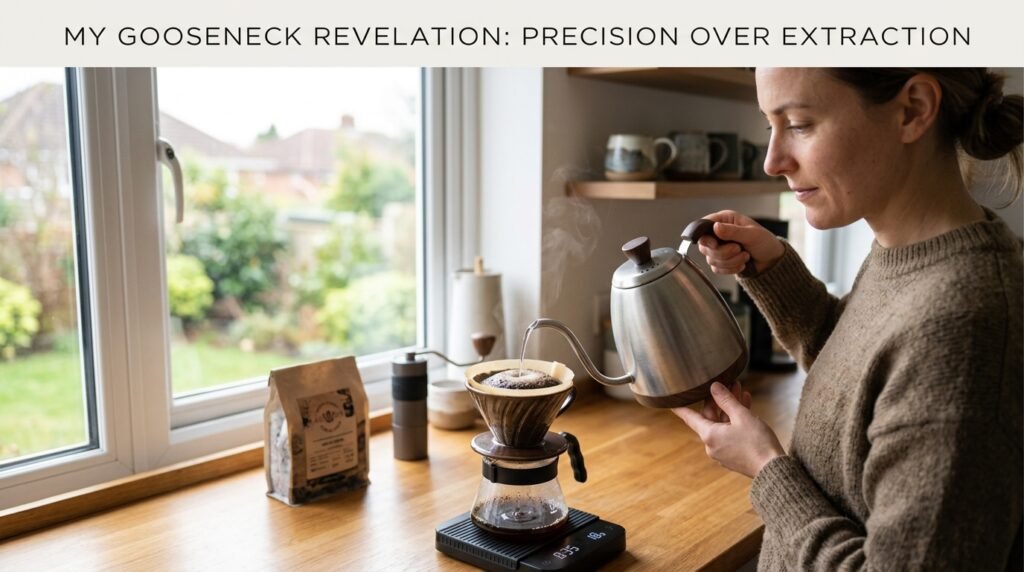
I invested in a digital kitchen scale to measure my coffee beans and my water accurately. I also bought a stainless steel gooseneck kettle.
A gooseneck kettle has a long, thin, curved spout. It restricts the flow of the water, allowing you to pour a precise, delicate stream.
The first morning I used that specific kettle was a revelation. It allowed me to gently wet the coffee grounds and watch them bloom. It allowed me to stop pouring, wait for the water level to drop, and then start pouring again. The physical mechanics of holding that tool completely altered my morning routine. I wrote a dedicated breakdown about My First Experience Using a Gooseneck Kettle because it was the single biggest upgrade to my brewing technique. It gave me surgical precision over the extraction.
The Clarity of the Cup
Once my technique improved, I started noticing a massive difference in the texture of the beverage.
My old automatic drip machine produced coffee that was heavy, dark, and slightly sludgy. It always had a strange, generic “roasted” flavor that coated the back of my throat.
The pour over method produced something entirely different. The coffee looked translucent in the mug. It resembled a dark, heavy herbal tea.
When I tasted it, the clarity was absolutely staggering. There was no muddy residue. There was no harsh bitterness. I could actually taste individual flavor notes. I could taste bright citrus acidity on the sides of my tongue and sweet milk chocolate on the finish.
This clarity comes down to the filter. The heavy paper filters used in most pour over drippers do a phenomenal job of trapping bitter oils and microscopic coffee dust. They produce the cleanest possible expression of the coffee bean.
Understanding this filtration dynamic was fascinating. It sent me down a rabbit hole of research regarding What I Learned After Making Coffee With Filter Papers. I learned that the simple act of rinsing the paper filter with hot water before brewing removes any residual paper taste, resulting in an even cleaner final cup.
Reclaiming the Kitchen Counter
There was a highly practical, non-culinary benefit to throwing away my automatic machine. I got my kitchen back.
Standard drip coffee makers are massive. They take up a huge footprint on the kitchen counter. They are tall, boxy, and generally quite ugly. They sit there permanently, taking up valuable real estate twenty four hours a day, even though they only operate for ten minutes every morning.
My pour over setup is completely different.
The dripper itself is the size of a coffee mug. My digital scale is the size of a paperback book. When I am done brewing my coffee, I simply wash the dripper, put it in the cabinet, and put the scale in a drawer.
My kitchen counters are completely clear. The only appliance left sitting out is the elegant stainless steel gooseneck kettle.
Switching to a manual method removed visual clutter from my home. It made my kitchen look cleaner, larger, and much more organized. The minimalist aesthetic of manual brewing is deeply satisfying.
The Freedom of Easy Maintenance
Cleaning my old automatic machine was a nightmare. As I discovered with the flashlight, it was basically impossible to do properly.
You have to run harsh vinegar solutions through the water reservoir. You have to scrub the hot plate. You have to hope the internal tubes are fully sanitized. It is a stressful, tedious chore.
Cleaning a pour over setup takes exactly ten seconds.
When the coffee finishes dripping into the mug, you lift the dripper off the cup. You grab the edge of the paper filter and throw the entire thing directly into the trash can or compost bin. You rinse the ceramic or plastic cone under hot tap water in the sink.
That is it. You are completely finished.
There are no hidden tubes. There are no water reservoirs growing mold in the dark. There are no heating plates crusting over with burnt coffee stains. The absolute simplicity of the maintenance makes the entire process incredibly enjoyable. You spend your time drinking the coffee, not scrubbing a plastic machine.
The Shift in Morning Psychology
The most profound change I experienced after switching to pour over had nothing to do with the taste of the coffee. It had everything to do with my brain.
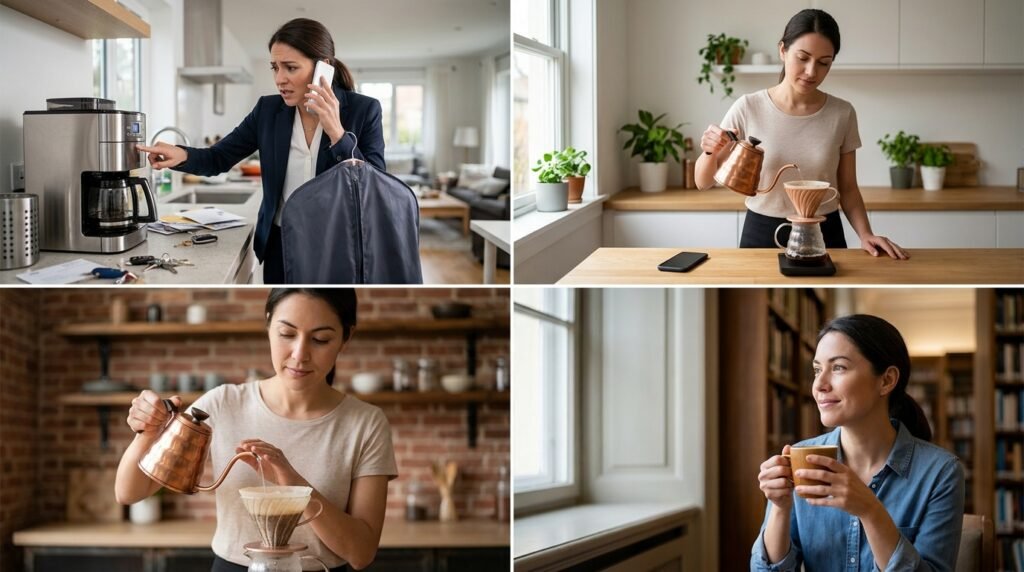
Automatic machines promote a culture of frantic rushing. The entire selling point of the machine is that you do not have to pay attention to it. You push a plastic button, walk away, take a shower, get dressed, and grab a mug on your way out the door.
It treats coffee as a background utility.
Manual brewing demands your full attention. You cannot push a button and walk away from a V60. If you walk away, the water stops flowing.
You have to stand in your kitchen. You have to hold the kettle. You have to watch the water hit the grounds. You have to actively participate in the creation of the beverage for three uninterrupted minutes.
Initially, this felt like an inconvenience. I was used to multitasking. But very quickly, those three minutes became the best part of my entire day.
It forced me to put my smartphone down. It forced me to stop checking work emails. It forced me to be entirely present in the physical world. The rhythmic, circular motion of pouring the hot water became a daily meditation. It set a calm, deliberate tone for the rest of my morning.
The Final Verdict
I have not owned an automatic coffee maker in years. I do not miss it.
I understand the appeal of convenience. I understand why millions of people rely on a programmable machine to wake them up. But the cost of that convenience is simply too high.
You sacrifice water temperature. You sacrifice even extraction. You sacrifice counter space. You subject yourself to impossible cleaning routines and hidden mineral buildup.
Switching to a manual pour over method puts the power back in your hands. It forces you to learn the basic chemistry of the beverage you drink every single day. It allows you to buy expensive, high quality beans and actually extract the flavors you paid for.
If you are currently feeling bored with your morning coffee, I challenge you to look inside the water reservoir of your machine with a flashlight. You might not like what you see.
Take ten dollars, walk to a local cafe, and buy a simple plastic pour over cone. Buy a box of paper filters. Boil some water on your stove. Stand by your kitchen window and slowly pour the water yourself.
The clarity of the flavor will shock you. The peace of the process will calm you. Once you taste the difference that manual control provides, you will happily carry your automatic machine to the dumpster.
