The yellow lines on the highway were starting to blur together into one continuous, hypnotic streak. It was 1:30 AM on a desolate stretch of interstate, and I still had three hundred miles to go before I reached my destination.
The rhythmic thud of my tires against the pavement was acting like a metronome, slowly putting me to sleep. I rolled down the window to let the freezing night air hit my face, turned the radio volume up to an uncomfortable level, and started desperately scanning the dark horizon for a neon sign.
Finally, I saw the glowing logo of a 24-hour diner at the next exit.
I pulled my car into the empty parking lot, walked through the glass doors, and sat down at the counter. The waitress walked over, holding a standard glass pot filled with generic, dark drip coffee. She offered to pour me a mug.
I held my hand up and shook my head. “No thank you,” I said, feeling like I needed something much more aggressive. “I have a long drive ahead of me. I need the strongest thing you have. Bring me a double espresso.”
She nodded, walked over to the shiny silver espresso machine, and pulled a tiny, dark shot of liquid into a small ceramic cup. I knocked it back in one single, bitter gulp, paid my tab, and confidently walked back out to my car. I was expecting liquid lightning to course through my veins. I expected to be wide awake, hyper-focused, and ready to conquer the rest of the drive.
Thirty minutes later, I was yawning uncontrollably. Forty-five minutes later, I had to pull over at a dark rest stop and sleep in the driver’s seat for two hours because I literally could not keep my eyes open.
I felt completely betrayed. How could I drink the most potent, concentrated, aggressive coffee in the world and still fall asleep?
It wasn’t until weeks later, while randomly reading a book about brewing science, that I stumbled upon the answer. It completely shattered my understanding of the beverage. It was the absolute first coffee fact that truly surprised me, and it proved that almost everything I believed about caffeine was completely backwards.
The Illusion of Intensity
To understand why I fell asleep in my car that night, we have to look at how we, as a society, define the word “strong.”
When I ordered that double espresso at the diner, I ordered it because it tasted strong. Espresso is an incredibly intense, heavy, and concentrated liquid. It coats your tongue. It is usually quite bitter, incredibly bold, and physically thick.
Our brains are biologically wired to associate intense, aggressive flavors with intense chemical effects. We naturally assume that because a shot of espresso tastes like a punch in the face, it must contain a massive, overwhelming dose of caffeine.
But flavor intensity and caffeine concentration are two completely different things.
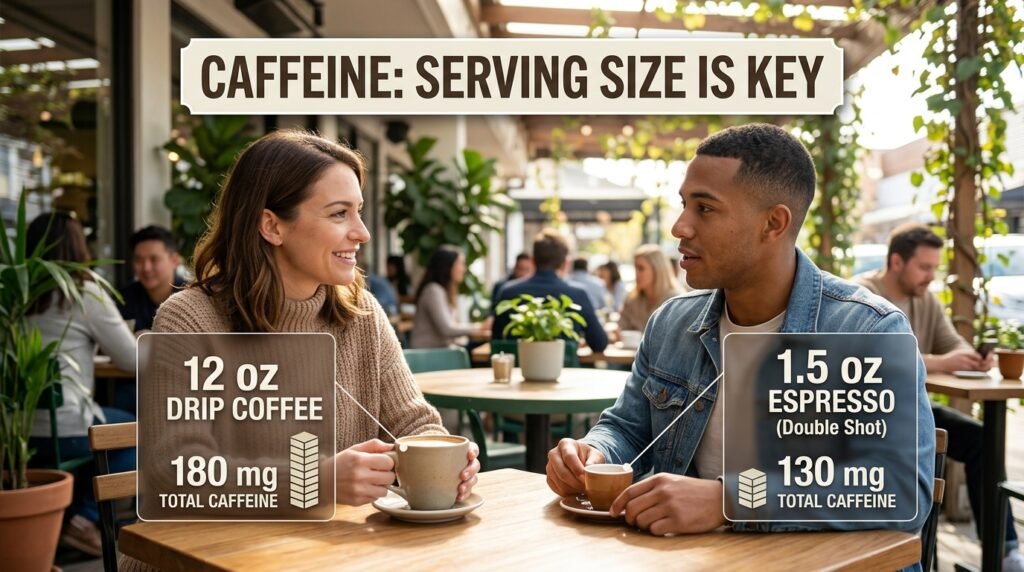
The shocking, undeniable fact that I learned is this: A standard, boring, 12-ounce mug of regular drip coffee contains significantly more caffeine than a standard double shot of espresso.
Breaking Down the Math
When I first read this fact, I genuinely thought it was a typo. I had spent my entire adult life watching movies where tired detectives and busy executives ordered tiny shots of espresso to stay awake. It was a cultural staple.
But the numbers do not lie.
If you look at the chemical breakdown, a standard double shot of espresso (which is roughly two ounces of liquid) contains somewhere between 120 and 150 milligrams of caffeine.
A standard 12-ounce mug of drip coffee, on the other hand, contains anywhere from 150 to over 200 milligrams of caffeine, depending on the specific beans used.
If you go to a massive commercial coffee chain and order a large (16-ounce or 20-ounce) drip coffee, you could be consuming well over 300 milligrams of caffeine in a single sitting. That is more than double the caffeine of an espresso shot.
Realizing this completely flipped my understanding of my daily habits, a realization I explored deeply in my article regarding The Coffee Fact That Surprised Me Most This Year. I had been strategically ordering espresso when I needed to stay awake, inadvertently giving myself less caffeine than if I had just ordered a regular cup of coffee.
The “Ounce for Ounce” Argument
Now, coffee purists will often try to argue this fact by using the “ounce for ounce” defense.
And technically, they are correct. If you measure strictly by volume, espresso is much more highly caffeinated per ounce. One ounce of espresso has about 65 milligrams of caffeine, while one ounce of drip coffee only has about 15 milligrams.
But this is a completely useless metric for human consumption.
Nobody walks into a cafe and orders 12 ounces of straight espresso. If you drank a 12-ounce mug of pure espresso, you would likely end up in the emergency room with a dangerously high heart rate.
We don’t consume coffee by the ounce; we consume it by the serving size. And the serving size of drip coffee is massive compared to the tiny serving size of espresso. Because you are drinking such a huge volume of liquid with drip coffee, the total cumulative amount of caffeine entering your bloodstream is much higher.
The Science of the Solvent
But why does a big pot of watery drip coffee extract so much caffeine in the first place? Why isn’t the high-pressure espresso machine pulling more caffeine out of the beans?
The answer lies in the basic chemistry of brewing.
Brewing coffee is essentially a scientific extraction process. You are using hot water as a solvent to pull flavors, oils, and chemicals out of a roasted seed. Caffeine is a highly water-soluble chemical. This means that if you put it in water, it dissolves very easily.
However, extracting caffeine requires one major ingredient: Time.
The longer the coffee grounds are physically in contact with the water, the more caffeine the water will extract from them. It is a slow, steady chemical transfer.
The Time Discrepancy
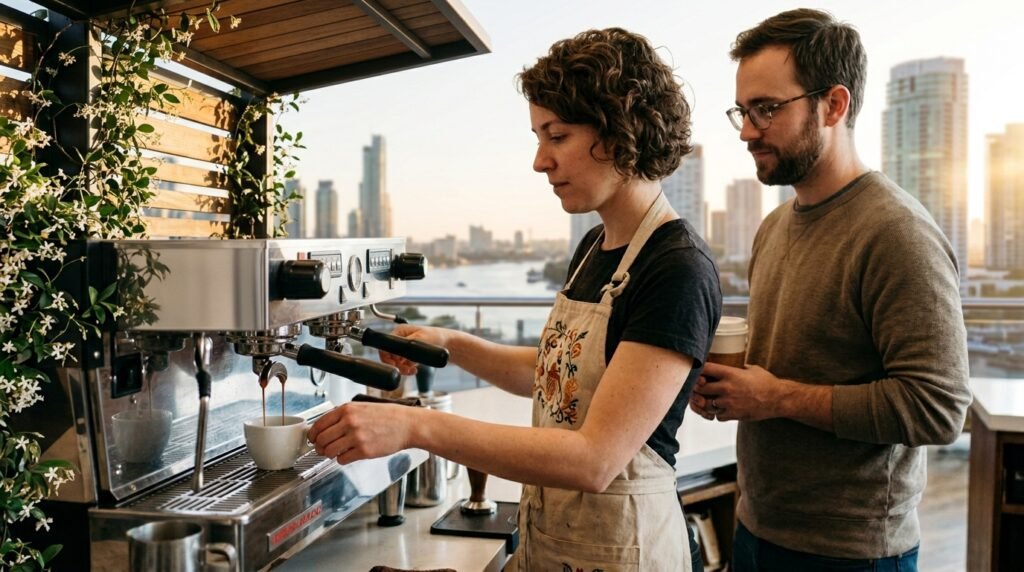
Let’s look at the espresso machine at that late-night diner.
When the waitress made my double espresso, she packed a small puck of finely ground coffee into a metal portafilter. Then, the machine forced hot water through that puck under intense, violent pressure.
The entire process—from the moment the water touched the coffee to the moment the shot was finished—took exactly 30 seconds.
Thirty seconds is enough time for the high pressure to aggressively rip the heavy oils, the bold flavors, and the dark colors out of the beans. But it is simply not enough time for the water to extract all of the available caffeine. The water passes through the coffee far too quickly.
Now, let’s look at the standard drip coffee pot sitting on the warmer.
To make a pot of drip coffee, hot water is slowly dripped over a large bed of coffee grounds sitting in a paper filter. Gravity slowly pulls the water down through the bed. The entire brewing process takes anywhere from four to six minutes.
That is nearly ten times longer than an espresso shot.
Because the water sits and steeps with the coffee grounds for five full minutes, it has ample time to thoroughly dissolve and extract a massive payload of caffeine. Time beats pressure every single day of the week when it comes to chemical extraction.
The Ultimate Caffeine Bomb: Cold Brew
Once I understood this fundamental rule—that time equals caffeine—another massive coffee mystery was immediately solved for me.
For a long time, I couldn’t understand why drinking a glass of cold brew coffee made me feel like I was vibrating. I would drink a cup in the afternoon and my heart would race, a physiological reaction that forced me to document How I Learned Coffee Strength Affects My Mood.
Cold brew is notoriously potent. And knowing the science of extraction, it makes perfect sense.
Cold brew is not made with hot water. It is made by taking coarsely ground coffee and soaking it in cold or room-temperature water. Because the water is cold, the extraction process is incredibly slow. To get a flavorful cup, you have to let the coffee steep for a very, very long time.
A standard batch of cold brew steeps for 16 to 24 hours.
While the cold water doesn’t extract the bitter acids and heavy oils as efficiently as hot water, sitting submerged in liquid for an entire day allows the water to pull out nearly every single milligram of caffeine available in the beans.
If you want the absolute maximum, jitter-inducing caffeine jolt legally available in a cafe, you don’t order an espresso. You order a large cold brew. It is the undisputed king of caffeine simply because of the clock.
Rethinking the Late-Night Diner
Looking back at that exhausting night in my car, the irony of the situation is almost painful.
When I walked into that diner, the waitress literally offered me a mug of drip coffee from the glass pot. That mug would have given me nearly 200 milligrams of caffeine. The five-minute brew time would have extracted a heavy dose of the stimulant I desperately needed.
But because of my own ignorance, and my misplaced trust in the “bold” flavor of espresso, I refused the drip coffee. I paid more money for a tiny shot that only gave me a fraction of the caffeine, and I ended up sleeping in a parking lot.
The espresso tasted like a wake-up call, but it was chemically inferior to the boring, watery-looking coffee sitting on the burner.
Changing the Way We Order
Learning this surprising fact fundamentally changed the way I navigate coffee shops. I no longer order blindly based on marketing myths. I order based on what my body actually needs in that specific moment.
If I am sitting at a beautiful specialty cafe on a Saturday morning, and I want a rich, culinary experience, I order an espresso or a milk-based espresso drink like a cappuccino. I want the heavy texture, the intense flavor concentration, and the beautiful latte art. I am ordering for the sensory experience, not the chemical jolt.
But if it is a Tuesday morning, and I have a massive deadline approaching at work, and I barely slept the night before? I completely ignore the espresso machine.
I order the largest batch-brewed drip coffee they have. I want the liquid that sat in the filter for five minutes. This strategic approach to caffeine consumption completely altered my schedule, leading to the insights I shared in What I Learned From Brewing Coffee at Different Times of Day. By understanding the chemistry, I learned how to properly fuel my productivity without over-caffeinating when I didn’t need to.
The Red Eye Exception
There is, of course, one loophole to this rule for those moments of absolute desperation.
If you are ever in a situation where you need an ungodly amount of caffeine—perhaps you are driving across the country in the middle of the night, or pulling an all-nighter for a final exam—you can combine the two methods.
It is a drink called the “Red Eye” (or sometimes a “Shot in the Dark”).
You order a large, standard cup of drip coffee, and you ask the barista to pull a double shot of espresso and dump it directly into the drip coffee.
By doing this, you are getting the massive, time-extracted caffeine payload of the 12-ounce drip brew, plus the concentrated 150-milligram booster shot of the espresso. It is a terrifyingly effective beverage that tastes like burnt rubber and pure adrenaline. I do not recommend it for a casual Sunday morning, but it will absolutely prevent you from sleeping in your car at a rest stop.

The Beauty of Coffee Science
The realization that espresso has less caffeine than drip coffee was the very first domino to fall in my coffee education.
It taught me that in the culinary world, our senses can easily deceive us. Just because something tastes aggressive doesn’t mean it is chemically potent. It forced me to stop trusting my assumptions and start looking at the actual science of what was happening in my mug.
Coffee is full of these counterintuitive secrets. The more you learn about the extraction process, the water chemistry, and the roasting mechanics, the more you realize that brewing a cup of coffee is an actual science experiment happening on your kitchen counter every single morning.
So, the next time you feel your eyelids getting heavy, and you walk into a cafe looking for a lifeline, remember the math. Don’t be fooled by the tiny, intense cup. Respect the clock, trust the slow drip, and order the big mug. Your tired brain will thank you for it.
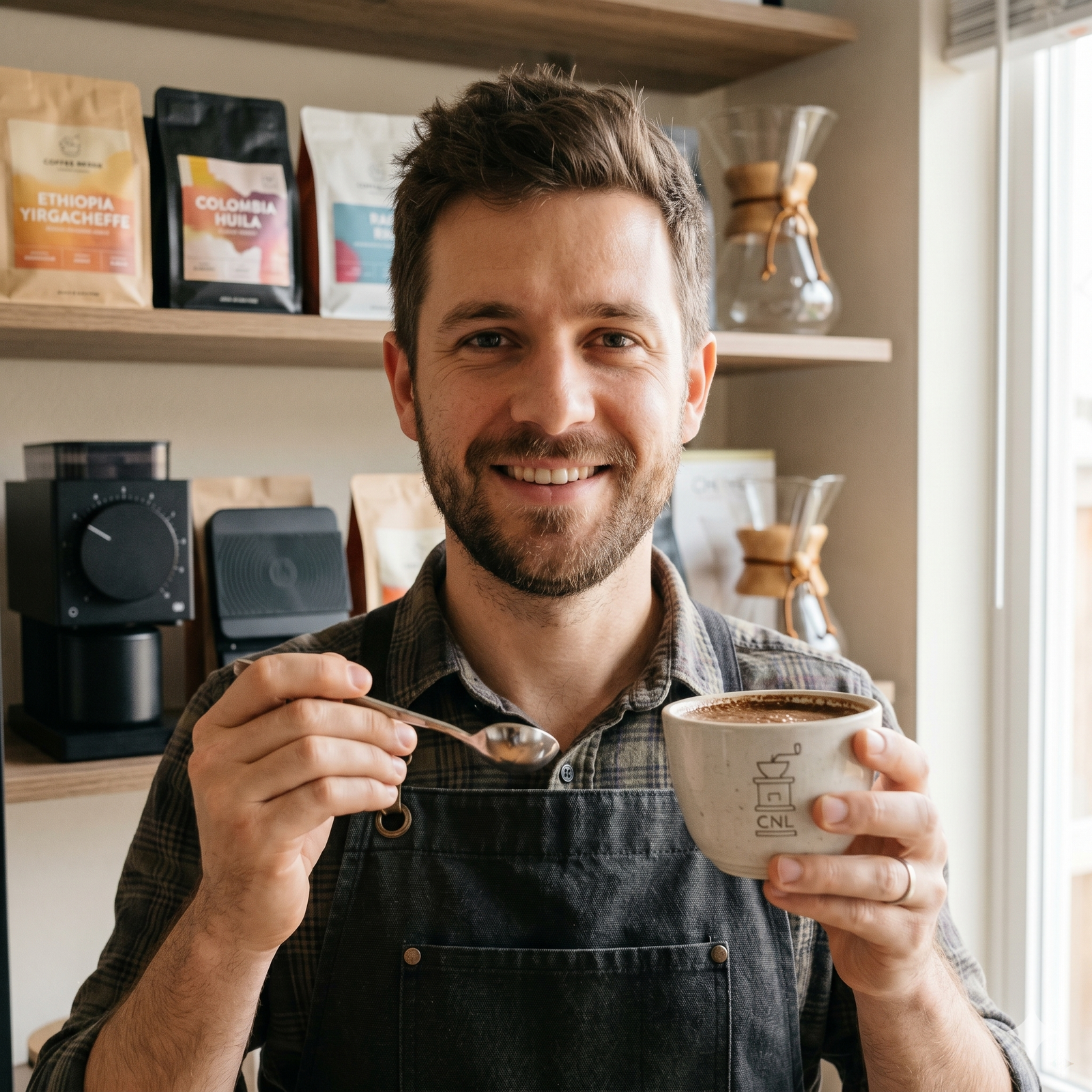
Hi, I’m the coffee enthusiast behind Coffee Nerd Lab.
Like many people, I started drinking coffee simply because it helped me wake up in the morning. Over time, that daily habit turned into a genuine interest in understanding what makes a great cup of coffee. I began experimenting with different beans, brewing methods, grinders, and coffee gear, learning through trial and error along the way.
This blog is where I document that journey. Every article is inspired by real experiences, discoveries, and lessons I’ve learned while exploring the world of coffee. From brewing guides and equipment reviews to practical tips and coffee basics, my goal is to share useful information in a way that’s easy to understand and enjoyable to read.
Thanks for stopping by, and I hope Coffee Nerd Lab helps you enjoy your next cup a little more than the last.