

I was sitting in my home office in Rio de Janeiro on a rainy Thursday morning. I was monitoring a massive file transfer for a client website. I watched the green progress bar slowly move across my digital screen. I knew exactly what percentage of the data was complete. I knew exactly how many seconds were left until the job finished.
I love having access to precise digital data. It completely removes anxiety from the workflow.
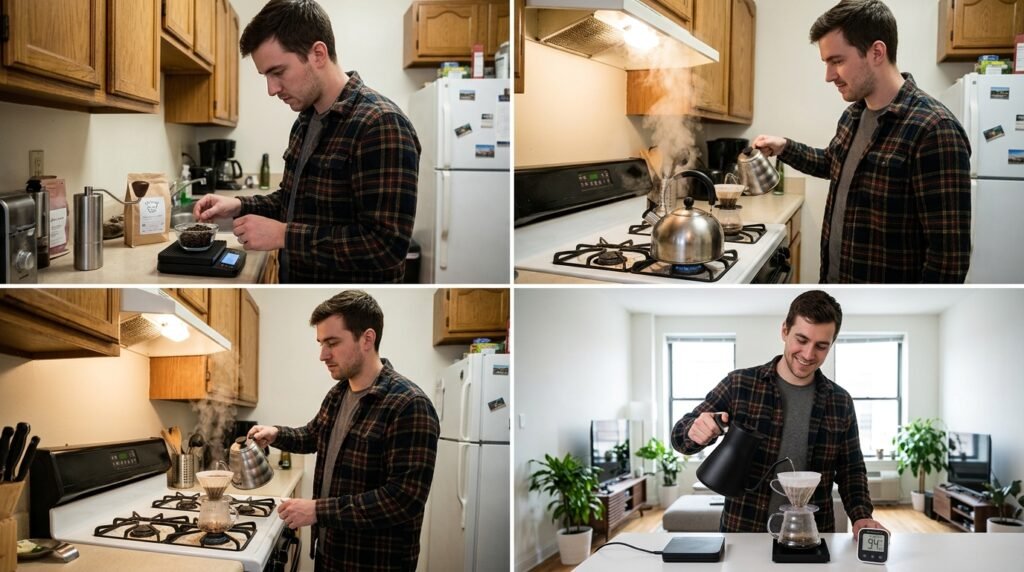
I walked away from my computer and went into the kitchen to brew a cup of coffee. I filled my stainless steel gooseneck kettle with water and placed it on the gas stove. I turned the flame on. I stood there and stared at the metal pot.
I suddenly realized my kitchen was completely blind.
I had no progress bar for my water. I had no idea what the internal temperature was. I was just waiting to hear the water boil. I was treating the most important solvent in my kitchen like a primitive campfire. The equipment upgrade that was actually worth it completely fixed this blind spot. I replaced my stove top kettle with a precision digital tool. It finally gave me absolute mathematical control over the heat of my extraction.
The Blind Spot in My Kitchen
For a long time, I was incredibly proud of my manual coffee setup.
I used a precision digital scale to weigh my beans down to the single gram. I used a heavy manual burr grinder to slice the dense seeds into perfectly uniform pieces. I used a gooseneck spout to control the exact physical flow of the water.
I controlled the mass. I controlled the particle size. I controlled the fluid dynamics.
But I had absolutely zero control over the thermal dynamics. I placed a metal pot on a gas fire and waited for the water to boil violently. That was my entire temperature strategy. I applied the exact same extreme heat to every single bag of coffee I purchased.
The Myth of Boiling Water
The internet is full of conflicting advice regarding coffee temperature.
Many people say you should only use water right off the boil. They claim that maximum heat is required to pull the complex sugars out of the roasted seed. For a while, I blindly followed this rule. I thought boiling water was a universal requirement for specialty coffee.
This is a massive chemical misunderstanding.
Water temperature acts exactly like an accelerator pedal in a car. The hotter the water, the faster and more aggressively it dissolves the organic compounds inside the coffee bean. If the water is too cold, the extraction stalls. The coffee tastes sour and weak. If the water is too hot, the extraction runs out of control. The coffee tastes dry, harsh, and aggressively bitter.
The Density Variable
The perfect temperature is never a static number. It depends entirely on the physical density of the agricultural product.
I frequently buy light roasted Ethiopian coffee beans. Because the roaster stops the heat very early, the cellular structure of the seed remains incredibly tight and dense. They are hard rocks. To penetrate those dense walls and extract the sweet peach notes, you actually need violently boiling water.
But coffee is not always dense.
If you buy a medium roasted coffee from Brazil, the physical reality changes completely. The roaster applied heat for a longer period. The cellular walls puffed up, expanded, and became highly brittle. The seed is fragile. It is highly soluble.
Overcooking the Beans
I bought a bag of beautiful, medium roasted honey processed coffee. I wanted to taste the heavy, sweet body the roaster promised on the label.
I ground the fragile beans. I took my stove top kettle off the violent gas fire. I poured the boiling water directly over the coffee bed.
The resulting beverage was an absolute disaster. It tasted like burnt toast and bitter ash. The heavy sweetness was completely destroyed.
The problem was the heat. The brittle, medium roasted beans did not need an aggressive solvent. They needed a gentle extraction. By dumping boiling water over them, I violently over extracted the fragile cells. I pulled out all the harsh, dark tannins.
Realizing this violent chemical reaction was exactly How I Learned Coffee Temperature Changes Flavor because I saw how easily heat could ruin an expensive bag of beans. I was actively cooking the coffee instead of brewing it.
The Search for the Thermometer
I knew I needed to control my heat. My first instinct was to buy a cheap kitchen thermometer.
I thought I could just stick a metal probe into the top of my stove top kettle. I would watch the analog dial spin, take the kettle off the heat, and wait for the water to cool down to my target temperature.
I tried this method exactly once. It was a miserable experience.
I stood in my kitchen holding a heavy metal pot, staring at a tiny dial, waiting for the needle to drop from two hundred and twelve degrees to exactly two hundred degrees. It took several minutes. It was tedious. It required my complete, undivided attention. It entirely ruined the peaceful pace of my morning routine.
The Digital Base Station
I needed a system that functioned like my digital web servers. I needed automation and precision.
I went online and purchased a variable temperature electric gooseneck kettle. It is the most expensive piece of hardware on my kitchen counter, and it is worth every single penny.
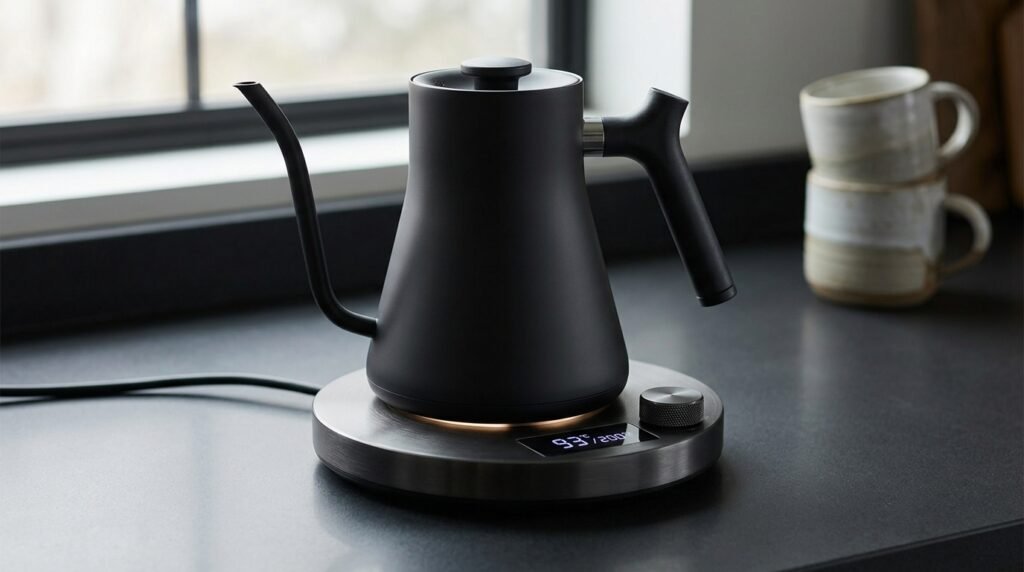
The kettle itself looks like a standard matte black metal pitcher. But the magic happens in the base.
The base station features a flat digital screen and a sleek control dial. It plugs directly into the wall. You do not place the kettle on a stove. You place it on the digital base. The base contains a massive heating element and a highly sensitive thermal probe.
Setting the Target
The electric kettle arrived at my apartment a few days later. I unpacked it and plugged it into the wall.
I filled the metal pitcher with filtered water and placed it on the base. The digital screen instantly lit up. It displayed the current room temperature of the water. I had my digital progress bar.
I grabbed my bag of medium roasted honey processed coffee. I decided I wanted to brew this fragile bean at exactly two hundred degrees Fahrenheit.
I turned the dial on the base station. I set the target temperature to exactly two hundred. I pushed the start button. I did not have to guess. I did not have to stare at an analog thermometer. I gave the machine a strict piece of digital data.
The Speed of the Element
The electric base began heating the water. The speed was absolutely staggering.
My old gas stove took nearly ten minutes to bring a full kettle to a boil. It was a massive waste of time. The electric base utilized a twelve hundred watt heating element. It transferred thermal energy directly into the water with absolute efficiency.
I watched the numbers climb rapidly on the digital screen. The water hit my exact target of two hundred degrees in less than three minutes.
The Magic of the Hold Function
The speed was impressive, but the greatest feature of the electric kettle is the hold function.
When my old stove top kettle reached a boil, I had to use it immediately. If I turned the fire off to go answer a client email, the water would rapidly cool down. I would lose my thermal energy. I was a slave to the timing of the stove.
The electric base station completely severs that physical dependency.
When the digital screen hit two hundred degrees, the machine beeped softly. It then activated the hold protocol. It used tiny, microscopic bursts of electricity to maintain the water at exactly two hundred degrees. It could hold that exact temperature for a full hour.
Fixing the Morning Workflow
This single feature completely revolutionized my morning workflow.
Finding this level of automated convenience was exactly The Coffee Gear That Made My Routine More Enjoyable because it removed the panic from my kitchen.
Now, I wake up, fill the kettle, and push the button. I can walk away completely. I can go to the bathroom. I can check my website analytics. I can weigh and grind my coffee beans at a slow, peaceful pace.
I know the water will be waiting for me at the exact mathematical temperature I requested. The machine waits for the operator. The operator no longer waits for the machine.
Testing the Honey Process
I was ready to test the flavor theory. I poured the medium roasted grounds into my glass V60 cone.
I picked the electric kettle off the base. The water inside was exactly two hundred degrees. It was hot, but it was safely below the violent boiling point.
I poured the water in slow concentric circles. I completed the extraction and waited for the liquid to drain into my mug. I carried the cup to my desk and took a slow sip.
The transformation was absolute. The burnt, bitter ash flavor was completely gone. The heavy, sweet honey body was perfectly intact. The coffee felt smooth and rich on my palate. I had successfully extracted the complex sugars without accidentally burning the fragile cellular walls of the bean.
The Micro Adjustments
Once I realized the massive impact of thermal dynamics, I started experimenting aggressively.
I treated the temperature dial exactly like a volume knob on a stereo. I could turn the extraction up, or I could turn it down.
If I brewed a cup of coffee at two hundred degrees and it tasted slightly weak or sour, I knew I needed more thermal energy. The next morning, I set the digital base to two hundred and four degrees. The hotter water dissolved the compounds faster, increasing the strength of the beverage.
If I brewed a cup and it tasted slightly dry and bitter on the finish, I turned the dial down. Dialing the heat back by just two or three degrees was exactly The Small Coffee Adjustment That Made a Big Impact and instantly restored the sweetness. I was manipulating the chemistry with surgical precision.
Changing the Origin Strategy
The electric kettle unlocked a completely new level of purchasing freedom.
Before the upgrade, I was terrified to buy anything darker than a light roast. I knew my boiling water strategy would destroy medium or dark roasted beans. I was locked into a very narrow flavor profile.
The variable temperature base completely removed that limitation.
I can now walk into a local roastery and confidently buy a heavy, dark roasted Brazilian blend. I take it home, set the kettle to one hundred and ninety degrees, and execute a gentle, perfect extraction. The low temperature protects the dark roasted seeds from turning bitter. I can explore the entire global map of coffee origins without fear of burning the ingredients.
The Consistency Guarantee
The ultimate value of this equipment upgrade is pure consistency.
I work in an industry where replication is critical. If a piece of code works perfectly on Monday, it must work perfectly on Friday.
Coffee is already highly volatile. The beans age. The room humidity changes. You do not want your water temperature fluctuating wildly every single morning. If you guess the temperature, you guarantee chaotic results in your mug.
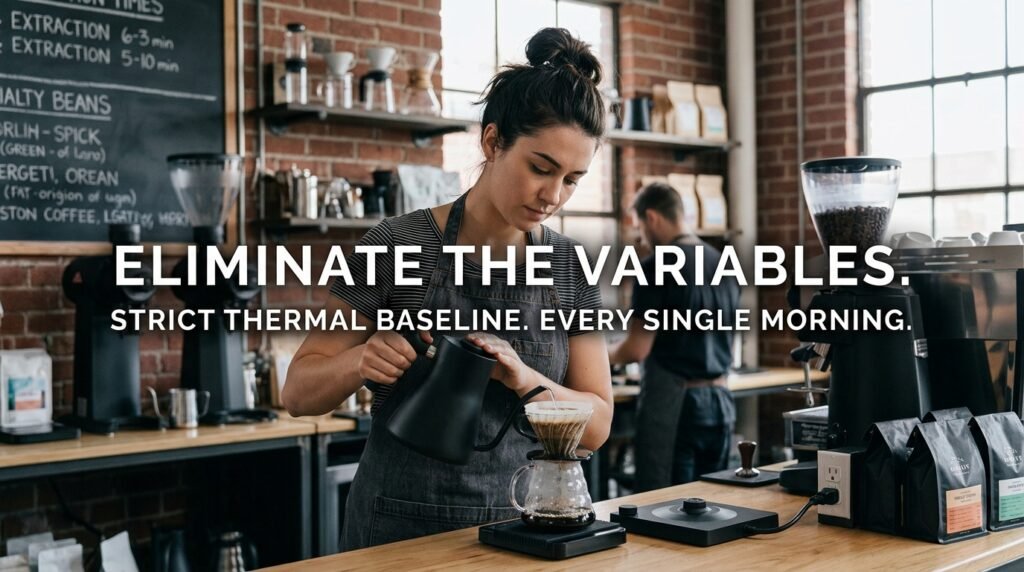
The electric base station provides a strict thermal baseline. It removes the largest physical variable from the equation entirely. I know the heat is perfectly stable, which allows me to focus my attention strictly on the pouring technique and the grind size.
Stop Guessing Your Heat
Take a very critical look at how you boil water in your kitchen.
If you are placing a metal pot on a gas stove and waiting for the whistle to blow, you are actively destroying your ability to make complex coffee. You are applying a sledgehammer to a delicate culinary task.
You cannot fix a burnt extraction with better pouring technique. You cannot fix sour water by buying more expensive beans. The thermal energy dictates the absolute ceiling of your flavor profile.
You need to buy a variable temperature electric gooseneck kettle. It is a massive financial upgrade, but it is the only tool that gives you absolute authority over the extraction. When you finally stop guessing the heat, and you finally taste the sweet, unburnt reality of a perfectly extracted bean, you will realize the digital base station is the most valuable computer in your entire house.
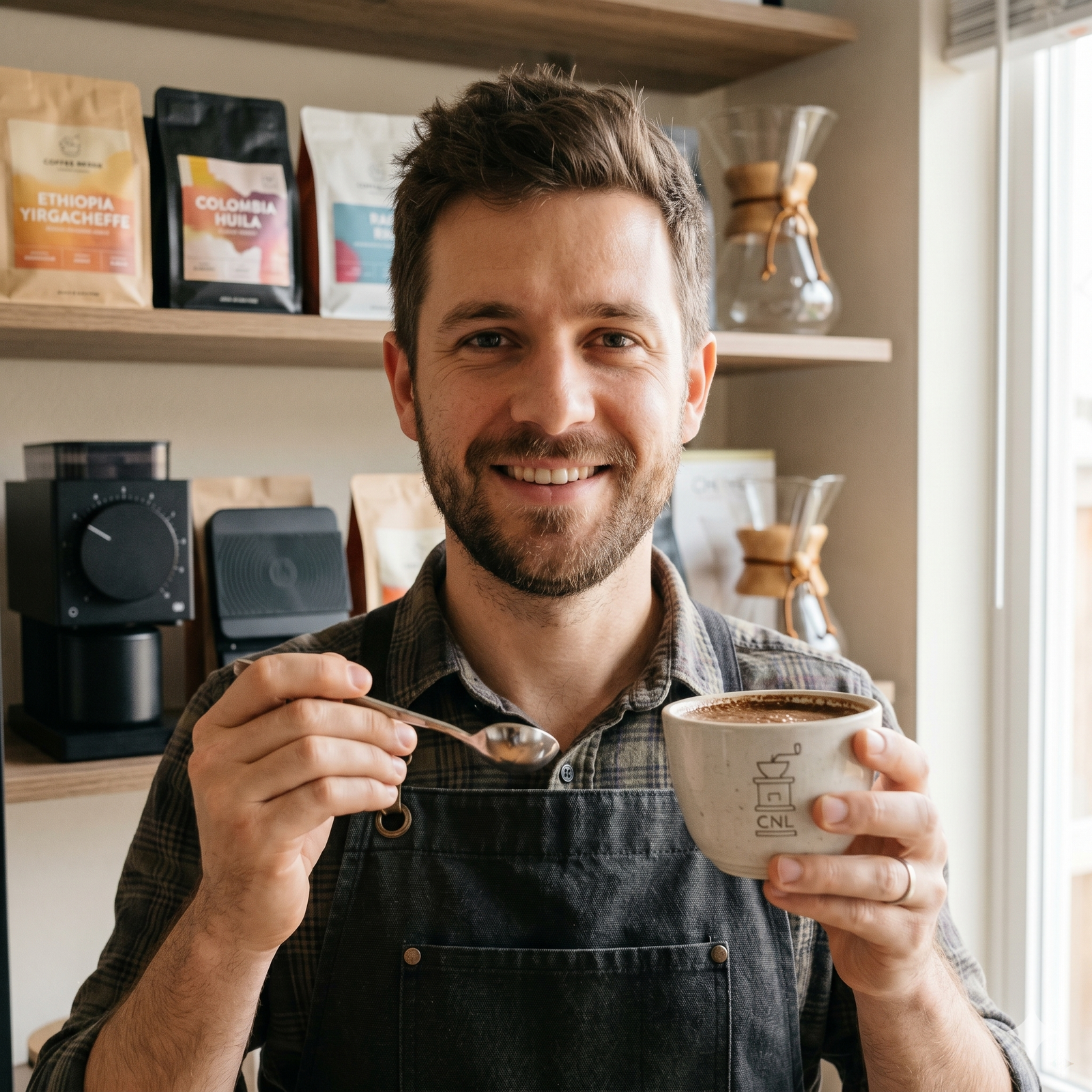
Hi, I’m the coffee enthusiast behind Coffee Nerd Lab.
Like many people, I started drinking coffee simply because it helped me wake up in the morning. Over time, that daily habit turned into a genuine interest in understanding what makes a great cup of coffee. I began experimenting with different beans, brewing methods, grinders, and coffee gear, learning through trial and error along the way.
This blog is where I document that journey. Every article is inspired by real experiences, discoveries, and lessons I’ve learned while exploring the world of coffee. From brewing guides and equipment reviews to practical tips and coffee basics, my goal is to share useful information in a way that’s easy to understand and enjoyable to read.
Thanks for stopping by, and I hope Coffee Nerd Lab helps you enjoy your next cup a little more than the last.