I was standing in a brightly lit gift shop at the airport, waiting for my flight home after a week-long vacation in a tropical climate. I had some leftover local currency in my pocket and a strong desire to bring a piece of the trip back to my kitchen.
On the top shelf of a wooden display rack, I spotted it. It was a beautiful, thick foil bag of coffee. The packaging was stunning. It featured a watercolor painting of a lush green mountain, a colorful exotic bird, and a bold, gold-foil stamp that proudly declared it the “Ultimate Reserve Volcano Blend.”
I did absolutely zero research. I didn’t look at the back of the bag. I didn’t search for the brand on my phone. I just looked at the pretty artwork, assumed that a coffee grown near a volcano had to be spectacular, and happily paid a ridiculous premium for it.
I brought it home, eagerly opened the bag the next morning, and brewed a massive pot.
It was, without exaggeration, some of the worst coffee I have ever consumed in my life. It was aggressively bitter, tasted like burnt rubber, and left a chalky residue coating the inside of my mouth.
I was so confused that I finally sat down at my computer and searched for the brand name. It took me less than five minutes of reading a coffee forum to discover the truth. The coffee I had bought was a notorious tourist trap. It was a blend of the cheapest, lowest-grade beans available, roasted to a crisp to hide their flaws, and packaged in a shiny bag designed specifically to trick uninformed travelers.
That terrible cup of coffee was a hard lesson. But it was also the turning point in my brewing journey. It was the exact moment I realized that buying coffee based on aesthetics or assumptions is a massive gamble. That single bag is why I started reading more about coffee before buying it.
The Illusion of the Front Label
The coffee industry is a masterclass in psychological marketing.
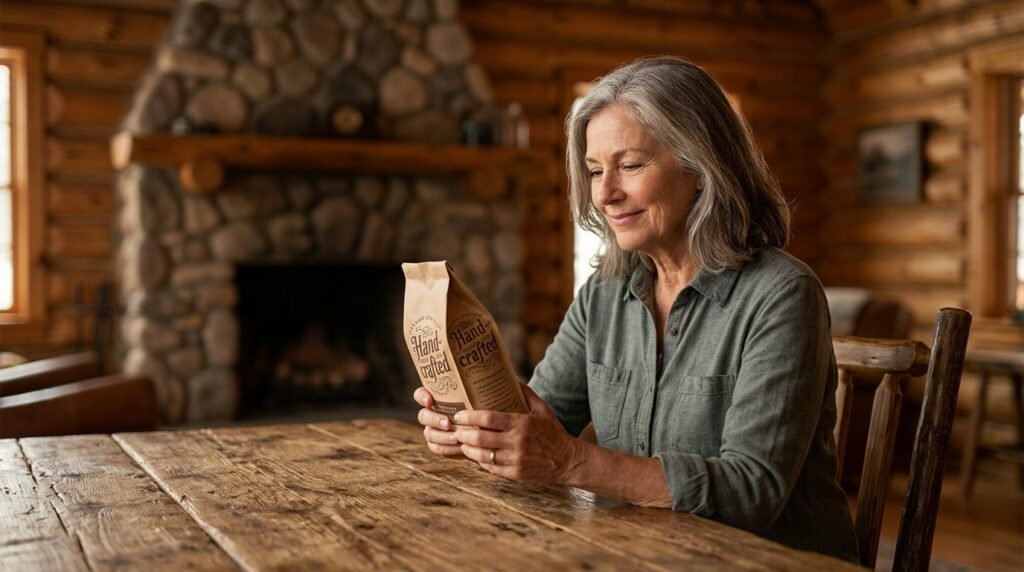
Companies spend millions of dollars designing packaging that bypasses your logical brain and appeals directly to your emotions. They use rustic fonts to make you feel like the coffee was hand-crafted in a small cabin. They use minimalist, sleek bags to make you feel like you are buying a luxury lifestyle product.
They also rely heavily on meaningless buzzwords. Words like “Gourmet,” “Premium,” “Artisan,” and “Master Crafted” hold absolutely no legal or agricultural weight. Anyone can print those words on a bag of terrible coffee.
For years, I fell for this illusion. I let the graphic designers dictate what I drank.
I realized that if I wanted to stop wasting my money, I had to completely ignore the front of the bag. I needed to turn the package around and look for hard, objective data. This shift in consumer behavior is exactly Why I Started Reading Labels Before Buying Coffee Beans. I had to learn to separate the marketing fluff from the actual agricultural facts.
Treating Coffee Like Electronics
Think about how you buy a new television or a new smartphone.
You rarely walk into an electronics store, point to the first shiny box you see, and hand over your credit card. You read reviews. You look up the specifications. You compare screen resolutions, battery life, and processing speeds. You want to know exactly what you are investing your money in.
I decided to start treating my coffee purchases with that exact same level of scrutiny.
Specialty coffee is not cheap. When you are paying a premium price for a 12-ounce bag of artisan roasted beans, you are making an investment in your morning routine. Blindly clicking “Add to Cart” is a fantastic way to end up with a flavor profile you actively dislike.
Before I buy a new bag of coffee today, I treat it like a research project. I pull up the roaster’s website, grab a cup of water, and spend at least fifteen minutes reading the offering sheets. I look for specific, detailed information that tells the true story of the bean.
Researching the Origin Story
The very first thing I read about is the geography.
In the past, I would just see a country name like “Colombia” or “Brazil” and assume that was enough information. But entire countries do not produce a single, uniform flavor.
When I read a good coffee description now, I look for the specific region. I look for the name of the nearest town. Most importantly, I look for the exact name of the farm or the washing station where the coffee was processed.
If a roaster provides the name of the actual farmer who grew the crop, that is a massive green flag. It proves transparency. It shows that the roaster has a direct, respectful relationship with the agricultural side of the supply chain. If the roaster just calls it a “South American Blend” and provides no other details, I immediately close the tab and take my money elsewhere.
Reading about the specific origin connects you to the earth. It makes the beverage deeply personal. You stop drinking a brand, and you start drinking a specific harvest from a specific family.
The Altitude Equation
While reading the origin details, I always hunt for a specific number: the elevation.
You will often see this listed as MASL (Meters Above Sea Level). Before I started reading about coffee biology, I thought this was just a pretentious piece of trivia. Why would anyone care how high up the mountain the farm was located?
I soon learned through my reading that altitude is the ultimate flavor predictor.
Coffee plants grown at high elevations face harsh conditions. The nights are cold, which slows down the ripening process of the coffee cherry. This agonizingly slow maturation allows the seed to pack in incredibly complex sugars and bright, vibrant acids.
If I am reading a description and I see the coffee was grown at 1,800 MASL, my brain immediately knows what to expect. I know the coffee will likely be dense, floral, and feature a sparkling, tea-like acidity.
If I see the coffee was grown at a lower altitude, like 1,000 MASL, I know the ripening process was much faster. The resulting cup will be smoother, milder, and likely feature heavy notes of chocolate and roasted nuts.
By simply reading a four-digit number, I can predict the entire character of the beverage before I even boil the water.
Unlocking the Processing Methods
Perhaps the most valuable reading I ever did involved the post-harvest processing of the coffee cherry.
This is the step that happens immediately after the fruit is picked from the tree, and it alters the final flavor more drastically than almost any other variable. If you don’t read up on how a coffee was processed, you are playing a very dangerous game of flavor roulette.
I spent hours online digging into What I Learned About Coffee Processing Methods, and it completely changed my buying habits.
I learned that “Washed” coffees have the fruit stripped away immediately. They taste clean, crisp, and highly structured. This is the classic coffee experience.
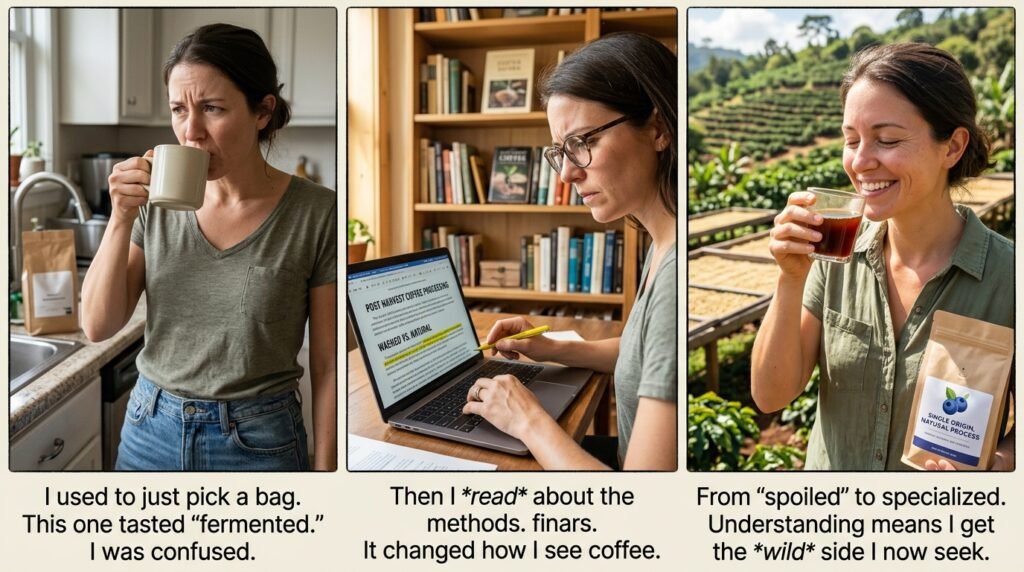
But I also read about “Natural” processed coffees, where the entire fruit is left to dry in the sun like a raisin. The sugary fruit ferments and soaks directly into the seed. These coffees taste wild, heavy, and aggressively fruity.
Before I learned to read the fine print, I accidentally bought a naturally processed coffee and thought it had gone bad because it tasted like fermented blueberry wine. Once I actually read the science behind the method, I understood it. Now, I actively seek out natural coffees when I want a crazy, fruit-forward weekend brew. Reading removed my confusion and replaced it with appreciation.
The World of Plant Varieties
The deeper you read into coffee, the more granular the information becomes. Eventually, you move past the processing method and start reading about the actual genetics of the plant itself.
Just like there are hundreds of different types of apples in a grocery store, there are hundreds of different botanical varieties of the coffee plant.
When I read a roaster’s website, I look for words like Bourbon, Typica, Caturra, or Pacamara.
I remember reading an incredible article about the native “Heirloom” varieties growing wild in the high-altitude forests of East Africa. The article described how these ancient, uncultivated plants produced flavors that didn’t exist anywhere else on earth. The sheer romance and history of those wild genetics captivated me.
Reading that single article was the sole reason I finally decided to seek out those specific beans. It was the direct inspiration for The Day I Explored Ethiopian Coffee for the First Time. When I finally brewed them, I could taste the wild, floral jasmine notes I had read about. The reading made the physical tasting infinitely more rewarding.
Understanding the Roaster’s Philosophy
Reading about the beans is crucial, but reading about the person cooking the beans is equally important.
Every coffee roaster has a specific philosophy. Some believe in pushing the roast very dark to create a bold, classic diner-style cup. Others believe in roasting as lightly as possible to preserve the delicate, acidic fruit notes of the farm.
Neither approach is inherently wrong, but they produce completely opposite results.
Before I buy from a new company, I always click on their “About Us” or “Roasting Philosophy” page. I read their manifesto. I want to know how they approach thermal energy.
If their website talks extensively about “bold, rich, traditional European roasts,” I know their coffee will likely be too dark and ashy for my personal palate. I politely move on.
If they write passionately about “highlighting origin characteristics” and “omni-roasting for filter,” I know we speak the same language. I confidently add a bag to my cart.
Reading their philosophy saves me from the frustration of brewing a cup that completely misaligns with my personal preferences.
The Anticipation Builds the Flavor
There is a psychological benefit to doing all of this reading that goes far beyond simply picking a good product.
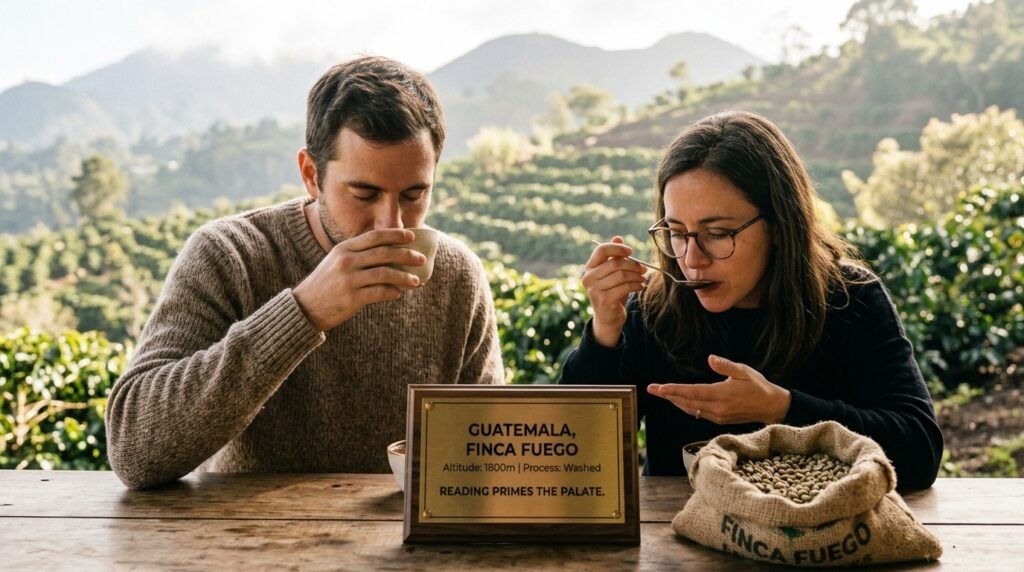
When you spend twenty minutes reading about a specific farm in Guatemala, learning about the volcanic soil, the high-altitude climate, and the meticulous washing process, you build a massive amount of anticipation.
You aren’t just waiting for a box of brown beans to arrive in the mail. You are waiting for the culmination of an incredible agricultural story.
When that package finally arrives, and you cut open the bag, the experience is elevated. You smell the dry fragrance, and your brain immediately connects it to the words you read on the screen days prior. When you take the first sip, you actively search for the flavor notes the roaster described.
The reading primes your palate. It prepares your brain to receive complex information. The coffee genuinely tastes better because you understand the context of its creation.
Becoming an Active Participant
For most of my life, I was a passive coffee consumer. I let the grocery store shelves dictate what I drank. I let flashy graphic design trick me into spending money on inferior products. I accepted whatever bitter liquid ended up in my mug.
That terrible bag of tourist trap coffee from the airport gift shop was the final straw.
I decided that if I was going to drink this beverage every single day of my life, I owed it to myself to actually understand it.
Reading about coffee transforms you from a passive consumer into an active participant. It turns a boring grocery chore into a fascinating global scavenger hunt. You start hunting for rare processing methods. You start tracking the harvest seasons of different continents. You start seeking out specific plant genetics.
If you currently feel like you are stuck in a coffee rut, or if you feel like you are spending good money on beans that constantly disappoint you, the solution is not to buy a more expensive coffee machine.
The solution is to open a new tab on your browser.
Find a highly respected specialty roaster online. Click on one of their single-origin offerings. Ignore the price tag for a moment, and just read the text below the photo. Read about the farmer. Read about the altitude. Read about the processing method.
Let the story of the bean capture your imagination before you ever let the flavor touch your tongue. Once you start reading the fine print, the marketing illusions disappear, and the true, beautiful complexity of the coffee world finally opens up to you.
