
I build and maintain digital websites in Rio de Janeiro. When a client calls me to report a broken webpage, I never look at their computer monitor. I know the physical screen is not the problem. I immediately check the foundational code on the server. If the core data is corrupted, the final visual output will always be completely broken.
I apply this strict diagnostic logic to my work every single day. Yet I completely ignored this logic in my own kitchen for years.
I was highly frustrated with my morning coffee routine. I owned a heavy manual burr grinder. I used a precision digital scale. I bought expensive bags of light roasted Ethiopian Guji beans. I measured my variables perfectly. But the coffee constantly tasted dull. It was flat, chalky, and lacked the vibrant fruit notes printed on the bag.
I blamed the beans. I blamed my pouring technique. I blamed my grinder. I was looking at the computer monitor instead of checking the server. I completely ignored the foundational data. How changing my coffee water made a difference completely rewrote the chemistry in my kitchen. It taught me that coffee is merely a reflection of the liquid solvent you use to extract it.
The Mathematical Reality
To understand why the water matters, you have to look at the strict mathematics of the beverage.
When you brew a glass V60 pour over, you are performing a chemical extraction. You pour hot water over crushed organic seeds. The hot water dissolves the complex sugars, acids, and lipids hidden inside the cellular walls.
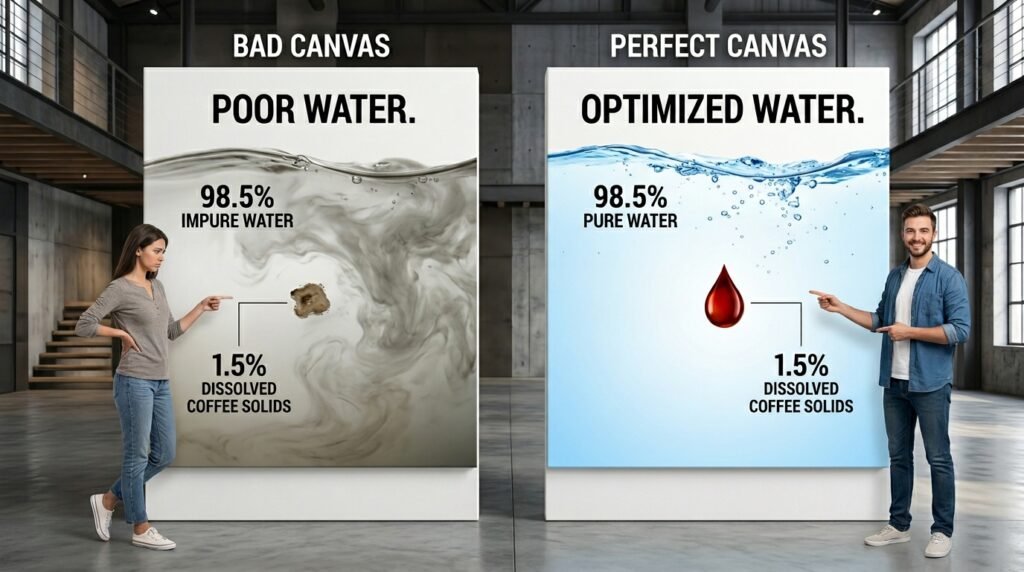
If you analyze the final liquid sitting inside your ceramic mug, the math is incredibly humbling. The actual dissolved coffee material only accounts for about one and a half percent of the total volume.
The other ninety eight and a half percent of the beverage is just water.
I was spending massive amounts of money and physical energy to optimize one percent of the cup. I was completely ignoring the other ninety eight percent. You cannot hide bad water behind expensive coffee beans. The water is the blank canvas. If the canvas is dirty, the painting is ruined.
The Problem with the Tap
My first massive mistake was using municipal tap water.
The city water in Rio de Janeiro is heavily treated to ensure it is safe to drink. The treatment facilities pump massive amounts of chlorine into the system to kill dangerous bacteria. This is great for public health. It is terrible for culinary chemistry.
Chlorine is an incredibly aggressive chemical. It possesses a sharp, heavy, industrial odor.
When you boil chlorinated water, that chemical smell does not disappear. It amplifies. If you pour heavy chlorine over delicate Ethiopian coffee grounds, the chemical instantly attacks the volatile aromatic compounds. It incinerates the fragile floral notes. The resulting beverage smells like a swimming pool and tastes like bitter medicine.
The Carbon Filter Upgrade
I realized the chlorine was destroying my expensive beans. I needed to sanitize the solvent.
I went to a local supermarket and bought a standard plastic water filter pitcher. It used a thick activated carbon block to trap the heavy chemicals. I filled the pitcher from the sink and placed it in my refrigerator.
The next morning, I used the filtered water in my gooseneck kettle. The improvement was immediate.
The harsh chemical smell was completely gone. The water boiled cleanly. The coffee tasted significantly better. I could finally perceive some of the underlying sweetness in the African beans.
The Lingering Flatness
The carbon filter was a massive upgrade, but the coffee was still not perfect.
The bitter medicine taste was gone, but the beverage still felt heavy. It felt chalky on my tongue. The bright, juicy lemon acidity that I expected from an Ethiopian coffee was completely missing. The flavor was muted and completely flat.
I knew my pouring technique was correct. I knew the water temperature was precise.
Finding the root cause of this dull flavor was exactly The Small Change That Made My Coffee Less Bitter because it forced me to look past the heavy chemicals and examine the microscopic minerals. The carbon filter removed the chlorine, but it did not change the foundational hardness of the water.
The Science of Hard Water
As water travels through the earth before reaching the municipal supply, it absorbs heavy minerals from the rocks and the dirt. The two most important minerals for coffee brewing are calcium and magnesium.
The coffee industry refers to the concentration of these minerals as water hardness.
You actually need a specific amount of calcium and magnesium in your brewing water. These minerals act exactly like microscopic chemical hooks. When the hot water enters the coffee bed, these tiny hooks grab onto the complex fruit sugars and pull them out of the cellular walls.
Without these mineral hooks, the water is completely powerless. It cannot extract the flavor.
The Danger of the Overload
The problem is that most municipal tap water contains an extreme excess of these minerals. The water is entirely too hard.
If you have too many chemical hooks in your water, the extraction becomes completely chaotic. The solvent acts too aggressively. It pulls out the sweet sugars, but it also rips out the harsh, dry, aggressive tannins hidden deep inside the dark core of the coffee seed.
This massive mineral overload creates a heavy, chalky texture on your palate. It actively crushes the delicate organic acids.
When I brewed a bright, citrusy coffee with my heavily mineralized filtered water, the citrus flavor disappeared entirely. The heavy minerals smothered the delicate acidity. The resulting liquid tasted muddy and uninteresting.

The Silent Killer of Acidity
There is a third chemical compound hidden in tap water that completely ruins specialty coffee. It is called bicarbonate.
Bicarbonate acts as a chemical buffer. Its primary job is to neutralize acid. Municipal water facilities use bicarbonate to prevent the water from corroding the underground metal pipes.
Coffee is a naturally acidic beverage. The bright, vibrant flavors of peach, strawberry, and lemon are entirely dependent on organic acids.
If your brewing water contains high levels of bicarbonate, the water will actively attack and neutralize the acid in your coffee cup. It literally deletes the bright flavors from the liquid. You can buy the most acidic, vibrant Kenyan coffee in the world, but if you brew it with high bicarbonate water, it will taste like dull cardboard.
Seeking the Blank Canvas
I realized my carbon filter pitcher was not enough. It removed the bad odors, but it could not remove the extreme mineral hardness or the heavy bicarbonate buffer.
I needed total control over the chemistry. I needed a completely blank canvas.
I went to a local pharmacy. I bought a massive plastic jug of pure distilled water. Distilled water is created by boiling water into steam and catching the condensation. The heavy minerals and chemicals cannot travel inside the steam. The resulting liquid is absolutely pure. It contains zero calcium, zero magnesium, and zero bicarbonate.
The Danger of Pure Distillation
I took the pure distilled water home. I poured it into my stainless steel kettle. I boiled the water and brewed my Ethiopian coffee.
I took a sip of the resulting beverage. It was completely terrible.
The coffee tasted entirely hollow. It had absolutely no body. It tasted like weak, sour tea.
I had made a massive chemical error. Because the distilled water contained zero minerals, it contained zero chemical hooks. The hot solvent was completely powerless. It washed over the coffee grounds but failed to pull the heavy sugars out of the cellular walls.
The water was too clean. It was a blank canvas, but I had absolutely no paint.
Rebuilding the Chemistry
I now understood the strict chemical boundaries. Tap water has too many minerals. Distilled water has zero minerals. The perfect coffee water exists exactly in the middle.
I had to become a chemist in my own kitchen. I needed to take the pure, blank canvas of the distilled water and manually add the exact correct amount of mineral hooks back into the liquid.
I went online and found specialized coffee mineral packets.
These tiny packets are designed specifically for the specialty coffee industry. They contain highly precise, laboratory grade measurements of magnesium sulfate, calcium citrate, and a very tiny amount of sodium bicarbonate.
The Custom Formulation
The mineral packets arrived at my apartment. The instructions were incredibly simple.
I took a fresh, one gallon jug of pure distilled water. I opened one tiny paper packet of the mineral powder. I poured the white powder directly into the gallon jug. I screwed the cap back on and shook the plastic jug violently for thirty seconds.
The white powder dissolved completely. The liquid looked entirely clear.
I had successfully built my own custom brewing water. It was completely free of chlorine. It had the exact amount of magnesium hooks required to pull out the sweet fruit sugars. It had a very low bicarbonate buffer, ensuring the delicate acids would survive the extraction.
The Thermal Efficiency
The next morning, I was ready to test the custom water. I poured the remineralized liquid into my electric gooseneck kettle.
I immediately noticed a physical difference during the heating phase. When I used hard tap water, the surface of the water always looked slightly cloudy as it approached the boiling point. A thin, white film of calcium would form on the surface.
The custom water boiled completely clear. It looked like liquid glass.
Mastering this specific thermal clarity was exactly How I Discovered the Right Water Temperature for Coffee because the clean water carried the thermal energy much more efficiently. Without the heavy mineral load slowing it down, the heat transfer into the coffee grounds would be incredibly precise.
The Visual Bloom
I ground fifteen grams of my dense Ethiopian Guji beans. I placed my glass V60 cone on the digital scale. I poured forty grams of the custom boiling water over the dry coffee bed.
The visual reaction of the bloom phase was spectacular.
Because the water chemistry was perfectly balanced, the solvent penetrated the dry coffee particles instantly. There was absolutely zero resistance. The coffee bed erupted. Massive bubbles of carbon dioxide gas formed and popped across the surface. The dark slurry swelled into a massive, highly active dome.
The rising steam carried absolutely zero chemical odors. The only smell in my kitchen was the explosive, vibrant aroma of sweet peaches and blooming jasmine flowers.
Tasting the Resolution
I finished the extraction. The red liquid drained perfectly through the paper filter. I carried my ceramic mug to my computer desk.
I waited three minutes for the temperature to drop. I took a slow, deliberate sip.
My brain completely stalled. The flavor transformation was absolute. The chalky, heavy, flat texture was completely gone. The liquid felt incredibly crisp, light, and silky on my palate.
A massive, brilliant wave of sharp lemon acidity hit the front of my tongue. It was not sour. It was perfectly sweet and juicy. That citrus note melted seamlessly into a heavy, syrupy peach sweetness. The floral jasmine aroma lingered in the back of my throat long after I swallowed.
The Realization of Quality
I sat at my desk and realized I was finally tasting the true potential of the coffee bean.
I had been buying premium African coffee for months, but I had never actually experienced it. Experiencing this absolute sensory clarity reminded me of The Day I Explored Ethiopian Coffee for the First Time because it felt like an entirely new beverage.
The custom water acted like a high resolution computer monitor. It displayed the digital data of the coffee bean perfectly. There were no smudges on the screen. There was no static noise masking the code. The magnesium hooks pulled the exact right flavors, and the low buffer allowed the vibrant acids to shine brilliantly.
Protecting the Hardware
The massive flavor upgrade was worth the effort entirely. But the custom water provided a massive secondary benefit that saved me money.
If you boil hard tap water inside an expensive stainless steel kettle or an espresso machine, the heavy minerals slowly bake onto the internal metal walls. Over time, this creates a thick, crusty white layer of calcium scale.
This scale ruins the equipment. It acts like a thermal insulator, preventing the water from heating evenly. If the scale flakes off, it ruins the mechanical valves inside the machine.
Because my custom water uses highly specific, balanced minerals, it produces absolutely zero calcium scale. The inside of my expensive gooseneck kettle remains perfectly spotless and shining. I never have to buy harsh chemical descaling powders. The pure water protects my financial investment permanently.
The Ultimate Diagnostic Tool
Using custom water completely removes the biggest variable from the kitchen.
When my coffee tastes bitter or sour now, I never blame the water. I know the solvent is mathematically perfect. I know the foundation is secure.
This forces me to look at my physical mechanics. If the coffee is sour, I know my grind size is too coarse. If the coffee is bitter, I know my water temperature is too high. The clean water acts as the ultimate diagnostic tool. It isolates my human errors perfectly.
Fix Your Foundation
If you are currently frustrated with your morning coffee routine, stop looking at expensive new grinders. Stop buying different bags of exotic coffee. Stop changing your pouring technique.
Walk into your kitchen and look at your sink.
If you are turning the tap and pouring municipal water directly into your kettle, you are actively destroying your beverage. You are painting a delicate masterpiece with dirty swamp water.
Go to the store. Buy a gallon of pure distilled water. Order a box of specialized coffee mineral packets online. Empty the powder into the jug and shake it.
When you finally brew a cup of coffee using a perfectly balanced, mathematically calculated solvent, the heavy fog will lift from your palate. You will stop tasting the harsh chemicals of the city pipes, and you will finally taste the vibrant, sweet reality of the agricultural dirt. Fix your water, and you will permanently fix your coffee.
