
The delivery driver arrived at my apartment in Rio de Janeiro on a humid Tuesday afternoon. He handed me a small cardboard box. I carried it into my kitchen and sliced the packing tape open. Inside the box were three bags of highly expensive, light roasted Ethiopian coffee.
I was incredibly excited. I love Ethiopian Yirgacheffe. I love the complex floral aromas and the bright peach acidity.
But as I placed the three bags on my kitchen counter, my excitement quickly turned into a strange kind of culinary anxiety. I live with my partner, but I am the only person in the house who drinks specialty coffee. I consume exactly fifteen grams of coffee every single morning.
I did the math in my head. Each bag contained two hundred and fifty grams. Three bags equaled seven hundred and fifty grams of coffee. At my current consumption rate, it would take me exactly fifty days to finish the entire supply.
That timeline was a complete disaster. The simple trick that helped me keep my coffee fresh longer completely cured this specific anxiety. It allowed me to defeat the biological clock of the roasted seed, protect my financial investment, and enjoy perfect clarity on day fifty.
The Ticking Biological Clock
Coffee is a highly sensitive agricultural product. It is not a nonperishable canned good.
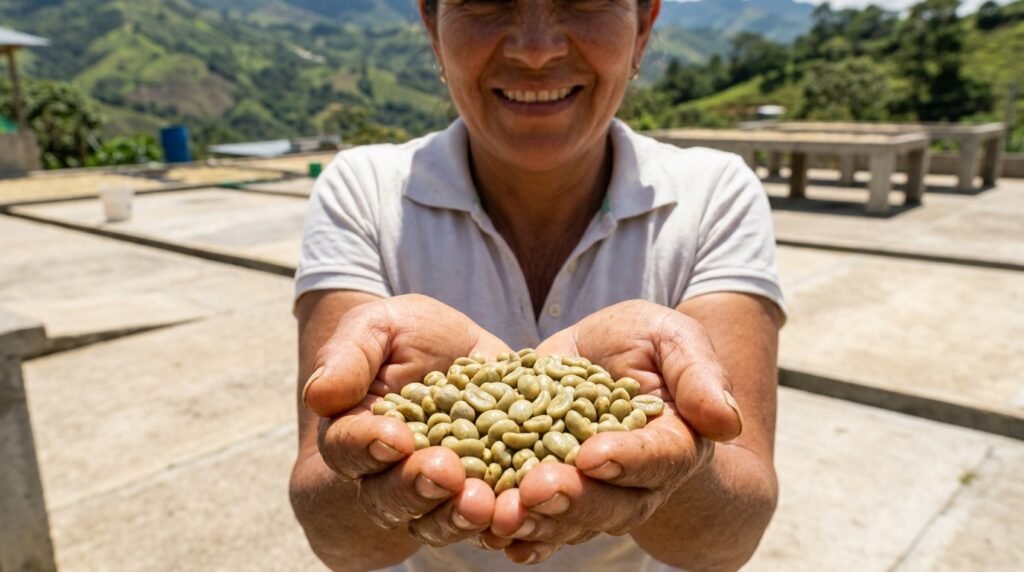
During the roasting process, the raw green seed undergoes intense chemical changes. The extreme heat creates hundreds of volatile aromatic compounds. These compounds are responsible for the beautiful smells of sweet fruit, dark chocolate, and blooming jasmine.
The moment the coffee leaves the roasting drum, a biological timer starts ticking.
The roasted seed is essentially a tiny, fragile vault. For the first few days, the vault remains tightly sealed. The coffee tastes vibrant and perfectly articulate. But as time passes, the vault slowly degrades. The volatile aromatic compounds evaporate into the air.
The Enemy of Oxygen
Evaporation is only the first part of the problem. The true enemy of roasted coffee is oxygen.
When oxygen interacts with the natural lipids and heavy oils inside the coffee bean, a violent chemical reaction occurs. This reaction is called oxidation. It is the exact same chemical process that causes a sliced apple to turn brown and soft on your kitchen counter.
Oxidation completely destroys the complex fruit sugars. It replaces the bright acidity with a flat, dull, woody flavor.
Realizing this rapid biological decay was exactly The Day I Finally Understood Why Fresh Coffee Beans Matter because I saw my expensive investment slowly dying on the shelf. I knew that by the time I opened the third bag of Ethiopian coffee, the oxygen would have completely incinerated the delicate floral notes.
The Problem with the Environment
The oxidation process is heavily accelerated by environmental factors. Heat, light, and humidity all speed up the biological decay.
My kitchen in Rio de Janeiro has an abundance of all three variables. The climate is incredibly hot. The ambient humidity is massive. My kitchen windows let in bright tropical sunlight. It is the absolute worst possible environment for storing a sensitive agricultural product.
I needed to find a way to halt the chemical degradation completely. I needed to freeze time.
The Failure of the Vacuum Canister
My first attempt to solve the storage problem was a massive failure. I went online and bought an expensive vacuum sealed coffee canister.
The canister featured a heavy lid with a built in mechanical pump. The instructions told me to pour my coffee beans inside, place the lid on top, and pump the handle repeatedly to suck all the air out of the container.
The logic seemed perfect. If oxygen causes oxidation, removing the oxygen should stop the decay.
The logic was actually completely broken. The vacuum canister did more harm than good. When you forcefully pump the air out of a sealed container, you create a negative pressure environment. That negative pressure physically sucks the delicate volatile aromatics out of the coffee beans.
Every time I opened the canister to get my morning dose, I smelled a massive, explosive wave of beautiful coffee aroma. I thought this was a good sign. I was wrong. That smell was the flavor leaving the beans permanently. The resulting coffee in my mug tasted incredibly flat.
Shifting the Strategy
I threw the expensive vacuum canister into the bottom of my cabinet. I had to rethink my entire strategy.
Grasping this delicate chemical balance was exactly How I Learned Coffee Storage Affects Flavor and it forced me to look for a different scientific approach. If I could not remove the oxygen safely, I had to slow down the molecular activity.
In the world of science, there is only one reliable way to slow down molecular activity. You have to lower the temperature drastically.
I looked at my kitchen freezer. I use the freezer to preserve meat, vegetables, and bread for months at a time. The extreme cold halts biological decay perfectly. I wondered why I was not using this exact same appliance to protect my expensive coffee beans.
The Danger of the Cold
There is a very persistent myth in the specialty coffee industry. Many professionals tell you to never put your coffee in the freezer.
They claim the freezer ruins the flavor. They claim it makes the coffee taste like frozen onions or old ice.
They are partially correct, but they are blaming the wrong variable. The cold temperature does not ruin the coffee. The actual enemy inside the freezer is moisture. The enemy is condensation.
The Mechanics of Condensation
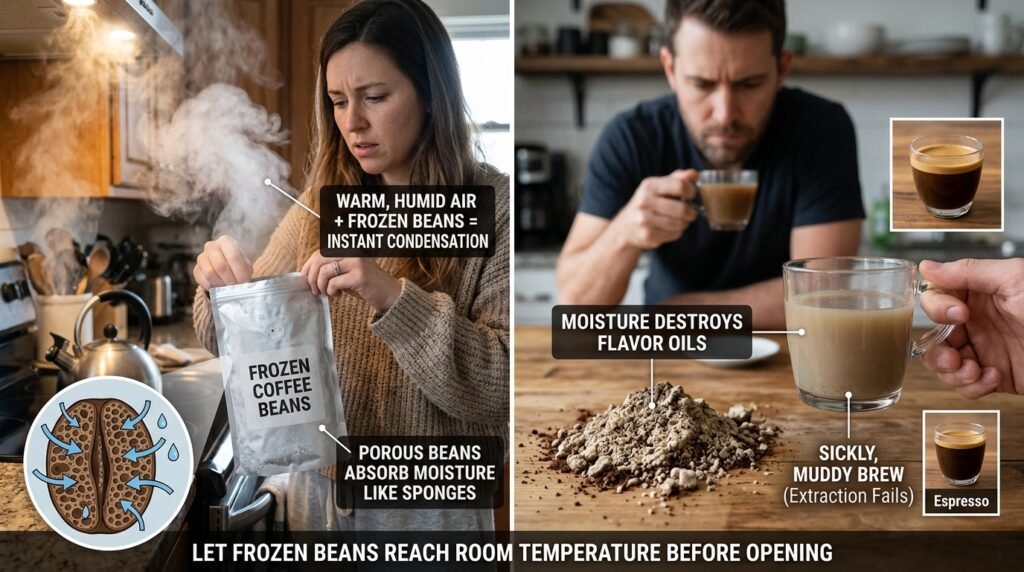
Coffee beans are highly porous. They act like tiny, dry sponges. They will aggressively absorb any moisture they touch.
If you take a bag of coffee out of the freezer and immediately open it in a humid kitchen, physics takes over. The freezing cold beans instantly collide with the warm, humid air. Massive amounts of liquid water immediately condense directly onto the surface of the beans.
The dry sponges soak up this external water instantly.
This moisture completely destroys the cellular structure of the seed. It causes the internal oils to degrade rapidly. If you grind those wet beans, the extraction will fail. The coffee will taste muddy, sour, and completely ruined.
The Secret of the Seal
The trick to freezing coffee is completely bypassing the condensation phase. You have to isolate the beans from the ambient air entirely.
I took the second and third bags of my Ethiopian Yirgacheffe. I had not opened them yet. The original paper bags were completely sealed by the roaster.
However, specialty coffee bags feature a small plastic circle on the front. This is a one way degassing valve. It is designed to let carbon dioxide out of the bag without letting oxygen in.
In a freezer environment, this valve is a massive vulnerability. As the temperature fluctuates, the valve can accidentally draw humid freezer air inside.
The Tape Trick
I grabbed a roll of heavy clear packing tape. I cut a small square of tape and placed it directly over the plastic degassing valve on the front of the coffee bag. I pressed the tape down hard to ensure a perfect, airtight seal.
The original bag was now completely waterproof and airtight.
To be absolutely safe, I placed the taped bag inside a heavy duty plastic ziplock freezer bag. I squeezed all the excess air out of the plastic bag and zipped it tightly shut.
I placed this double sealed package into the deepest, coldest corner of my kitchen freezer. I made sure to keep it far away from any strong smelling foods like garlic or frozen fish.
The Deep Freeze Suspension
Implementing this deep freeze technique was exactly What I Learned About Storing Coffee in the Freezer and it completely eliminated my buying anxiety. I had successfully placed the biological decay on pause.
The extreme cold slowed the molecular activity of the coffee seeds down to a near halt. The complex fruit sugars and the delicate floral oils were perfectly locked in cryogenic suspension. The double airtight seal completely protected the porous seeds from the ambient moisture of the freezer.
I left those bags in the freezer for four entire weeks while I slowly consumed the first bag on my counter.
The Vital Thawing Process
When I finally finished the first bag, I was ready to retrieve the frozen supply. This is the most critical step of the entire process. If you rush this step, you ruin everything.
I opened the freezer and pulled out the heavy plastic ziplock bag. The coffee inside was freezing cold.
I placed the sealed bag directly onto my kitchen counter. I did not open the ziplock. I did not open the paper coffee bag. I did not touch the clear packing tape over the valve.
I walked away and went to sleep.
Defeating the Condensation
I let the sealed package sit on the kitchen counter for twelve full hours overnight.
During the night, the frozen coffee beans slowly returned to room temperature. Because the outer bags remained completely sealed, the warm, humid air of Rio de Janeiro could not touch the cold seeds.
The condensation formed entirely on the outside of the plastic ziplock bag. The actual coffee beans inside remained completely bone dry.
When I woke up the next morning, I wiped the external water off the plastic bag with a towel. Only then did I unzip the outer seal. I removed the paper coffee bag. I peeled the clear packing tape off the degassing valve. I finally ripped the main seal of the bag open.
The Sensory Reward
The result was absolutely spectacular.
I held the open bag to my nose and took a deep breath. A massive, explosive wave of sweet peach and bright jasmine hit my brain instantly. The aroma was incredibly powerful. It smelled exactly like the day it was roasted.
The extreme cold had perfectly preserved every single volatile compound. The heavy, dull smell of cardboard and oxidation was completely absent.
I weighed exactly fifteen grams of the thawed beans. I ground them in my manual burr grinder. The room filled with the vibrant scent of African dirt. I brewed my standard glass V60 pour over and took a sip.
The flavor was completely pristine. The sharp lemon acidity and the heavy floral finish were flawless. The freezer trick had worked perfectly.
The Financial Freedom
This simple storage trick completely changes the economics of specialty coffee.
Shipping costs for high end coffee are incredibly expensive. If you buy one single bag of coffee online, the shipping fee often doubles the total price of the purchase. It is a massive waste of money.
To avoid the high shipping fees, you have to buy three or four bags at a time to qualify for free delivery.
Before I learned the freezer trick, I refused to buy in bulk. I knew the extra bags would go stale and turn into bitter dust before I could drink them. I was trapped paying massive shipping fees every single month.
Buying in Bulk
Now, my buying strategy is completely liberated.
If I find a brilliant roaster offering a rare, limited edition Colombian Gesha, I do not just buy one bag. I buy four bags. I get the free shipping. I save a massive amount of money.
When the box arrives, I keep one bag on my kitchen counter. I immediately tape the valves on the other three bags. I double seal them in plastic. I throw them deep into the freezer.
I can drink my daily cup of coffee at a slow, peaceful pace. I do not have to rush. I do not have to force myself to drink multiple cups a day just to beat the biological clock. I know my expensive investment is perfectly safe in the ice.
The Rules of the Freeze
If you want to use this trick, you must obey the strict rules of thermal dynamics.
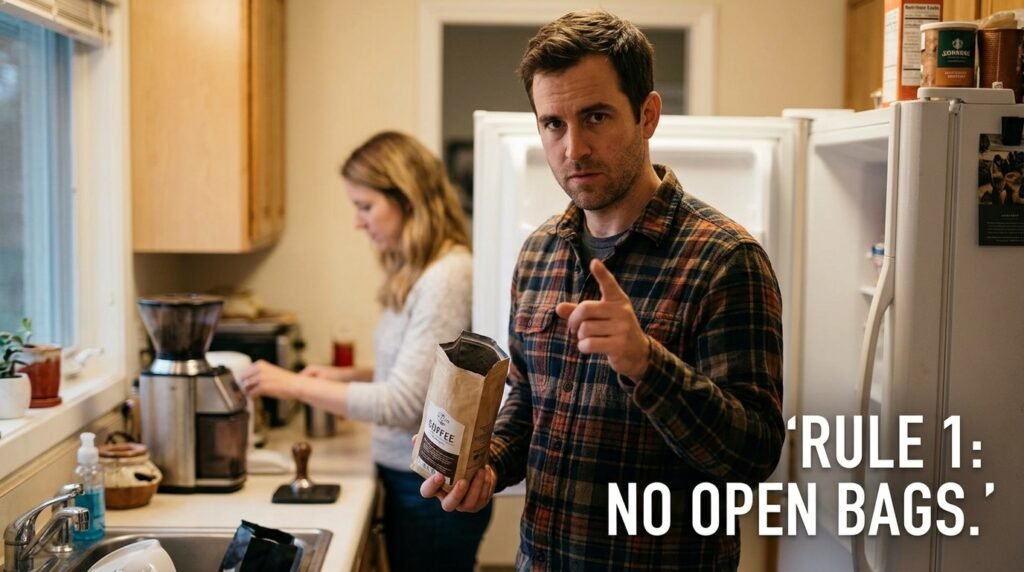
First, never put an open bag of coffee into the freezer. Once you break the original factory seal, the bag is compromised. The freezer air will get inside and destroy the beans. Only freeze completely sealed, unopened bags.
Second, tape the valve. The valve is a weak point. Seal it tightly with strong tape.
Third, and most importantly, never open a cold bag. You must let the sealed package rest at room temperature for at least twelve hours. If you open a cold bag, you will watch the moisture destroy your coffee in real time.
Reclaim Your Pantry
Look at your own coffee buying habits.
Are you constantly running out of beans because you are afraid to buy in bulk? Are you throwing stale, month old coffee into the garbage because you could not drink it fast enough? You are wasting your own money.
You already own the ultimate preservation tool. It is sitting in your kitchen right now.
Buy the bulk order. Tape the valves. Double bag the packages. Use the extreme cold to freeze the biological clock. When you finally open a bag of coffee that has been frozen for two months and experience the explosive, pristine aroma of a fresh roast, you will completely stop worrying about shelf life. You will finally have total control over your culinary inventory.
