
I was wandering around a new neighborhood on a quiet Sunday morning. I walked past a small cafe and decided to go inside to buy some coffee for my house. I did not want a cup of brewed coffee. I just wanted a bag of whole beans for my kitchen.
I looked at the retail shelf near the cash register. I picked up a simple brown paper bag.
The label was very minimal. It simply said “Ethiopia Sidamo” and listed tasting notes of peach, jasmine, and black tea. I paid for the bag, walked back to my apartment, and placed it on my kitchen counter.
Up until that Sunday, I viewed coffee strictly as a raw material. I thought coffee beans were just naturally brown seeds that grew on trees. I knew they had to be cooked in an oven, but I viewed that cooking process as a simple, automated factory chore. I assumed you just put the seeds in a hot machine until they turned brown.
I opened the bag of Ethiopian coffee. The first bag of coffee beans that made me curious about roasting completely destroyed my simplistic worldview. It forced me to realize that the person operating the roasting machine is actually a highly skilled chef, and the oven dictates the entire reality of the cup.
The Visual Shock of the Light Roast
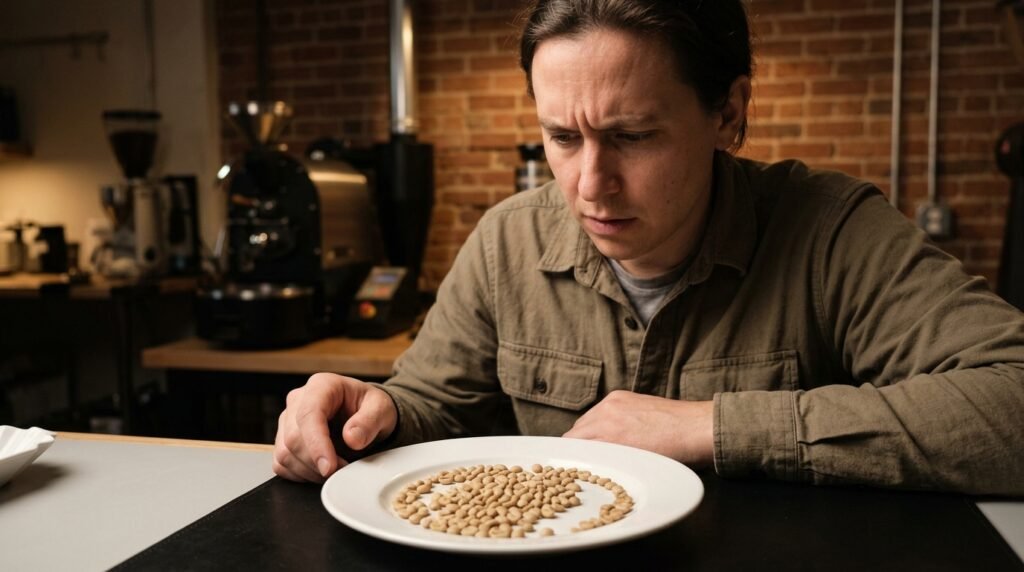
I reached into the brown paper bag and pulled out a handful of the Ethiopian beans. I poured them onto a white ceramic plate to look at them closely.
I was immediately confused. These beans looked entirely different from the commercial coffee I usually bought.
My usual beans were large, smooth, and pitch black. They were always covered in a thick, wet layer of shiny oil. They left dark greasy smudges on my hands.
The Ethiopian beans on the plate were completely matte. There was absolutely zero oil visible anywhere on their surface. More importantly, they were not black. They were a pale, muted tan color. They looked like dry peanuts. They were also incredibly tiny and chaotic in shape.
I actually wondered if the bag was defective. I wondered if the roaster had forgotten to finish cooking them.
The Physical Density Test
I decided to brew them anyway. I weighed out twenty grams of the pale beans on my digital scale. I poured them into the hopper of my manual hand grinder.
I grabbed the metal handle and started turning. My arm immediately met massive physical resistance.
Normally, my hand grinder sliced through dark, oily coffee beans in a matter of seconds. They felt brittle and fragile. These light Ethiopian beans felt like solid gravel. The handle violently jerked in my hand. I had to grip the grinder tightly against my chest and use genuine physical effort to force the ceramic burrs to spin.
This extreme physical struggle taught me a massive lesson about the roasting process. Understanding this cellular density was a critical moment for me. This struggle heavily influenced What I Discovered About Grinding Coffee Too Fine because I realized dense beans react completely differently to the burrs. The oven had barely altered their raw physical state.
The Aromatic Clue
I finally finished grinding the dense seeds. I unscrewed the bottom catch bin of my grinder and brought it up to my nose.
I took a deep breath. The aroma completely stunned me.
There was no smell of smoke. There was no smell of toasted wood or dark chocolate. The dry grounds smelled intensely of sweet spring flowers and bright citrus. It smelled like a high quality herbal tea.
I poured the fragrant grounds into my glass pour over cone. I boiled my kettle. I poured the hot water slowly over the coffee bed.
The steam rising from the glass cone amplified the floral notes a hundred times over. My entire kitchen smelled like a blooming jasmine garden. I stood there holding the kettle, absolutely mesmerized by the sweet scent. I could not comprehend how a hard, dry seed could produce such a vibrant, floral aroma.
Tasting the Genetic Soup
I let the bright ruby liquid drain into my ceramic mug. I sat at my kitchen table and took a slow sip.
The flavor perfectly matched the aroma. It was spectacularly light and crisp. A massive wave of sweet peach acidity hit the front of my palate. That bright fruitiness quickly faded into a smooth, comforting flavor of black tea. There was absolutely zero harsh bitterness anywhere in the cup.
I pulled out my phone and started researching the Ethiopian Sidamo region.
I learned that Ethiopian coffee is incredibly unique. The farmers do not plant organized rows of identical hybrid clones. They harvest wild, ancient genetics straight from the forest. This is called a landrace or heirloom variety. Every single handful of Ethiopian coffee is a chaotic genetic soup of thousands of different plant mutations.
That genetic complexity is exactly why the coffee tastes like peaches and jasmine.
The Realization of the Chef
I looked back at the pale, dry coffee beans sitting on the white ceramic plate. A massive realization hit me.
The peach and jasmine flavors were hidden deep inside the raw, green seed. The person operating the coffee roaster had to make a very specific, deliberate choice to protect those flavors.
If the roaster had left those beans in the hot oven for two more minutes, the extreme heat would have completely incinerated the delicate floral sugars. The intense fire would have burned away the bright peach acidity. The coffee would have turned black, oily, and bitter.
The roaster chose to stop the machine early. They chose to pull the beans out of the fire at the exact perfect second to preserve the genetic identity of the Ethiopian soil.
Coffee as a Cooked Ingredient
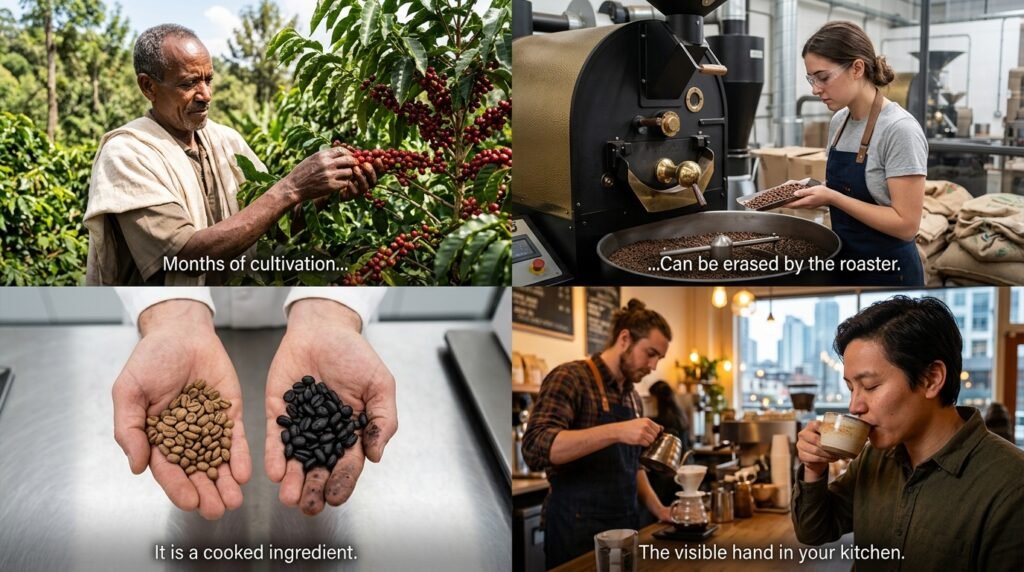
This realization fundamentally changed how I viewed the beverage. I finally understood that coffee is a cooked ingredient.
Think about a high quality, expensive piece of steak. If you take a premium cut of beef and leave it on a flaming grill for an hour, it will turn into a tough, black piece of charcoal. The quality of the raw meat does not matter if the chef destroys it with too much heat.
Coffee works exactly the same way. The farmer can spend months cultivating a beautiful, sweet coffee cherry. But if the roaster burns the seed in the drum, all of the farmer’s hard work is completely erased.
The roaster is the invisible chef in your kitchen. They dictate the absolute flavor ceiling of your morning mug.
The Chemistry of the Drum
I became completely obsessed with the chemistry of the roasting drum. I spent the next few weeks reading everything I could find about the process.
I learned about the Maillard reaction. This is the exact same chemical process that browns the crust of a loaf of bread. When the green coffee bean absorbs heat, the complex carbohydrates break down and caramelize into sugars.
I learned about the first crack. As the moisture inside the bean turns to steam, the pressure builds until the seed physically shatters open. It sounds exactly like popcorn popping.
This acoustic marker is the most critical moment in the entire roast. The roaster must decide how far to push the development after the first crack. Pushing the heat alters the organic acids. Exploring this thermal balance completely validated How I Learned Coffee Temperature Changes Flavor both in the oven and in the brewing kettle. Temperature dictates everything.
The Definition of Development
The most fascinating concept I discovered was the idea of roast development.
A light roast is not simply a bean that was cooked faster. A good roaster does not just pull the beans out early to keep them light. If you pull the beans out too early, the internal core of the seed remains raw.
A raw coffee bean tastes like grass and hay. It is highly acidic and completely lacks sweetness.
The roaster must apply enough thermal energy to fully cook the very center of the dense seed, without burning the fragile outer surface. It is an incredibly delicate balancing act. They have to push the heat perfectly to develop the sugars, but back off the heat before the sugars turn into bitter carbon.
Appreciating the Skill
Learning about this delicate balance gave me a massive amount of respect for the profession.
Coffee roasting is not an automated factory job. It requires intense sensory focus. The roaster must watch the digital temperature graphs closely. They must listen for the audible pop of the first crack. They must smell the smoke changing from a sweet hay aroma to a caramelized sugar aroma.
A single mistake of ten seconds can completely ruin a massive batch of expensive specialty coffee.
I realized I had been completely taking this skill for granted. I was complaining about the price of coffee without understanding the intense labor and scientific precision required to produce it.
The Shift in Buying Habits
This newfound curiosity completely changed my buying habits. I threw away all my generic supermarket coffee.
I realized that commercial coffee companies intentionally burn their beans. They buy cheap, defective coffee from massive industrial farms. To hide the bad flavors, they roast the beans until they are completely black and covered in oil. The extreme fire erases the defects, but it also erases any natural sweetness.
I started exclusively buying coffee from small, independent roasters who focus on light to medium profiles.
I actively search for roasters who respect the agricultural origin of the bean. Tasting a perfectly developed light roast from a skilled professional is an incredible experience. Finding a roaster who treats the bean with respect directly led to The Coffee Bean I Tried That Blew Me Away because the clarity of the flavor was absolutely undeniable.
Searching for the Date
The most important habit I developed was checking the roast date.
Because I now understood that roasting is a violent chemical reaction, I understood that the product is highly volatile. When the bean leaves the hot drum, it begins exhaling carbon dioxide gas. It begins interacting with the oxygen in the air.
Coffee is a living, breathing, degrading organic compound.
I refuse to buy any bag of coffee that does not clearly print the exact day it was roasted. If a bag only has a vague expiration date, it means the coffee has been sitting in a warehouse for six months. The delicate floral notes and complex sugars evaporated a very long time ago.
I treat coffee exactly like fresh produce. I buy it fresh, I let it rest for a few days, and I consume it within a month.
A New Layer of Enjoyment
My morning routine became vastly more enjoyable after I understood the roasting process.
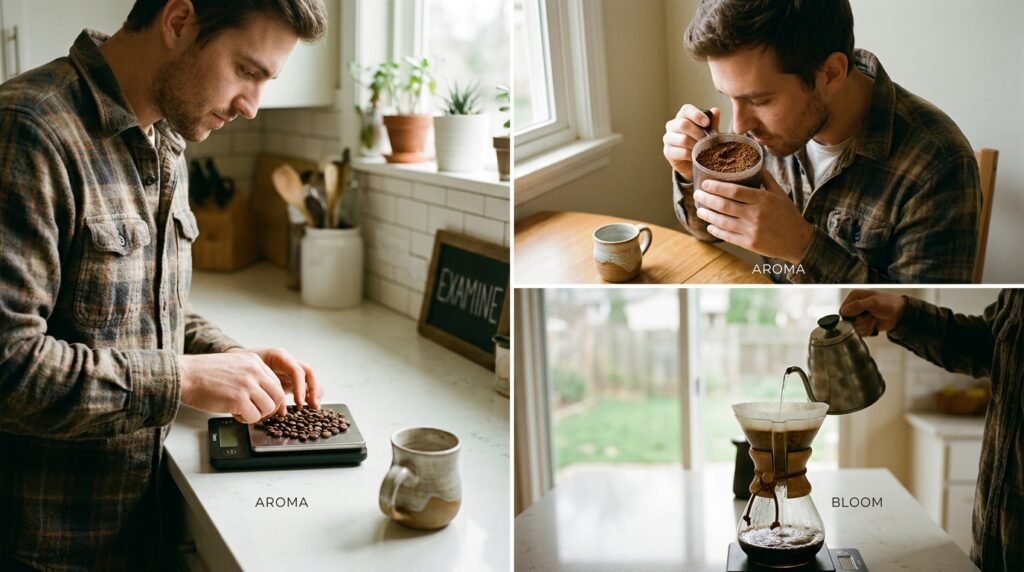
I no longer just blindly dump brown seeds into a machine. When I weigh my beans, I look at their color. I look at their surface texture. I appreciate the fact that a skilled human being stood in front of a hot, loud machine and carefully guided these specific seeds through a complex chemical transformation.
I smell the dry grounds and try to identify the specific sugars the roaster managed to caramelize. I pour the hot water and watch the bloom, knowing exactly why the trapped gas is escaping.
Look at Your Beans Tomorrow
Tomorrow morning, before you make your coffee, I want you to pause for ten seconds.
Pour a few of your whole beans into the palm of your hand. Look at them under a bright light.
Are they pitch black and covered in a thick, greasy layer of oil? If they are, you are drinking the flavor of a roasting oven. You are drinking carbon. The heat destroyed the origin.
Are they a light, matte brown color? Do they smell like fruit or flowers? If they do, you are holding a tiny piece of agricultural art. You are holding a seed that was carefully protected by a skilled professional.
Coffee is not just a caffeinated utility. It is a highly sensitive culinary ingredient. Once you become curious about the fire that cooked the seed, the mystery of the beverage disappears. You finally begin to respect the invisible chef who makes your morning mug possible.
