
I was sitting at the wooden bar of a local specialty roastery on a quiet Thursday afternoon. I am a regular at this specific shop. The head barista knows my palate perfectly. He knows I am deeply obsessed with the bright, floral coffees from the high mountains of East Africa.
He walked over to me holding a small, handleless ceramic cup and a glass decanter.
He poured a clear, ruby colored liquid into my cup. He did not show me a bag. He did not tell me the name of the farm. He simply told me he wanted me to do a blind tasting. He asked me to identify the origin based entirely on the flavor profile.
I was highly confident. I took a slow sip.
The coffee was spectacular. It felt incredibly light and crisp on my tongue. I immediately tasted notes of sweet black tea, ripe plum, and a delicate floral aroma that reminded me of jasmine. It was vibrant, clean, and beautifully complex.
I smiled. I put the cup down. I told him I was drinking a washed Ethiopian Sidamo. I told him I recognized the classic, tea like structure of the African soil.
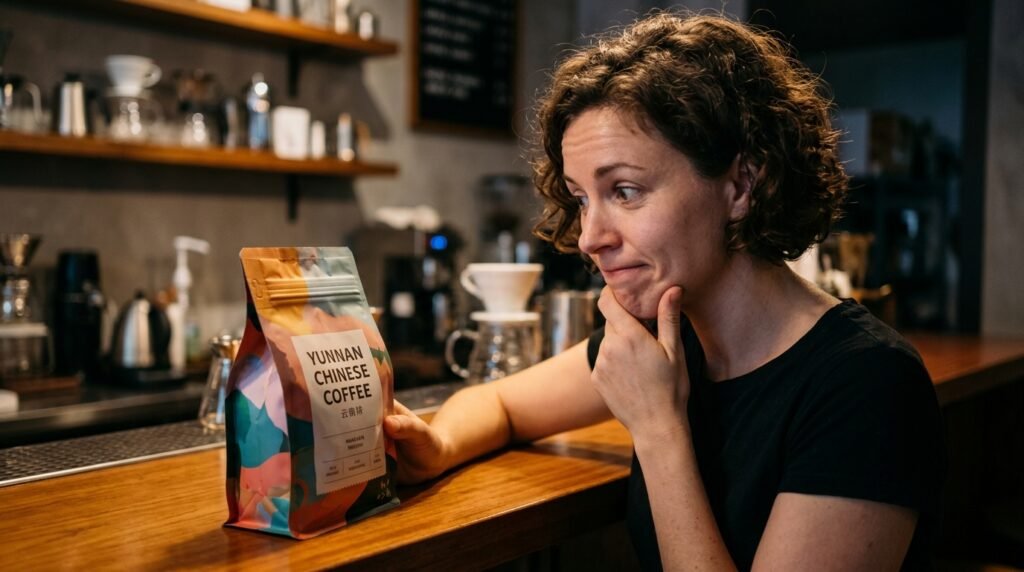
He laughed, shook his head, and reached under the counter. He pulled out the retail bag and placed it right in front of me. I stared at the label in absolute disbelief. The coffee origin that completely surprised me was printed in bold black letters. It was not from Africa. It was not from South America. It was from the Yunnan province of China.
The Arogance of the Comfort Zone
I sat at the bar staring at the bag of Chinese coffee. I felt a strange mix of embarrassment and absolute fascination.
For years, I had built a very rigid, stubborn mental map of the coffee world. I thought I knew exactly what every continent tasted like. If I wanted heavy chocolate, I bought coffee from Brazil. If I wanted earthy spice, I bought coffee from Sumatra. If I wanted bright florals, I bought coffee from Ethiopia.
I stayed firmly inside my comfort zone. I relied heavily on my familiar African varieties.
I completely ignored massive portions of the globe. I assumed that if a country was not famous for growing coffee, their coffee must be terrible. I had allowed my own geographical stereotypes to blind me to the reality of modern agriculture.
Shattering the Asian Stereotype
The biggest shock was how completely this coffee defied my expectations of the Asian coffee market.
Historically, the coffee industry associates Asia with very specific, heavy flavor profiles. Countries like Indonesia and Vietnam produce massive amounts of coffee. Due to their humid climates and specific processing traditions, those coffees usually taste incredibly dense, woody, and earthy. They lack bright acidity.
I assumed the Chinese coffee would taste exactly the same. I expected a heavy, muddy cup.
Instead, the coffee in my ceramic cup was sparkling and delicate. Discovering this hidden agricultural pocket was The Coffee Fact That Surprised Me Most This Year because it completely destroyed my preconceived notions. It proved that you cannot judge a coffee bean purely by its continent.
The Geography of Yunnan
I asked the barista to explain how China was producing coffee that rivaled my favorite Ethiopian beans.
He pulled out his phone and showed me a map of the Yunnan province. It is located in the far southwestern corner of China, bordering Myanmar and Laos.
I immediately recognized the geographical indicators of a premium coffee region. Yunnan is incredibly mountainous. The coffee farms are situated at extremely high elevations, often sitting between fifteen hundred and two thousand meters above sea level.
High altitude is the universal secret to great coffee. The thin air and cold nights stress the coffee trees. The cherries mature very slowly. This extended maturation process forces the plant to pack dense, complex sugars and bright fruit acids into the seed.
Yunnan had the exact same topographical advantages as the famous coffee mountains in Colombia and Ethiopia. The dirt was different, but the physics of the altitude were identical.
A History of Tea
The barista shared another fascinating detail about the region. Yunnan is globally famous for something else. It is one of the most historically significant tea producing regions on earth.
The local farmers have spent centuries perfecting the cultivation of delicate, high altitude tea leaves. They possess a deep, generational understanding of soil management, terraced farming, and careful harvesting.
In recent decades, many of these farmers started planting Arabica coffee trees alongside their tea crops.
They applied their meticulous, centuries old tea farming techniques directly to the coffee plants. They picked the cherries carefully by hand. They sorted them with extreme precision. This cultural dedication to agricultural quality transferred perfectly to the new crop. It explained exactly why the coffee tasted so clean and refined.
Reading the Fine Print
I bought the bag of Yunnan coffee. I needed to brew it in my own kitchen. I needed to see if I could replicate that perfect, delicate extraction.
When I got home, I placed the bag on my counter. I examined the label closely.
This experience is exactly Why I Started Reading Labels Before Buying Coffee Beans with a completely open mind. I stopped looking at the country name and started looking at the agricultural data.
The label told me the coffee was a Catimor varietal. It told me the exact altitude of the farm. Most importantly, it told me the coffee was fully washed.
The Importance of the Process
The washed processing method was the final piece of the puzzle. It explained the incredible clarity of the cup.
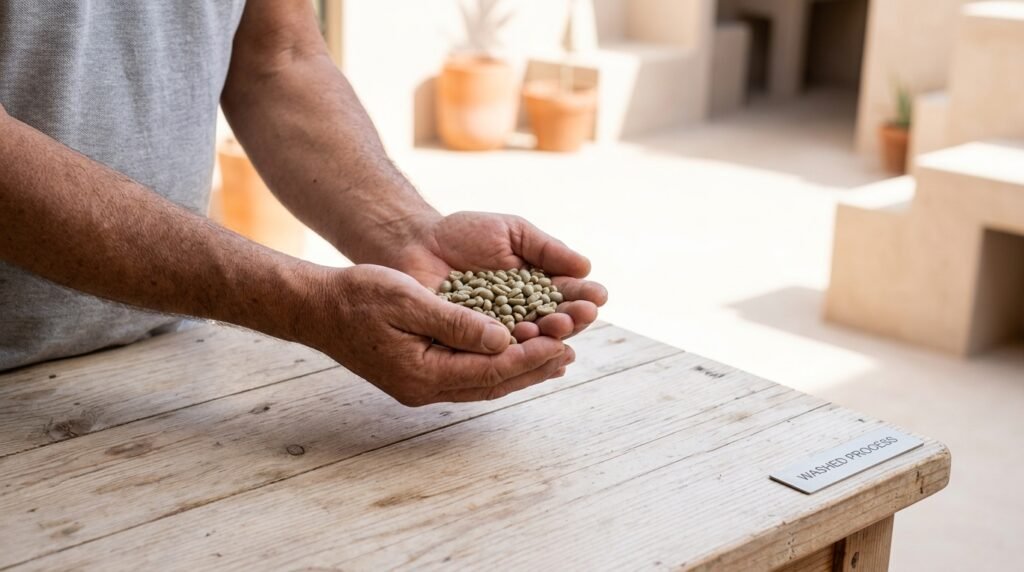
After the farmers in Yunnan pick the ripe coffee cherries, they do not let the fruit dry on the seed. They immediately run the cherries through a mechanical depulper. They soak the seeds in water tanks to remove all the sticky, sugary mucilage.
This leaves the green coffee bean completely bare.
When a roaster applies heat to a washed coffee bean, there is no fermented fruit sugar left on the outside to burn or distract the palate. The resulting flavor is a direct, naked translation of the soil and the altitude.
The clean, bright flavor profile was a direct result of these local washing stations, confirming What I Learned About Coffee Processing Methods regarding how post harvest care dictates the final cup. The meticulous washing process allowed the delicate black tea notes to shine without any muddy interference.
Dialing in the Unknown
The next morning, I stood in front of my coffee station. I had to figure out how to brew this new ingredient.
I decided to treat the Chinese beans exactly like I would treat an Ethiopian bean. I assumed their high altitude origins meant they were physically dense and hard. Dense beans require aggressive extraction parameters to force the sugars out.
I weighed out twenty grams of the Yunnan coffee. I poured them into my hand grinder.
As I turned the crank, I felt a familiar physical resistance. The beans were indeed very hard. The burrs crushed them slowly. When I opened the catch bin, the dry aroma filled the kitchen. It smelled like toasted brown sugar and dried plums.
Managing the Thermal Energy
I set up my glass V60 pour over cone. I placed a paper filter inside and rinsed it with hot water.
I boiled a full kettle of filtered water. I did not let the water cool down. I used it directly off a rolling boil. I wanted maximum thermal energy to break through the dense cellular walls of the light roasted beans.
I poured forty grams of boiling water to start the bloom phase.
The reaction was beautiful. The coffee grounds swelled into a smooth, dark dome. Small bubbles popped on the surface. The steam rising from the glass cone carried a heavy, sweet scent of black tea.
I waited forty five seconds for the carbon dioxide gas to escape completely.
The Slow Extraction
I resumed pouring. I kept the stream of water incredibly thin and slow.
With delicate, high altitude coffees, you cannot rush the water through the grounds. If the water flows too fast, it will only wash the sharp acids off the surface. You will end up with a sour, thin beverage.
I poured in tight, concentric circles. I kept the water level low inside the glass cone. I forced the hot water to maintain contact with the coffee grounds for a full three minutes.
I watched the digital scale slowly climb to three hundred and twenty grams. I pulled the kettle away and let gravity finish the job. The spent coffee bed was perfectly flat.
The Home Tasting
I removed the glass cone and threw the paper filter in the trash. I picked up my ceramic mug. The liquid was a vibrant, deep red color.
I sat at my kitchen table and took a sip.
I had successfully replicated the roastery experience. The coffee was brilliant. The bright acidity of the plum notes hit the front of my tongue instantly. That sharp fruitiness quickly faded into a smooth, comforting flavor of sweet black tea. The finish was completely clean. There was absolutely zero bitterness.
It was an incredibly elegant cup of coffee. It lacked the heavy, aggressive punch of a South American dark roast. It demanded your attention. It was a coffee you had to think about while you were drinking it.
A New Respect for the Map
Brewing that bag of Chinese coffee changed my entire approach to buying beans.
I realized that the global coffee map is constantly evolving. Countries that were previously ignored by the specialty coffee industry are rapidly improving their agricultural practices. Farmers all over the world are planting better tree varieties. They are building better washing stations. They are improving their sorting methods.
If I simply stick to my favorite Ethiopian and Colombian farms for the rest of my life, I will miss out on incredible culinary discoveries.
Great coffee is not defined by historical borders. It is defined by altitude, soil, and human dedication. You can find those three elements in completely unexpected places.
Escaping the Predictable Routine
We humans love predictability. We find a brand we like, and we stick to it. We find a flavor profile we enjoy, and we stop exploring.
This is a terrible habit when it comes to food and drink. It turns a dynamic, exciting culinary experience into a boring daily chore.
If you know exactly what your coffee is going to taste like before you even turn on your kettle, you are doing it wrong. You are robbing yourself of the joy of discovery. You are silencing the global agricultural conversation happening inside your mug.

The Challenge of the Unknown
I challenge you to break your own geographical rules the next time you buy a bag of coffee beans.
Walk into a local specialty roastery. Do not look for the familiar names. Do not buy the Brazilian blend. Do not buy the Colombian single origin.
Look for a country you have never tasted before. Look for a bag from Myanmar. Look for a bag from Rwanda. Look for a bag from Yemen or Papua New Guinea. Look for a bag from the Yunnan province of China.
Ask the barista what the coffee tastes like. Ask them how they recommend brewing it.
Take that unfamiliar bag home. Treat the beans with respect. Dial in your grinder. Weigh your water perfectly.
When you take that first sip of an entirely new origin, you will feel a sudden rush of excitement. Your palate will scramble to identify the foreign flavor notes. You will realize that the world of coffee is infinitely larger and vastly more complex than you ever imagined. Embrace the surprise, and let the unknown geography completely transform your morning routine.
