
My smartphone illuminated my dark bedroom at exactly six in the morning. I picked it up to turn off the alarm. The screen was completely covered in push notifications.
My habit tracking application reminded me to drink a glass of water. My automated task manager displayed a list of fourteen urgent emails I needed to answer. My calendar application flashed a bright red warning about a project deadline.
My entire life is built around digital productivity. I use software to automate my note taking. I use complex digital systems to manage my daily workflow. I optimize every single minute of my day for maximum efficiency.
But looking at that glowing screen before my feet even touched the floor made my chest feel incredibly tight. I felt completely overwhelmed. I was already exhausted, and the day had not even officially started.
I put the phone face down on my nightstand. I decided to leave it there.
I walked into my kitchen in complete silence. I did not turn on the news. I did not open my laptop. I walked over to my coffee station. That quiet, disconnected morning was a massive turning point in my life. The moment I realized brewing coffee can be relaxing completely changed my relationship with the beverage and cured my morning anxiety.
The Failure of the Automated Machine
Before that specific morning, I treated coffee exactly like I treated the rest of my life. I treated it like a logistical problem that needed to be solved as fast as possible.
I used to own an expensive, highly programmable coffee machine. I bought it because it promised total automation. I could fill it with water and cheap coffee grounds the night before. I could program a digital timer to start brewing at exactly five fifty five in the morning.
The goal was pure efficiency. I wanted the caffeine ready to drink the second I walked into the kitchen.
But that machine stripped all the joy out of the process. The coffee tasted burnt and stale because the grounds sat out all night long. More importantly, it removed my physical involvement. It turned coffee into a purely functional utility, much like turning on a light switch.
I eventually got rid of that machine. I replaced it with a manual glass pour over cone and a hand grinder. But even with the manual gear, I was still rushing. I was still treating the brewing process like a chore standing between me and my work desk.

Stepping Away from the Screen
Standing in my quiet kitchen without my smartphone, I decided to change my approach. I decided to stop rushing.
I grabbed a bag of whole bean coffee from a local roaster. They were a washed Ethiopian Sidamo. This specific variety is known for being incredibly delicate. It has complex floral notes and requires careful attention to brew correctly. You cannot rush an Ethiopian coffee.
I placed my manual hand grinder on my digital scale. I carefully poured the beans until the screen read exactly twenty grams.
Normally, I would grind the coffee as fast as humanly possible. I would crank the handle aggressively, trying to shave a few seconds off the task.
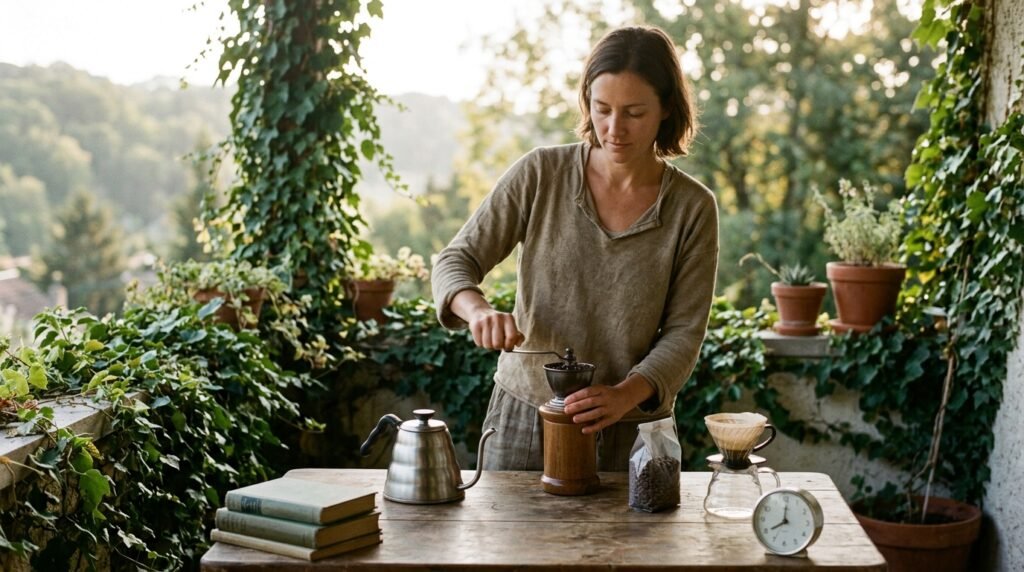
This time, I turned the metal handle slowly. I felt the physical resistance of the ceramic burrs crushing the dense, lightly roasted seeds. I listened to the rhythmic crunching sound. It was repetitive and strangely soothing.
The physical effort required to grind the beans forced me to remain entirely present in the physical world. I could not check my email while turning the handle. I was completely tethered to the physical task.
The Anchor of Aroma
When I finished grinding, I unscrewed the bottom catch bin of the grinder.
I brought the bin up to my face and took a deep breath. The dry fragrance of the Ethiopian beans was absolutely stunning. A massive wave of sweet jasmine and bright lemon zest filled my senses.
Scent is incredibly powerful. It is the only human sense directly tied to the memory and emotion centers of the brain. Smelling that complex, beautiful aroma immediately lowered my heart rate. It forced my brain to stop worrying about the spreadsheet due at noon.
I was completely anchored to the exact moment. The scent was a physical reminder that I was safe, I was in my own home, and I had a few minutes of peace.
Preparing the Blank Canvas
I placed a paper filter into my glass pour over cone. I boiled water in my gooseneck kettle.
I poured a thin stream of hot water over the empty paper filter to rinse away the dusty taste. I watched the hot water heat up the ceramic mug sitting underneath. I dumped the rinse water into the sink.
I poured the twenty grams of fresh coffee grounds into the damp filter. I gently shook the glass cone to make sure the coffee bed was perfectly flat and even.
This preparation phase felt incredibly satisfying. It felt like laying out tools before starting a physical craft. I was creating a clean, organized environment. I was taking chaotic raw materials and preparing them for a highly controlled chemical reaction.
The Magic of the Bloom
I took my gooseneck kettle off the stove. I waited exactly sixty seconds for the violent boiling water to calm down.
I started the timer on my digital scale. I poured forty grams of water over the dry coffee grounds.
I placed the kettle back down and watched the coffee react. This is the bloom phase. The hot water causes the trapped carbon dioxide gas to aggressively escape from the fresh grounds. The coffee bed swells upward. It bubbles and foams.
Watching the bloom is a visual confirmation that the coffee is fresh and alive. It is a beautiful, dynamic chemical process happening right in front of your eyes.
I stood perfectly still in my kitchen and watched the bubbles pop. I did not pace around the room. I did not look out the window. I just gave the coffee my completely undivided attention.

The Rhythm of the Pour
After forty five seconds, the bloom phase ended. The coffee grounds relaxed back down. It was time for the main extraction.
This is the exact moment where the relaxation truly took hold.
I picked up the gooseneck kettle. I began pouring the hot water in slow, tight, concentric circles. I kept the curved metal spout incredibly close to the surface of the coffee. I focused all of my mental energy on keeping the water flow perfectly smooth and perfectly steady.
I watched the water level slowly rise inside the glass cone. I matched the speed of my pour to the speed of the water draining through the filter.
It was a delicate balancing act. It required hand eye coordination. It required a physical rhythm.
Because the pouring process required my total physical and mental focus, there was absolutely no room left in my brain for anxiety. The stress of my digital notifications completely evaporated. I was entirely consumed by the analog task of moving water from a metal pot into a glass cone.
A Forced Meditation
I realized something profound as I watched the scale hit my target weight of three hundred grams.
Manual coffee brewing is an incredible, built in meditation session.
People spend hundreds of dollars on meditation apps and yoga retreats trying to find ten minutes of peace. They try to force their brains to go completely blank. But clearing your mind is incredibly difficult when you are just sitting still in a quiet room.
Coffee provides a focal point.
The physical mechanics of weighing, grinding, and pouring give your brain something active to do. It occupies your hands and your senses. It forces you to disconnect from the digital world for exactly five minutes. Discovering this physical relief was the core theme of The Coffee Routine That Helped Me Slow Down because it proved that action can be just as calming as stillness.
The Final Drawdown
I stopped pouring the water. I put the kettle down on the stove.
I stood by the kitchen counter and watched gravity finish the job. The remaining dark liquid slowly dripped through the bottom of the glass cone into my warm ceramic mug.
The surface of the liquid inside the cone slowly dropped. It revealed a perfectly flat, level bed of wet coffee grounds at the absolute bottom of the paper filter.
That flat bed was physical proof of a job well done. It meant my slow, methodical pouring technique was successful. It meant I had extracted the flavor evenly from every single particle of coffee.
I removed the glass cone and tossed the wet paper filter into the trash can. The entire brewing process was finished.
Tasting the Effort
I picked up the warm ceramic mug. I walked over to my kitchen table and sat down.
I did not have my phone. I did not have a newspaper. I just sat at the table and looked at the steam rising from the hot liquid.
I took a slow sip.
The flavor was absolutely spectacular. The Ethiopian beans delivered a massive wave of bright peach acidity, followed immediately by a heavy, comforting floral sweetness. There was absolutely zero harsh bitterness. The texture was clean and incredibly smooth.
The coffee tasted significantly better than it usually did.
It tasted better because I had not rushed the extraction. I had poured the water with deliberate care. But more importantly, it tasted better because my mind was actually quiet enough to appreciate the complex flavors.
Reclaiming the Morning
Sitting at my table, drinking that perfect cup of coffee, I felt completely recharged.
The tight, anxious feeling in my chest was entirely gone. I felt calm, centered, and ready to face the massive list of digital tasks waiting for me on my computer.
I realized that my morning routine had been completely backward. I had been trying to use caffeine to jumpstart a stressful, chaotic workflow. I was treating my body like an engine that just needed raw fuel.
But humans are not machines. We cannot just wake up and immediately start processing data.
We need a transition period. We need a physical, tactile bridge between the quiet world of sleep and the loud, demanding world of work. Recognizing the necessity of this bridge was exactly The Morning I Realized Coffee Could Be a Ritual and not just a functional beverage. The act of brewing became the most important part of my day.
Protecting the Boundary
That single quiet morning changed my behavior permanently.
I created a strict, unbreakable rule for myself. From the moment I wake up until the moment I finish drinking my first cup of coffee, my smartphone is strictly forbidden. I do not look at screens. I do not check emails. I do not look at my task manager.
The first thirty minutes of my day belong entirely to the coffee.
I protect this analog boundary fiercely. Even if I have a massive project due at work, I refuse to rush the brewing process. I refuse to use a machine. I stand in my kitchen. I turn the manual grinder. I smell the fresh beans. I pour the water slowly.
Those five minutes of physical focus set the emotional tone for the next twelve hours of my life.
The Analog Cure
If you wake up every morning feeling stressed, anxious, and behind schedule, I highly encourage you to examine your coffee routine.
Are you pushing a button on a plastic machine while frantically scrolling through your smartphone? Are you throwing a pod into a machine and rushing out the front door?
You are robbing yourself of a perfect opportunity to relax.
You do not need to buy expensive meditation software to calm your nervous system. You just need to engage your hands.
Buy a manual pour over cone or a French press. Buy a manual hand grinder. These tools force you to participate in the process. They demand your attention. They physically prevent you from multitasking. Building this strict physical boundary is the exact mechanism behind The Coffee Habit That Made Mornings Enjoyable Again because it forces the digital noise to wait.
Tomorrow morning, leave your phone in your bedroom. Walk into your kitchen. Focus entirely on the smell of the dry grounds. Focus entirely on the temperature of the water. Focus entirely on the physical flow of the liquid.
Brewing coffee is not a chore. It is a highly sensory, analog craft. Once you stop rushing the process and start paying attention to the physical details, you will realize that the five minutes you spend standing by the kettle are the most relaxing, deeply restorative five minutes of your entire day.
