
I was sitting on a comfortable barstool in my friend’s kitchen on a late Sunday morning. I had stopped by his apartment to drop off a book I borrowed. He offered to make us some coffee before I left. I happily accepted.
I expected him to walk over to an automatic machine, push a plastic button, and hand me a mug a few minutes later.
Instead, he turned his back to me and completely ignored our conversation. He pulled a small digital scale out of a drawer. He carefully weighed a handful of coffee beans. He ground them by hand. He rinsed a paper filter with hot water. He stood perfectly still in his kitchen, slowly pouring water from a gooseneck kettle in deliberate, tight circles.
He treated the process like a sacred morning ritual. He did not check his phone. He did not try to multitask.
He finally handed me a ceramic mug. The coffee was a bright, translucent amber color. I took a sip and was absolutely blown away. It was incredibly sweet, complex, and perfectly balanced. I asked him what expensive, exotic coffee beans he was using.
He smiled and pointed to a bag sitting on his counter. I felt a knot form in my stomach. It was the exact same bag of coffee I had sitting in my own pantry at home.
When I brewed those beans at my house, the coffee tasted harsh, bitter, and completely unremarkable. When he brewed them, they tasted like a luxury culinary experience. The ingredient was identical. The only difference was the execution. That quiet Sunday morning proved that the steps you take are just as important as the beans you buy. Here is exactly why my coffee improved after changing my brewing routine.
The Chaos of the Autopilot Morning
To fix my coffee, I had to take a brutal, honest look at my old routine.
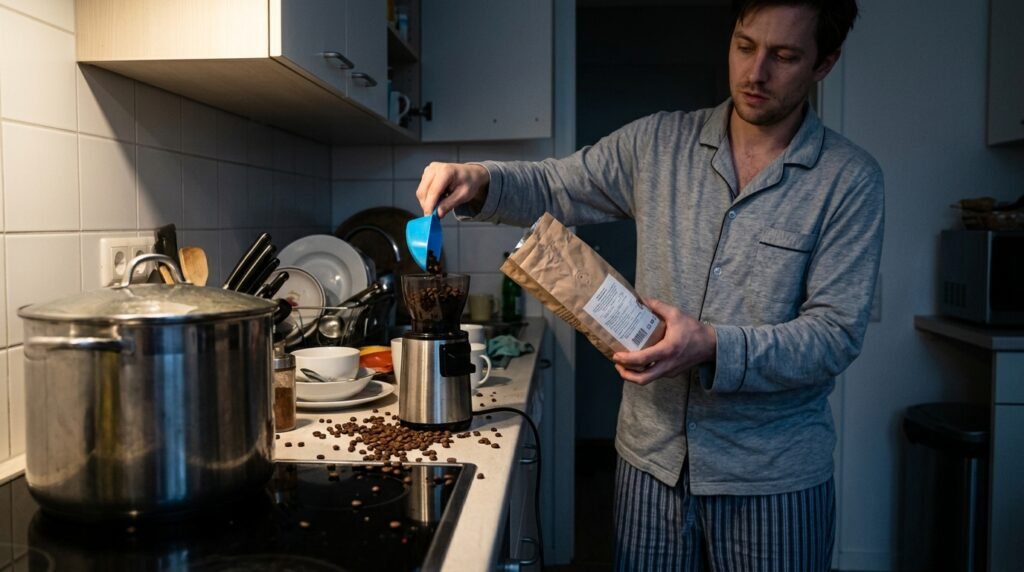
My mornings used to be highly chaotic. I treated the kitchen like a pit stop on a race track. I would wake up late, stumble into the kitchen, and grab a plastic scoop. I would blindly throw two or three heaping scoops of expensive coffee beans into my grinder.
I would dump the unevenly ground powder into a filter. I would boil water in a massive cooking pot. I would splash the boiling water aggressively over the grounds all at once.
While the coffee dripped, I would scramble around the house. I would pack my work bag. I would feed the dog. I would frantically answer emails on my phone. By the time I finally returned to the kitchen to grab my mug, the coffee was usually lukewarm and tasted like muddy water.
I was buying premium ingredients, but I was treating them with absolute disrespect. I expected great flavor without putting in any actual effort.
Recognizing the Science of Extraction
My friend’s methodical approach taught me a vital lesson. Making coffee is not a passive chore. It is an active chemistry experiment.
You are using hot water as a solvent to extract highly specific chemical compounds from a roasted seed. If you want that extraction to taste good, you have to control the variables. You cannot control variables if you are running around your house looking for your car keys.
I decided to completely overhaul my morning. I decided to build a rigid, repeatable routine.
I wanted to remove the guesswork. I wanted to eliminate the chaos. If my coffee tasted bad, I wanted to know exactly which step of the routine failed so I could fix it the next day.
The End of the Plastic Scoop
The first major change I made to my routine involved how I measured my ingredients.
For years, I relied on volume. I used a plastic tablespoon to measure my beans. But volume is a massive lie in the coffee world. A dark roast coffee bean is significantly larger and lighter than a dense, light roast coffee bean.
If you use a scoop, you will get a completely different amount of actual coffee every single time you change your bag of beans. Your ratio of coffee to water will be wildly inconsistent.
I threw the plastic scoop in the trash. I bought a cheap digital kitchen scale.
I made a strict rule for myself. I would weigh my coffee beans in grams every single morning. I settled on exactly twenty grams of coffee. Implementing this strict, numbers based approach was the core theme of What I Learned About Coffee Measurement Accuracy in my kitchen. By measuring the weight, I guaranteed that my baseline recipe was absolutely identical every single day.
Fixing the Water Variable
The next step in my routine overhaul focused on the water.
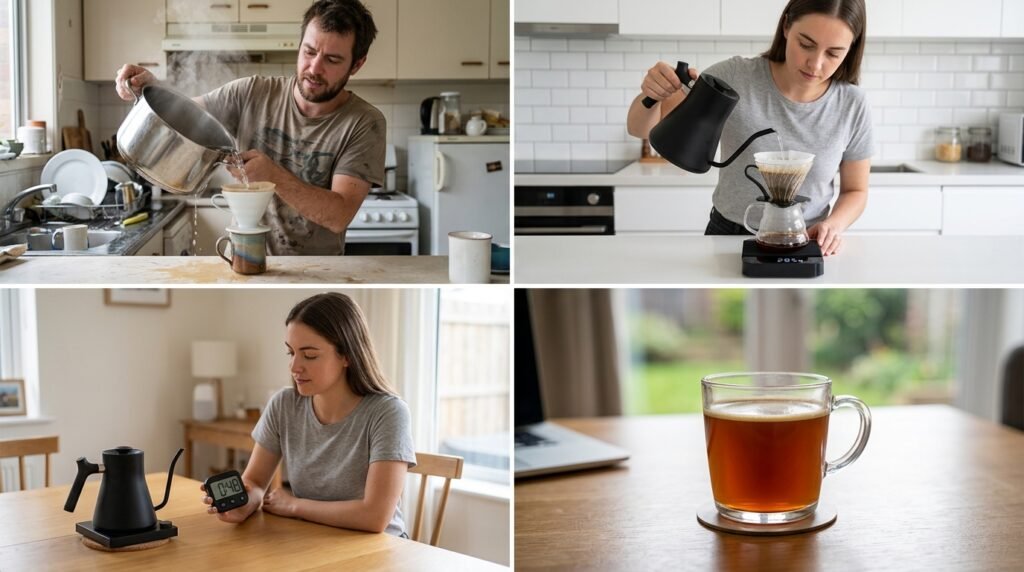
In my chaotic past, I would boil a massive pot of water on the stove. I never measured how much water I was putting into the pot. When it started whistling, I would just dump an arbitrary amount of boiling liquid over my coffee grounds.
This created two massive problems. First, I never knew my true brewing ratio. Sometimes my coffee was weak and watery. Sometimes it was thick and sour.
Second, the water was entirely too hot. Aggressively boiling water physically burns the delicate natural sugars found in specialty coffee. It destroys the sweetness and leaves a harsh, ashy flavor behind.
I changed the routine. I bought a gooseneck kettle. I started weighing my water on the digital scale, aiming for exactly three hundred grams. Most importantly, I forced myself to wait.
When the kettle reached a rolling boil, I took it off the heat. I set a timer for sixty seconds. I let the extreme thermal energy dissipate before the water ever touched the coffee grounds. Discovering this simple waiting period completely mirrored How I Discovered the Right Water Temperature for Coffee without needing to buy an expensive digital thermometer. Cooler water extracts sweeter flavors.
The Mandatory Kitchen Pause
The hardest part of changing my routine had nothing to do with the physical equipment. It had to do with my brain.
I had to force myself to stop multitasking.
When you use a manual brewing method like a pour over cone, you have to control the flow of the water. You cannot pour it all at once. You have to pour slowly in concentric circles. You have to stop and let the water drain.
I made a strict rule. Once I started pouring the water, I was not allowed to leave the kitchen counter. I was not allowed to check my smartphone. I was not allowed to talk to anyone.
For three uninterrupted minutes, my only job in the entire world was to watch the hot water hit the coffee grounds.
Initially, standing perfectly still in my kitchen felt like a waste of productive time. I felt an intense urge to walk away and do something else. But after a few days, that mandatory pause became my favorite part of the morning. It forced my brain to slow down. It was a brief, quiet meditation before the stress of the workday began.
The Prep Work Habit
To ensure I actually stuck to this new, slower routine, I had to remove the friction from my mornings.
If I woke up and the kitchen was a mess, I knew I would revert to my old, chaotic habits. I would rush the process.
I started a new habit the night before. Before I went to bed, I would clean the kitchen counter. I would wash my glass pour over cone and set it neatly on a drying rack. I would fill my gooseneck kettle with fresh, filtered water and place it on the stove. I would set my digital scale and my hand grinder right next to the coffee beans.
When I woke up the next morning, my entire workstation was ready. I did not have to search for clean equipment. I just had to turn on the stove and weigh the beans.
This nighttime preparation was a game changer. It completely eliminated morning decision fatigue. It created a smooth, seamless transition into the brewing process. This small change in preparation was exactly The Coffee Habit That Improved My Daily Routine because it protected my time and my energy.
The Cleanup Protocol
A good routine does not end when the coffee is in the mug. It ends when the kitchen is reset.
In the past, I would leave wet coffee grounds sitting in the filter all day long. I would leave my grinder covered in stale coffee dust. Over time, that old, rancid coffee oil would contaminate my fresh brews. It made everything taste slightly bitter and stale.
I added a strict cleanup protocol to the end of my new routine.
The moment the coffee finished dripping into my mug, I immediately took action. I threw the wet paper filter and the used grounds into the compost bin. I rinsed the glass cone under hot water. I wiped the digital scale with a damp towel.
The entire cleanup process takes exactly thirty seconds if you do it immediately. If you wait until the coffee crusts over and dries out, it takes ten minutes of aggressive scrubbing.
Keeping my equipment impeccably clean guaranteed that tomorrow’s cup of coffee would taste just as good as today’s. Clean gear is the absolute foundation of clean flavor.
The Power of Consistency
After two weeks of following this new, rigid routine, my coffee transformed completely.
I was using the exact same beans I had always used. I was using the same water. But the flavor in the mug was completely unrecognizable.
The harsh, unpredictable bitterness was gone. The weak, watery batches were a thing of the past. Every single morning, the coffee was incredibly sweet, heavily textured, and perfectly balanced. I could finally taste the delicate notes of fruit and chocolate printed on the label.
The secret was consistency.
Because I was weighing my coffee and my water, my extraction ratio never fluctuated. Because I was waiting sixty seconds off the boil, my temperature never spiked. Because I was standing still and pouring slowly, my extraction was perfectly even.
I had removed the chaos. I had isolated the variables. I finally allowed the coffee beans to show me their true potential.
A Foundation for Experimentation
Building a strict routine does not mean your coffee experience becomes boring. In fact, it accomplishes the exact opposite.
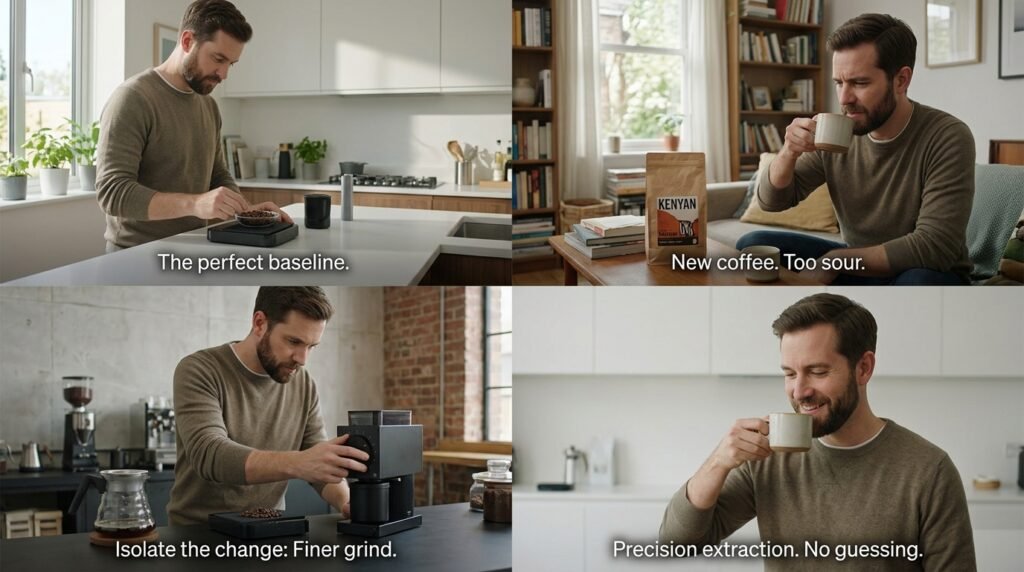
A rigid routine provides a reliable baseline. Once you have a perfect baseline, you can start running highly controlled experiments.
If I buy a new bag of coffee from Kenya and it tastes a little too sour, I do not panic. I rely on my routine. I keep my coffee weight exactly the same. I keep my water volume exactly the same. The only variable I change is the grind size. I grind the beans slightly finer the next morning to increase the extraction.
Because the rest of my routine is locked in, I know with absolute certainty that the finer grind size was the cause of the flavor change. I am no longer guessing. I am navigating the extraction process with mathematical precision.
Respecting the Morning
My friend in his kitchen that Sunday morning taught me a lesson that goes far beyond coffee. He taught me the value of intentionality.
When you rush through a task, you signal to your brain that the task is a burden. You tell yourself that making coffee is an annoying obstacle standing between you and your caffeine fix.
When you slow down and build a deliberate routine, you signal respect. You respect the agricultural product you bought. You respect the tools in your kitchen. Most importantly, you respect your own time.
If you are currently frustrated with the coffee you make at home, do not immediately go out and buy a more expensive bag of beans. Do not buy a fancy new machine.
Audit your routine first.
Buy a cheap digital scale. Start weighing your ingredients. Stop pouring boiling water over the grounds. Put your phone away and watch the coffee bloom. Clean your equipment immediately.
Change the way you behave in the kitchen. Once you establish a calm, focused, and consistent routine, the quality of your coffee will skyrocket. The beans have always been good. You just needed a better routine to unlock them.
